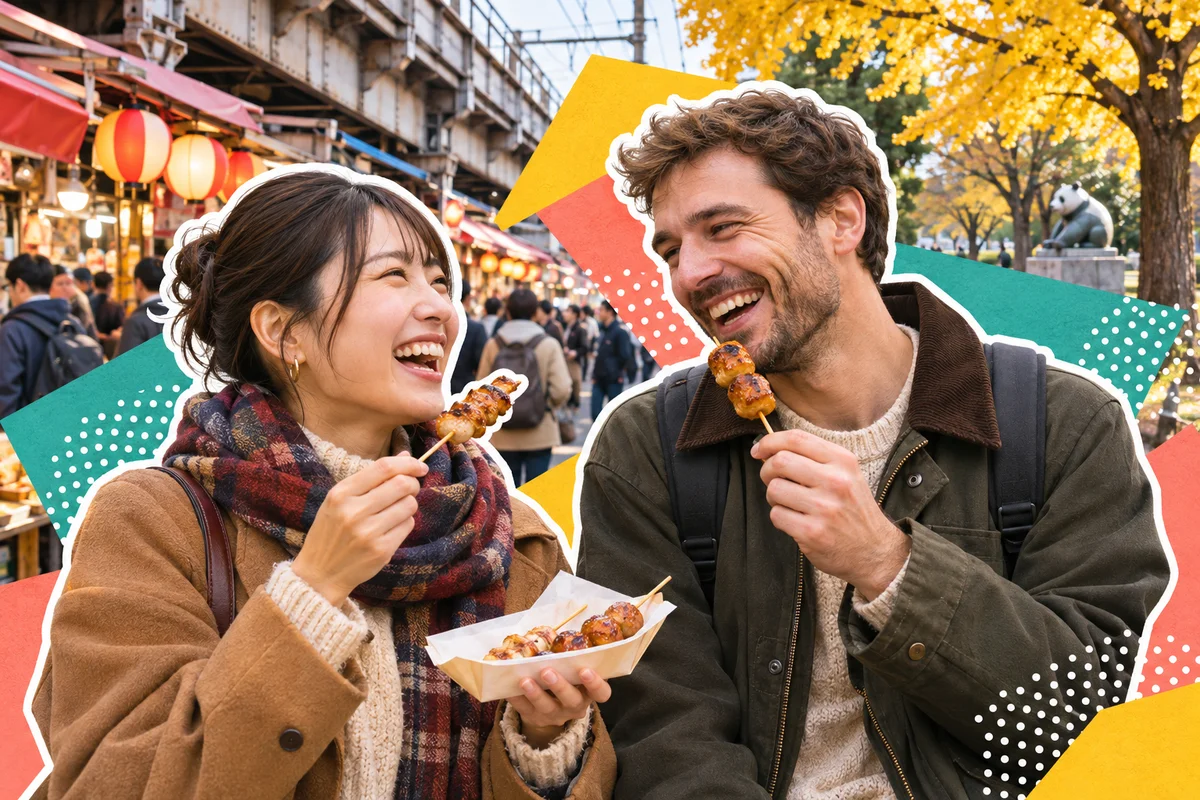
Ueno is full of people from everywhere. Walk through Ameyoko and you'll hear five languages before you reach the end of the market. Sit outside the museums in Ueno Park and half the benches are travelers comparing photos. So why does it feel so hard to actually make a friend here?
Ueno isn't Roppongi or Shinjuku's Golden Gai. There's no famous strip of foreigner bars where everyone knows to go. The people are here, but they're spread out, moving fast, and a lot of them are leaving town on Thursday.
This guide is for anyone who lives in, is moving to, or is spending real time in Ueno: international students, people working in east Tokyo, travelers staying a few weeks, and anyone who changes trains here every day and wonders where the social life is. It covers why Ueno works differently, the specific spots where conversations actually start, and how to turn those conversations into friends.
The short version: in Ueno, look for friends in daytime places, not nightlife. Museums, food stalls and the pond path give you something to talk about before you've said a word. At night, a sports pub does the same job. Pick one spot and keep showing up at the same place.
There are plenty of foreigners in Ueno. That part is easy. Turning a five-minute chat into a friendship is the hard part, and there are a few reasons why.
Most of the crowd is passing through. A lot of the foreigners you meet in Ameyoko or Ueno Park are tourists on a short trip. You can have a great conversation and they're in Kyoto the next day.
It's a giant transit hub. Shinkansen, the Skyliner to Narita, JR lines and the subway all meet here. Everyone is heading somewhere else, and the station area doesn't invite you to slow down.
There's no single nightlife district for internationals. The bars are scattered, so there's no obvious "go here and you'll meet people" area like other parts of Tokyo have.
But here's the flip side. Ueno sits in Taito City, which has one of the higher shares of foreign residents in Tokyo. The ward's multicultural plan says 6.82% of residents were foreign nationals as of January 2022, the fourth highest share among Tokyo's 23 wards. So Ueno isn't only tourists. Plenty of internationals actually live here, and that's who you can build something lasting with, alongside Japanese neighbors.
Ueno has three very different sides: the park side, the Ameyoko and Okachimachi side, and the Shinobazu Pond and Yanaka side. Pick the one that suits you.
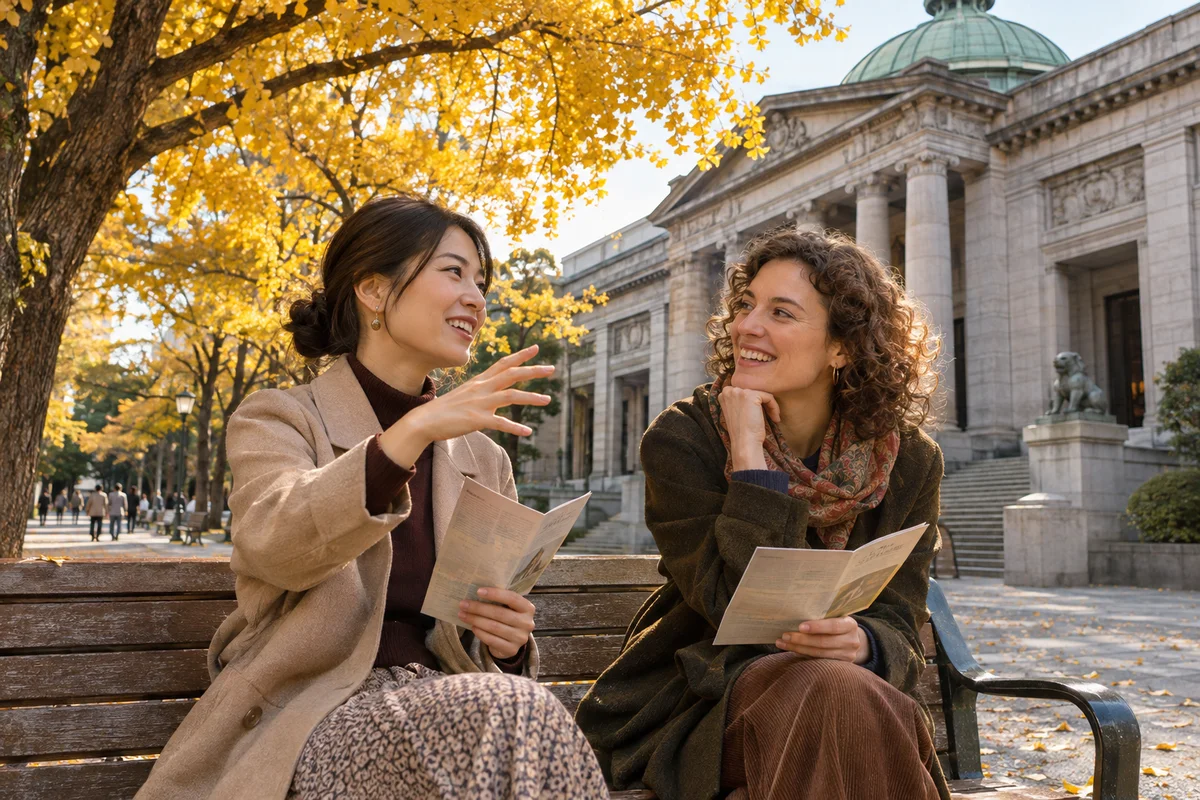
Ueno Onshi Park has one of the densest clusters of museums anywhere in Japan. The Tokyo National Museum, the National Museum of Western Art, the Tokyo Metropolitan Art Museum, the National Museum of Nature and Science and the Ueno Royal Museum are all within walking distance of each other. The National Museum of Western Art's main building was designed by Le Corbusier and is part of a UNESCO World Heritage listing. The Tokyo Metropolitan Art Museum marked its 100th anniversary in 2026.
That means art and history fans from all over the world end up here, and so do Japanese locals who love exhibitions. The best part about museums is that the art starts the conversation for you. "Did you like that one?" is a perfectly normal opener, in English or in simple Japanese.
Tactic: pick one special exhibition that genuinely interests you and go alone on a weekday afternoon. Afterwards, sit on a bench or in a park cafe and ask someone nearby what they thought. If they're a traveler, swap socials. If they live in Tokyo, suggest the next exhibition together.
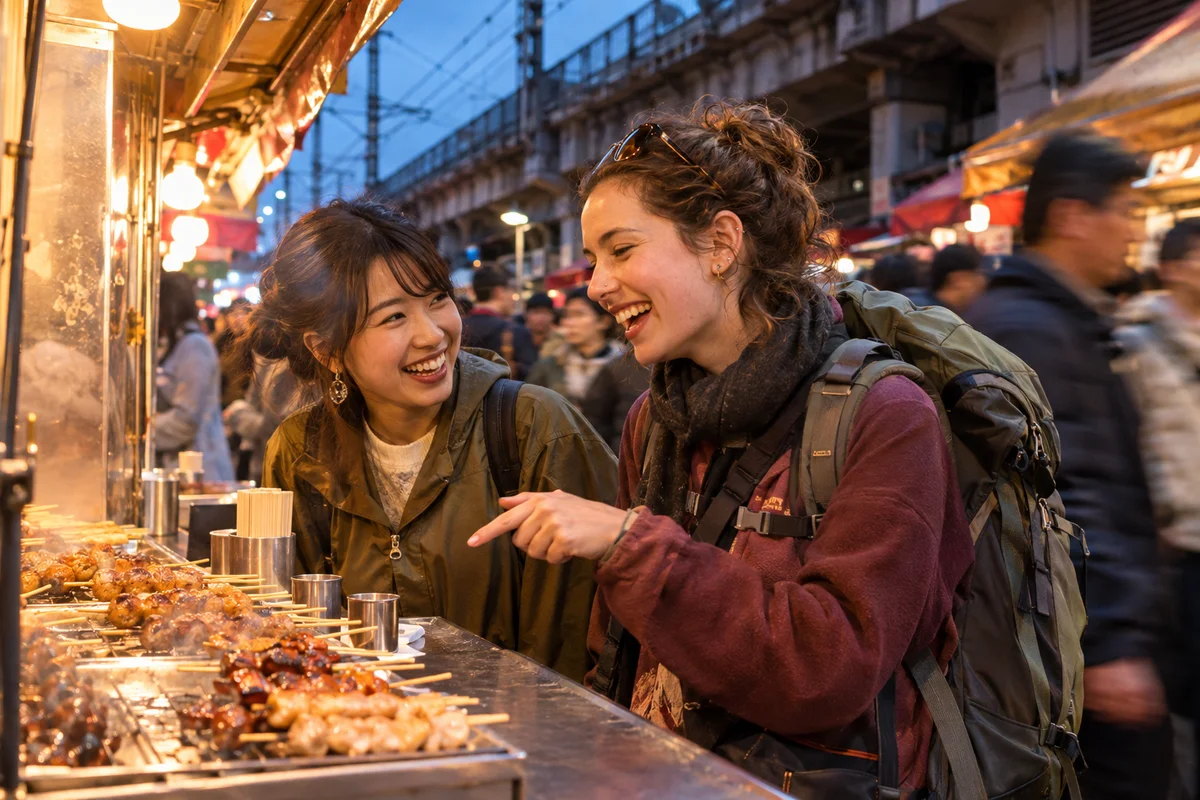
Ameyoko runs under and alongside the JR tracks from Ueno Station down to Okachimachi. It's a market street packed with food stalls, standing counters and izakaya that start pouring in the afternoon, and it's popular with international visitors.
What makes it good for meeting people is how close everyone stands. At a standing counter or an outdoor table, it's natural for the person next to you to ask "what is that, is it good?" From there it's one more question to "where else should I eat around here?"
Tactic: go in the early evening before it gets too packed, alone or with one friend. Go back to the same stall a few times and the staff and other regulars start recognizing you. The Okachimachi end has restaurants serving food from many countries, which makes it a good area if you bond with people over food.
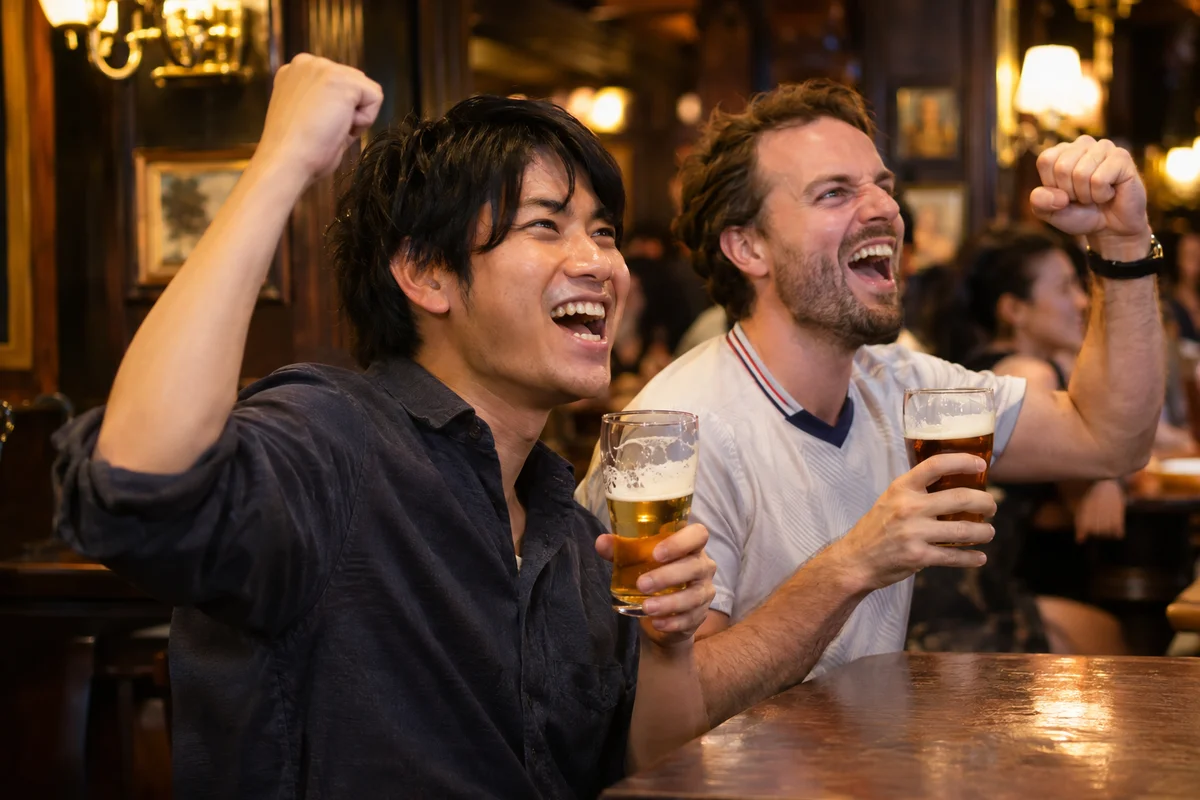
If you want to meet people in Ueno at night, start with British-style pubs. There are several branches of the HUB pub chain around Ueno, including along Shinobazu-dori and Showa-dori. You order and pay at the counter, so walking in alone is easy and nobody expects you to wait for a table.
Pubs work for friendships because people stand or sit at the counter side by side. On big football or rugby nights, Japanese and international customers end up cheering at the same screen. When the conversation topic is right in front of you, starting one is easy.
Branches and opening hours can change, so check before you go.
Shinobazu Pond, on the west side of Ueno Park, is known for its boats and its lotus plants. The path around it is busy with walkers and joggers, including plenty of internationals who live nearby.
Keep walking toward Yanaka and you reach an old shitamachi neighborhood with temples and narrow streets, which draws visitors who want a slower, older side of Tokyo.
If you'd rather talk without alcohol, this is your side of Ueno. Ask someone with a camera if they got a good shot. Help someone who looks lost. On the quieter side of Ueno, friendships start with small favors.
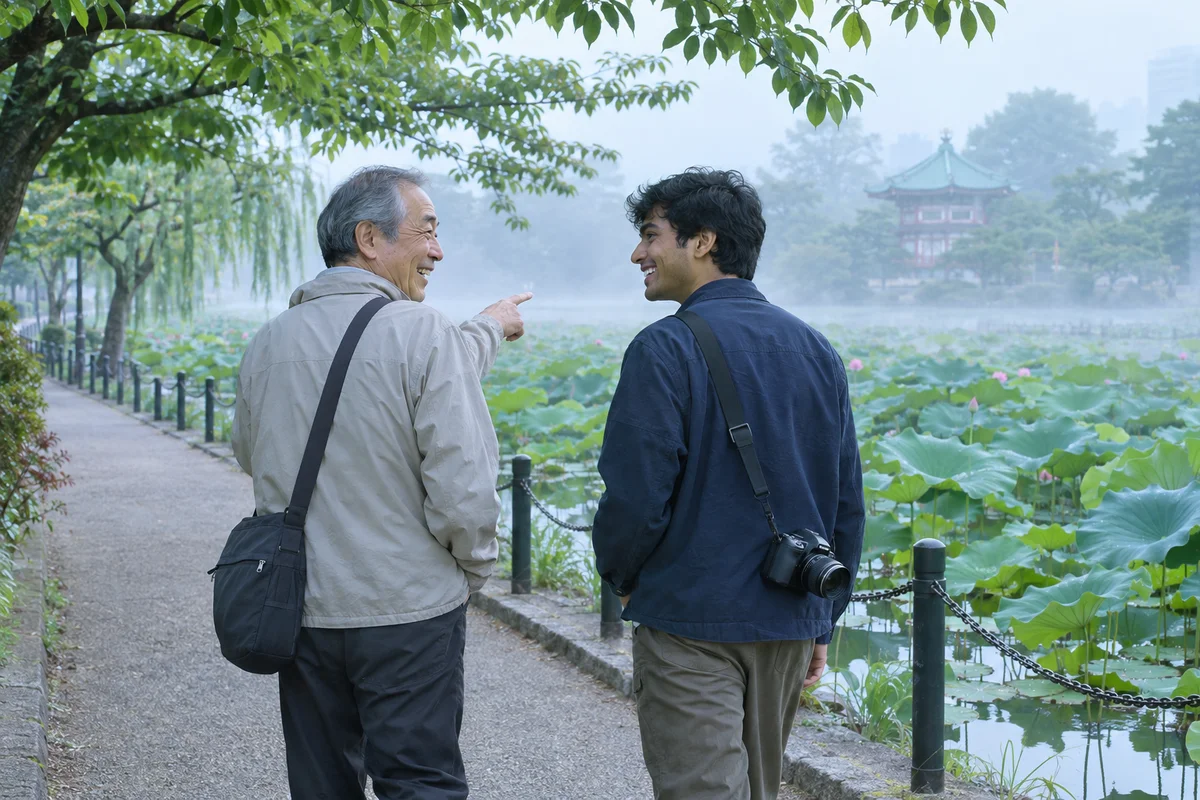
The Tokyo University of the Arts (Geidai) campus sits on the north side of Ueno Park. It's where students of music and fine art gather, including international students.
Geidai's school festival, Geisai, is usually held around September, and in 2026 it included events organized with local Ueno shopping streets. Exhibitions and performances like these are great places to meet people, because talking about the work comes naturally. Even if you're not a student, attending public exhibitions and concerts is a good way in.
If you want international exchange events in Ueno, the most reliable sources are public ones, not random event listings. Taito City has a multicultural coexistence plan and supports Japanese language classes for foreign residents as well as exchange programs between Japanese and international residents.
At the Tokyo level, the Tokyo Metropolitan Foundation "TSUNAGARI" runs multicultural programs, including community Japanese language education. Dates and content change, so check the ward's and the foundation's official sites for current information.
The strength of classes and exchange programs is that you see the same people again and again. Don't treat them as homework. Treat them as a place to meet future friends and they're much easier to keep going to.
Ueno Park / Park exit side: Museums, galleries and the zoo. Best for daytime conversations with a built-in topic.
Ameyoko / Shinobazu exit side: The liveliest part. Street food, standing bars and lots of travelers. The easiest place to start a chat.
Okachimachi: South end of Ameyoko. International restaurants and wholesale streets. Great for food lovers.
Ueno-Hirokoji / Shinobazu-dori: Lots of pubs and izakaya. Your spot for casual evenings.
Around Shinobazu Pond: Walkers and joggers. For calm, alcohol-free conversations.
Yanaka and Nezu: Old shitamachi streets. Relaxed visitors and long-time locals.
East of Ueno Station / Iriya: Hotels and guesthouses scattered around, with plenty of travelers.
The most common mistake is stopping at one fun night with a traveler. Those nights are great memories, but in my experience friendships are built from a lot of "oh, you again" moments.
Ueno suits map-based apps well. Travelers, residents and workers are packed into a small area, so a quick look at who's nearby can show people from many countries.
It works especially well in the spare hour after work or after a museum visit. Look at who's around, message someone who shares your interests, and suggest tea at a cafe in Ueno Park. Ueno has plenty of meeting points everyone can find.
The map isn't limited to Ueno, either. From your room, you can browse a city in another country and become friends with people who live there, no travel plans needed. You can also keep in touch with people from the countries of travelers you met in Ueno long after they've flown home.
Comparing options? See our guide to the best apps for making international friends.
Tourists cluster around Ameyoko and the museums in Ueno Park. People who enjoy slower, old-town Tokyo head to Shinobazu Pond and Yanaka. Travelers also stay in hotels and guesthouses around the station and toward Iriya. It varies by day and time, so walking around is the best way to get a feel for it.
Yes. British-style pubs showing sports are especially good, because watching the same game gives you an easy way to start talking. Don't stop at one visit. Go back for the next big game.
Not one single club, but plenty of internationals live in Taito City. You'll find them through regular spots, ward Japanese classes and exchange programs, and map apps that show who's nearby.
Definitely. Ueno has museums, galleries, a big park and the Shinobazu Pond path, all of which work without alcohol. Ameyoko is easygoing during the day too.
Taito City runs exchange programs and supports Japanese classes for foreign residents, and the Tokyo Metropolitan Foundation "TSUNAGARI" runs multicultural programs across Tokyo. Dates change, so check their official sites for the latest.
Not at all. If you start with something right in front of you, like an exhibition, a snack from Ameyoko or directions, it feels natural. If the other person looks busy, keep it to one line and move on.
Want to compare neighborhoods? Read how to make friends in Ikebukuro, how to make friends in Shinjuku and how to make friends in Tokyo.
Ueno doesn't have a flashy international bar street. What it has is an unusual number of daytime places where people gather: museums, Ameyoko, the park and the old streets toward Yanaka. Shared things to look at and eat make the first hello easy.
A traveler might be a one-time meeting, but if you connect on social media or a map app, it can last after they go home. With internationals and Japanese locals who live nearby, a regular spot turns familiar faces into friends. Somewhere in the Ueno crowd, there's someone you'll keep running into.
Looking for friends in Ueno?
SewaYou is a map-based friendship app for finding people nearby and anywhere in the world. See who's around Ueno Park, Ameyoko or Okachimachi right now and invite them for tea, or explore another city or country from home and make friends there. With or without travel plans, message the people you'd like to know.
Make Japanese Friends On a Live World Map
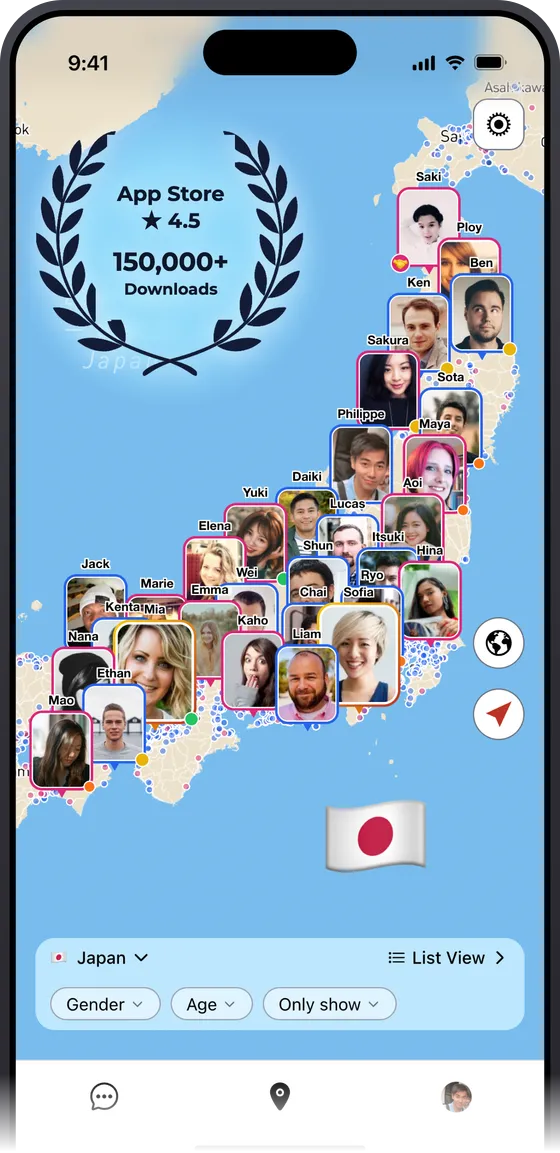
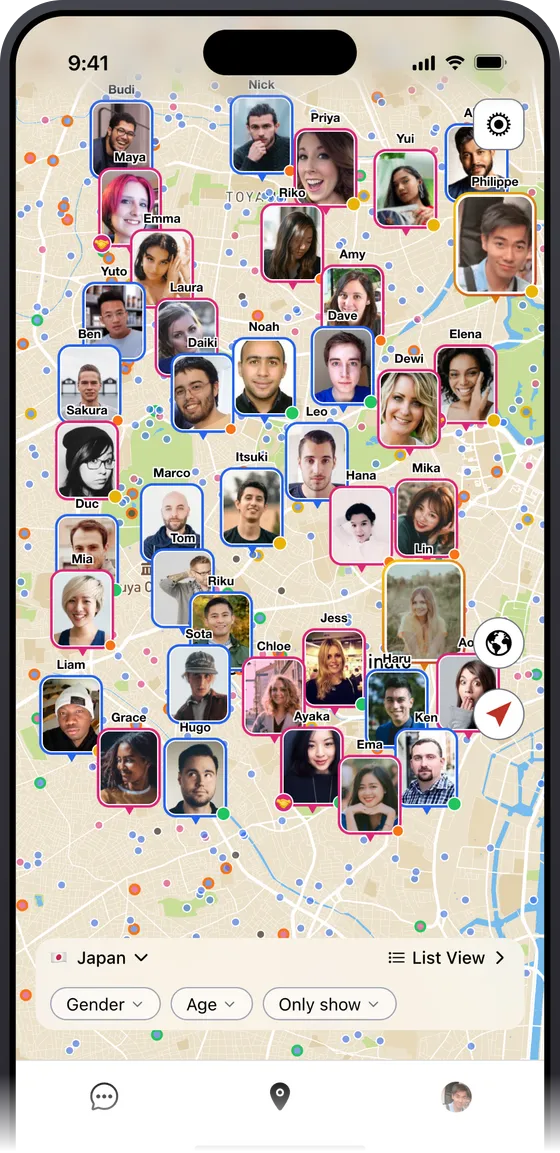
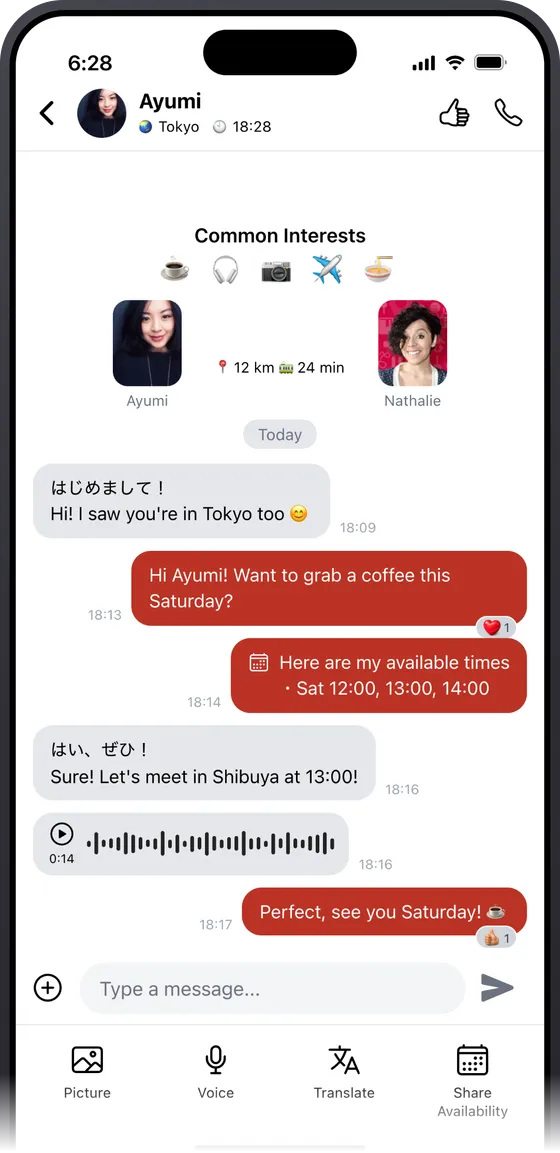


Ready to meet new people in Ueno? Download SewaYou and start exploring the map.
Looking at other cities? See our city-by-city guide to making friends.