

Moving to Tokyo is exciting. The trains run on time, the convenience stores are open 24/7, and there is always something new to try. But then you come home to your tiny apartment in Nakano or Shinagawa, scroll through your phone, and realize you have not had a real conversation with anyone in three days. Sound familiar?
Making friends in Tokyo as a foreigner is one of those things that sounds like it should be easy. It is one of the biggest cities in the world. There are millions of people everywhere you look. And yet, Tokyo has a reputation for being lonely, and not without reason. The good news is that it is absolutely possible to build a real social life here. You just need to know where to look and how to approach it.
This guide breaks down exactly how to make friends in Tokyo in 2026, including the specific neighborhoods, venues, and communities that actually work. Whether you just arrived on a working holiday visa or you have been here for two years and are still figuring it out, this is for you.
Let's get the honest part out of the way first. Tokyo is not like Melbourne or Berlin or Barcelona. You cannot just sit at a bar counter and strike up a conversation with the person next to you. Well, you can, but most of the time people will politely smile and go back to their drink.

A few things make Tokyo uniquely tricky for foreigners:
The language barrier is real. Even if you are studying Japanese, casual small talk with strangers requires a level of fluency that takes years. Japanese social norms around approaching strangers are different from what you might be used to.
Work culture eats your schedule. If you are teaching English, working at a Japanese company, or freelancing across time zones, your free hours rarely match up with potential friends. By the time you finish work at 8pm, most cafes are closing and people are heading home.
Tokyo is massive. A friend who lives in Kichijoji might as well live in a different city from someone in Kasai. "Let's grab coffee" often turns into a one hour train ride each way.
Expat turnover is brutal. You finally make a good friend, you hang out for three months, and then they tell you they are moving back to Sydney. Rinse and repeat.
Japanese social circles form early and stay tight. Your Japanese coworkers probably have friend groups from university or high school that they have maintained for 15 years. Breaking in takes time and intentional effort.
None of this is meant to discourage you. It is meant to help you understand why your usual approach might not be working, and why you need a more deliberate strategy.
Here is where it gets practical. These are the places and activities that consistently produce real friendships, not just one-time chats.
Language exchanges are the gateway drug of the Tokyo expat scene for a reason. They work. You show up knowing that everyone there wants to meet new people, which removes the awkwardness of approaching strangers.
The trick is finding the right ones. Big events at HUB pubs in Shibuya or Roppongi can be fun but overwhelming. Smaller weekly meetups, often held in cafes in Ebisu or Nakameguro, tend to produce better conversations and repeat attendees. Look for ones that cap attendance at around 20 to 30 people.
One thing to know: the gender ratio at these events is often skewed, and some attract a crowd more interested in dating than friendship. If that is not what you want, try events organized around a specific hobby or skill level rather than pure "conversation night" formats.
Where to look: Meetup, Facebook groups for Tokyo expats, and community boards at places like Good Day Books or the Tokyo American Club for English-focused events. For Japanese practice, check the bulletin boards at Japanese language schools in Takadanobaba.
Tokyo has an incredible running community. If you enjoy running, joining a crew is one of the fastest ways to build a consistent social life. Namban Rengo is a legendary international running club with weekly track sessions. There are also smaller crews that meet in Yoyogi Park, along the Arakawa river, or around the Imperial Palace loop on weekday evenings.
Beyond running, Tokyo has leagues for basketball (pickup games at Yoyogi and Komazawa parks), futsal, ultimate frisbee, rugby, and even dodgeball. Most are mixed groups of foreigners and Japanese locals, which is great because you are building a more balanced friend group rather than just an expat bubble.
Climbing gyms are another goldmine. Places like B-Pump Ogikubo, Rocky Spot Iwamotocho, and PUMP2 have loyal regular crowds. The vibe is casual, conversations start naturally around a tough route, and there are always plans for food after.
Tokyo's drinking culture runs on small bars. In Shimokitazawa, Sangenjaya, Koenji, and the tiny alleys of Golden Gai in Shinjuku, there are thousands of bars that seat six to ten people. The key is to pick one you like and go back. Again and again. That is how you become a regular.
The first visit, you drink alone and the master (bartender) might say hello. The third visit, they remember your order. The sixth visit, they introduce you to another regular. That is how friendships form in Japan. Not at loud clubs where you trade numbers and never text. Slowly, at the same counter, over months.
Specific recommendations: the tiny jazz bars in Yotsuya Sanchome, the listening bars in Nakameguro, the izakayas under the tracks in Yurakucho, and the music bars along the narrow streets of Shimokitazawa. Find one that matches your vibe and commit.
If you have a niche interest, Tokyo almost certainly has a community for it. Board game cafes like JELLY JELLY CAFE in Shibuya host open play nights where you sit at tables with strangers and learn a new game together. Fab Cafe in Shibuya runs workshops on laser cutting, 3D printing, and electronics. TRUNK(HOTEL) and SHIBUYA QWS host events for creatives and entrepreneurs that are easy to drop into.
For bookish types, there are English book clubs that meet at Blue Parrot in Takadanobaba and at various cafes in Shimokitazawa. Film clubs gather at venues like Stranger in Kiyosumi-Shirakawa. The point is that when you bond with people over a shared interest, you skip past small talk and get to actual friendship faster.
If you are a freelancer, remote worker, or entrepreneur, picking the right co-working space can change your social life completely. The Hive in Jingumae, The Millennials in Shibuya, and Impact HUB Tokyo in Meguro all have active communities, not just desks. They host weekly happy hours, lunch and learns, and weekend events.
The difference between these and a generic shared office is that people there actually want to connect. Say yes to the coffee break chats. Go to the Friday drinks. Introduce yourself at the newcomer orientation if they have one.
Knowing where to go is half the battle. The other half is knowing how to show up.

Tip 1: Say yes to the second hangout. The biggest mistake foreigners make in Tokyo is treating a nice first meeting as the goal. It is not. Friendship in Tokyo is built on the second, third, and fourth meeting. If someone invites you to something, go, even if you are tired. Especially if you are tired.
Tip 2: Become a regular somewhere. Pick one cafe in your neighborhood, one bar, one gym. Go consistently. In Kichijoji, that might mean the same kissaten every Saturday morning. In Sangenjaya, the same standing bar every Wednesday. Consistency compounds in a way that randomly bouncing between trendy spots never will.
Tip 3: Host something small. The power dynamic flips completely when you are the host. A potluck dinner in your apartment, a picnic under the cherry blossoms at Showa Kinen Park, a hot pot night during winter. You do not need a huge place. Four or five people in a cramped Tokyo apartment eating together is the most Japanese friendship-building activity there is.
Tip 4: Invest in your Japanese, even a little. You do not need to be fluent. But the moment you can make a joke in Japanese at a bar, your social world doubles. Even N4 level Japanese changes everything. Take lessons at a place like Coto Japanese Academy in Iidabashi, use an app daily, and practice with your language exchange partners.
Tip 5: Use apps that are designed for friendship, not dating. This is important. Regular dating apps do not work well for platonic friendships in Tokyo, and the friend-finding features bolted onto them rarely produce real connections. Apps built specifically for making friends are a different story, and they have gotten genuinely good in the last couple of years.
Not all of Tokyo is created equal for foreigners trying to build a social life. Some neighborhoods are just easier starting points.
Shimokitazawa is the indie, creative, bohemian heart of Tokyo. Young, artsy, full of small bars and vintage shops. Lots of English speakers, lots of Japanese locals who are curious about foreigners. Easy to feel at home.
Nakameguro has a quieter, more design-forward crowd. Canal walks, listening bars, coffee shops. Great if you are in a more introverted creative field.
Koenji is the punk and music kid neighborhood. Cheap, loud, friendly. The live houses here are famously welcoming.
Sangenjaya is becoming one of the best neighborhoods in Tokyo for a low-key social life. Close to Shibuya but much more livable. The alleys around Sancha have some of the best small bars in the city.
Ebisu and Daikanyama attract a slightly older, more international professional crowd. Good if you are in your thirties and want more dinner-party energy than pub-crawl energy.
Living in one of these neighborhoods, or at least going to them often, will massively increase your chances of building a real social life.
Here is the honest truth. Building a real friend group in Tokyo takes months, not weeks. You will have lonely stretches. Everyone does. The foreigners who seem to have it figured out went through the same quiet weekends you are going through right now.

A few things that help: get on a routine that includes regular human contact, even if it is not deep friendship yet. The barista at your coffee shop, the trainer at your gym, the person at your language exchange. These low-stakes interactions keep you from spiraling. Also, give yourself permission to make acquaintance-level friends. Not every person needs to become your best friend. Sometimes someone you grab ramen with once a month is exactly what you need.
And reach out first. Everyone in Tokyo is waiting for someone else to send the first message. Be the one who sends it.
One of the hardest parts of making friends in Tokyo is the logistics. You might hear about a great language exchange, but it is on a Tuesday night in Roppongi and you live in Ichikawa. You join a climbing gym but everyone there is focused on climbing, not chatting.
This is exactly the problem that map-based friendship apps solve. Instead of scrolling through endless profiles of people who live an hour away, you can see who is actually near you right now, in your neighborhood, open to meeting up today. It changes the entire dynamic of friendship in a city like Tokyo.
Make Japanese Friends On a Live World Map
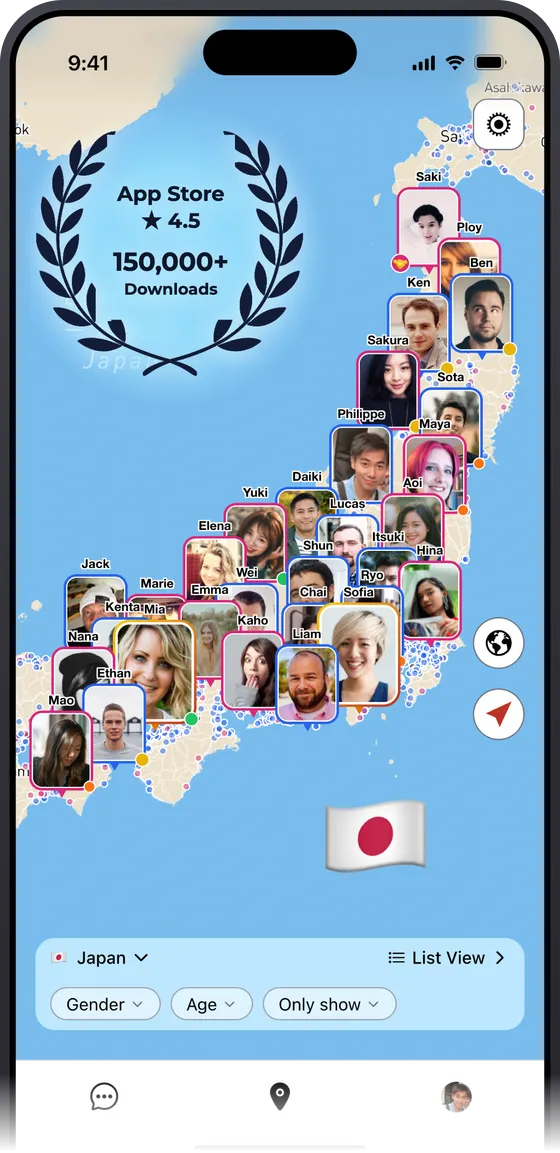
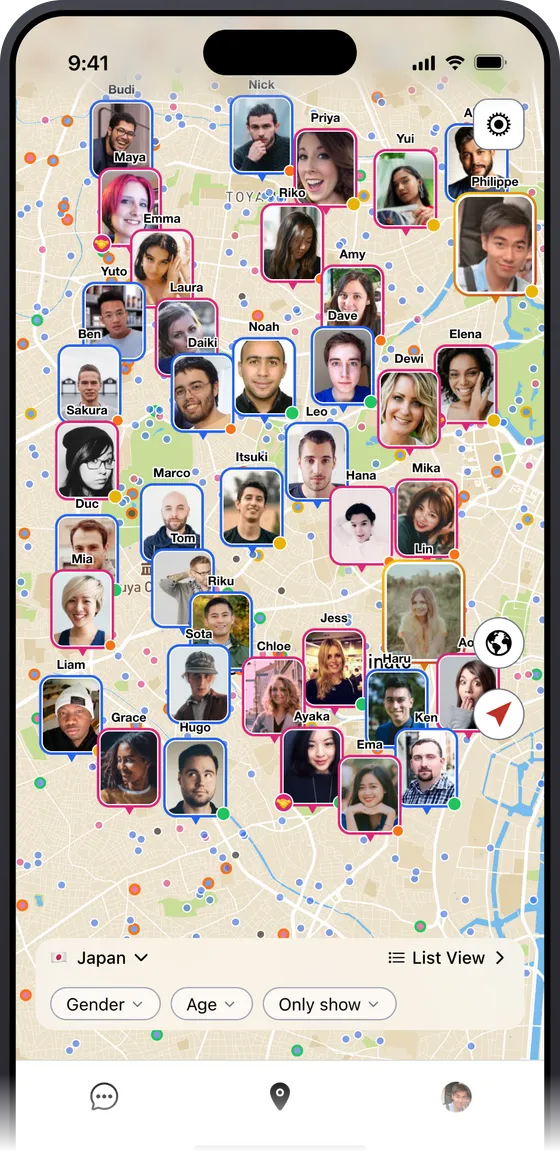
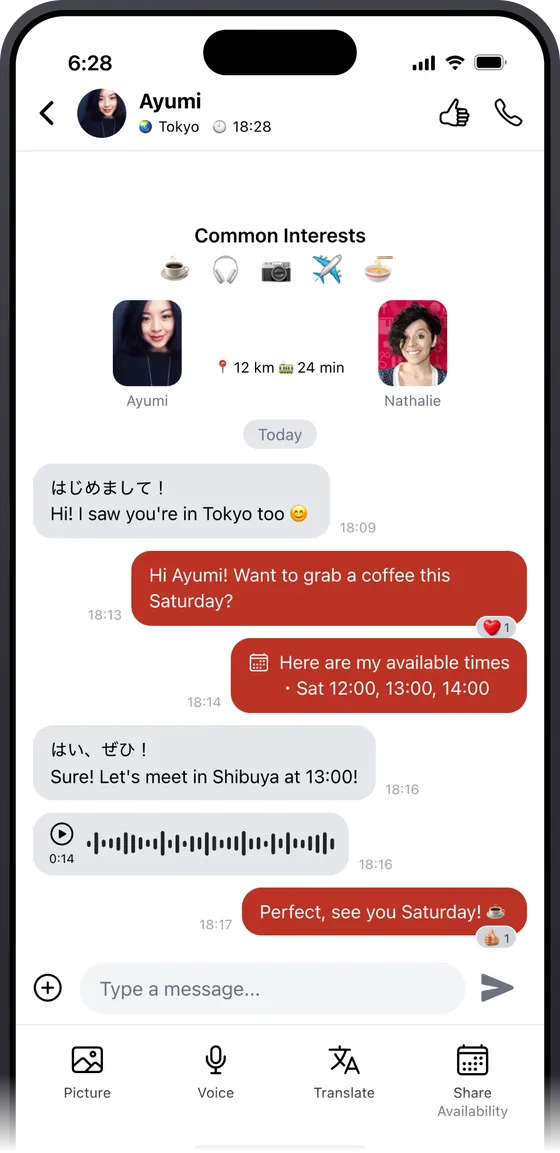


SewaYou is a map-based friendship app where you can find people nearby in Tokyo or anywhere in the world. Download it, browse your neighborhood on the map, and start connecting with people who are genuinely close enough to grab coffee with after work. No more "let's meet up sometime" that never happens. No more long train rides for a first hangout that might not click.
Making friends in Tokyo is a marathon, not a sprint. But with the right places, the right mindset, and the right tools, you will look back a year from now and wonder why you ever thought this city was lonely.
How long does it take to make real friends in Tokyo?
Most foreigners start building a consistent social circle after three to six months of active effort. Surface-level acquaintances come faster, often within the first few weeks, but the deeper friendships that make Tokyo feel like home typically take at least half a year. The key variable is consistency. People who show up to the same events and places repeatedly build friendships faster than those who try something new every week.
Do I need to speak Japanese to make friends in Tokyo?
No, you can absolutely build a social life in Tokyo with only English, especially in neighborhoods like Shimokitazawa, Roppongi, Ebisu, and parts of Shibuya. Most international meetups and expat communities operate in English. That said, even basic Japanese (N5 or N4 level) opens up a much wider social world and lets you connect with Japanese locals who might not feel confident in English. Even small effort gets rewarded.
Where can I meet Japanese friends rather than just other foreigners?
The best places to meet Japanese people who want to befriend foreigners are hobby-based communities, not pure language exchanges. Think climbing gyms, music venues, sports clubs, co-working spaces, and standing bars. These give you a shared activity first and conversation second, which is more comfortable for Japanese people than being put on the spot to practice English. Smaller neighborhood events also work much better than large Roppongi bar meetups.
Is it harder to make friends in Tokyo as an introvert?
Tokyo is actually one of the better cities in the world for introverts to make friends. The culture of small bars, quiet cafes, hobby communities, and low-pressure hangouts fits introvert energy well. You do not need to be the life of the party. You just need to find one or two spots where you feel comfortable and show up regularly. One-on-one meetups in a quiet cafe in Nakameguro will do more for your social life than any loud Shibuya club ever could.


