

Moving to Berlin is one of those decisions that sounds romantic until you find yourself sitting alone in a Späti at 11pm on a Tuesday, wondering why the stranger across the room just gave you the coldest nod of your life. Berlin is a city that promises freedom, creativity, and a nightlife that never really ends, but it also has a reputation for being one of the toughest places in Europe to actually make friends.
If you've been here a few weeks or a few years, you've probably felt it. The city is full of interesting people, but everyone seems to already have their tight circle, their Kiez crew, their WG pals, and breaking in feels like trying to join a band that stopped taking new members in 2013.
The good news? Making friends in Berlin is absolutely possible. You just need to understand how this city works, where people actually hang out, and how to approach the notorious "Berlin coldness" without taking it personally. Here's a real guide for 2026.
Before we get into the practical stuff, it helps to understand what you're dealing with. Berlin is not Barcelona or Lisbon. People here aren't going to strike up a conversation with you in line at the bakery, and smiling at strangers on the U-Bahn will get you a confused stare at best.
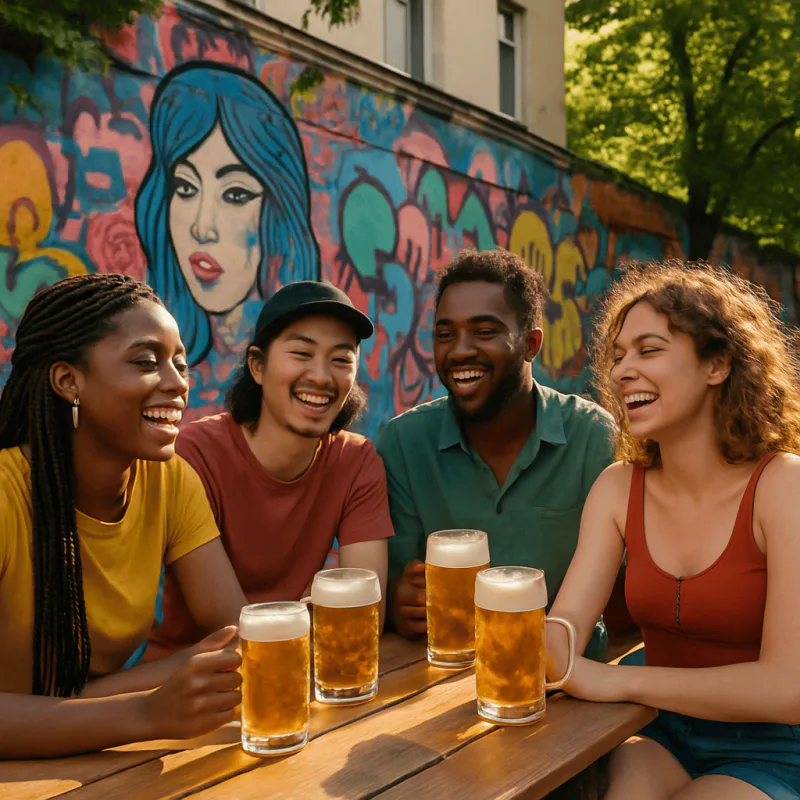
Germans, and especially Berliners, tend to have a clear separation between acquaintances and real friends. Getting someone to go from "Hi, nice to meet you" to "Yeah, come over for dinner on Saturday" can take months. This isn't rudeness. It's cultural. Once you're in, you're really in, but the process takes patience.
On top of that, Berlin is incredibly transient. A huge chunk of the expat population cycles through every year or two. You'll meet someone amazing at a house party in Neukölln, exchange numbers, and three months later they've moved back to Tel Aviv or São Paulo. This constant churn makes a lot of locals and long-term residents hesitant to invest emotionally in new people until they've stuck around for a while.
The language barrier matters too. A lot of newcomers assume Berlin is English-speaking enough that German isn't necessary. That's true for getting by, but friendship happens in the cracks of daily life, and a lot of those cracks are still in German. You don't need to be fluent, but showing up with some Deutsch goes a long way.
Berlin is a city of neighborhoods, and each one attracts a different crowd. If you're trying to build a social life, it helps to know where to spend your time.
Neukölln remains the default for young internationals, artists, and people in their first couple of years in the city. Weserstraße and the area around Hermannplatz are packed with bars like Klunkerkranich (on top of the Neukölln Arcaden mall), Silver Future, and Fuchs und Elster where you can show up alone and find yourself in a conversation by your second beer. The crowd skews creative, queer-friendly, and very international.
Kreuzberg, especially around Görlitzer Park and Kottbusser Tor, is a bit more established. You'll find more thirty-somethings, more Germans who've been in Berlin for a decade, and a mix of the old punk scene with the new tech money crowd. Places like Prince Charles, Möbel Olfe, and Südblock are classics for meeting people who actually live in the city rather than those passing through.
Friedrichshain has the RAW-Gelände, a massive former industrial complex that now houses clubs, skate parks, and outdoor bars. It's chaotic in the best way and ideal if you want to bounce between venues in one night. Boxhagener Platz on a Saturday morning during the flea market is also a surprisingly easy place to strike up conversations.
Wedding and Moabit are where you'll find people who've given up on the gentrification of Neukölln. The bars are smaller, the crowd is a bit older and scruffier, and Mastul on Uferstraße is legendary for impromptu DJ nights that turn into lasting friendships.
Prenzlauer Berg used to be the cool spot but has shifted toward families and remote workers. Still, cafes like Bonanza Coffee on Oderberger Straße and the area around Helmholtzplatz are great for striking up conversations if your vibe is more daytime than nightlife.
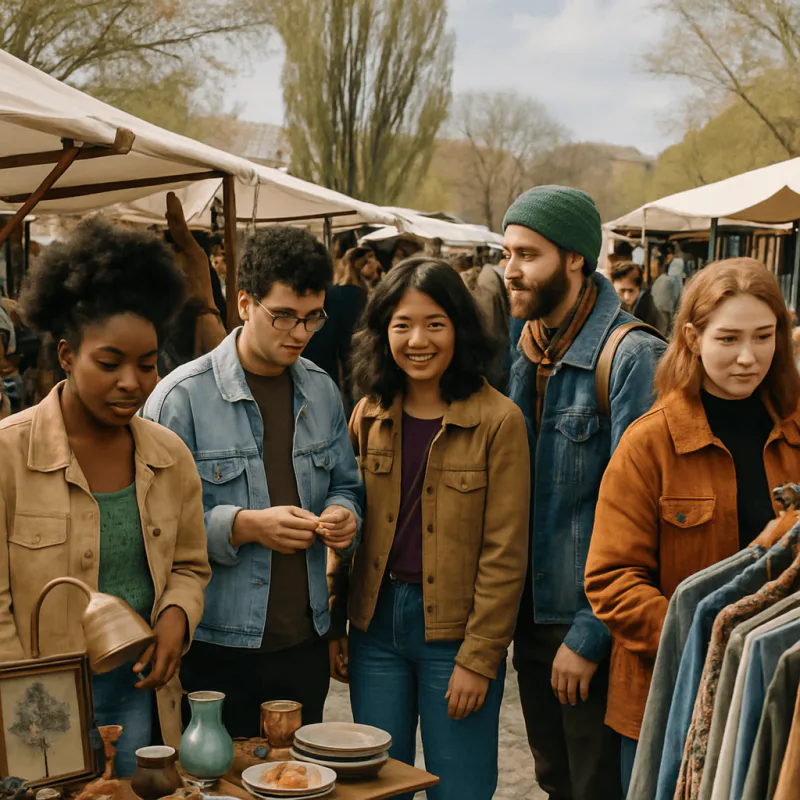
Germans love clubs. Not nightclubs, but Vereine, formal associations dedicated to a specific activity. There's a Verein for literally everything in Berlin: bouldering, board games, urban gardening, improv theatre, sailing on the Müggelsee, even a Verein for people who like to sit in saunas.
The beauty of a Verein is that it gives you a reason to see the same people every week. You're not just "going out to meet people." You're showing up to your Tuesday night volleyball game at Tempelhofer Feld, and by week six, those people are your actual friends. Boulderwelt in Friedrichshain and Magic Mountain in Wedding are particularly good for meeting folks because climbing is inherently social. You need a partner to belay, and conversations happen naturally in the rest breaks.
The classic Berlin language exchange is a Tandem meetup, where native speakers of different languages pair up. Most expats think of these as a cringe speed-dating situation, but there are a few that have become genuinely good social events.
Café Tasso on Frankfurter Allee hosts a long-running Tandem night that skews toward people actually interested in language rather than hook-ups. Sprachcafé Berlin in Kreuzberg runs something similar. The trick is to keep going back. Friendships form on the third or fourth visit, not the first.
If your German is shaky, the Volkshochschule (VHS) classes are unbeatable value and guaranteed to put you in a room with 15 other people who are also new to Berlin and looking for friends.
This is the most Berlin piece of advice possible. A Stammkneipe is your regular bar, the one you go to once or twice a week, where the bartender knows your order and the same handful of regulars show up. In a city where friendships take time, the Stammkneipe is your cheat code.
Find a small, unpretentious bar near your flat. Go on a quiet weeknight. Sit at the bar, not a table. Order the same thing every time. Don't aggressively try to make friends. Just be present. Within a month, you'll be nodding to people you recognize. Within two, you'll be in conversations. Within three, you'll be getting invited to birthdays.
Places like Trude Ruth und Goldammer in Neukölln, Zum Böhmischen Dorf in Rixdorf, or Lass uns Freunde bleiben in Friedrichshain are built for this.
Berlin nightlife gets all the attention, but the real social glue of this city is the WG party. WG stands for Wohngemeinschaft, the shared flats that most Berliners live in, and these parties happen constantly. Birthday parties, "we're leaving for two months so come hang out" parties, random Wednesday parties, leaving parties, arriving parties.
The problem is getting invited to one. The solution is to be the person who hosts. If you live in a WG or a decent-sized flat, throw something. It doesn't have to be big. Tell everyone you've met in the last month to bring one friend. This "plus one" rule is how Berlin social circles actually grow, and hosting puts you at the center of it.
If hosting isn't an option, become the person who says yes to every small invitation. "We're having a few people over for pasta" is the Berlin equivalent of a social audition. Show up, bring a bottle of wine from Späti, and be easy company.
Here's where most people get stuck. The typical Facebook groups for Berlin expats are oversaturated with the same desperate "anyone want to grab a drink?" posts, and Meetup events can feel like networking functions disguised as fun.
What works better in 2026 is using apps that show you who's actually nearby and open to meeting. The idea is similar to how Couchsurfing hangouts used to work ten years ago, where you could see travelers and locals in your immediate area and arrange a coffee that same afternoon.
The benefit of map-based apps is that they solve the logistics problem. Berlin is massive, and the difference between a friendship that sticks and one that fizzles often comes down to whether the person lives in your Kiez or an hour away by tram. Finding someone in your own neighborhood means you can actually do the small, casual hangouts that build real friendship, like grabbing a coffee at your local bakery or a quick beer at the Späti on your corner.
The flakiness is real. Berliners, especially internationals, cancel plans constantly. Don't take it personally and don't overthink it. Keep making plans anyway.
The WhatsApp black hole. You'll exchange numbers with people you had great conversations with and then never hear from them again. This is normal. The friendships that stick are usually the ones that involve a follow-up within three days.
The weather and winter depression. From November to March, Berlin is dark, grey, and cold. Social life contracts. The people who make it through this with intact friendships are the ones who actively plan winter activities: sauna days at Vabali, board game nights, ice skating at Potsdamer Platz, long afternoons at cafes like Kaschk in Mitte that have board games and craft beer.
The cliques. Some social groups in Berlin are genuinely impossible to break into if you don't already know someone. Don't waste energy on these. There are so many other scenes in this city.
Summer FOMO. From May to September, Berlin becomes a different city. Tempelhofer Feld fills up with picnics, every canal has people drinking on the bank, and if you're not doing something every weekend, you'll feel behind. Pace yourself. The friendships made in frantic summer hangouts don't always survive October.
The most important thing to understand about making friends in Berlin is that it takes longer than you want it to. Most people who end up with real friend groups in this city say it took them somewhere between eight months and two years to feel properly settled.
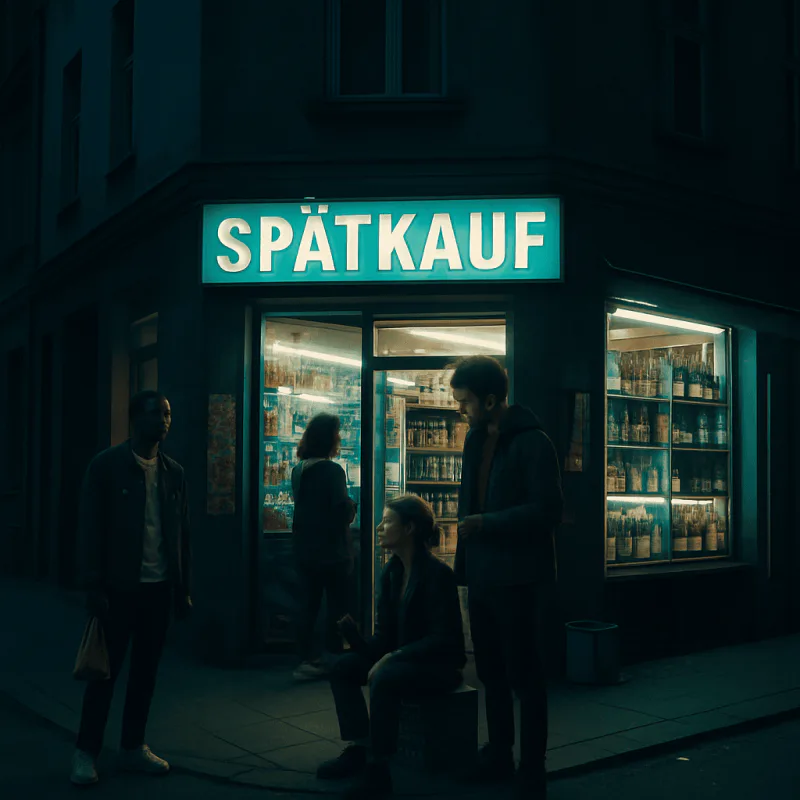
That sounds brutal, but it's also why the friendships you make here tend to be deep and lasting. Berliners don't do surface-level friendship very well, so by the time someone considers you a friend, you actually are one.
Be patient, be consistent, show up to things even when you don't feel like it, and don't mistake the city's initial coldness for genuine rejection. Berlin opens up slowly, and then all at once.
Make Japanese Friends On a Live World Map
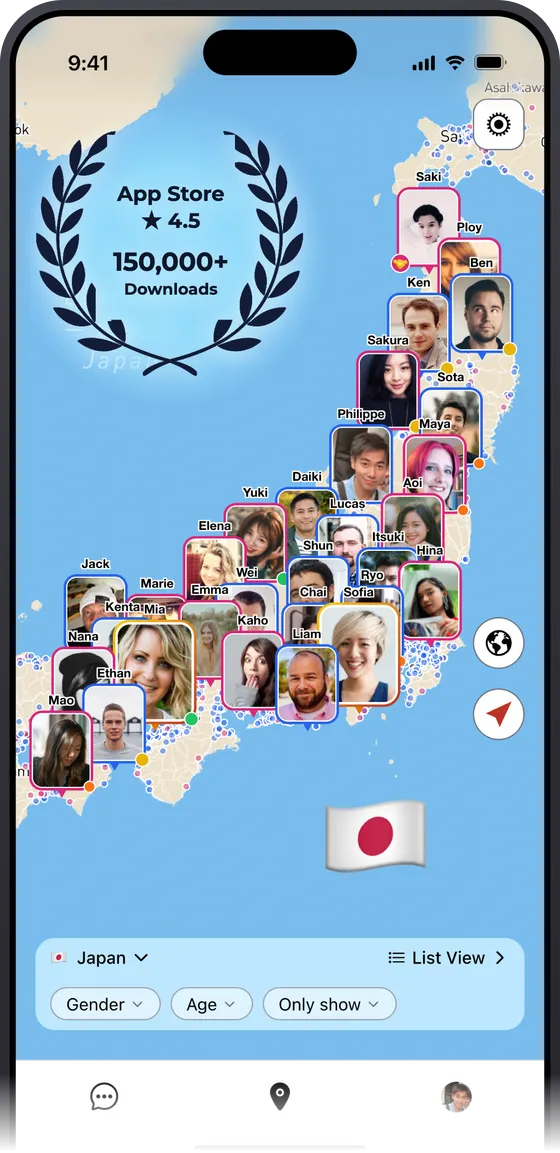
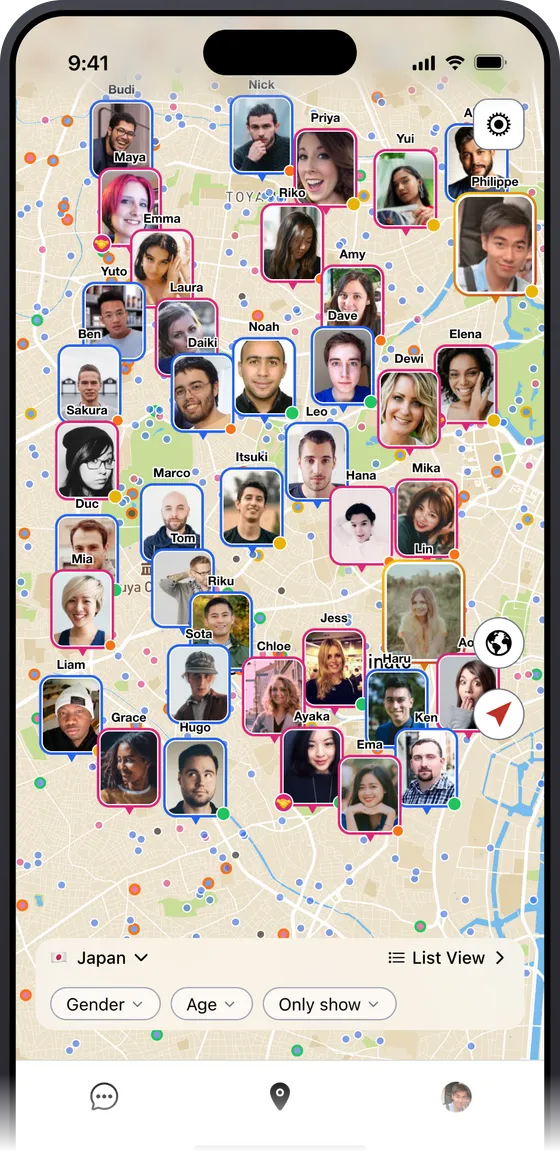
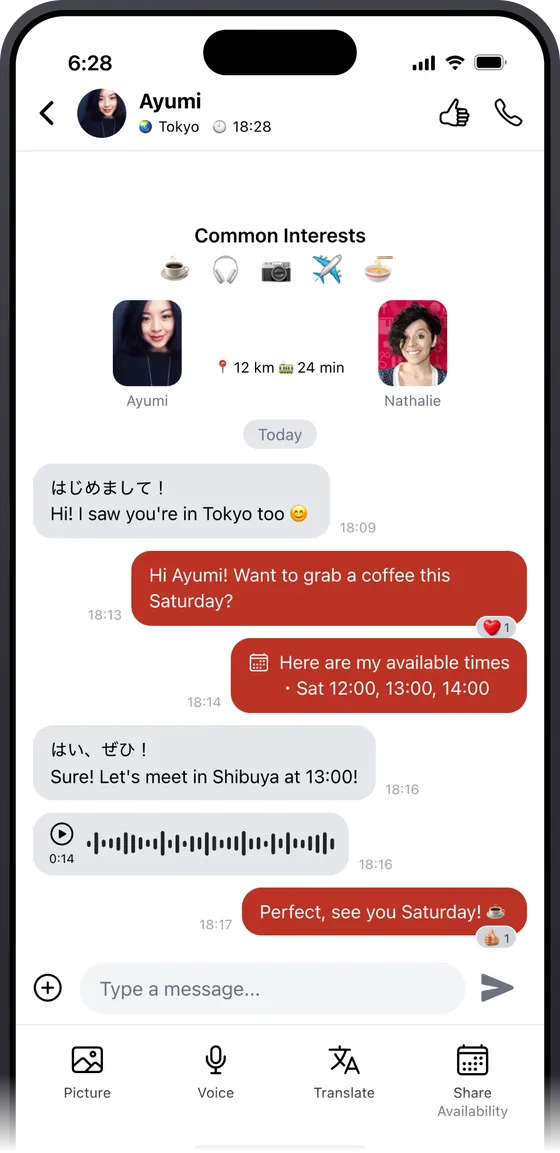


Looking for people to meet up with right now, near where you live? SewaYou is a map-based friendship app where you can find people nearby in Berlin or anywhere in the world. See who's around your Kiez, swap a few messages, and grab a coffee or a beer without the usual dating-app weirdness.
Most foreigners in Berlin report that it takes between 8 months and 2 years to form a solid friend group. The first few months are usually the hardest, with a lot of surface-level interactions that don't turn into lasting friendships. Sticking to the same neighborhoods, joining a regular activity, and being patient with the city's slower social pace are the biggest factors that shorten this timeline.
No, you can absolutely build a social life in Berlin with only English, especially in neighborhoods like Neukölln, Kreuzberg, and Friedrichshain. That said, learning even conversational German opens up a much wider pool of people, including long-term locals who tend to be more rooted in the city. If you're planning to stay more than a year, investing in a VHS course pays off both socially and practically.
Neukölln remains the top choice for newer internationals and the creative crowd, while Friedrichshain is great for nightlife-driven social life. Kreuzberg suits people looking for a mix of established locals and long-term expats. Wedding and Moabit have become popular for those wanting a more local, less touristy scene, and Prenzlauer Berg is best for daytime and family-oriented social circles.
Both work, but the most effective approach in 2026 is a combination. Apps are great for finding people in your specific Kiez or with shared interests, which solves the logistics problem of Berlin being huge. In-person activities like Vereine, language exchanges, and having a Stammkneipe are where those app connections turn into real friendships. The key is treating apps as an introduction tool, not a replacement for showing up consistently in real life.


