

Moving to London and realising you don't actually know anyone is a very specific kind of lonely. The city has nine million people, hundreds of languages spoken on any given bus, and somehow you can still go a full week without having a real conversation with anyone who isn't a barista asking if you want oat or whole.
If that sounds familiar, you're not broken and you're not doing anything wrong. London is genuinely hard to crack socially, even for Brits who move here from elsewhere in the UK. The good news is that once you understand how the city actually works, making friends becomes a lot more straightforward. This guide breaks down how to make friends in London as a foreigner in 2026, with specific neighborhoods, venues, and the kinds of low-stakes activities that actually lead to real connection.
Before we get into the tactics, it helps to understand why so many foreigners struggle here. London isn't unfriendly, exactly. It's just structured in a way that works against casual socialising.

People live far apart. A "local friend" might take an hour on the Tube each way to see you, and after a few months that friction adds up. Londoners book their calendars three or four weeks ahead, so spontaneous "want to grab a drink tonight" messages often get polite rejections that have nothing to do with you personally.
The weather also plays a bigger role than people admit. From November to March the default is "everyone goes home after work and doesn't emerge until the weekend." Winter isolation hits foreigners particularly hard because you don't have the childhood friends or family nearby to carry you through the dark months.
There's also the pub problem. British social life revolves around pubs, which is brilliant if you drink and can be alienating if you don't, or if you find shouting over a Sunday roast in a crowded Young's pub exhausting rather than fun. If that's you, don't worry, this city has plenty of alternatives once you know where to look.
Where you live in London has a huge impact on how easy it is to make friends. The city is really a collection of villages, and each one has its own rhythm.
Hackney, Dalston, and Stoke Newington are full of creative industry people in their late twenties and thirties. Lots of freelancers, lots of people working from cafes, lots of community events. Easy to meet people at spots like Pamela in Dalston or the London Fields lido in summer.
Peckham and Brixton skew a bit younger and more international. The rooftop at Frank's Cafe, the evening markets at Peckham Levels, and the Brixton Village food courts are all strong for striking up conversations naturally.
Clapham and Battersea are the classic young professional zones. If you work in finance or consulting and want to meet people who understand "I have drinks on Thursday and a Pilates class on Saturday," this is your patch. Northcote Road on a Saturday is basically a neighborhood networking event disguised as brunch.
Shoreditch and Bethnal Green lean tech and startup. Plenty of run clubs, coworking spots like Second Home and Ace Hotel lobby, and late-opening coffee places where people actually talk to each other.
Kentish Town, Tufnell Park, and Archway have a softer, slightly older vibe. More walking groups, more book clubs, more people who'll invite you round for dinner rather than meeting you at a bar.
If you can, visit a neighborhood on a weekend before you sign a lease. The vibe at 11am on a Saturday tells you almost everything about who lives there and what they do socially.
London has gone completely mad for run clubs in the last two years, and for good reason. They're free, they're regular, they end at a coffee shop or a pub, and the whole format is built around talking to strangers.

A few that are genuinely welcoming to beginners:
If running isn't your thing, the same format exists for swimming (Serpentine Swimming Club, Hampstead Heath Ponds in summer), cycling (Rapha Cycle Club at Brewer Street), and walking (the London Ramblers have sub-groups for every age and fitness level).
The trick is to go at least four or five times before deciding if it's for you. The first two times will feel awkward and you won't remember anyone's name. By the fifth session you'll have two or three people who recognise you and actually want to chat afterwards.
One of the fastest ways to build real friendships in London is to pick up a hobby that involves showing up to the same place with the same people on a regular schedule. Classes are better than one-off events because repetition is how strangers become friends.
Pottery studios have exploded in popularity. Turning Earth in Hoxton and Leyton, The Kiln Rooms in Peckham, and East London Printmakers all have waiting lists but are worth getting on. You're stuck next to the same people for eight weeks, hands covered in clay, with nothing to do but chat.
Improv classes at Hoopla in Kings Cross or The Free Association in Dalston are genuinely one of the fastest ways to make close friends in this city. The format forces vulnerability, which short-circuits the usual British politeness barrier in a way that's almost unfair.
Climbing gyms like The Castle in Stoke Newington, VauxWall, and Yonder in Walthamstow all have very active community vibes. The nature of belaying means you can't really do it alone, so people partner up organically.
Language exchange meetups, cooking classes at Le Cordon Bleu or smaller setups like Cook at Borough, and community choirs like Some Voices all work on the same principle: same people, same time, low pressure to perform socially.
This one sounds obvious but it's the biggest difference between people who build a social life in London and people who don't. The city has an infinite number of events happening every night. You will never feel "ready" to go to any of them.

Go anyway. Go alone. Go when you're tired. Go when the weather is bad.
Platforms worth scrolling:
The rule of thumb is if you're thinking about an event on Wednesday and you haven't committed by Friday, you won't go. Buy the ticket. Put it in your calendar. Show up.
London is too big to make friends with "Londoners" as a category. You need to narrow down to the specific type of person you actually want to spend time with.
Are you into film? There's a serious community around Prince Charles Cinema in Leicester Square, Close-Up Film Centre in Shoreditch, and the Barbican. Season passes and regular attendance pay off.
Big reader? London Review Bookshop, Daunt Books branches, and Libreria in Shoreditch all run regular events. The London Library in St James's is a paid membership but many people say it's the best social investment they've made, full of writers, academics, and interesting weirdos who use the reading rooms as a second home.
Design and architecture? The Design Museum membership, Open House London weekend in September, and events at RIBA on Portland Place will put you in rooms with people who care about the same things you do.
Food obsessive? Borough Market on a Saturday morning, supper clubs advertised on Instagram, and places like Kricket or BRAT where solo diners at the counter often end up talking.
The more specific the subculture, the smaller the group, the faster you'll become a regular, and the faster strangers become acquaintances and eventually friends.
If you're moving to London for work, the period just after you start is gold and most people waste it. New starters are assumed to not know anyone, so colleagues will invite you to lunch, after-work drinks, and random activities in a way they absolutely will not six months in.
Say yes to all of it, even when you're tired. Ask people what they do on weekends. Get added to the WhatsApp group. If there's a company sports team, book club, or five-a-side football fixture, join it in week two before you have an excuse.
This is also the best moment to ask for introductions. "I just moved here and I'm trying to meet more people, do you have any friends you think I'd get on with?" is a completely normal thing to say to a new colleague, and most people are happy to help. The friends-of-friends route is how the vast majority of London friendships actually form.
You will experience this: you meet someone great, you swap numbers, you make tentative plans, and then the plans fall through and you never actually see them again. This is extremely normal in London and is not a reflection of you.
The fix is to set the next thing up immediately. Don't leave it open-ended. "Want to check out that new Vietnamese place in Dalston next Thursday at 7?" works infinitely better than "we should hang out soon." Specificity beats enthusiasm every time.
It also helps to have a default activity you invite new people to. A regular run club, a weekly pub quiz, a Sunday afternoon park walk, anything where your answer to "what are you up to this weekend" is a concrete thing they can tag along to. Inviting people into something that's already happening has a much higher conversion rate than trying to coordinate calendars from scratch.
London winters will test you. The sun sets before five, it rains for weeks at a time, and everyone's natural instinct is to stay home. If you arrived in summer and found it easy, you might be blindsided by how different November feels.
Plan for it. Book things in advance for Thursday, Friday, and Saturday nights in December and January, even if they're small. A ceramics class, a gig, a dinner with one person. Anything on the calendar is better than an empty week.
Embrace indoor social spaces. Kiln in Tufnell Park, Lyle's in Shoreditch, and the Standard Library bar in Kings Cross all feel warm and alive in winter. Saunas have had a moment recently, with places like Community Sauna Baths in Hackney Wick running a very social, talky atmosphere.
And give yourself permission to ask for help. If you're struggling, tell a friend. Londoners are generally much kinder than their reputation suggests, especially in winter.
One of the genuinely frustrating things about London is that you might live on the same street as someone you'd really get on with and never know it. The Tube makes the city feel connected, but it also means your social life tends to scatter across zones rather than concentrating near home.
Make Japanese Friends On a Live World Map
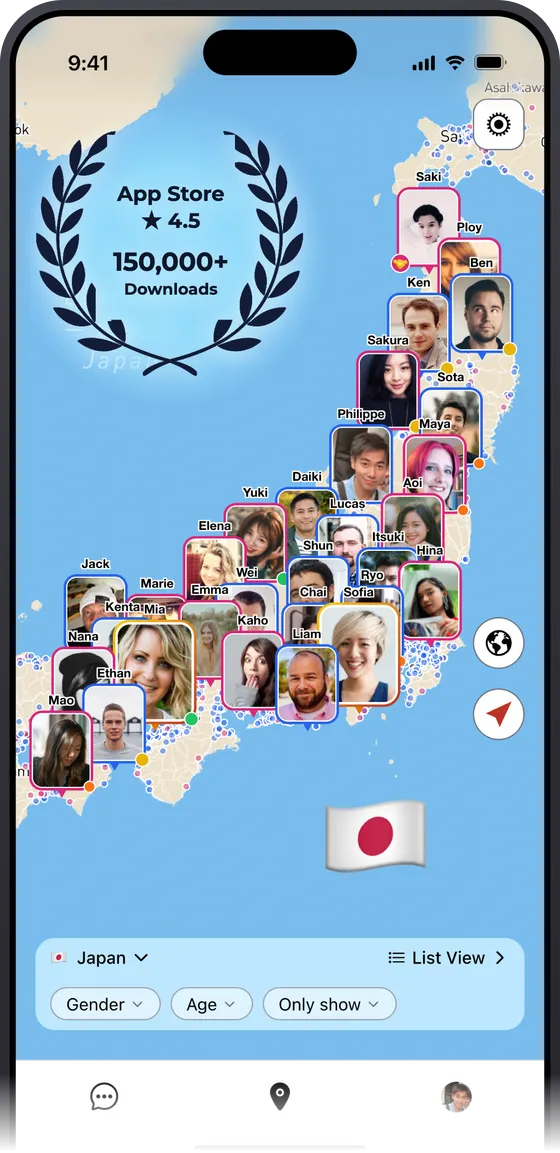
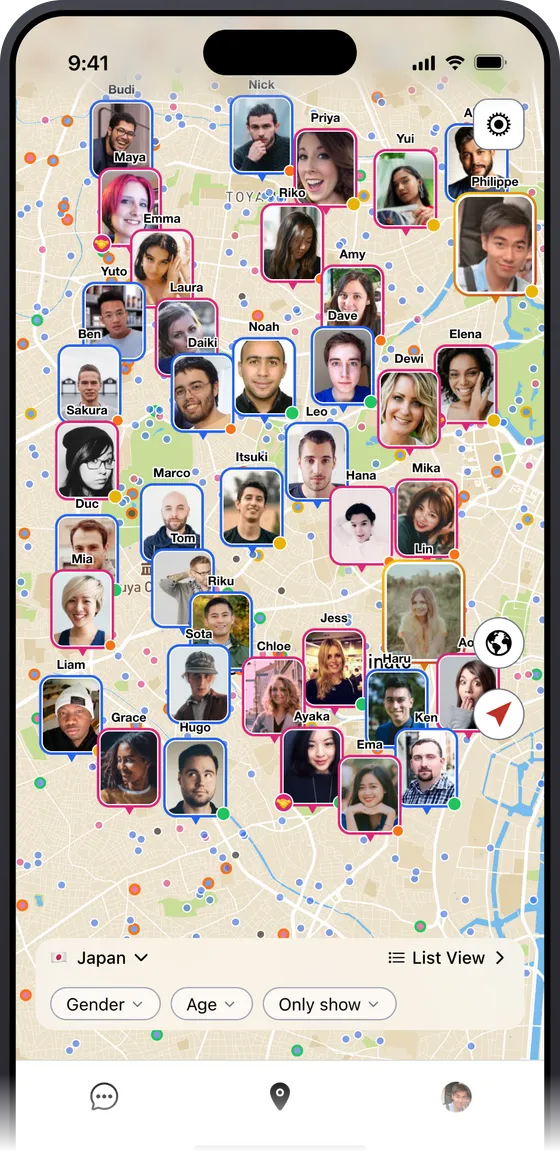
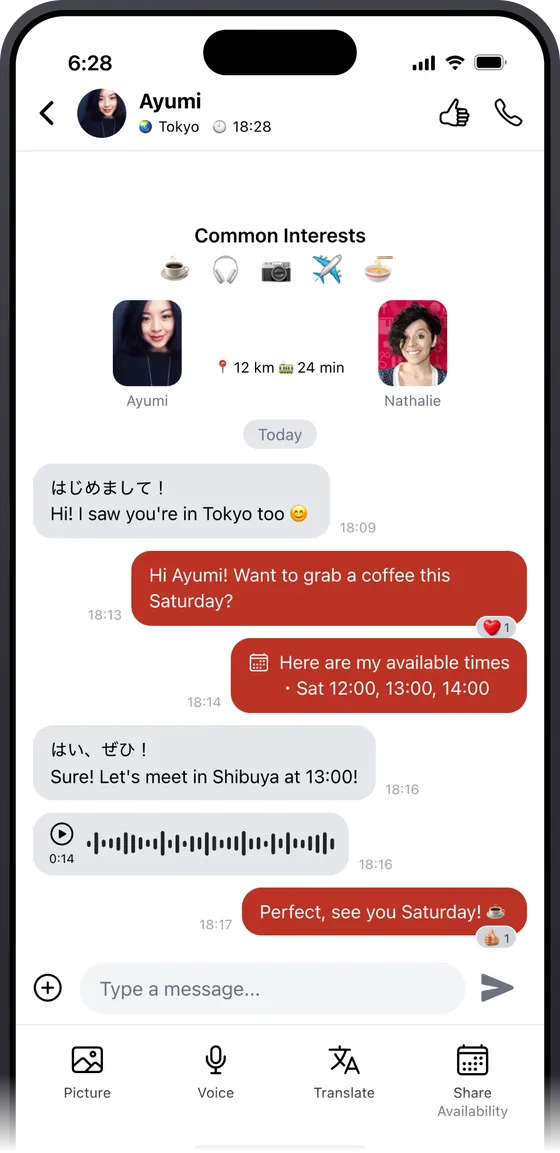


This is exactly where SewaYou comes in. SewaYou is a map-based friendship app where you can find people nearby in London or anywhere in the world, which means you can actually see who's open to meeting up within walking distance of your flat. No more commuting across the city just to grab a coffee with someone new. If you're in Hackney, you'll find people in Hackney. If you're working from a cafe in Peckham, you might find someone to get lunch with two streets away.
The app is built for making real, in-person friends rather than endless chat, which is exactly what most foreigners in London actually need.
It's harder than in smaller cities, but not because Londoners are cold. The main challenges are distance between friends, booked calendars, and the winter weather. Once you commit to a neighborhood, join one or two regular activities, and push through the first two months, it gets significantly easier. Most foreigners report that year two in London is vastly more social than year one.
There isn't one single "expat zone" because London is international everywhere. That said, areas like Angel, Shoreditch, Clapham, Hackney, and Bermondsey tend to have high concentrations of people in their twenties and thirties from all over the world. Neighborhoods like Notting Hill, South Kensington, and Marylebone skew slightly older and more settled. For community-specific spots, look at cultural institutions like the Institut Francais, the Goethe Institut, or Japan House on Kensington High Street.
Map-based friendship apps like SewaYou are the most useful for finding people physically nearby, which matters a lot in a city this spread out. Beyond apps, Meetup still works for niche hobbies, Eventbrite is great for one-off events, and Instagram is increasingly where local communities organise themselves. The best strategy is usually to combine one app for discovery with real-world regular activities so your online connections have somewhere to become offline ones.
Most foreigners say it takes between three and twelve months to build a proper friend group, depending on how actively you put yourself out there. Superficial acquaintances come fast. The leap from "people I say hi to" to "people I'd call on a Sunday" usually happens between months four and eight, and almost always requires you to have been showing up to the same activity or friend group repeatedly rather than constantly meeting new people.
Making friends in London as a foreigner in 2026 is absolutely possible. It just takes a slightly different playbook than you might be used to. Pick your neighborhood carefully, lean on hobbies and regular activities, say yes more often than you want to, and use tools that help you find people actually near you rather than scattered across the whole city. Give it time, and this massive, overwhelming, brilliant city will start to feel like home.


