

Kyoto has a reputation. Beautiful temples, incredible food, ancient streets, and... a quiet local culture that can feel impossible to break into. If you've been walking around Gion at sunset wondering why you've been here three months and still don't have anyone to grab coffee with, you're not alone. Kyoto is one of the trickiest cities in Japan for foreigners to build a social circle in, and that's not your fault. It's just how the city works.
The good news is that once you crack the code, the friendships you build here tend to stick. Kyoto attracts a specific kind of person, whether Japanese or foreign, and the connections tend to be deeper and longer-lasting than the churn you'd get in Tokyo. Here's how to actually make it happen in 2026.
Let's get this out of the way first. Kyoto is not Tokyo. The social fabric is tighter, more traditional, and more insular. Locals often have friend groups that go back to elementary school. There's a real thing called "iken-san" (よそさん), which roughly translates to "outsider," and it can apply to people from Tokyo just as much as people from abroad. This isn't hostility. It's just that Kyoto has its own rhythm, and breaking into it takes time.

On top of that, a huge portion of the foreign population in Kyoto is transient. Tourists come and go. Exchange students stay for six months and leave. Even longer-term expats often rotate out after a year or two. This means even when you do find foreigners to hang out with, the group keeps shifting under your feet.
The third challenge is geography. Unlike Tokyo, Kyoto doesn't have one dominant expat neighborhood. The foreigner community is scattered across Kawaramachi, Demachiyanagi, Karasuma, and pockets of Fushimi and Uji. You can spend weeks not knowing the international scene exists because it isn't concentrated anywhere obvious.
If you want to meet people, you need to go where they already are. Kyoto has a surprising number of spots where language exchange and international mingling happen naturally. A few to know:
Demachiyanagi and Hyakumanben (around Kyoto University). This is probably the densest concentration of international-minded people in the city. Kyoto University has a huge exchange student population, and the cafes and izakayas around the Hyakumanben intersection are full of locals who are used to foreigners and actually want to practice English or other languages. Hole-in-the-wall spots like Cafe Marble Bukkoji, Knot Cafe in Kamigyo, and the cluster of bars along Imadegawa are solid bets.
Kawaramachi and Kiyamachi. The main nightlife strip. Places like Rub-a-Dub on Kiyamachi are foreigner-friendly bars that have been running language exchange-style vibes for years. The area around Sanjo is also worth exploring, especially the small jazz bars and standing bars where conversation happens naturally.
Karasuma and Shijo. More upscale, more professional. If you're working in Kyoto and want to meet other working adults, the cafes and wine bars here are where the 25 to 40 crowd tends to spend their evenings. Weekdays after work are prime time.
Fushimi. The sake district. If you're into drinking culture, the breweries and tasting rooms in Fushimi host events where foreigners and locals mingle over sake. It's a more specific scene but the people are passionate and friendly.
Here's where the real advice starts. I've seen people burn six months trying to force friendships and get nowhere. The strategies below work because they match how Kyoto actually operates.

This is the single biggest lever you have. Kyoto is a city of regulars. People build trust through repetition, not intensity. A one-time meetup in Kawaramachi is fun but it almost never turns into a real friendship. A weekly activity where you see the same faces for three months will.
Some ideas that work well in Kyoto specifically:
Kyoto has a culture of neighborhood regulars that's hard to explain until you experience it. If you walk into the same small kissaten or izakaya once a week for a month, something shifts. The owner remembers your order. Other regulars start nodding to you. Eventually someone invites you to sit at their table.
Pick a small place, not a chain. Somewhere with under 20 seats. Cafe Bibliotic Hello on Nijo, a standing bar in Pontocho, a kissaten in Nishijin. Go at the same time every week. Don't be on your phone. Say hello to the staff. This sounds simple because it is simple, and it works far better than any app ever will for building local connections.
The tricky part is that this takes time. You might need to visit six or seven times before anyone really talks to you. That's normal. Kyoto locals are warm but they move slowly.
This sounds weird but hear me out. Many Japanese people in Kyoto are genuinely curious about foreigners but too shy to initiate. If you signal openness clearly, a lot of people will meet you halfway.
Practical ways to do this:
If you're working remotely or freelancing, coworking spaces in Kyoto are a gold mine. The scene is smaller than Tokyo but that's actually the advantage. Everyone knows everyone. Places like Oinai Karasuma, Impact Hub Kyoto, and Kyoto Startup Summer School events attract a mix of Japanese entrepreneurs, foreign founders, and creatives. The people there are specifically looking for collaboration and conversation, unlike a cafe where everyone has headphones in.
Look for the ones that host regular community events or lunches. That's where the actual friendships form. A hot desk that also comes with a Friday pizza night will do more for your social life than a fancy private office.
This is where 2026 has genuinely improved things. The old model of meeting people through giant group chat servers or generic meetup sites is dying because it was always bad at filtering for proximity and genuine fit. If you live in Kyoto, you want to meet people who live in Kyoto, ideally in your own neighborhood.
Map-based apps have changed this. Instead of scrolling through endless event listings, you can see exactly who's around you, what they're into, and whether you'd actually want to grab coffee with them. This matters a lot in Kyoto specifically because the city is smaller and more walkable than Tokyo or Osaka. If someone lives two stations away from you, you can realistically meet up on a weeknight without it being a whole production.
A few things that catch new arrivals off guard:
Winter is isolating. Kyoto winters are cold, damp, and long. From December through February, a lot of locals hibernate. If you arrive in late autumn, don't be surprised if your social momentum dies in January. Push through by committing to indoor activities early.
The tourist vs resident divide. Kyoto gets an enormous amount of tourism. If you're new, you can accidentally signal "tourist" in ways that make locals subconsciously keep distance. Dress slightly more conservatively than you would in Tokyo or Osaka, don't take photos in residential neighborhoods, and learn basic restaurant etiquette. You'll be read as a resident much faster.
The foreigner bubble is real and it's a trap. It's easy to end up in a Facebook group full of other foreigners who only hang out with other foreigners. This is fine for the first month. After that, it actively prevents you from building roots in the city. Push yourself to spend at least half your social time in mixed or mostly Japanese environments.
Nightlife ends early. Compared to Tokyo or Osaka, Kyoto shuts down early. Most good bars close by midnight. Many restaurants stop serving at 9pm. Plan your social life around this. Early dinners, afternoon coffees, and weekend day activities work much better than late nights.
Be patient with yourself. A realistic timeline looks something like this:

If you're expecting to have a full social life in six weeks, you'll be frustrated. If you're willing to invest six months, Kyoto rewards you with some of the most loyal friendships you'll ever make.
How do I meet Japanese people in Kyoto if I don't speak Japanese?
Start with activities that don't require language, like climbing, cycling, or cooking classes. Most Japanese people in Kyoto under 40 have some English and will meet you halfway if you show up consistently. Language exchange events at kokoka and around Kyoto University are specifically designed for this and draw locals who actively want to practice English. Learning even basic phrases in Kyoto-ben will take you further than polished Tokyo Japanese.
Is Kyoto a good place for solo foreigners to live long term?
Yes, but with the caveat that you need to be proactive about your social life. Kyoto is not a place where friends will just happen to you. If you're the type who thrives on structure, weekly rituals, and slow-built deep connections, it's arguably the best city in Japan. If you need constant stimulation and a huge rotating cast of people, Tokyo or Osaka will suit you better.
What's the best neighborhood to live in for meeting people?
The area between Demachiyanagi and Kawaramachi, especially around Imadegawa and Marutamachi, has the best balance of international scene, walkability, and cafe culture. Kitayama is also a solid choice if you want a quieter neighborhood with easy access to everything. Avoid living too far south (south of Kyoto Station) if social life is your priority, because you'll find yourself commuting into the action constantly.
How do I meet other foreigners who actually live in Kyoto long term?
Kokoka events, the Kyoto International Foundation, and weekly trivia nights at foreigner-friendly bars are your best traditional options. More recently, location-based apps have made it dramatically easier to filter for people who actually live in the city rather than tourists passing through. Look for people with Kyoto-specific interests listed in their profiles, like pottery, tea, or specific neighborhood mentions. Those are usually residents.
Kyoto is slower and harder than other Japanese cities, but the friendships you build here last. Pick weekly activities, become a regular somewhere small, embrace the local culture visibly, use coworking spaces if you work remotely, and use tools designed for finding people nearby rather than anonymous group events. Give it six months. The city rewards patience.
Make Japanese Friends On a Live World Map
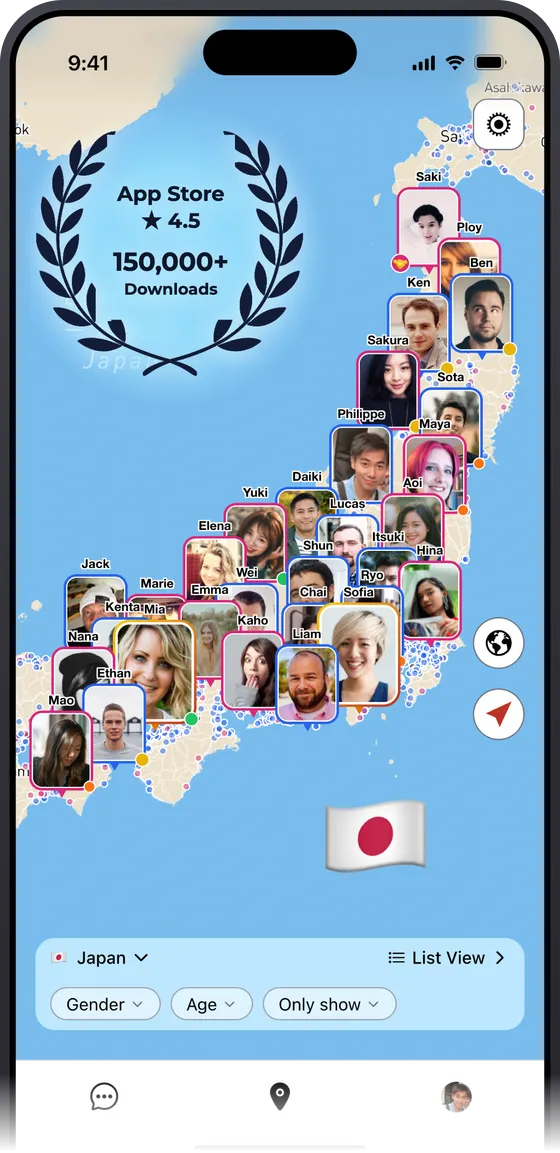
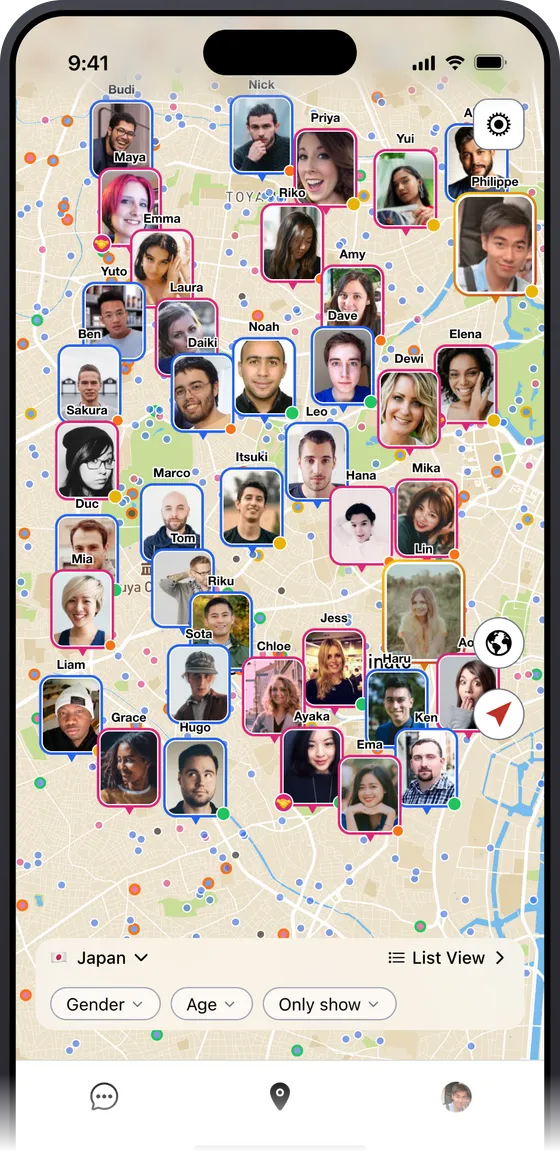
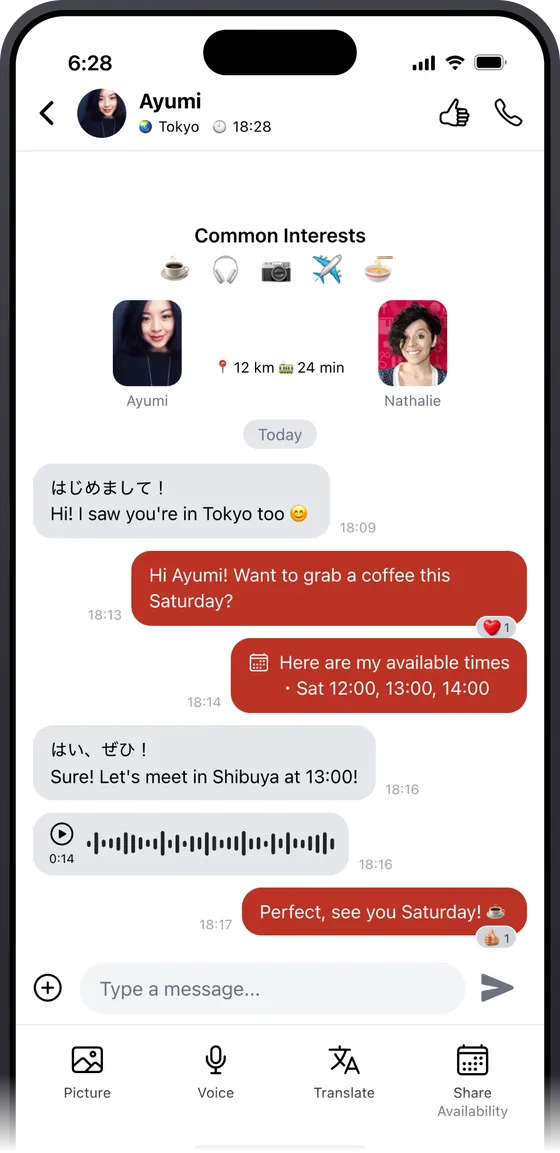


SewaYou is a map-based friendship app where you can find people nearby in Kyoto or anywhere in the world. Open the map, see who's around you in Gion, Demachiyanagi, or wherever you've set up home, and start building your circle the way Kyoto friendships are meant to form: slowly, locally, and for real.


