
Maybe you're a student in Makuhari, you work a shift job out at Narita Airport, or you picked an apartment in Funabashi because the rent made sense and Tokyo is one train away. Either way, you've probably noticed something odd. Chiba is full of people, plenty of them from abroad, and yet your weekends can feel strangely empty.
You're not imagining it. Chiba is a tricky place to build a social life, but not a hopeless one. This guide covers how to make friends in Chiba in 2026: why it's harder than it looks, which areas actually work for meeting people, the international associations and events worth your time, and a simple plan for your first month.
The first problem is the commute. A lot of people who live in Chiba spend their weekdays in Tokyo and come home only to sleep. That goes for Japanese locals and foreign residents alike. When everyone's social energy gets spent on the Sobu Line, there isn't much left for the neighborhood.
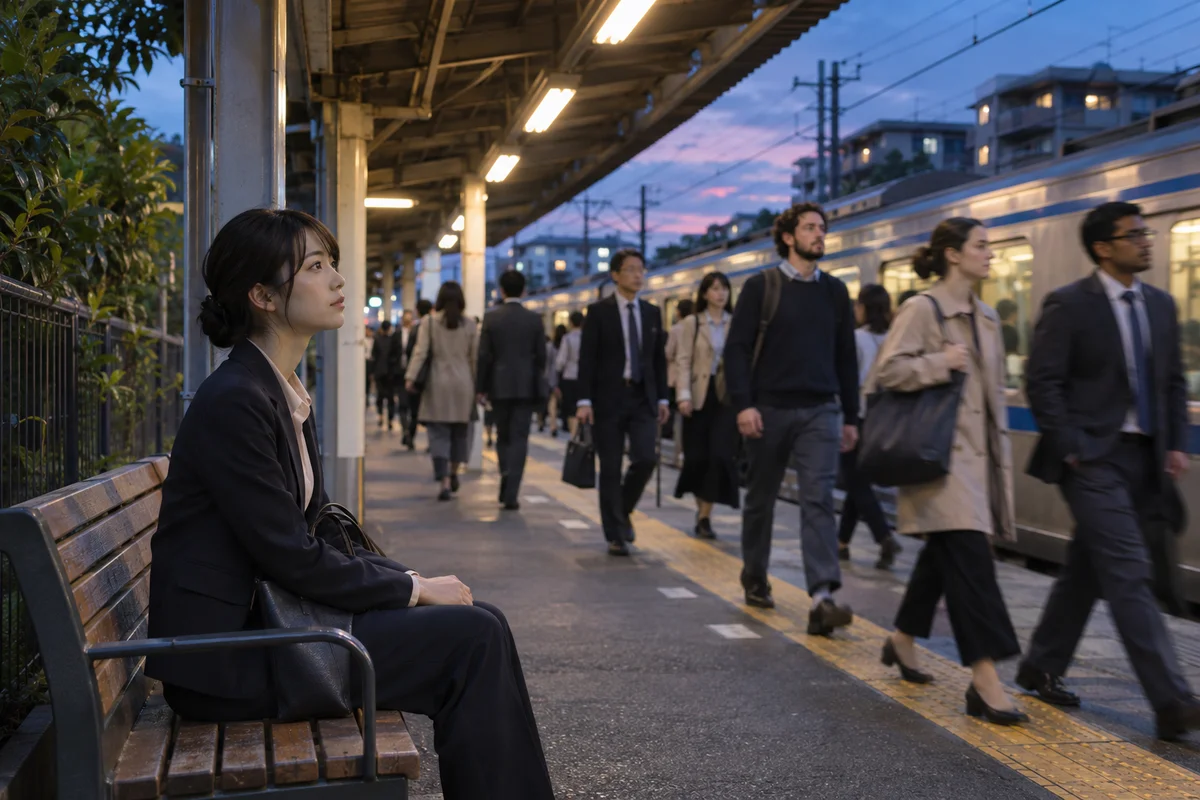
The second problem is size. Chiba Prefecture is big, and the places where internationals gather are scattered. Makuhari has universities and offices, the area around Chiba Station has the nightlife, Narita has the airport and the temple town, and Funabashi and Kashiwa are commuter suburbs. There's no single Roppongi-style hub where you can just show up and find the foreign crowd.
The third problem is that tourists and residents mix. Narita-san and the big events at Makuhari Messe pull in visitors from all over the world. Fun to chat with, sure, but hard to see again next week.
The upside? Once you stop trying to cover the whole prefecture, Chiba gets much easier. Build your social life around your own train line, and you'll find universities, international associations and pubs all within a short ride.
Each part of Chiba attracts a different crowd. The best area for you is almost always the one on your daily route, because that's the one you'll keep going back to.
The streets around Chiba Station are the biggest nightlife area in the prefecture. From the east exit through Fujimi, Sakaecho and over toward Chiba-Chuo, you'll find a dense cluster of izakaya and bars. Foreign residents who work in the city and international students living nearby come here to drink, so it's a natural place for evening plans.
The Chiba City International Association also has its office in Chiba-Chuo, which makes this a handy area for a daytime event followed by dinner nearby.
Makuhari probably has the most international feel in Chiba. Kanda University of International Studies is here, with lots of students who love languages and other cultures, and the area around Kaihin-Makuhari Station is lined with office towers and hotels. The Chiba International Center, run by the prefecture's international exchange foundation, is in the Makuhari Techno Garden building, a walk from the station's north exit.
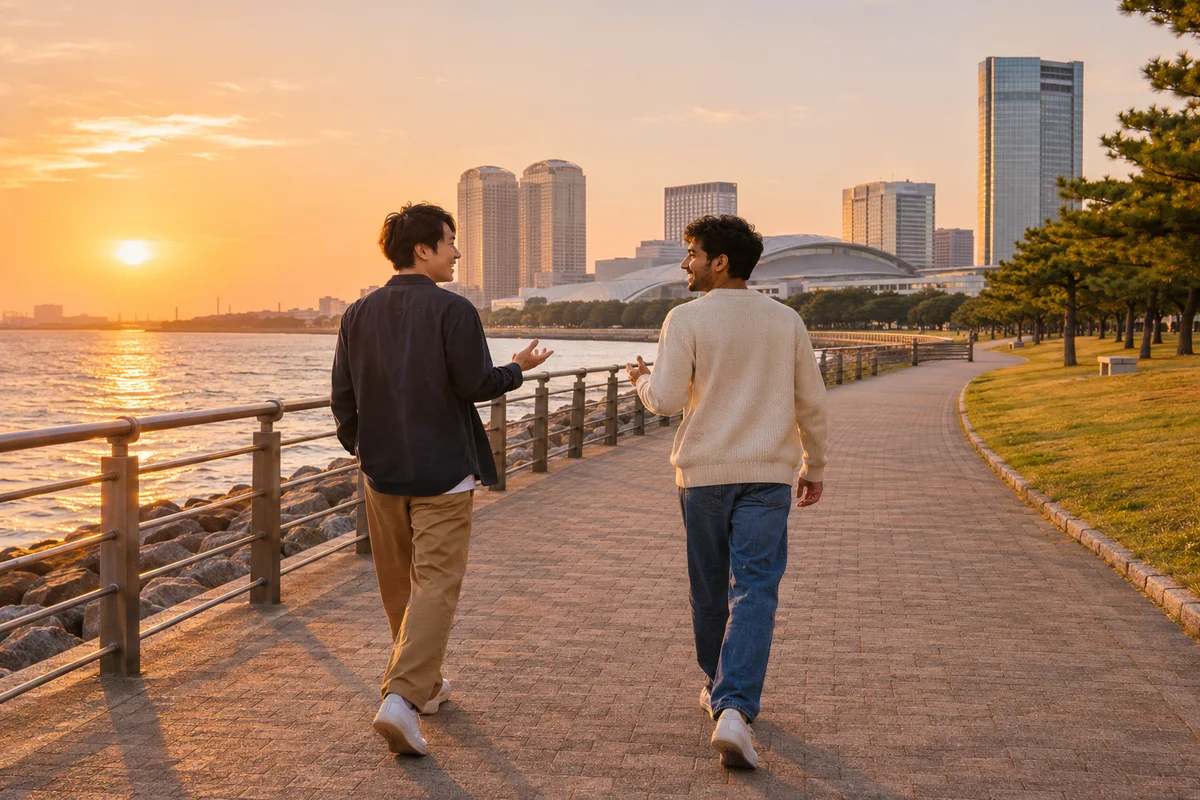
Then there's Makuhari Messe, the venue for huge events like Tokyo Game Show. One-off events rarely create friendships by themselves, but standing in line next to someone who loves the same games or bands is an easy way to start a conversation and swap contacts.
Nishi-Chiba is home to Chiba University's main Nishi-Chiba campus, which brings in international students and researchers. The station area has a relaxed student-town feel, with cafes and cheap set-meal restaurants.
Head a little further to Inage and you reach Inage Beach and Inage Seaside Park. It's not where you'll meet people, but it's a lovely place to take someone you've just started getting to know.
These are commuter towns, home to foreign families and to students at nearby Japanese language schools. Late-night bars aren't really the scene here. Community Japanese classes and international association gatherings are a much better bet.
Kashiwa also has the Kashiwanoha area to the north, with university campuses and research facilities that bring in researchers from overseas. The area around Kashiwa Station has plenty of restaurants, so it's worth finding one place you can drop into after work.
Narita is an airport town. People from abroad work at the airport, for airlines and in hotels, and the Omotesando approach to Naritasan Shinshoji Temple is busy with tourists. Narita also has its own international association that runs exchange activities between residents and foreign nationals.
Travelers come and go, but people who work around the airport often live in Narita or nearby towns. Many work shifts, so if your schedule is unusual too, weekday daytime meetups can be easier here than almost anywhere else.
If you want to meet people without a drink in your hand, start with the Chiba City International Association. Its office is in Chiba-Chuo, and it runs Japanese conversation exchanges, an exchange salon and a volunteer program. In autumn 2026 its site was announcing Japanese exchange sessions and a multicultural festival held in a local housing complex.

These sessions are built around conversation in Japanese, so any level is welcome, and the Japanese participants are there to talk with people from abroad. Go a few times, see the same faces, and small talk slowly turns into "want to get lunch after this?"
Chiba City holds the Chiba City International Fureai Festival at City Hall, designed to bring foreign and Japanese residents together. The February 2026 edition was canceled because of snow, but it was set to feature booths and stage shows from local international exchange groups, plus food from around the world.
Festivals lower the bar for talking to whoever's next to you. A good tactic: find a booth run by a group that interests you, ask what they do the rest of the year, and then go to one of their regular activities. That's how a one-day event becomes an ongoing connection.
University festivals are one of the few times outsiders can easily meet students, both international and Japanese. Kanda University of International Studies in Makuhari holds its Hamakaze Festival every October, and the 2026 edition ran on October 24 and 25 with cultural activities and food stalls from around the world.
Around Chiba University in Nishi-Chiba, keep an eye on events the university opens to the public. A festival is a single day, but if you ask about clubs and upcoming events while you're there, you'll have a reason to come back.
If you want deeper relationships than one-off events can give you, local Japanese classes are one of the most underrated options in Chiba. The Funabashi International Association runs Japanese classes for foreign residents at seven locations around the city, staffed by local volunteers. The Chiba City International Association and the Chiba International Center also run courses and training for Japanese-language volunteers.
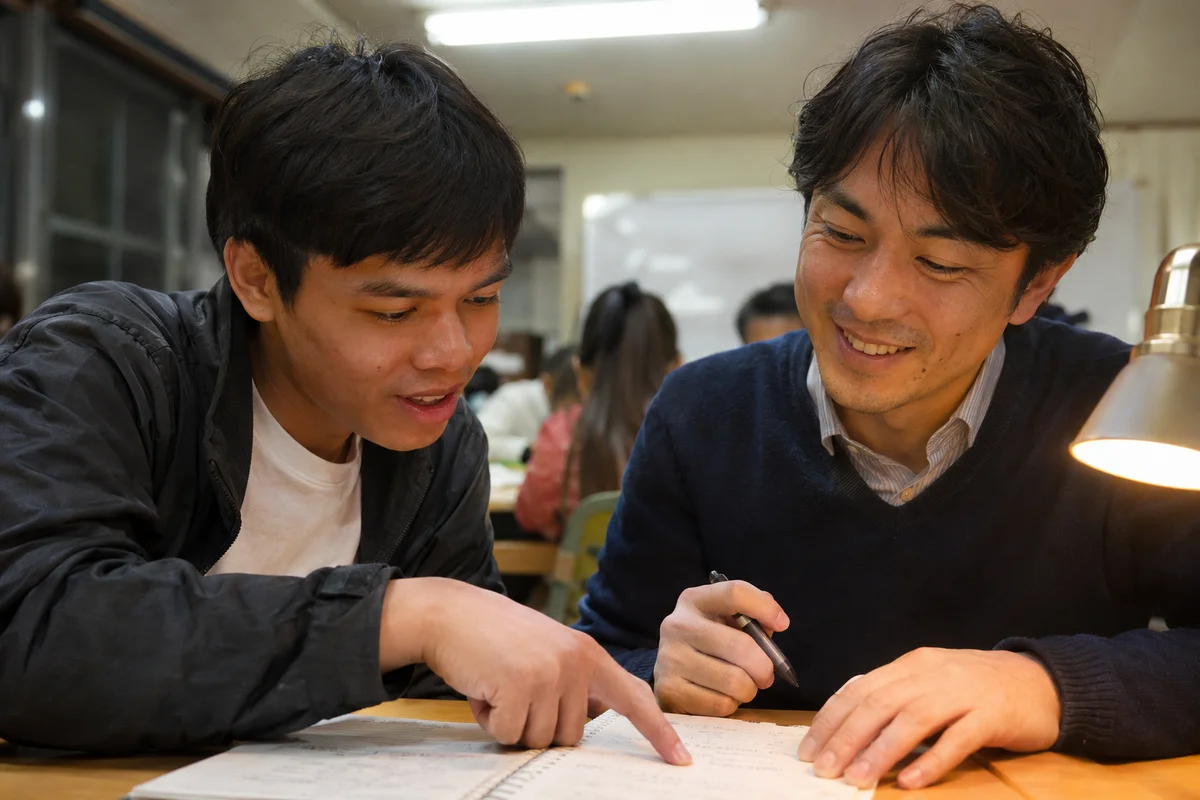
The magic is that you see the same people every week. After a few months, the line between "volunteer" and "learner" blurs and you're just people who know each other. If you live in a commuter town like Funabashi or Kashiwa, this may be the most realistic route of all.
Looking for a place where foreigners in Chiba hang out at night? HUB, the British-style pub chain, has branches at Perie Chiba Ekinaka inside Chiba Station, at Kaihin-Makuhari and at Tsudanuma. They show sports, so on a big football or rugby night you'll often find foreign customers cheering at the same screen as you.
To find other options, look on Google Maps for places with lots of English-language reviews. Then pick one and keep going back, rather than trying a new bar every week. Being a familiar face beats being new everywhere. Once the staff and other regulars know you, introductions start happening on their own.
When you've met someone and want to move from "acquaintance" to "friend," local outings work wonders. Snack your way down the Omotesando approach to Naritasan Shinshoji, or walk the seaside in Inage or Makuhari. It's an easy invite, and it gives both of you a reason to enjoy living here.
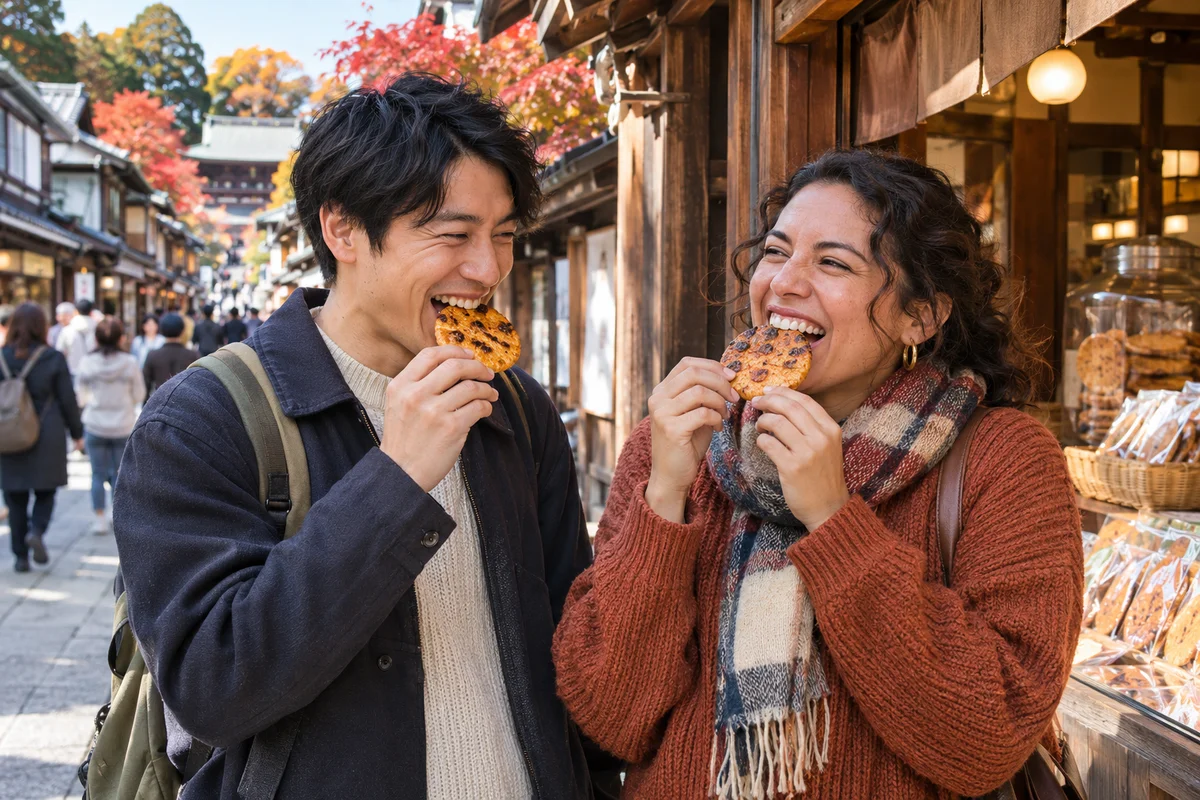
"Want to check out Naritasan next weekend?" is a small sentence, but it's often the one that turns a friendly chat into an actual friendship.
If event dates never fit your schedule, or you commute to Tokyo and weekdays are gone, a map-based app lets you find people near you on your own time. More on that below.
The Chiba expat community isn't concentrated in one spot. It's more like a small base at every station: Sakaecho and Fujimi around Chiba Station, Kaihin-Makuhari, Tsudanuma, Funabashi, Kashiwa. Find one place on your own commute and go early on weeknights. That's the version you'll actually keep doing.
For things to do in Chiba to meet people without drinking, you have four main routes: Chiba City International Association conversation exchanges and salons, community Japanese classes such as those run by the Funabashi International Association, university festivals like Hamakaze at Kanda University of International Studies, and Meetup or Facebook groups. Searching "Chiba" in English on those platforms can turn up gatherings announced in English.
Week 1: Check the website of the Chiba City International Association, or the international association in your own city, and pick one event you can realistically attend. Note a couple of places on your commute with lots of English reviews.
Week 2: Go to that event once. On the weekend, try one of the pubs or cafes on your list.
Week 3: Go back to the same event and the same place. Say hi to someone you talked to last time.
Week 4: Invite one person for a walk on Inage Beach or a snack crawl at Naritasan.
The most common mistake is letting Chiba's size pull you in every direction. You spend all your energy on trains and stay "the new person" everywhere. Pick one area and stick to it. That's the single best tip for making friends in Chiba.
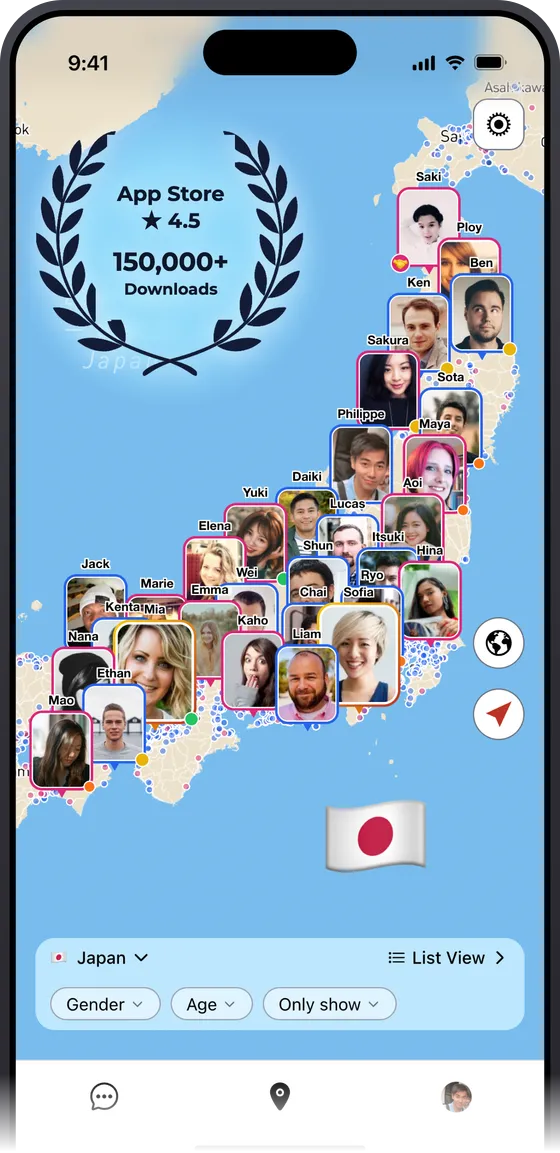
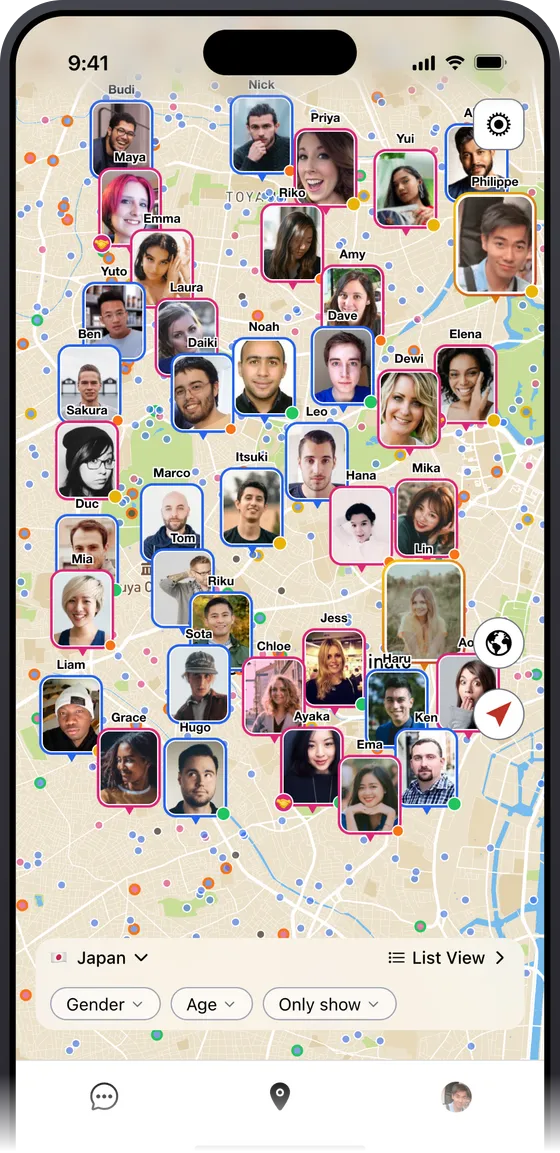
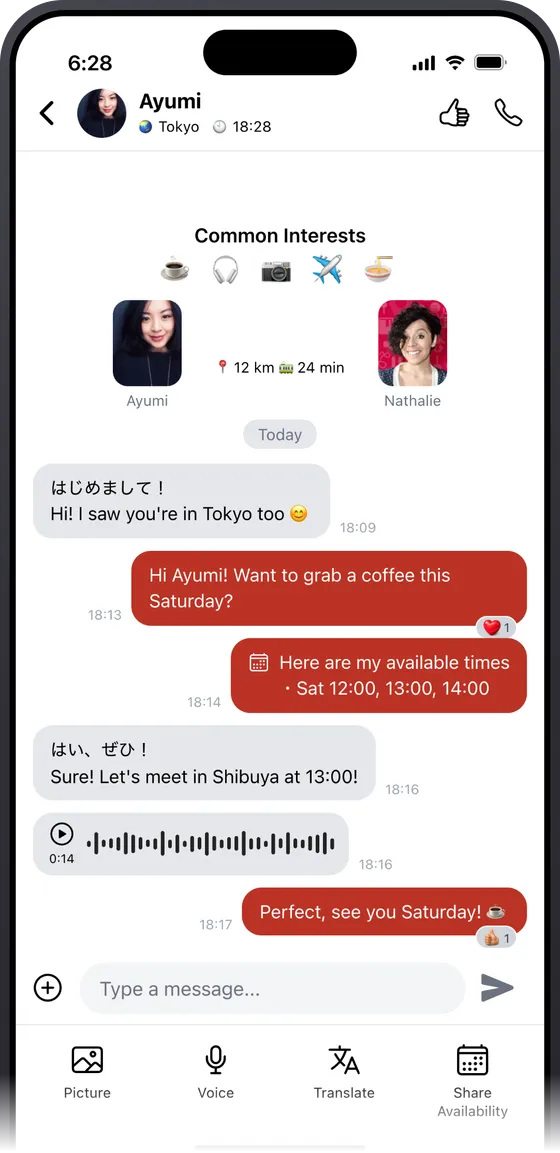
A map-based app like SewaYou fits Chiba well precisely because the prefecture is so spread out. Open the map, see foreigners and Japanese locals around your home or workplace who are also looking for friends, and suggest a coffee in Kaihin-Makuhari whenever it suits you.
SewaYou isn't limited to your neighborhood, either. You can find people anywhere in the world on the same map. Make friends online from home with people in a country you're curious about, no travel plans needed, or connect with someone before they fly into Narita so you already know each other when they land.

Make Japanese Friends On a Live World Map


If you're comparing options, our guide to the best apps for making international friends is a good place to start.
Where can I meet people in Chiba as a foreigner?
For daytime and without drinking, Chiba City International Association events and the international association in your own city are the most reliable. At night, try the areas around Chiba Station, Kaihin-Makuhari and Tsudanuma. University festivals, such as the Hamakaze Festival at Kanda University of International Studies in Makuhari, are also a good chance to meet students.
Is there an expat community in Chiba?
Yes, but it's spread across the prefecture rather than centered in one neighborhood. You'll find pockets around Chiba Station, Makuhari, Funabashi, Kashiwa and Narita. Meetup and Facebook groups that mention "Chiba" are a useful way to find gatherings announced in English.
How can I meet locals in Chiba?
Community Japanese classes and international association exchanges are where Japanese volunteers who want to meet foreign residents show up week after week. Being a regular at one local pub or restaurant on your commute also helps.
Which area of Chiba is best for making friends?
Wherever you already spend your time. Makuhari and Nishi-Chiba suit students and language lovers, Chiba Station is best for evenings out, Funabashi and Kashiwa work well through community Japanese classes, and Narita is good for meeting people who work around the airport.
Do I need to speak Japanese to make friends in Chiba?
Not to start. Pubs like HUB and English-language groups are easy entry points. But even basic Japanese opens up a lot more, and Japanese conversation exchanges and community classes welcome every level.
Chiba is a place where you pass people from abroad every day but rarely get the chance to become friends. Combine international association events, a university festival, one regular pub on your line and the occasional trip to the seaside or Naritasan, and a real circle of friends starts to form.
Looking for friends in Chiba?
SewaYou is a map-based friendship app for finding people nearby and anywhere in the world. Meet locals and internationals around Chiba for a coffee in Kaihin-Makuhari or a walk along Inage Beach, or make friends online from home with people in another country, no trip required. Download SewaYou and start building your Chiba circle today.
Looking at another city? See our guide to making friends by city.