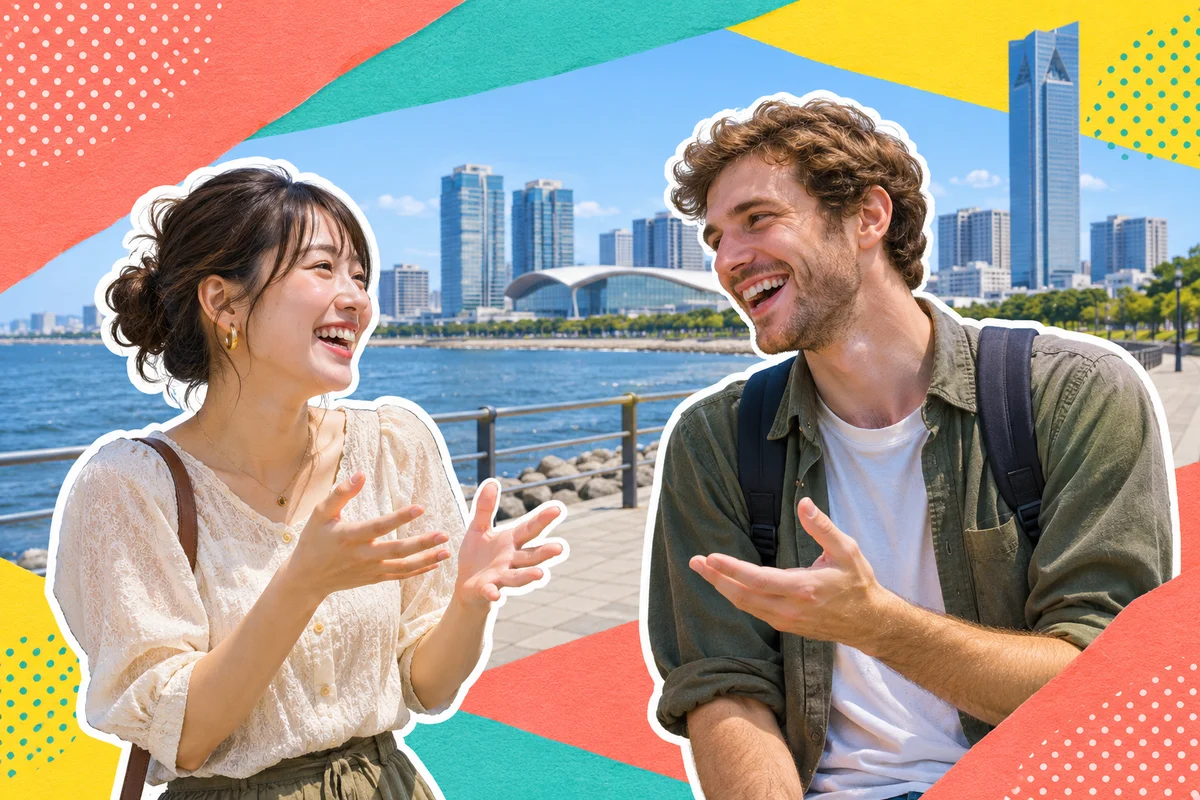
Hakodate is one of those places that looks made for meeting people. Old port, Western-style churches on the hills, a night view people fly across the world to see, seafood everywhere. Then you actually move here, as an English teacher, a student or someone staying a few months, and you notice something odd. You see foreigners all the time. You just never see the same ones twice.
That's the Hakodate problem in a sentence. This guide is about getting past it: where locals and internationals actually overlap, which organizations are worth knowing, and how to turn a friendly chat into someone you text on a Saturday. Everything here is about how to make friends in Hakodate in 2026, whether you live here already or just arrived.
Hakodate was one of the first Japanese ports opened to foreign trade, and it still wears that history openly. But history doesn't give you a social life. A few things make this city its own case.
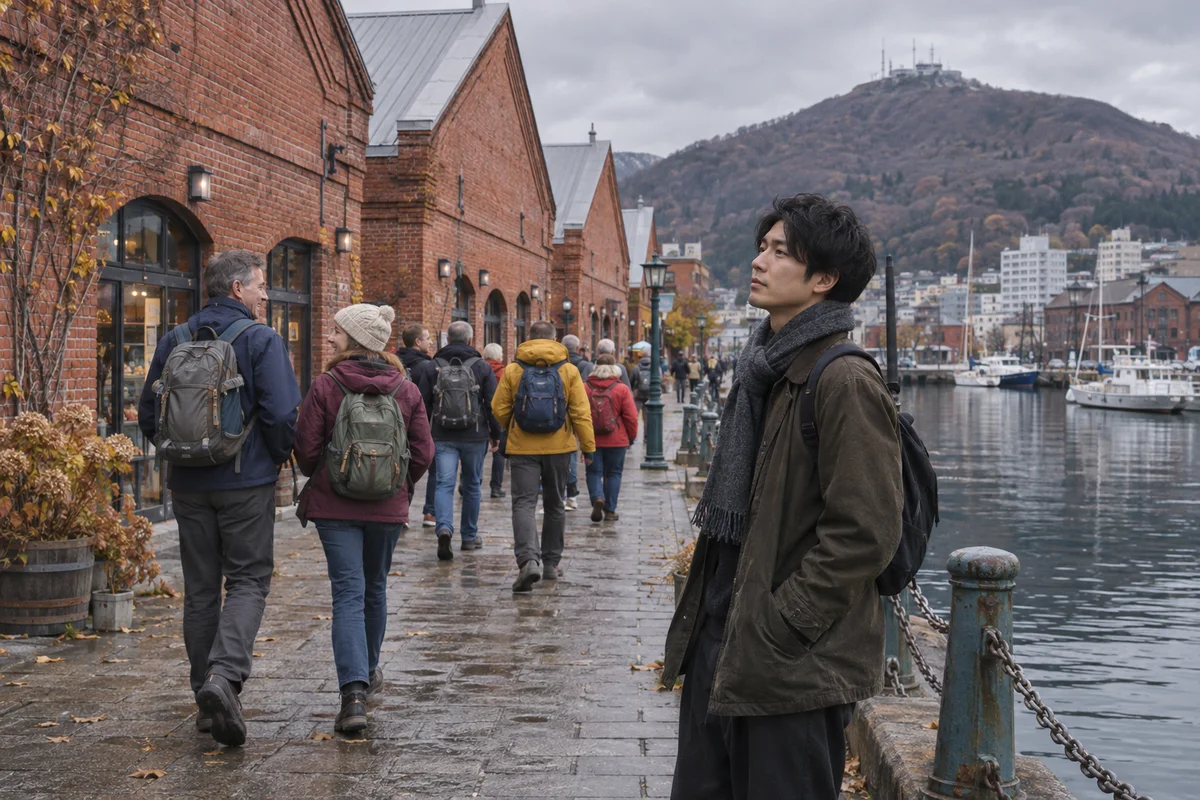
Most foreigners you see are tourists. They eat a seafood bowl at the morning market, ride up Mount Hakodate for the night view, and leave for Sapporo or Aomori the next day. You can have a great conversation with them, and it ends there.
The resident international community is small. There are university students and researchers, English teachers, and people working at local companies, but it isn't Tokyo or Osaka, where some language exchange or expat night is happening every evening. You won't stumble into a scene. You have to find the people.
Information lives offline. A lot of Hakodate's international get-togethers spread through organization websites, notice boards and word of mouth. Searching in English often turns up very little.
The upside is real, though. In a city this size, you keep running into the same faces at the same cafes, bars and events. In a small city, one connection spreads fast. Make one good friend and you're suddenly meeting their friends, and their friends' friends.
Four areas matter most if you want to meet people in Hakodate. They're all linked by the streetcar, so getting between them is easy even in winter.
Motomachi is the most Western-feeling part of town. The Hakodate Orthodox Church, the Catholic Motomachi Church and St. John's Church sit along the slopes, and the views from Hachiman-zaka and Daisan-zaka down to the harbor are some of the most photographed in Hokkaido.
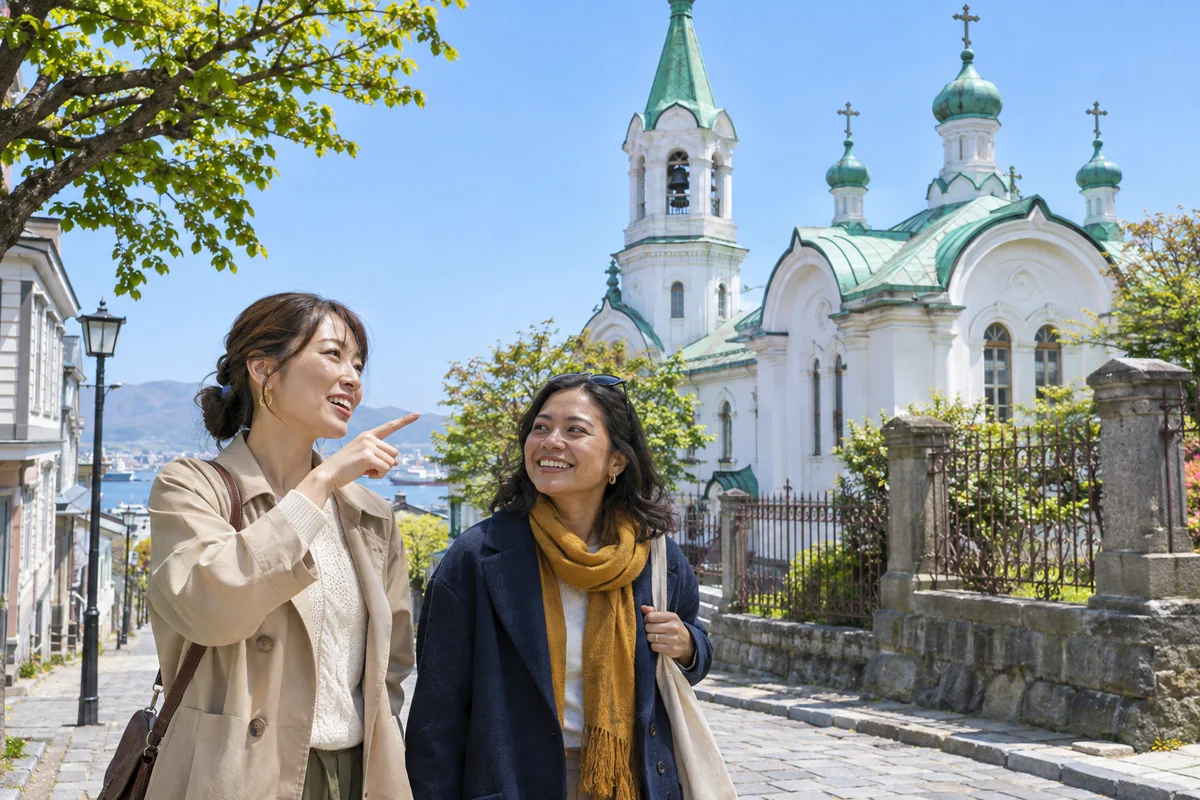
It's also where the Hokkaido International Foundation (HIF) is based. HIF has run homestays and Japanese language and culture programs for international students in Hakodate for decades, and it organizes things like host family recruitment and workshops where locals learn to guide cruise visitors. If you want to plug into the city's international side, this is the first name to know.
The area around the Kanemori Red Brick Warehouses is probably where you'll see the most foreign visitors in Hakodate. International cruise ships call at the port, and on days when a ship is docked at Wakamatsu Pier, the waterfront gets busy fast.
Treat the Bay Area as a warm-up rather than a place to find your people. Help someone with directions, offer to take a photo, chat for five minutes. It keeps you social, and it makes starting conversations feel normal. Just don't expect a cruise passenger to become your weekend hiking buddy.
Daimon, right by Hakodate Station, is the old downtown nightlife area. Its yatai village, Daimon Yokocho, is a row of tiny food stalls where most seating is at a counter with a handful of stools. When you're elbow to elbow with strangers over grilled squid, talking is basically the default.
The crowd mixes locals with travelers and business visitors staying at the station hotels, so an evening here can put you next to people from almost anywhere.
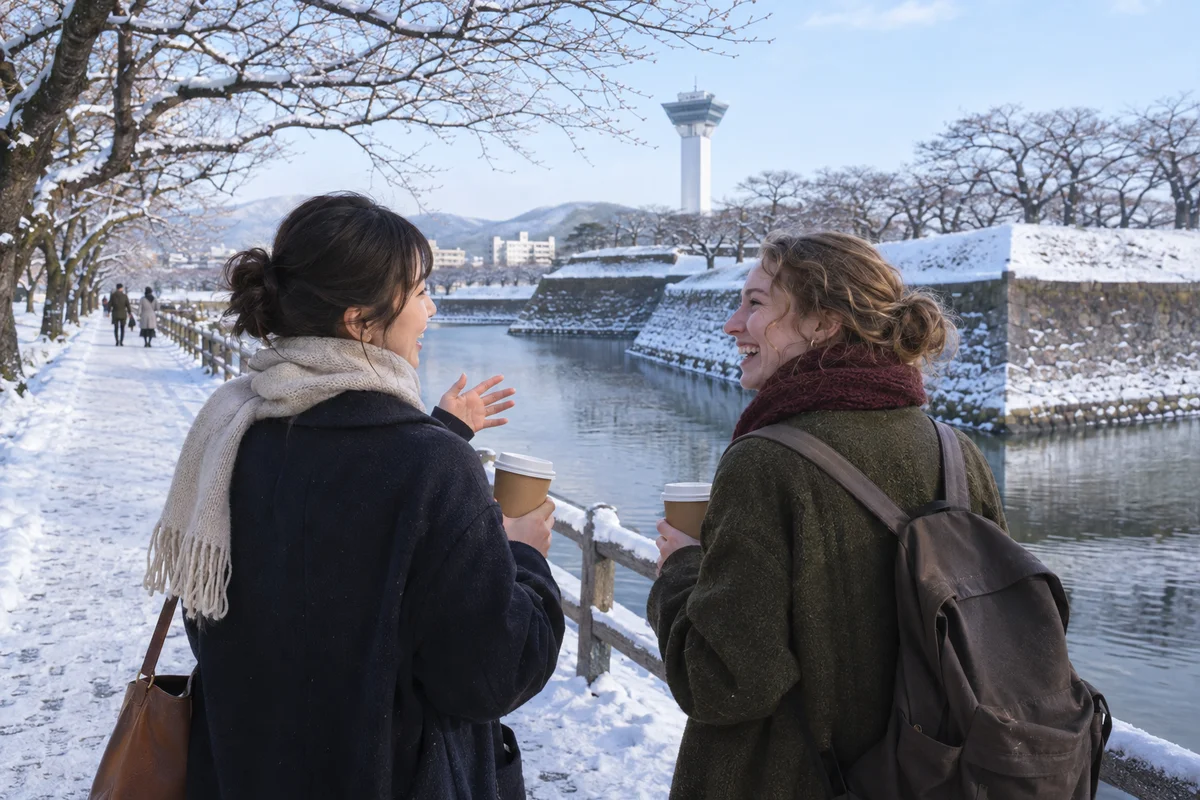
Goryokaku is home to the star-shaped fort park and Goryokaku Tower, and the surrounding Honcho area is Hakodate's main drinking district. If foreign residents are out for the night, in our experience Honcho is a good bet.
If you want to meet students and researchers, it helps to know where the universities are. Hokkaido University's Hakodate Campus, home to its Faculty and Graduate School of Fisheries Sciences, is near the port. Future University Hakodate is in Kameda-Nakano-cho. Hokkaido University of Education's Hakodate Campus has a Department of Regional and International Studies with projects that link the local community and international exchange.
Start with HIF. During its summer Japanese language and culture programs, international students come to Hakodate, and HIF looks for host families and volunteers. Even if hosting isn't possible for you, check what else they're asking for. There are often smaller ways to help out and meet people.
The City of Hakodate's international and regional exchange office is the other official channel. City-related exchange events and information about local international groups show up on the city's website, so it's worth a regular look.
It's hard to point at one single "foreigner bar" in Hakodate. What works better is picking a small place with a counter in Daimon or Honcho and going back again and again.
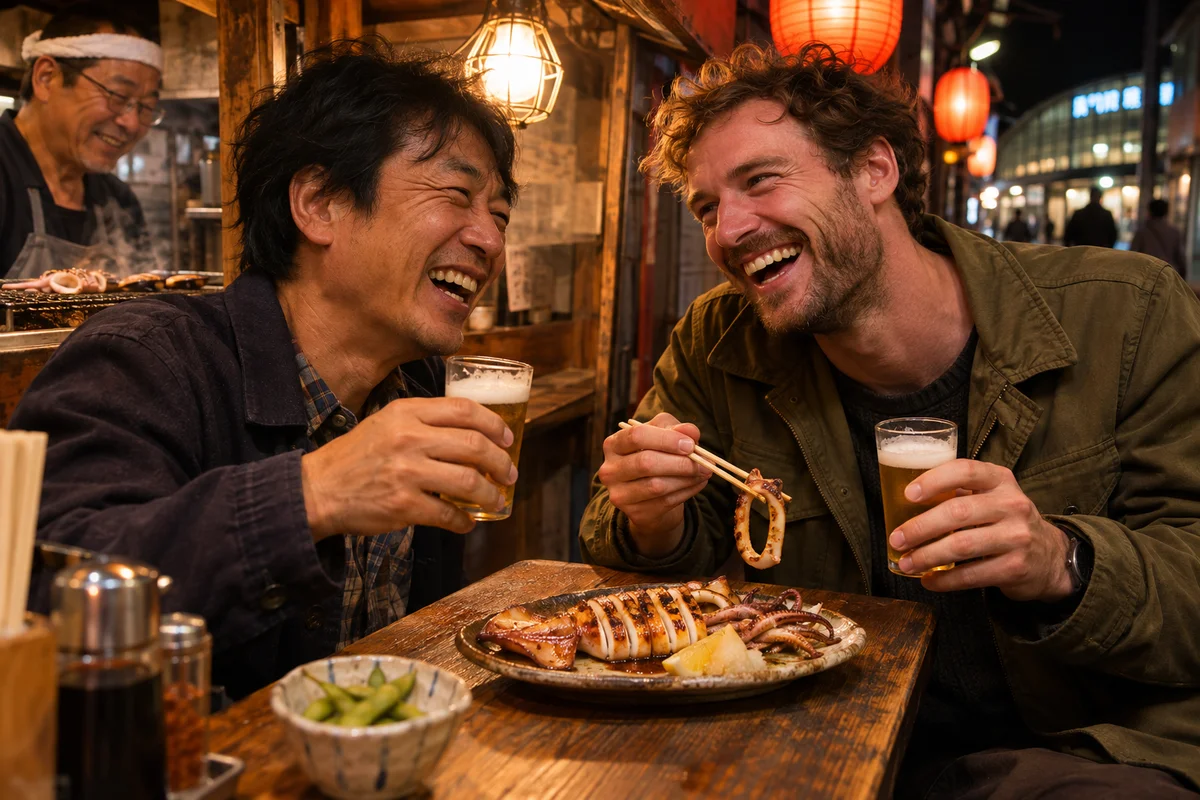
Once the owner knows your face, they start connecting regulars. "An Australian guy was in here last week, you should meet him" is exactly the kind of introduction that happens in small bars. One bar, many visits, beats bar-hopping. That's true anywhere in Japan, and even more so in a city this size.
Hokkaido University's Hakodate Campus, Future University Hakodate and Hokkaido University of Education Hakodate Campus all hold public lectures and open events from time to time. You won't necessarily meet international students at the lecture itself, but getting to know people involved in a university's international side is often how you hear about student gatherings.
Hakodate runs on tourism, and there are volunteer guide groups and hospitality efforts for international cruise visitors. The tourists come and go, but the people volunteering next to you stay. Some of them are foreign residents, others are locals who lived abroad. Real friends come from working side by side.
Hiking Mount Hakodate, photography, running, skiing and snowboarding in winter. A shared hobby takes pressure off language, because you're doing something together instead of performing a conversation. Search "Hakodate" on Meetup or Facebook and you may find groups that already include foreigners.
Week 1: Ride the streetcar around Motomachi, the Bay Area, Daimon and Goryokaku. Get a feel for each area and note any cafes, bars or notice boards that catch your eye.
Week 2: Go to one thing. An HIF or city exchange event, a university public lecture, or that small bar you spotted in Daimon or Honcho.
Week 3: Go back to the same place. Say hi first to someone you saw last time.
Week 4: Swap contacts with one person and suggest coffee or dinner. The city is compact, so "Want to check out a cafe in the Bay Area this weekend?" is an easy ask.
The common trap is feeling satisfied with tourist encounters. They're fun, but they don't last. Aim to see the same person three times and things start to feel like friendship.
In a city like Hakodate, waiting for events to come to you is slow. There just aren't that many of them.
That's where SewaYou comes in. SewaYou is a map-based friendship app for finding people nearby and anywhere in the world. Open the map and see who's around you in Hakodate, locals and other internationals, then message someone and suggest a walk up the Motomachi slopes or a coffee by the water.
Make Japanese Friends On a Live World Map
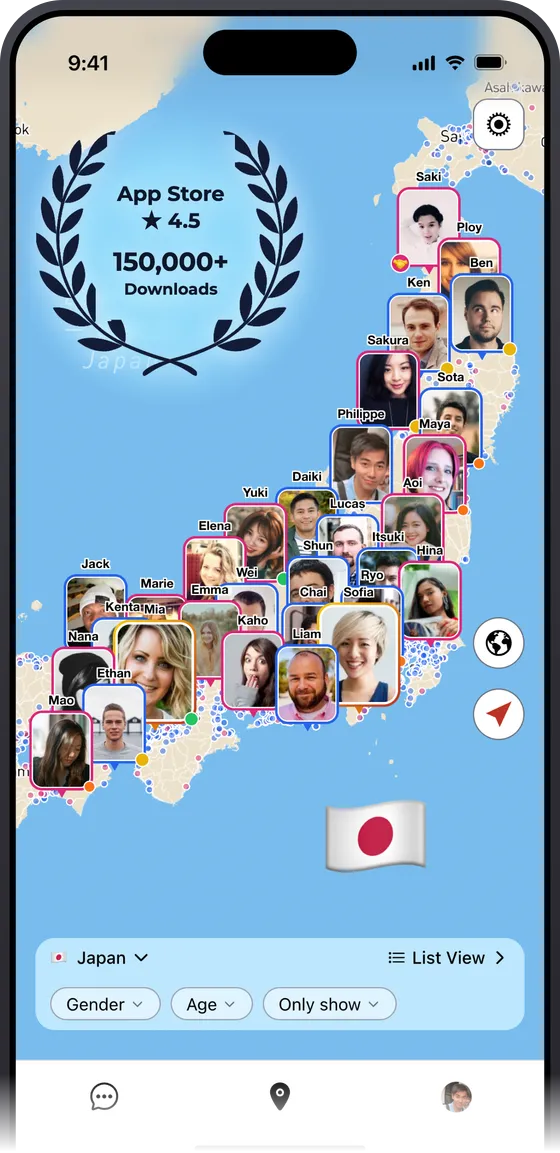
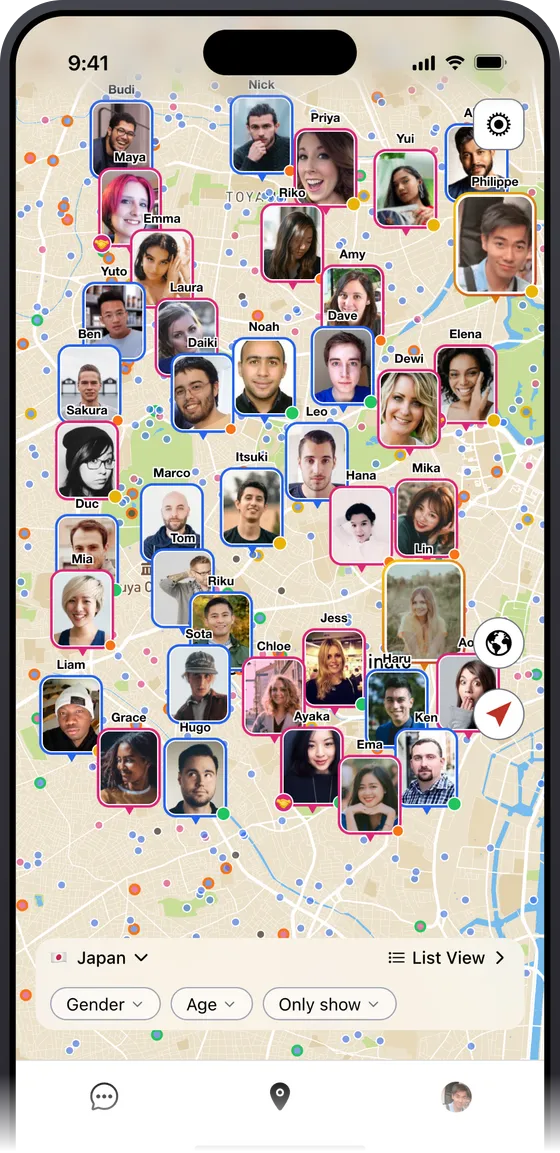
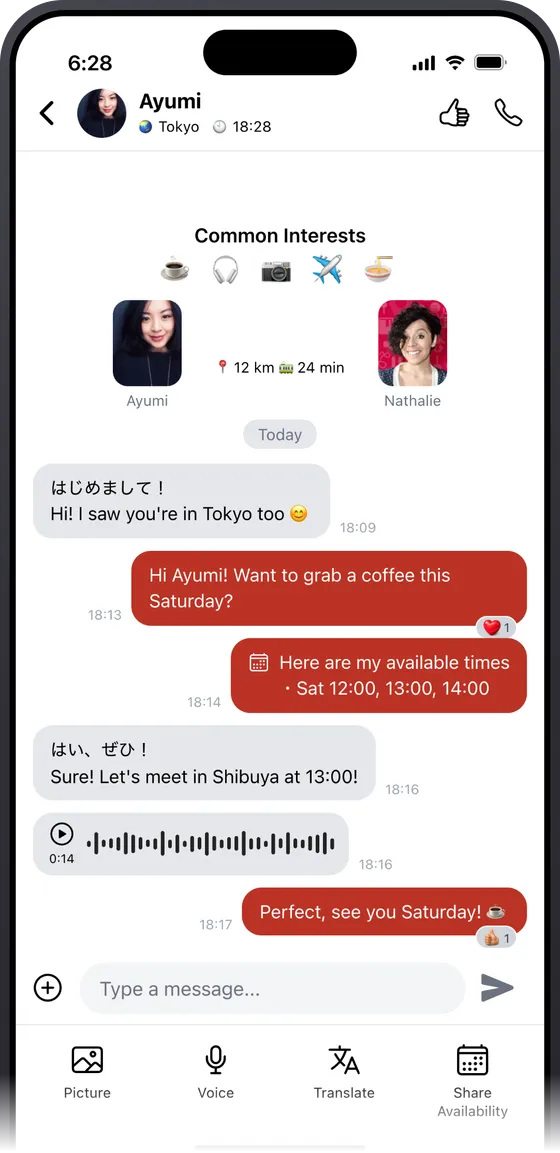


The map doesn't stop at Hakodate either. You can explore Sapporo, Tokyo or a city on the other side of the world from your sofa, build online friendships with no travel plans at all, or connect with people before a trip and meet once you're there.
Still comparing options? See our guide to the best apps for making international friends. Heading elsewhere in Hokkaido? Read how to make friends in Sapporo.
Is there an expat community in Hakodate?
Yes, but it's small and not very visible online. Foreign residents include university students and researchers, English teachers and people working at local companies. The easiest ways in are the Hokkaido International Foundation, the city's international exchange information, university events, and becoming a regular at a bar in Daimon or Honcho.
Where can I meet locals in Hakodate?
For organized exchange, HIF in Motomachi is the most reliable starting point. For a relaxed atmosphere, try the counter stalls at Daimon Yokocho or the bars around Honcho. Volunteering with visitor support groups and joining hobby groups also puts you next to locals regularly.
What are good things to do in Hakodate to meet people?
Go back to the same small bar, join a hobby group like hiking or winter sports, volunteer with tourism efforts, and attend university public lectures. Repeat visits matter more than any single event.
Do I need to speak Japanese to make friends in Hakodate?
It helps a lot, but you don't need to be fluent. Hobby groups and exchange events care more about showing up than perfect grammar, and many locals involved in international exchange are happy to mix languages. Learning some basic Japanese will open far more doors in a city this size than it would in Tokyo.
Hakodate makes it easy to cross paths with people from abroad and surprisingly hard to keep them. The fix isn't a secret venue. It's going back to the same places, seeing the same people, and letting a small city do what small cities do best: once you're in, you're in.
Looking for friends in Hakodate?
SewaYou is a map-based friendship app for meeting people nearby and anywhere in the world. Find locals and internationals around Hakodate and meet up on the Motomachi slopes or at a Bay Area cafe, or make friends in another city or country from home, with or without travel plans. Download SewaYou and send your first message today.
Exploring other cities too? Browse our city-by-city guide to making friends.