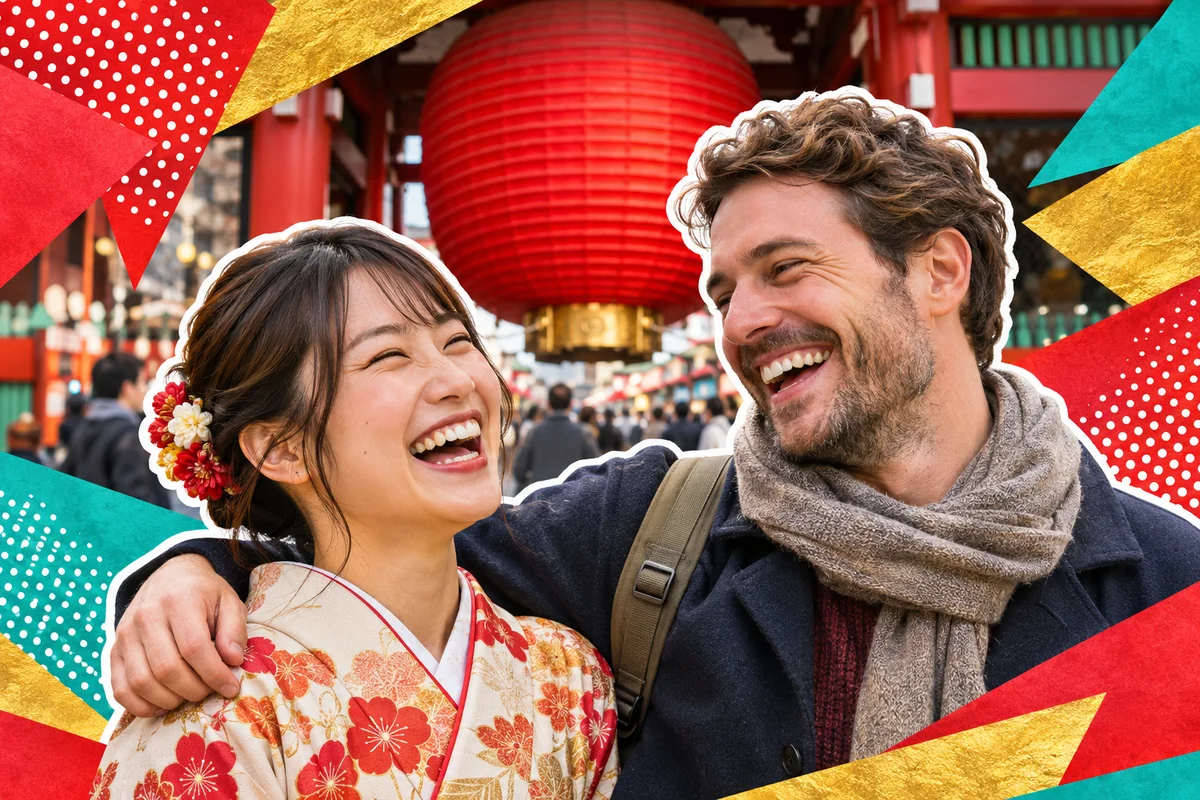
Stand in front of Kaminarimon for five minutes and you'll hear a dozen languages. Nakamise is packed shoulder to shoulder. Asakusa is one of the most international corners of Tokyo, at least by foot traffic. So why does making actual friends here feel so hard?
Because almost everyone around you is passing through. Asakusa doesn't have a Roppongi-style bar strip or a Shinjuku-style late-night scene where internationals gather. Most visitors take their photos, eat a melon pan, and head for Skytree within a few hours. The people are here. The structure for meeting them twice isn't obvious.
This guide covers how to make friends in Asakusa in 2026, area by area: the temple side, the izakaya side, hostel bars, the river, and the quieter craft neighborhoods to the south and west. It works whether you live in east Tokyo, you're studying here, you just moved, or you're staying a few weeks and want more than tourist small talk.
The short version: skip the center of the crowd and look one step off the main drag. Hoppy Street's outdoor tables, a hostel bar counter, a sunset walk along the Sumida. Anywhere you can sit down or walk side by side, conversations last longer. Then keep coming back.
Asakusa has no shortage of foreigners. The problem is the shape of the place.
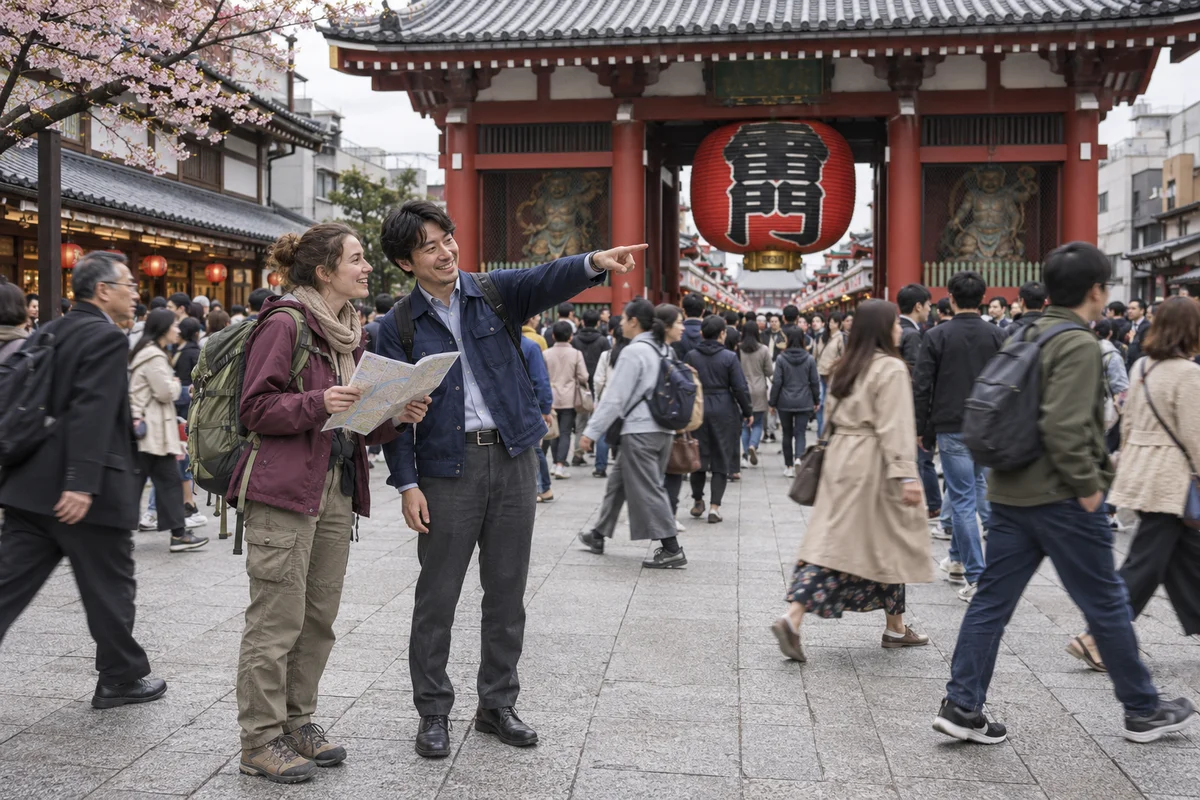
Everyone is mid-sightseeing. Most of the people around Kaminarimon, Senso-ji and Nakamise are on a trip with a schedule. Photo, snack, next stop. Not many have time to stand around and chat.
It's too crowded to start a conversation. On weekends Nakamise is hard to even walk through. Asking "where are you from?" in that crush feels awkward for everyone.
The evenings end early. Asakusa is a daytime neighborhood. Nakamise shops start closing in the late afternoon and the main streets go quiet. Don't expect a dedicated international bar district open until dawn.
Here's the flip side, though. Asakusa sits in Taito City, and it's not just tourists. According to the ward's own figures, about 20,411 foreign residents lived in Taito as of February 1, 2025, around 9.4% of the ward's population. Plenty of internationals actually live here, along with Japanese neighbors who've been around for generations. Those are the people you can see again next week.
The front of Senso-ji, the izakaya streets behind it, the riverside, and Kuramae and Kappabashi all feel like different neighborhoods. Pick the one that fits you and start there.
The biggest crowds of foreigners in Asakusa are between Kaminarimon, Nakamise and the main hall of Senso-ji. It's not really a place to build friendships, but it's where openings happen constantly.
Someone puzzling over an omikuji fortune. Someone unsure how to use the purification fountain. Someone clearly hoping a stranger will take their photo. If you live here and know the area, a simple "Need a hand?" often turns into a chat about where to eat or what to see next. If you're the visitor, locals helping you is a very normal way to meet.
Across from Kaminarimon, the Asakusa Culture Tourist Information Center is Taito City's tourist information office, and plenty of travelers stop by. It's a natural place to cross paths.
Tactic: avoid weekend middays. Walk the temple grounds on a weekday morning or early evening instead. If a chat goes well, swap socials and offer to show them another part of the neighborhood next time.
If you're searching for bars in Asakusa to meet people, start with Hoppy Street, west of Senso-ji near the off-track betting building. It's a row of izakaya serving stewed beef tendon and yakitori, many with tables set out on the street. Drinking from midday is part of the charm.
What makes Hoppy Street work is that the next table is right there. Tourists and Japanese regulars sit on the same strip, so "What is that?" or "How do you drink Hoppy?" happens naturally.
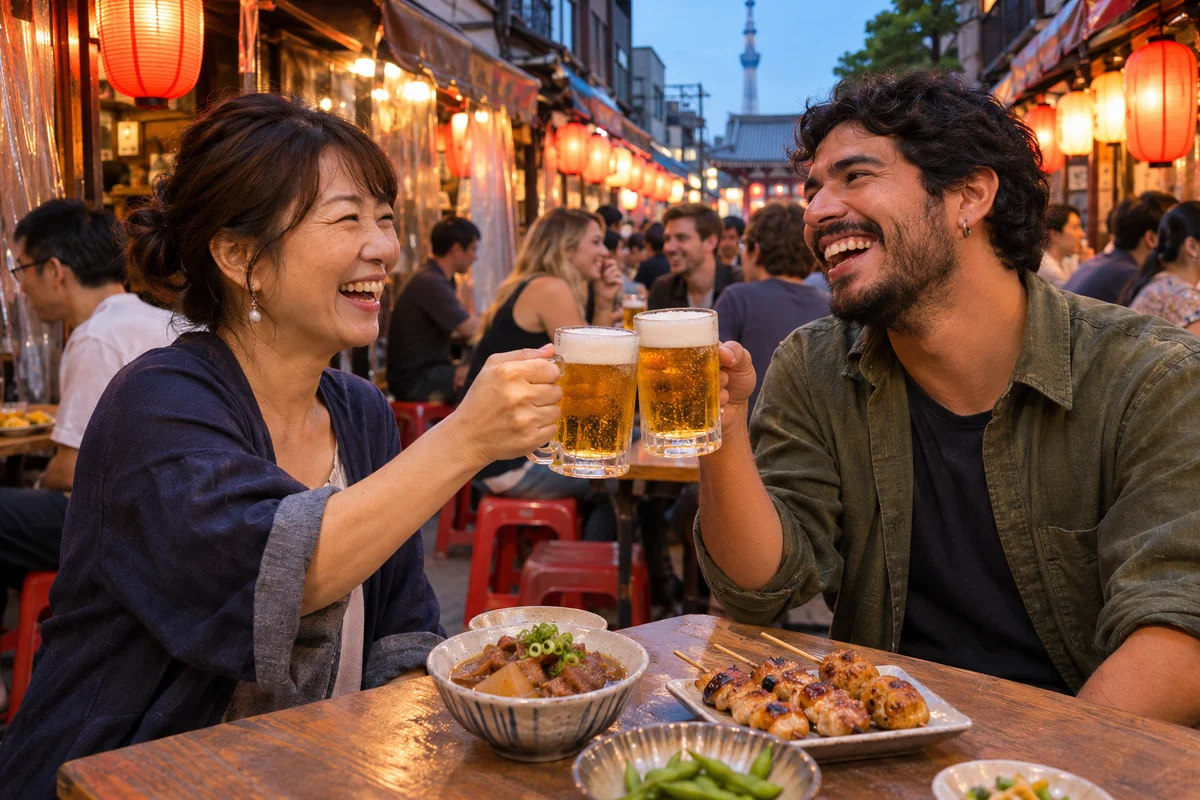
Tactic: go on a weekday evening rather than a packed weekend night. Come alone or as a pair and sit outside. When you find a place you like, go back on the same night of the week so the staff start to recognize you.
Travel review sites suggest the crowd changes a lot by time of day, and atmosphere and prices vary shop to shop. Walk the street a few times before you settle on your spot.
From Asakusa down to Kuramae there are a lot of guesthouses and hostels, and backpackers come from everywhere. Some of them have their own cafe or bar.
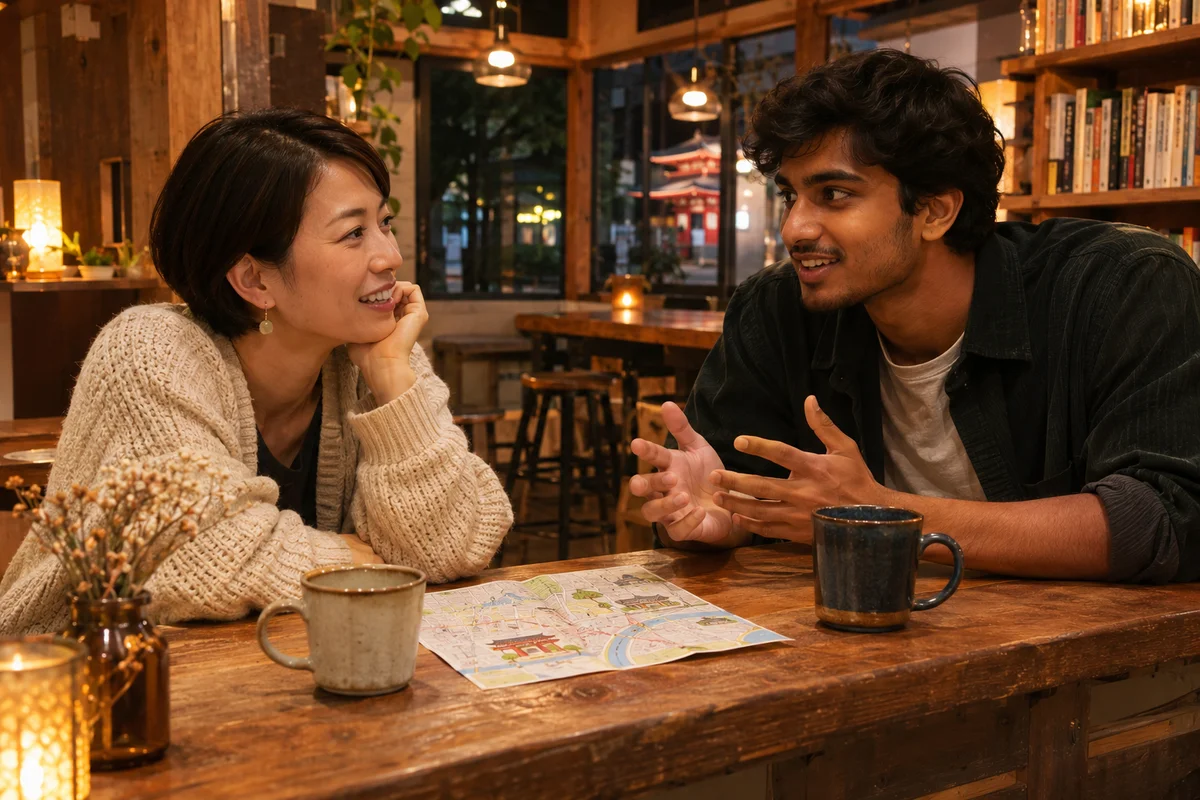
Nui. HOSTEL & BAR LOUNGE in Kuramae, for example, runs as a cafe by day and a bar at night, with travelers and neighbors sharing the same counter. People are often said to drop in just for the lounge without staying there.
The best part of a hostel bar is that people are there because they want to talk. Solo travelers especially love a local tip. If you live nearby, recommending one good hidden spot can make you instant friends. If you're the traveler, it's the easiest place in Asakusa to meet both locals and other internationals.
Some guesthouses don't allow non-guests in. Hours and rules can change, so check the official site before you go.
East of Asakusa, the Sumida River Terrace is a riverside promenade with Skytree across the water. In the late afternoon it fills with walkers, joggers and people taking photos.
Sumida Park runs along both banks of the river, across Taito and Sumida wards, and is famous for cherry blossoms in spring. To cross toward Skytree on foot, use the Sumida River Walk, a pedestrian path built alongside the railway bridge.
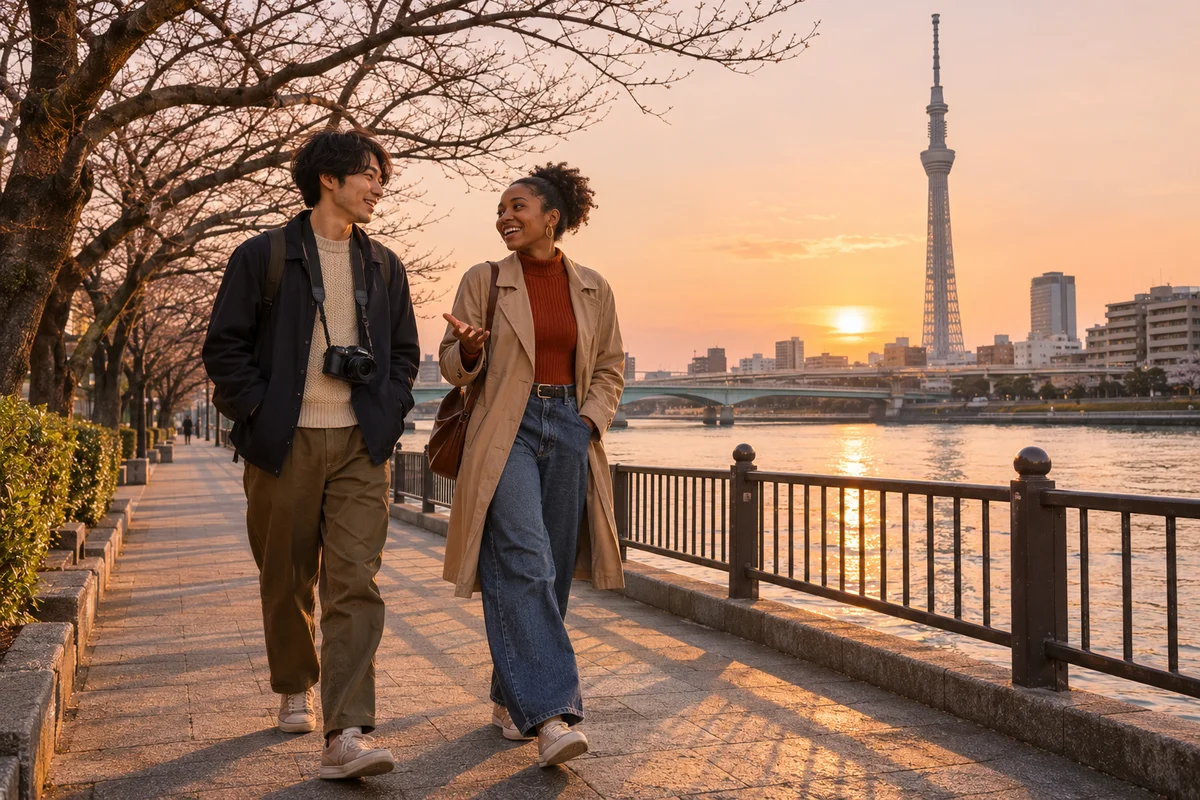
This is the spot if you want to talk without drinking. Walking side by side is less intense than sitting across a table, and asking someone with a camera "Did you get a good shot?" is about as natural an opener as it gets.
West of Asakusa, Kappabashi is the kitchenware street, lined with shops selling knives, tableware and restaurant supplies. Plenty of foreigners come here to shop. To the south, Kuramae is known for its cafes, small shops and craft workshops.
The internationals you meet around here tend to be into Japanese cooking, design or making things. A shared interest makes conversations go deeper fast, whether the other person lives here or is visiting. If you love cooking, ceramics or coffee, this could be your regular neighborhood.
For international exchange events in Asakusa, the most reliable sources are public ones, not random listings. Taito City drew up a multicultural coexistence plan in 2022 that lists creating more chances for Japanese and international residents to interact as a goal.
At the Tokyo level, the Tokyo Metropolitan Foundation "TSUNAGARI" runs multicultural events and workshops. Dates and content change, so check Taito City's official site and newsletter and the foundation's site for what's coming up.
And don't forget the festivals. Big ones like Sanja Matsuri every May draw plenty of foreign spectators, and volunteering or getting involved with local community groups is a good way to meet international neighbors who live here too.
Kaminarimon and Nakamise: The busiest stretch. Tourists everywhere. Conversations start from directions and photo requests.
Senso-ji grounds and the five-story pagoda: Calm in the early morning. Good for an unhurried chat.
Denboin-dori and Shin-Nakamise: Street food and shopping. Easy daytime small talk.
Hoppy Street and Asakusa Rokku: Izakaya and outdoor tables. Your best bet for meeting people in the evening.
Sumida riverside and Azumabashi: Walks and photos. For people who want to talk without drinking.
Kuramae: Guesthouses, cafes and craft shops. Meet both travelers and residents.
Kappabashi: Kitchenware street. Where food and design lovers cross paths.
The most common mistake is letting one fun chat in front of Kaminarimon be the end of it. That's a nice memory. But in my experience, friends come from seeing each other again, and again.
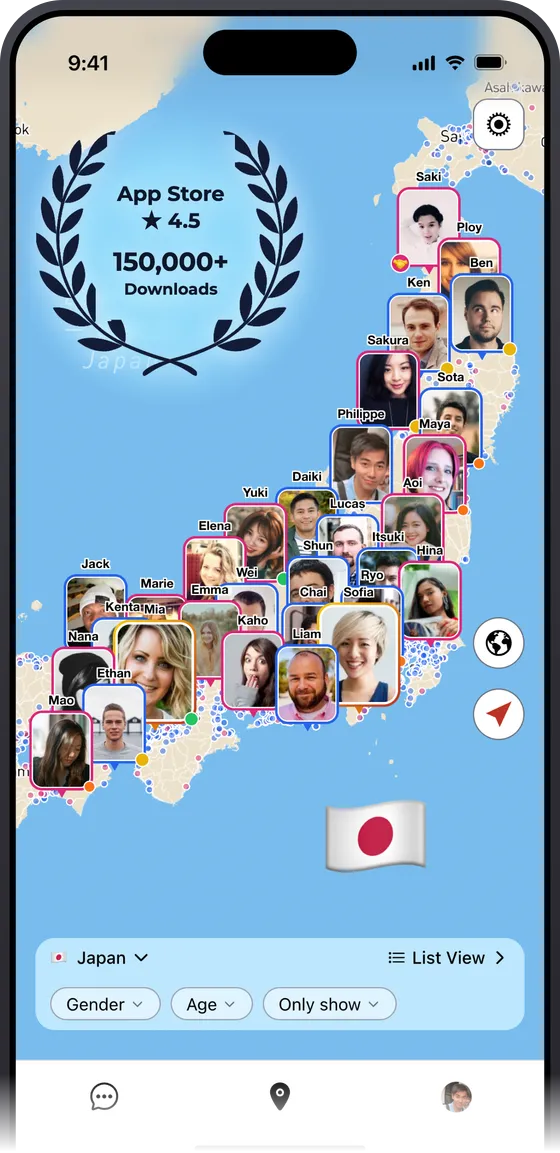
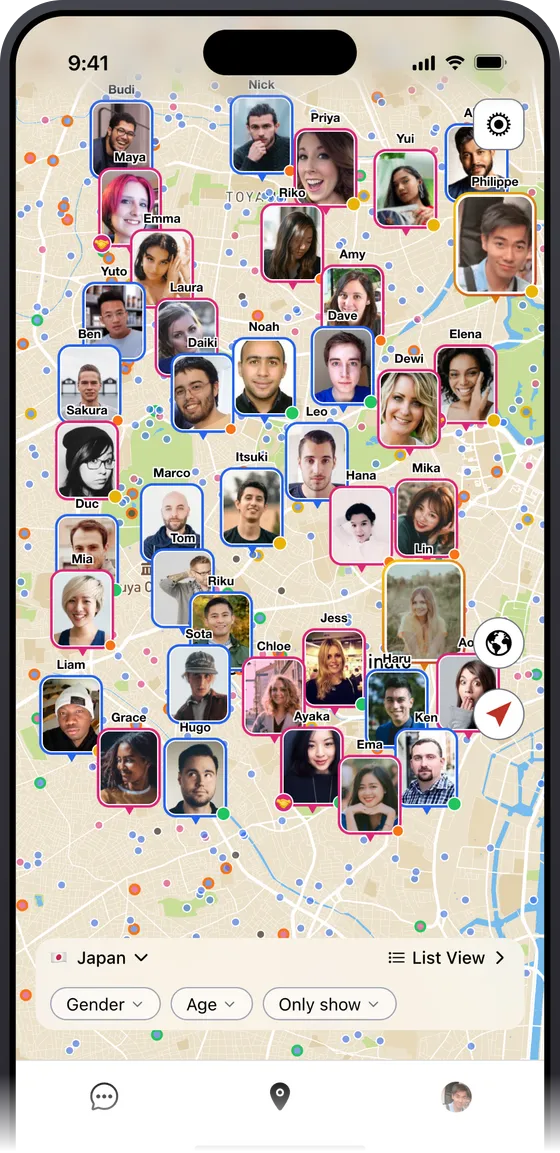
Asakusa suits map-based apps well. Tourists, residents and people who work here are packed into a small area, so just looking at who's nearby shows you people from all over the world.
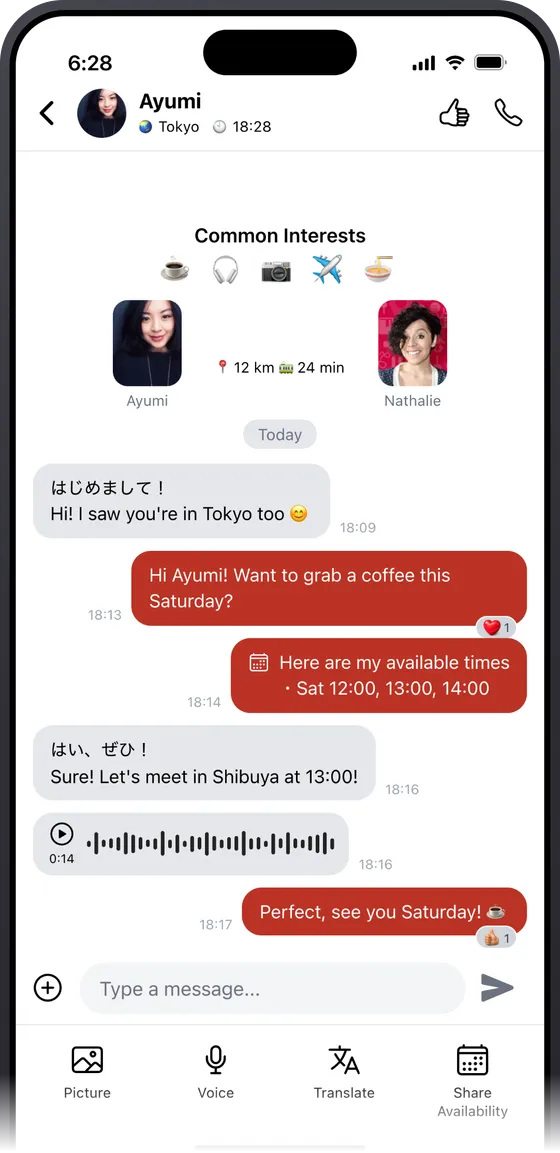
It's most useful in the small gaps: after work, or a spare afternoon on the weekend. Check the map, message someone whose interests line up with yours, and suggest meeting at Kaminarimon. Asakusa's landmarks make it easy for anyone to find you.
The map also goes far beyond Asakusa. You can browse a city in another country from home and get to know the people who live there, with or without travel plans. Met a traveler on Hoppy Street? You can keep talking with people from their country long after they've gone home.
If you're comparing options, see our guide to the best apps for making international friends.
The biggest crowds are between Kaminarimon and Senso-ji. For real conversations, try the outdoor tables on Hoppy Street, hostel bars in Asakusa and Kuramae, and the Sumida River promenade. Places where you sit down or walk together keep the conversation going.
There's no single expat club, but around 9.4% of Taito City's residents are foreign nationals, so plenty of internationals live nearby. You'll find them by becoming a regular somewhere, through ward and Tokyo exchange programs, and with map apps that show who's around.
There's no international bar strip like in Roppongi, but Hoppy Street izakaya get both foreign visitors and Japanese regulars. Toward Kuramae, some hostels have bars where travelers and locals share the counter.
Taito City works on creating more exchange between Japanese and international residents, and the Tokyo Metropolitan Foundation "TSUNAGARI" holds multicultural events. Dates change, so check their official sites for the latest.
Yes. Early-morning walks around Senso-ji, the Sumida River Terrace, and cafes in Kappabashi and Kuramae all work without alcohol. Daytime street food is an easy option too.
Not at all. Start with something situational, like directions, a photo or what an omikuji fortune means. If the other person seems in a hurry, keep it to one line and move on.
Want to compare neighborhoods? Read how to make friends in Ueno, how to make friends in Shinjuku, and how to make friends in Tokyo.
Asakusa might be the place in Japan where you cross paths with the most foreigners and Japanese locals in a single afternoon. That means more openings than almost anywhere.
The person at the next table on Hoppy Street, the traveler at the hostel bar, the stranger you took a photo for by the river. Keep that one conversation going online and travelers stay friends after they leave, while neighbors go from familiar faces to real friends. Somewhere in that crowd is someone you'll see again.
Looking for friends in Asakusa?
SewaYou is a map-based friendship app that shows people nearby and anywhere in the world. Find someone around Kaminarimon, Hoppy Street or Kuramae right now and invite them for coffee, or explore a city on the other side of the world from home and make friends there. Travel plans or not, message someone who catches your eye.
Make Japanese Friends On a Live World Map


Ready to meet new people in Asakusa? Download SewaYou and open the map.
Looking at other cities? See our guide to making friends city by city.