Miyazaki looks like the easiest place in Japan to be happy. Palm trees, warm winters, surf a short drive from downtown, and locals with a reputation for being relaxed and kind. So why do so many foreigners here spend their weekends alone?
If you're an English teacher placed in a small town, a student at one of the universities, a surfer who came for the waves, or a remote worker who picked Miyazaki for the slower pace, you've probably felt it. People are friendly. Friends are harder. This guide covers how to make friends in Miyazaki in 2026, with the neighborhoods, organizations and habits that actually turn friendly faces into a real circle, Japanese locals and other internationals both.
Miyazaki is not Tokyo or Fukuoka. There's no single district where foreigners are always hanging out, and no packed calendar of international meetups every night of the week. But there are plenty of foreigners here: English teachers, university students and faculty, surfers who moved for the ocean, people married to Japanese partners, and travelers passing through.
The problem is mostly about geography. Some people live downtown along Tachibana-dori, some down by the university in Kibana, some in Kiyotake, some close to the beach at Aoshima. It's a car city, so you rarely bump into anyone just by walking around.
Then there's the commute. Many English teachers work at schools in towns across the prefecture and only come into Miyazaki City on weekends. And information is thin. Search for a Miyazaki expat community and you'll often get results about Fukuoka instead.
Here's the upside, though. Because the community is small, people remember your face quickly. Find one way in, and the circle grows faster than it would in a big city.
You don't need to know the whole city. Four areas cover most of where foreigners and locals mix.
Nishitachi and Tachibana-dori are the center of it all. Nishitachi, the nightlife district around Nishi-Tachibana-dori, is packed with izakaya, bars and snack bars. If you're looking for the bars where foreigners in Miyazaki hang out, start here. On weekend nights you'll often find English teachers in from the countryside and foreigners who work in the city.
Just east is Tachibana-dori, the daytime main street. The Carino Miyazaki shopping building sits on it, and the Miyazaki International Foundation (more on that below) is on its basement floor. Same area, two moods: coffee and events by day, drinks by night.
At Miyazaki Station, the west exit has AMU Plaza Miyazaki, a go-to for shopping and meeting up at a cafe. The station makes it easy to meet people coming in from the airport or other towns. If late nights in Nishitachi aren't your thing, a daytime coffee here is a perfectly good start.
Kibana and Kiyotake are the university side of town. The University of Miyazaki's Kibana campus sits in the south of the city near the coast, and it has an international office and exchange students from universities abroad. A little inland in Kiyotake is Miyazaki International College, where most classes in its liberal arts program are taught in English and many faculty members are from overseas. You'll spot students and teachers in nearby cafes and shops. Walking onto a campus uninvited is awkward, so public lectures and open events are the natural way in.
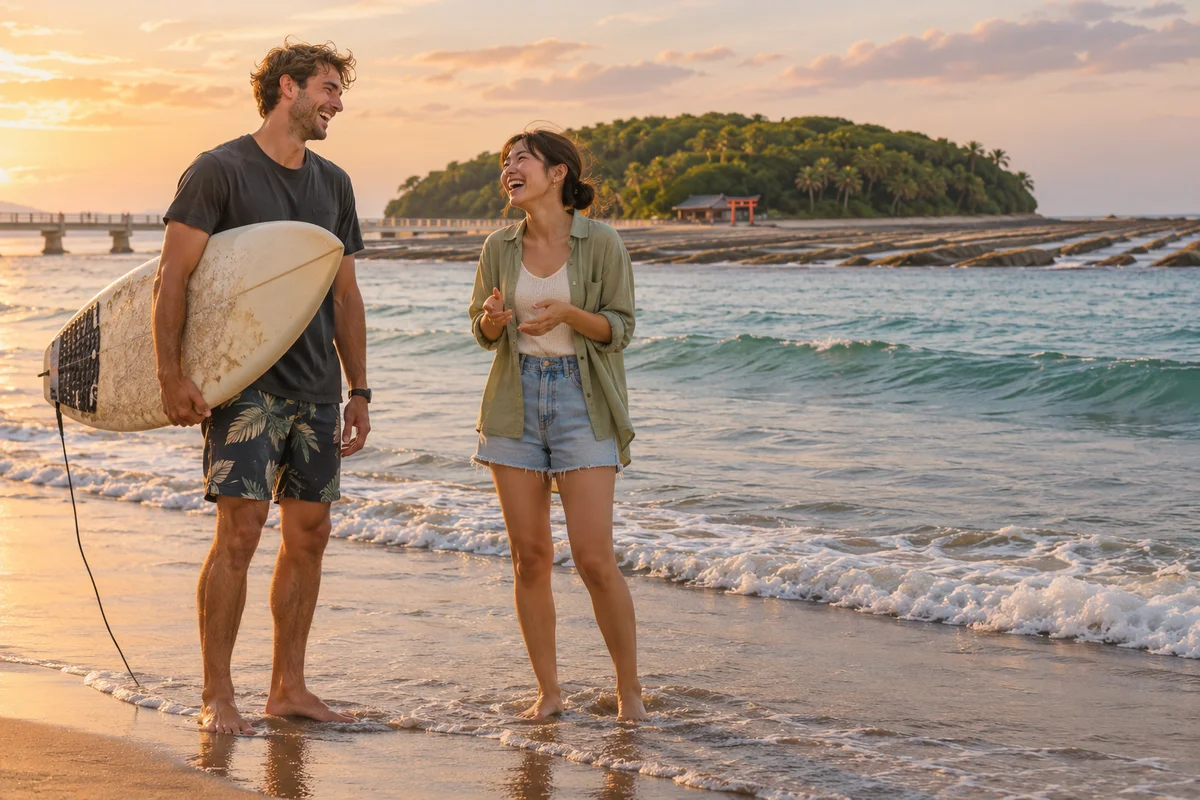
Aoshima and Kisakihama are Miyazaki's secret weapon. Both are well-known surf spots, Kisakihama has hosted major international competitions, and Aoshima has surf schools. Plenty of people come from overseas just for the waves. Out in the water, nobody cares where you're from. You're just another person waiting for a set.
When someone asks where foreigners drink in Miyazaki, the answer is almost always Nishitachi. Small bars with English menus or foreign regulars are scattered through the district.
The strategy is the same one that works in every Japanese city: pick one place and keep going back. Once the owner knows your name, introductions to other regulars happen on their own. Small bars open and close, so check recent Google Maps reviews to make sure a place is still running before you go.
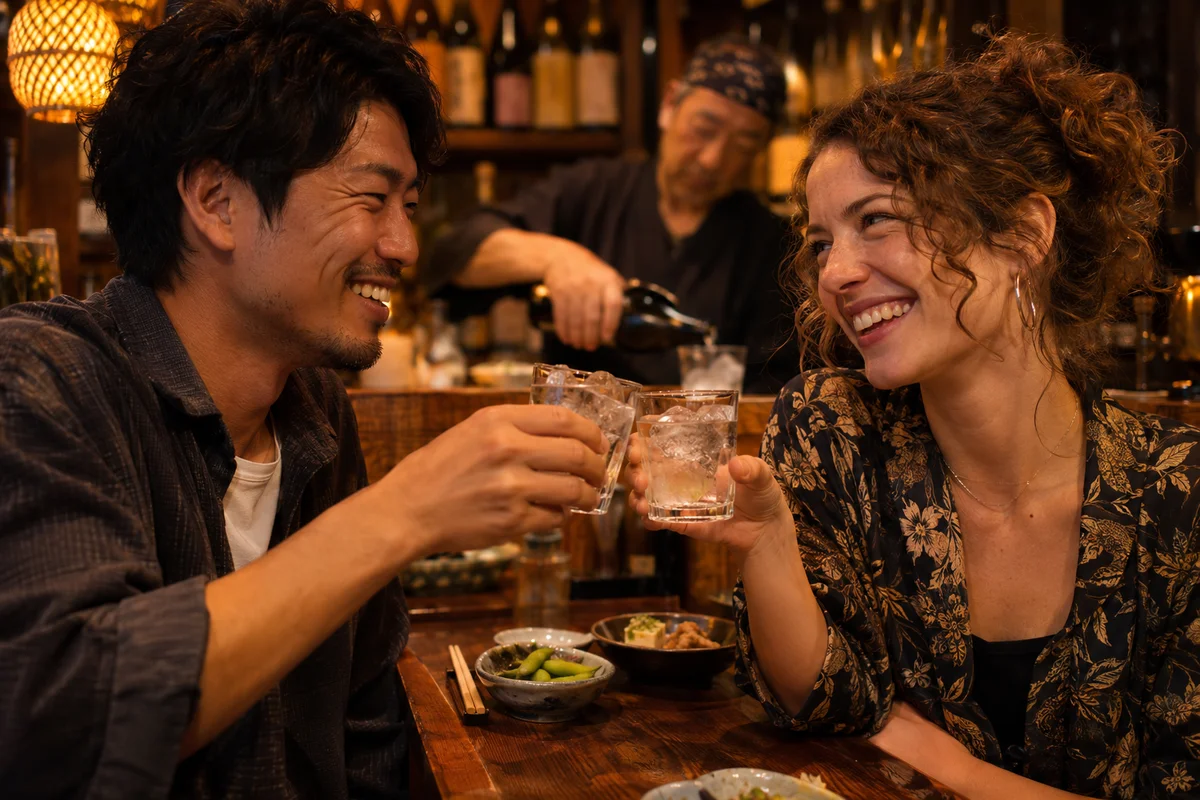
The mistake is bar-hopping. Five bars once each gets you five nice conversations. One bar five times gets you friends.
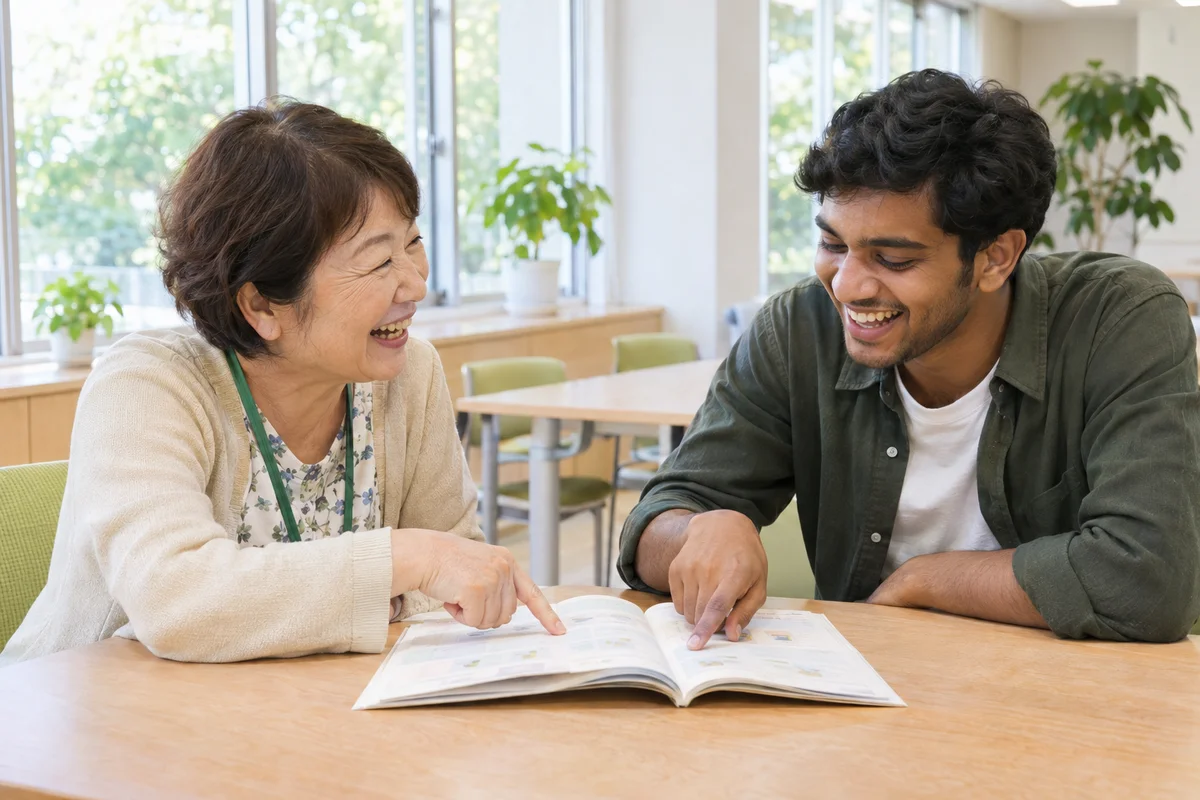
The most reliable starting point in Miyazaki is the Miyazaki International Foundation (宮崎県国際交流協会), a public-interest foundation on the basement floor of Carino Miyazaki. It runs a consultation desk for foreign residents, Japanese classes and international exchange events.
Its event calendar lists things like casual chat sessions with people from overseas, talks introducing different countries, and international chat gatherings that invite participants. Some need sign-up in advance, so check the calendar on its website before you go.
It's a sober, low-pressure way to meet both Japanese locals who are curious about other cultures and other foreigners living in Miyazaki. If bars aren't your scene, this is honestly your best bet.
This one is underrated. The foundation's website has volunteer recruitment pages, including Japanese-language volunteers. Whether you help at events or offer support that matches your skills, volunteering puts you in a room with the same people again and again.
The best part is that nobody is there to "make friends". You're there to help, the small talk grows each week, and one day you realize you're grabbing chicken nanban together on a Sunday. You meet residents, not tourists. Check with the foundation for current openings.
The one to watch is the Miyazaki International Festival, "World Terrace," held in autumn. In 2026 it took place on October 17, and the Miyazaki International Foundation and JICA Desk Miyazaki ran a joint booth where visitors could try on traditional clothing from different countries.
Festivals bring people from many countries and several exchange groups together in one place. If a group catches your interest, go to its next smaller gathering. That's where the real conversations happen. Dates and venues change from year to year, so keep an eye on the foundation's site and local listings.
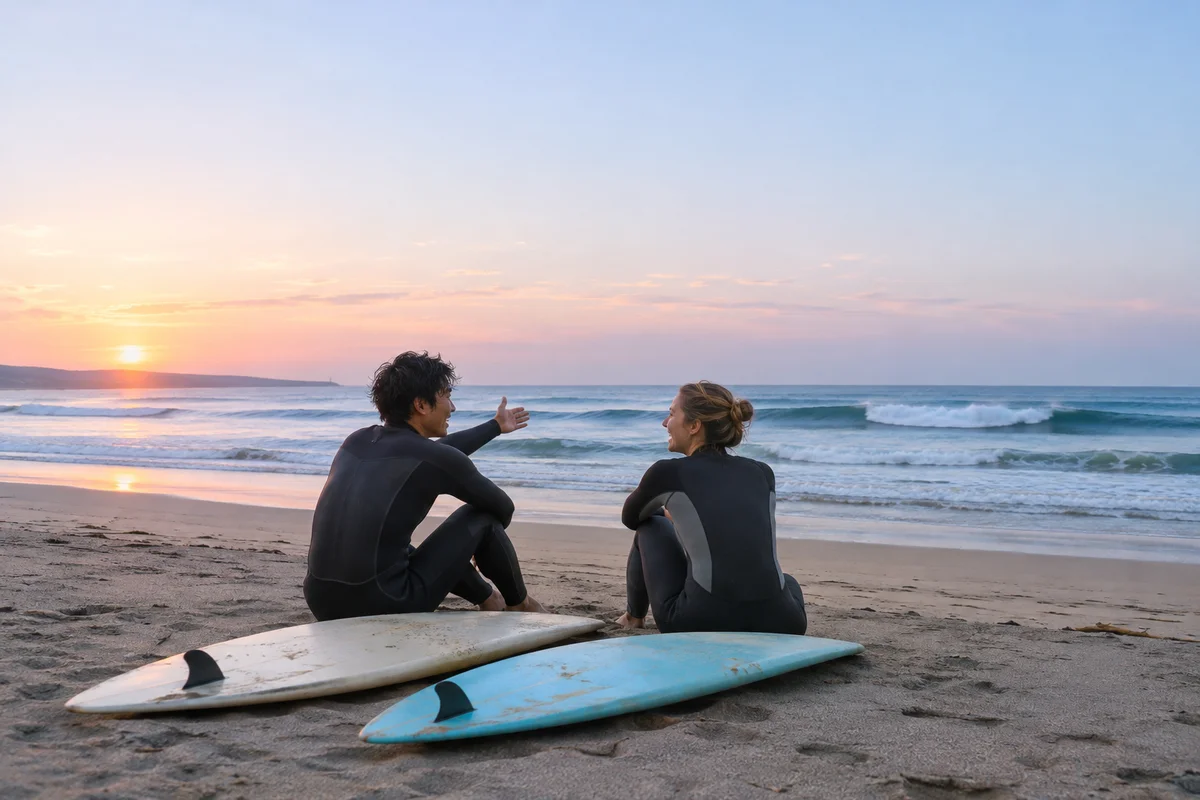
If there's one thing to do in Miyazaki to meet people, it's this. Take lessons at a surf school in Aoshima, or start paddling out at Kisakihama in the morning, and you'll keep seeing the same faces.
Surfing doesn't ask for deep conversation. It starts with "How are the waves today?" and drifts into coffee at a beach cafe after the session. In Miyazaki, surfing might be the best common language. Every break has its own etiquette, so beginners should start with a school.
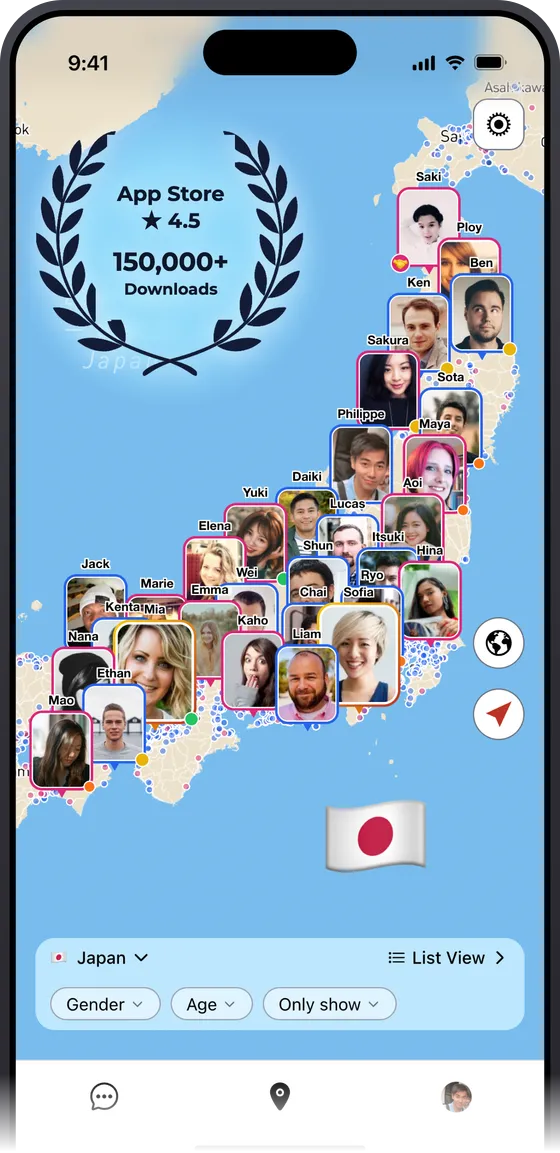
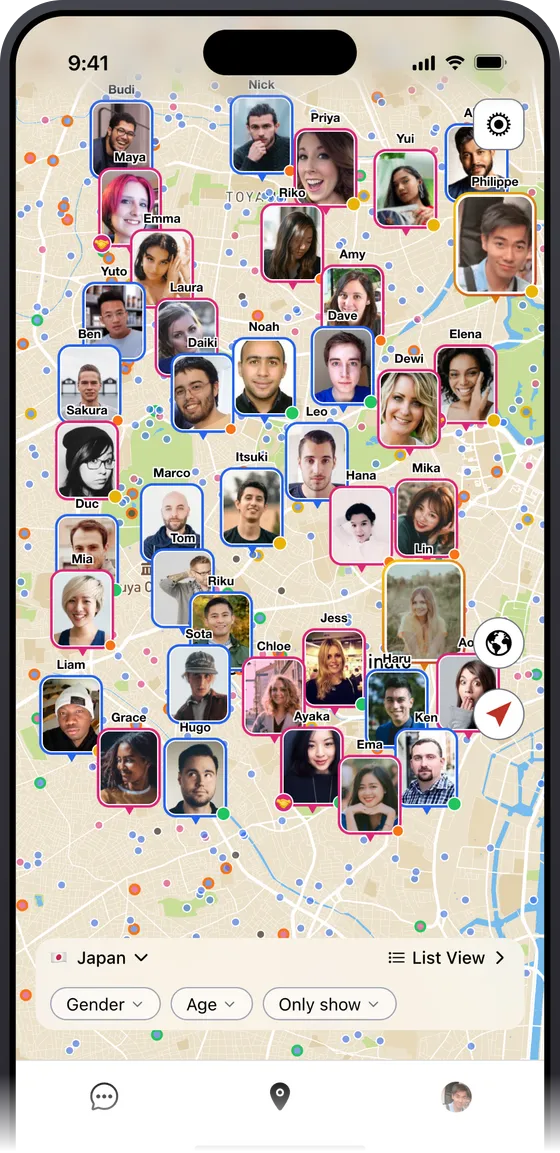
In a spread-out, car-based city like Miyazaki, map-based apps make a lot of sense. Instead of waiting for a lucky encounter, you can look by place: who's around Nishitachi, who's near Kibana, who lives by the beach. If you want to compare options, see our guide to the best apps for making international friends.
A map-based friendship app like SewaYou works well in Miyazaki because it lets you find people by place, not by chance. Whether your life is downtown, near the university or by the ocean, open the map and see who's around. If a profile clicks, suggesting coffee on Tachibana-dori this weekend is an easy message to send.
And the map doesn't stop at Miyazaki. Even with no travel plans, you can explore a city in a country you're curious about from your couch and make friends online with people who live there. Or connect with someone planning a surf trip to Miyazaki, and show them your favorite local spots when they arrive.
Make Japanese Friends On a Live World Map
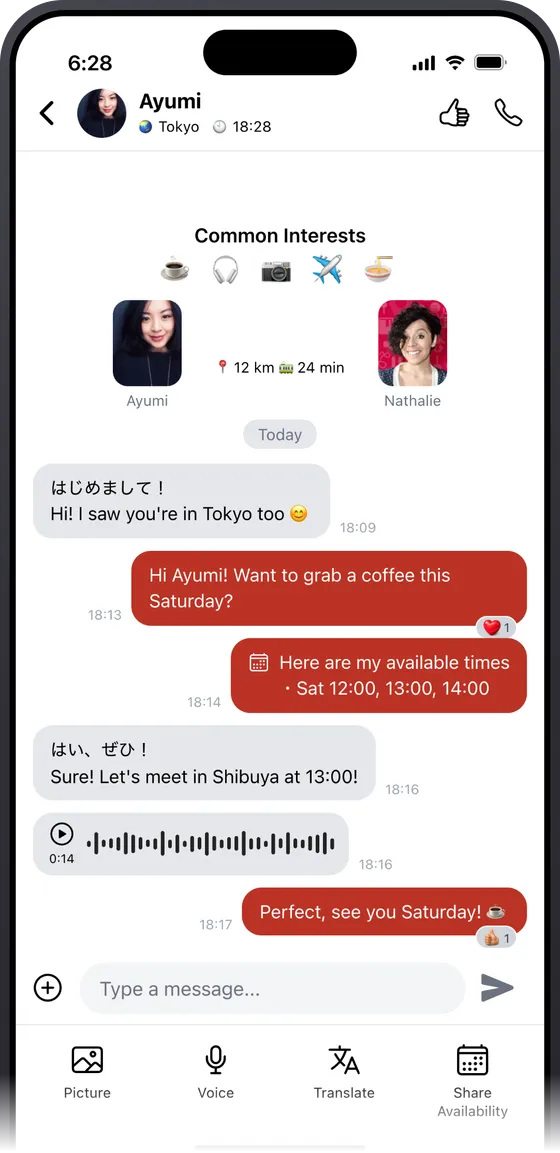


Friends nearby are easy to see again. Friends far away can become the ones you talk to for years. Both are real friends.
Week 1: Walk from Tachibana-dori into Nishitachi. Note a bar or cafe that feels right, and stop by the Miyazaki International Foundation at Carino Miyazaki to pick up event info.
Week 2: Go to one thing. A Friday night at your chosen bar, a foundation chat session, or a surf lesson at Aoshima.
Week 3: Go back to the same thing. Say hi to someone you saw last week.
Week 4: Swap contacts with one person. The community is small, so one connection tends to lead to the next.
The most common mistake? Treating locals as conversation practice. They're Miyazaki residents with their own lives. Trade what you know instead: they'll tell you where the best jidori chicken is and which beach has the best sunset, and you can bring your own stories from home. That's what makes a friendship two-way.

At night, the bars in Nishitachi. By day, around Tachibana-dori and Miyazaki Station. For a calmer, alcohol-free option, try the Miyazaki International Foundation's chat sessions and volunteer programs at Carino Miyazaki. If you like the ocean, the surf breaks at Aoshima and Kisakihama are great places to meet people too.
Yes, though it's small and spread out. English teachers, university students and faculty, surfers and long-term residents make up most of it. Many teachers live in towns around the prefecture and come into the city on weekends, so Nishitachi and foundation events are where paths cross most often.
It helps a lot, but you don't need to be fluent. Some locals at exchange events are happy to try their English, and mixing Japanese and English works fine. Learning a few local phrases and being curious about Miyazaki matters more than perfect grammar.
The Miyazaki International Foundation runs chat sessions and culture talks regularly, listed on the calendar on its website. In autumn there's also the Miyazaki International Festival, "World Terrace." Dates change every year, so check for the latest info.
Pick one place and keep showing up: a regular bar, a foundation chat session, or a surf school. Go two or three times before you judge it. In a community this size, one good friend opens a lot of doors.
Miyazaki won't hand you a social life. You have to make the first move. But the community is small and people are easygoing, so once you take that first step, things move fast.
Looking for friends in Miyazaki? SewaYou is a map-based friendship app for finding people nearby and anywhere in the world. Meet locals and other internationals around Miyazaki for coffee on Tachibana-dori or a morning surf at Aoshima, or make friends online in a country you've always wanted to know, from home, with or without travel plans. Download SewaYou and start building your circle.
Exploring other cities? See our guide to making friends city by city, or read about nearby Kyushu cities: Kagoshima, Kumamoto and Fukuoka.