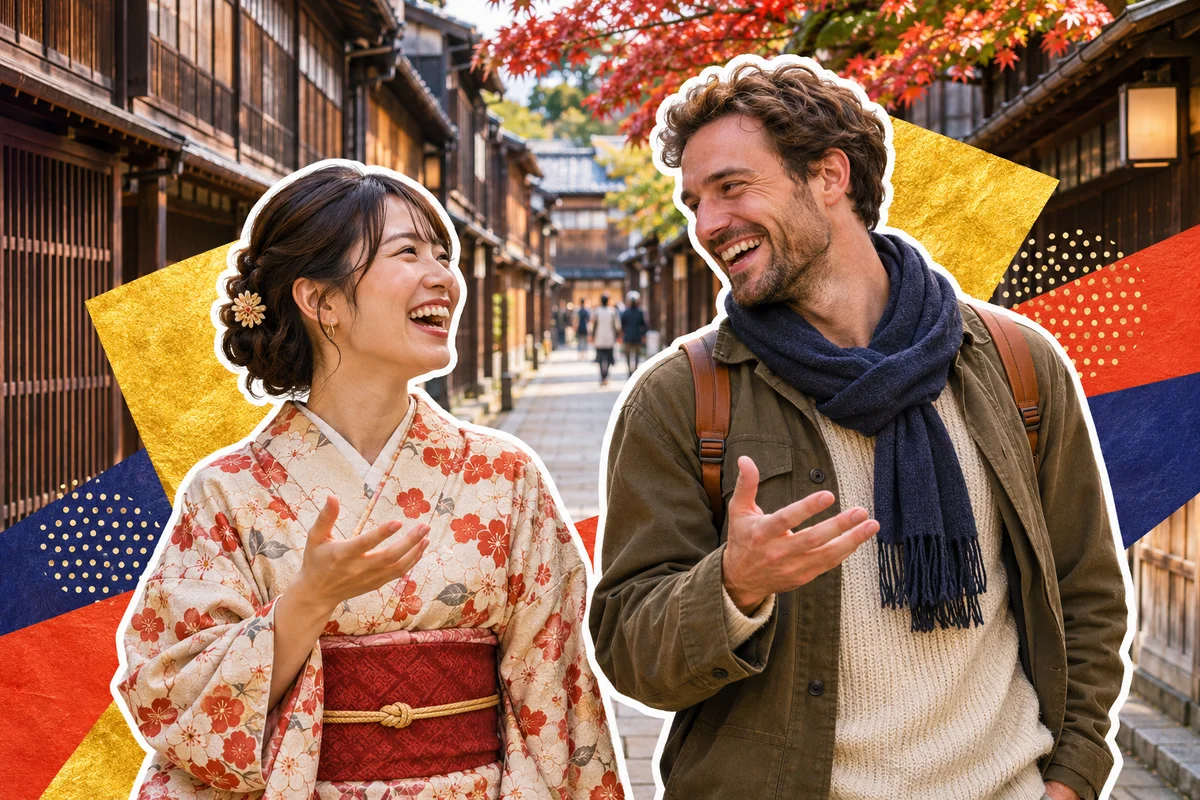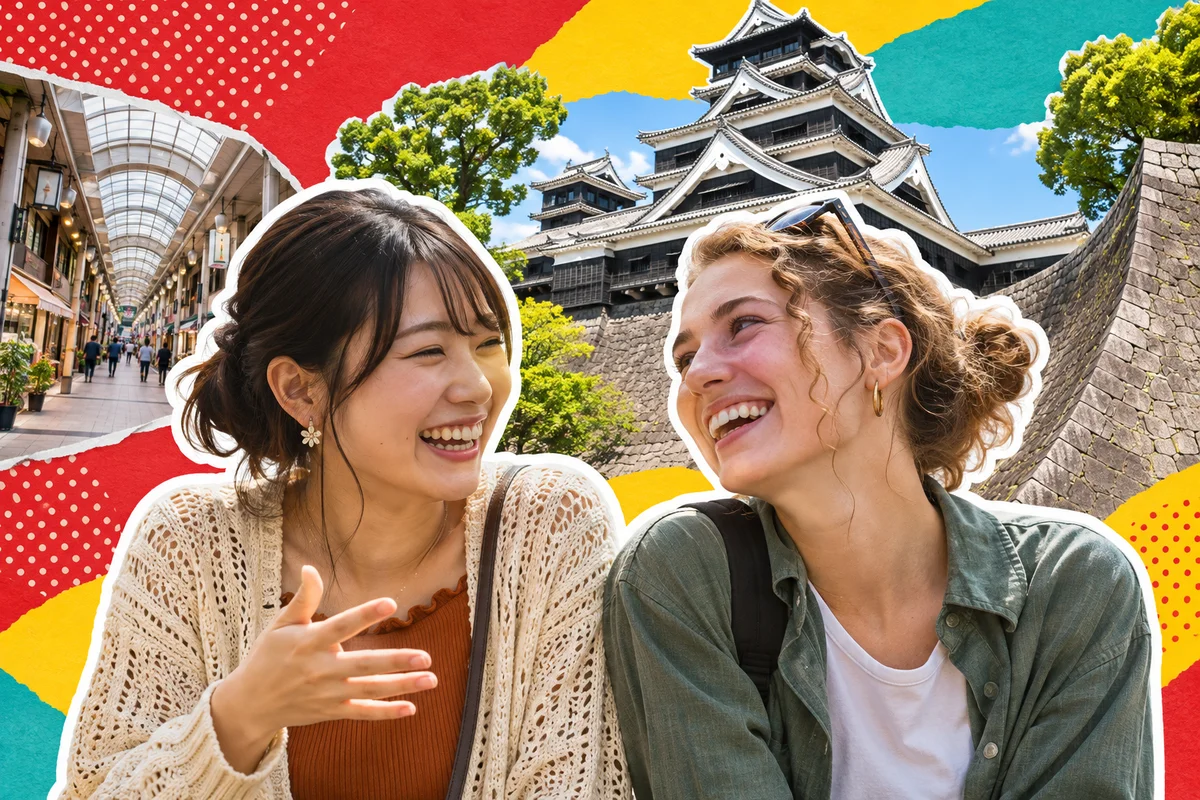
Maybe you moved to Kikuyo for a semiconductor job and your family came with you. Maybe you teach English at a school somewhere in the prefecture and only get into the city on weekends. Or maybe you just arrived for a year at Kumamoto University. Either way, you probably noticed the same thing: there are foreigners in Kumamoto, and there are plenty of friendly locals, but somehow your weekend plans still involve nobody.
That's a really common place to be. Kumamoto isn't Tokyo or Osaka, and the advice written for those cities doesn't quite fit here. This guide covers how to make friends in Kumamoto in 2026, with the real neighborhoods, organizations and events that help foreigners meet locals and each other.
The first thing to understand is that Kumamoto's international community is split up by geography. Engineers and families who came from Taiwan tend to live around Kikuyo and Koshi, near the JASM plant. International students are around Kurokami, where Kumamoto University's main campus is. ALTs are spread across schools in towns all over the prefecture. Everyone is "a foreigner in Kumamoto," but people's daily lives barely overlap.
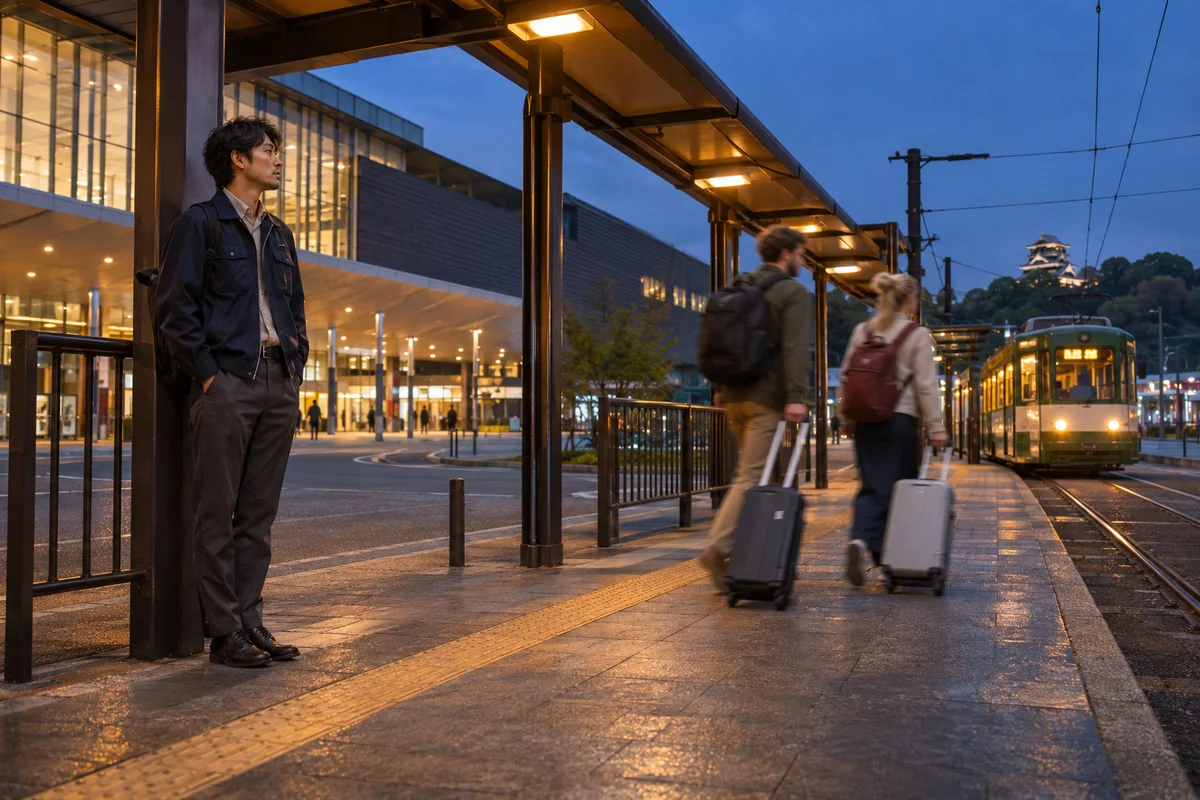
The second thing is that residents and travelers mix. Plenty of visitors pass through on their way to Kumamoto Castle or Aso and leave after a few days. The foreigner you see on Shimotori might live here, or might be on a train to Kagoshima tomorrow.
The third is the car. Around Kikuyo and Hikari no Mori, life runs on driving, so the casual "let's meet at the cafe by the station" rhythm of big cities doesn't happen on its own.
The upside? Once you decide where your people actually are, it all gets simpler. Central Kumamoto is compact, packed around the shopping arcades, so after you meet someone, running into them again is easy.
One practical note: after the July 2026 earthquake, some events and venues may have changed their plans. Check official pages before heading out.
Each part of Kumamoto gives you a different crowd. Five areas are enough to know.
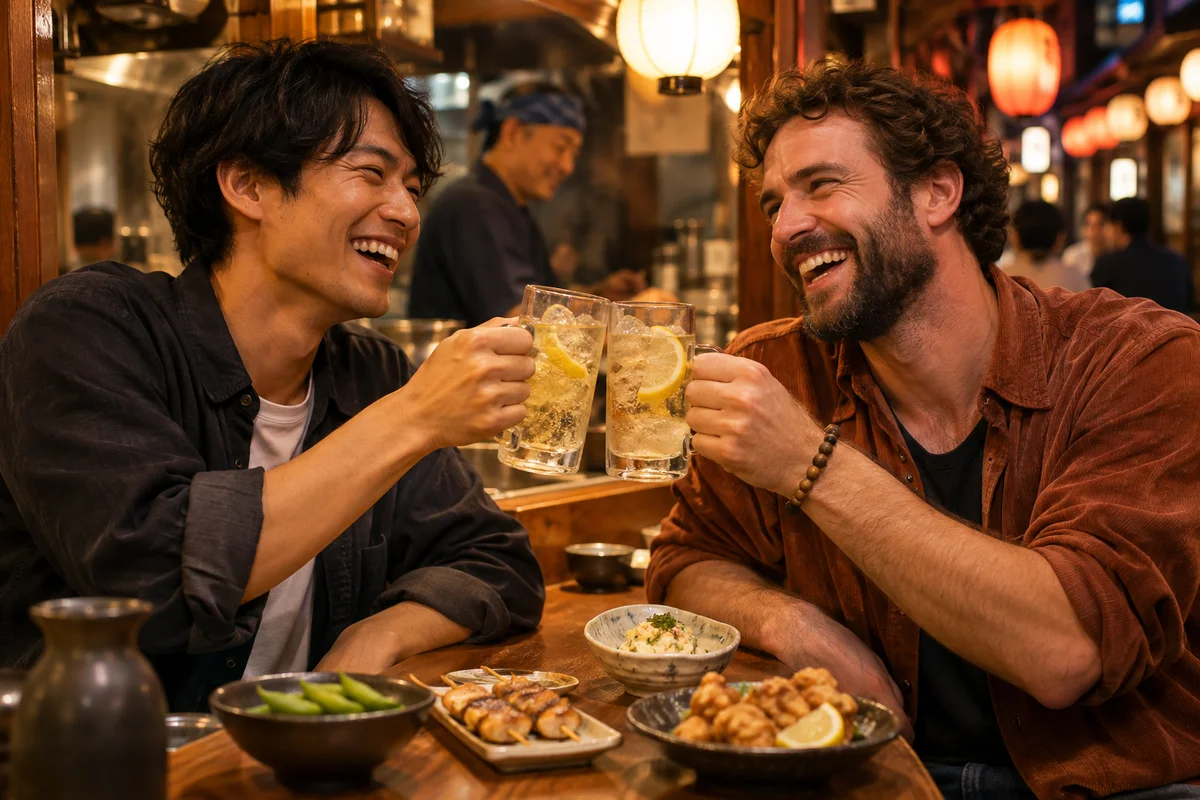
Together these form the city's main downtown. Shimotori is one of the biggest covered arcades in Kyushu, and the side streets around it are full of small bars, izakaya and craft beer spots. If you're looking for where foreigners go out at night, start here. On weekends you'll find residents, students and ALTs who came in from other towns for a night out.
Kamitori is calmer, with used bookshops and cafes. If loud bars aren't your thing, a daytime walk through Kamitori is a gentler way in.
The area between the arcades and the castle is home to the Kumamoto City International Center, which we'll come back to. It's the most reliable place to meet people without alcohol involved, and it's walkable from the Sakuramachi bus terminal, so it's easy to reach from anywhere in the city.
Here you'll mostly see shinkansen travelers and business trips, so meetings here tend to be one-offs. But the Amu Hiroba plaza in front of the station hosts big events. In 2026 it's the venue for Taikuma Saisai, a Taiwan and Kumamoto cultural exchange festival, on November 7 and 8.
The area around Kumamoto University's Kurokami campus is where you'll find international students and visiting researchers. The university's own pages show its number of international students has grown in recent years. Rather than wandering onto campus, use events open to the public, like the school festival or public lectures, as your way in.
These towns surround the plant run by JASM, TSMC's Japanese subsidiary, and many employees and families from Taiwan live here. The local paper has reported that Taiwanese residents are the largest group of foreign residents in Kikuyo. There are restaurants around Hikari no Mori with chefs from Taiwan, and Kikuyo has a Japan-Taiwan center that shares Taiwanese food and culture. This is residential territory, so friendships here start at parks, kids' activities, community events and the supermarket, not at bars.
To find foreigner-friendly bars in Kumamoto, look around Shimotori and Shinshigai for places with English menus or lots of English-language reviews. Reading Google Maps reviews in English gives you a decent sense of who drinks there.
Then stop bar-hopping. Three visits to the same place is usually when the staff start recognizing you, and that's when introductions to other regulars, Japanese and foreign, begin. Kumamoto's nightlife is clustered tightly around the arcades, so knowing one bar's crowd soon connects you to the crowds of the bars next door.
Weekday evenings, earlier in the night, are usually better for real conversation than late Saturday.
If you want a no-alcohol option, the Kumamoto City International Center in Hanabatacho is the best starting point. The Kumamoto City International Foundation, which runs it, holds "intercultural cafes" where people from different countries introduce their home country, with themes like Germany, Korea, France and China. It also runs international exchange cafes and volunteer programs.
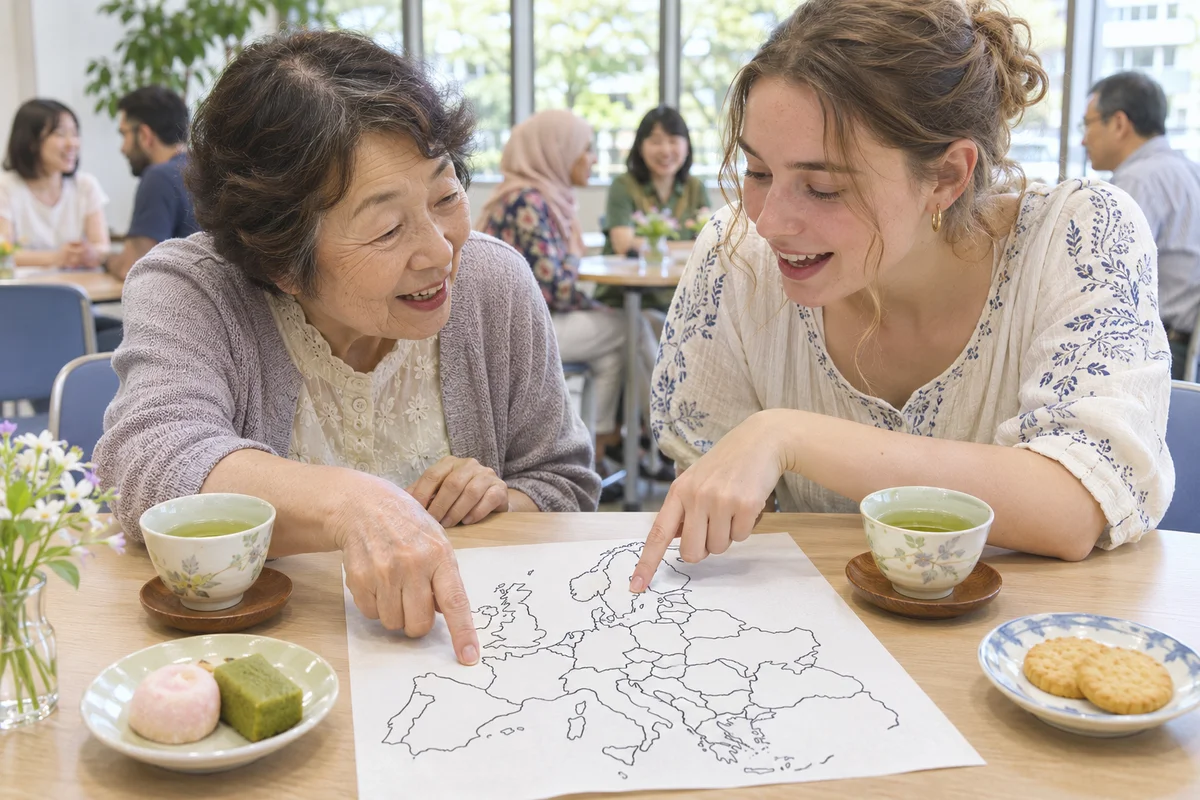
Themed events are great because you never run out of things to talk about. Go to the same series a few times and you'll start recognizing people from that country, plus the Japanese regulars who keep showing up. This is also one of the easiest ways to meet locals in Kumamoto who actively want international friends. Dates and sign-up details are on the foundation's event calendar.
With so many people from Taiwan now living around Kikuyo, Kumamoto has started hosting Taiwan exchange events. Taikuma Saisai brings Taiwanese food, crafts, cultural activities and a stage, and you can talk directly with vendors from Taiwan. It started in Koshi in 2024, and in 2026 it moved to the plaza in front of Kumamoto Station.
Festival energy makes it easy to strike up a conversation in a food line. If Taiwan interests you, our guide on how to make friends in Taipei gives you a few extra things to talk about.
The school festival and public lectures at Kumamoto University are natural ways to cross paths with international students. The university's global education college has also run exchange sessions in the past where students chatted in English and Japanese.
Students also turn up at the city international center's events, so combining this with Tip 2 widens your circle fast.
ALTs work in their own towns during the week, and many come into Kumamoto City on weekends. KumAJET, the local JET community, is run mostly by JETs, but it says its events are open to all Kumamoto residents, foreign and Japanese. Events are mainly announced on Facebook, and there's a Discord server for the community.
If jumping into a group cold feels awkward, befriend one person at a bar or exchange event and let them bring you along. ALTs also spend every day around Japanese students and coworkers, so they're often great bridges to local friends.
If you live out by the plant, your best friendships may start a few meters from your door. Kids play at the same park. You shop at the same supermarket. Here, a greeting and small favors work much better than trying to "make friends" on purpose.
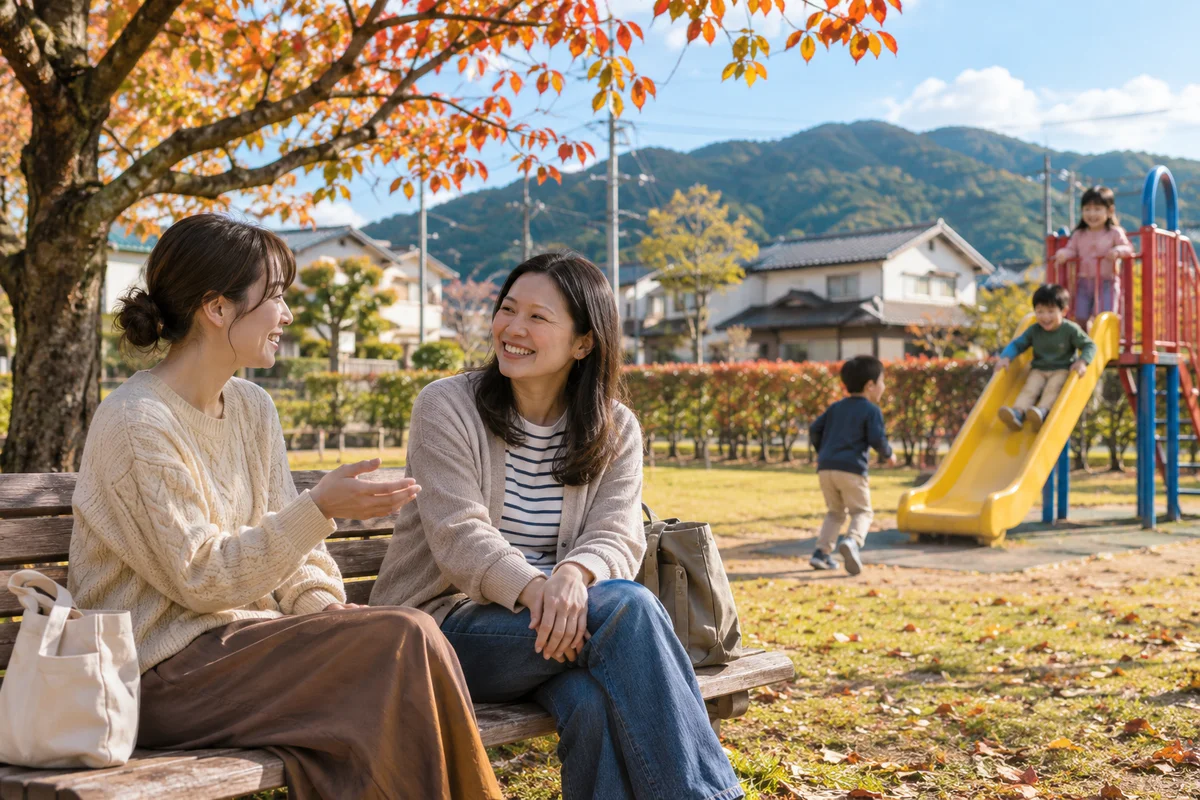
If you're the newcomer, asking a neighbor how garbage sorting works or which clinic they use is a perfectly good opener. Japanese parents often appreciate the effort, and simple Japanese plus gestures carries you surprisingly far. If you've been here longer, offering that same help to a family who just arrived from Taiwan is one of the fastest ways to make a friend for years.
When event dates don't line up with your shifts, or the drive into town feels like too much, an app that shows people on a map near you helps. Whether you live in Kikuyo or right by Shimotori, seeing who's nearby and also looking for friends makes the jump to an actual meetup much smaller. More on that below.
Ask where foreigners hang out in Kumamoto at night, and the answer is almost always around Shimotori and Shinshigai. There are a few spots near the station too, but downtown is where most residents go out.
For things to do in Kumamoto to meet people without drinking, there are four main routes: the intercultural and international exchange cafes at the city international center, Taiwan exchange events like Taikuma Saisai, Kumamoto University's public events, and community groups like KumAJET, Meetup and Facebook. Searching "Kumamoto" on Facebook or Meetup sometimes turns up gatherings announced in English. For prefecture-wide international events, the Kumamoto International Foundation is worth following too.
Week 1: Check the international center's event calendar and pick one intercultural cafe. Walk around Shimotori and Shinshigai one evening and note a few bars that look right.
Week 2: Go to that cafe. On Friday or Saturday, visit one of the bars on your list.
Week 3: Go back to the same event and the same bar. Say hi to whoever you talked to last time.
Week 4: Invite someone you clicked with for a walk around Kumamoto Castle or a picnic at Ezu Lake.
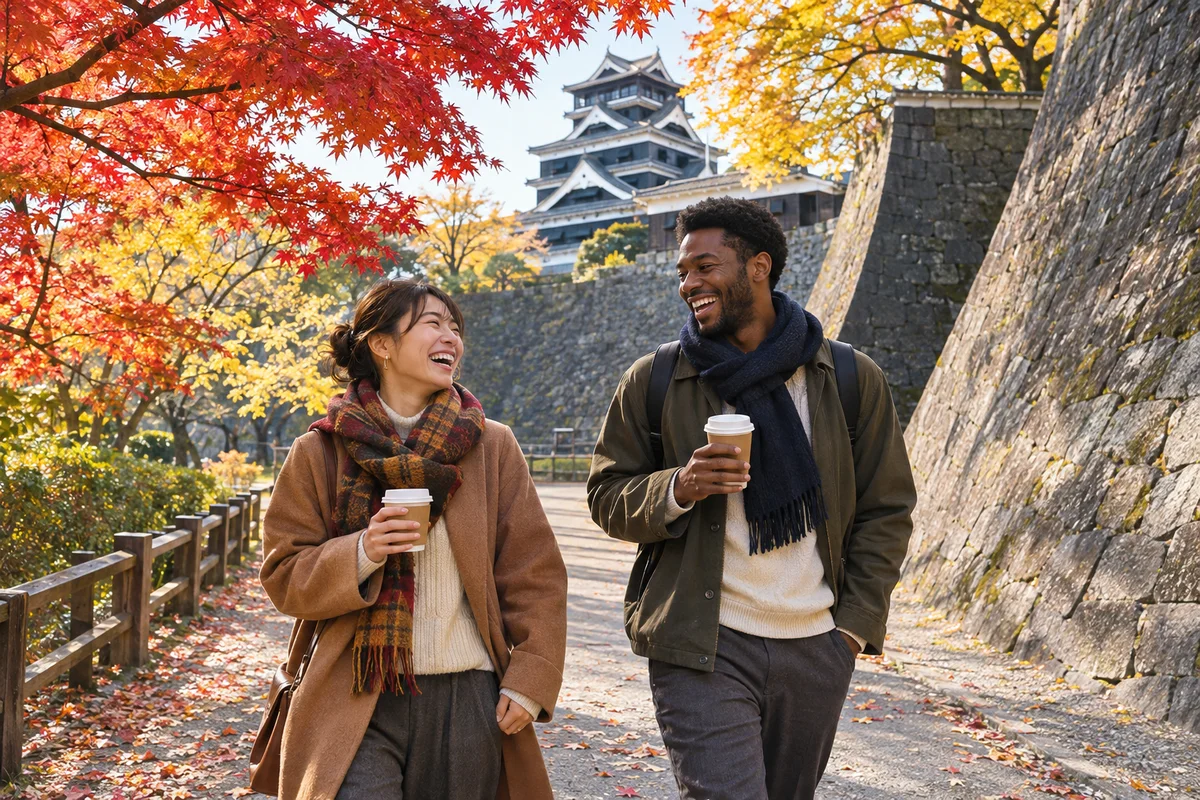
The classic mistake is trying to show up everywhere in month one. Going deep beats going wide. Kumamoto's international scene is much smaller than Tokyo's, so one good friend tends to lead to their friends, and then to theirs.
Map-based apps fit Kumamoto well because the community is so spread out. Open the map and you can see who's around Shimotori, who's out near Kikuyo, and who's looking for friends, locals and internationals alike. Then "want to grab coffee in Kamitori this weekend?" is an easy message to send.
Make Japanese Friends On a Live World Map
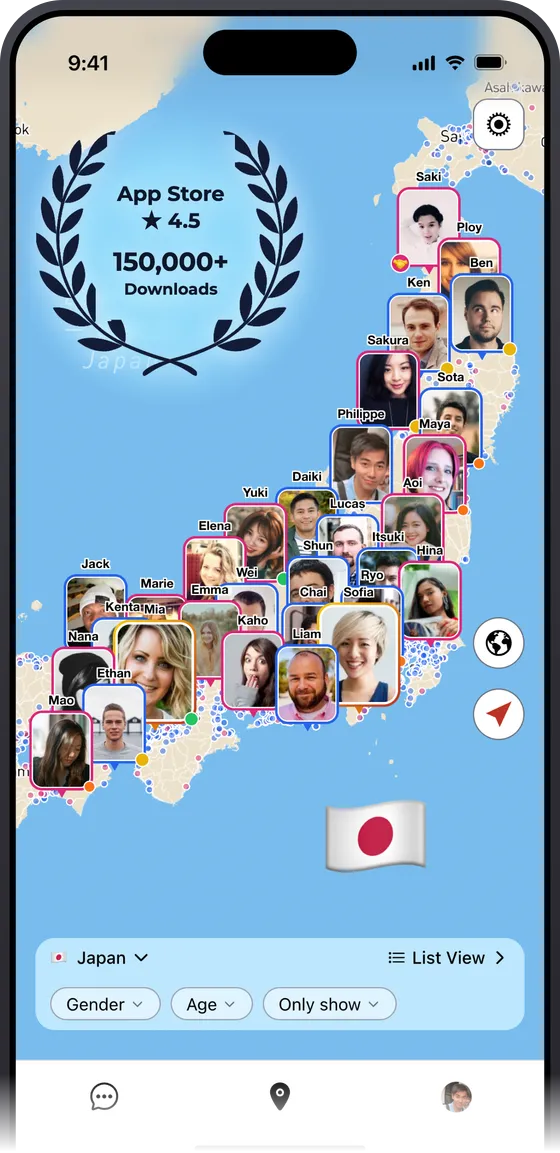
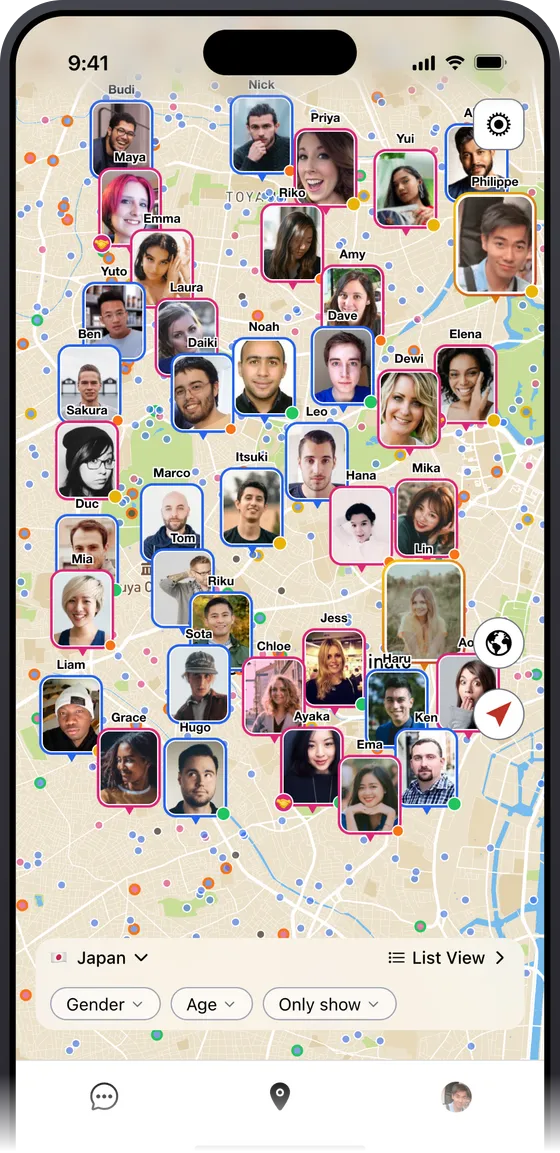
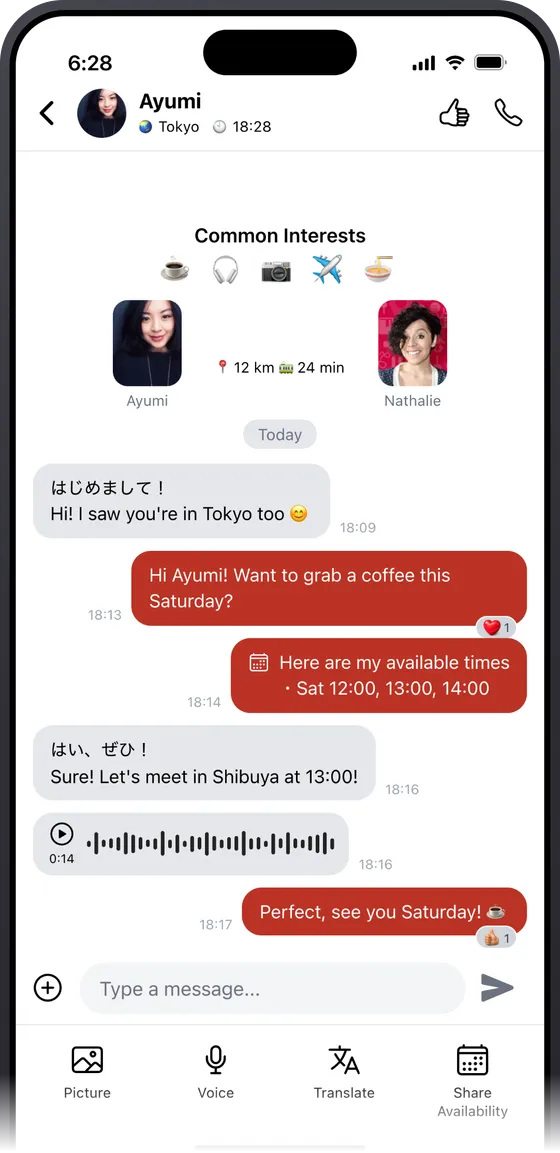


SewaYou is a map-based friendship app for finding people nearby and anywhere in the world. Besides meeting people in Kumamoto, you can browse another city or country from home and make online friends without any travel plans, or connect with someone before they move to Kumamoto (or before you visit their city) and meet once you're close. It's about friendship, not studying.
Still deciding which app to try? Our roundup of the best apps for making international friends compares the options.
Where can foreigners meet people in Kumamoto?
At night, the bars and izakaya around Shimotori and Shinshigai. Without alcohol, the intercultural cafes at the Kumamoto City International Center in Hanabatacho. For international students, try Kumamoto University's public events, and for people from Taiwan, exchange events like Taikuma Saisai.
Is there an expat community in Kumamoto?
Yes, though it's spread out. There's a Taiwanese community around Kikuyo, international students at Kumamoto University, ALTs across the prefecture through KumAJET, and people working at local companies. Many foreigners you see downtown are travelers heading to the castle or Aso, so not everyone lives here.
What are the best things to do in Kumamoto to meet people?
Intercultural and international exchange cafes at the city international center, festivals like Taikuma Saisai, KumAJET gatherings, and Meetup or Facebook group events. Check each organizer's official site or social accounts for current dates.
How do I meet locals in Kumamoto if my Japanese is basic?
Go where locals want to meet you. Japanese regulars at the international center's events are there for international friendship, and some sessions are run in Japanese, which is great practice. A regular bar works too, since staff and regulars warm up after a few visits. Effort and showing up again matter more than perfect Japanese.
Does SewaYou cost anything?
There's a free version with limited features, and Pro unlocks more chats and features.
Kumamoto has plenty of people to meet. They're just in different places. Mix a downtown bar, the city international center, Taiwan exchange events and university events, and a real circle of local and international friends comes together. Curious about the rest of Kyushu? Read how to make friends in Fukuoka next.
Looking for friends in Kumamoto? Download SewaYou to find people near you on Shimotori or in Kikuyo, or explore the map and make friends anywhere in the world from home. For other cities, see our guide to making friends by city.