Yokosuka is a strange place to feel lonely. You hear English on Dobuita Street, you see American families on the train platform, and there are Japanese locals everywhere who would happily talk to you. And yet a lot of foreigners here, whether they came with the base, teach English, or just moved for work, end up with a social life that stops at the office or the gate.
If you've been searching "how to make friends in Yokosuka" and getting nothing useful, this guide is for you. It covers the neighborhoods where friendships actually start, the local organizations that run classes and events, and a simple plan for your first month. Most of it works even if your Japanese is close to zero.
Yokosuka isn't Tokyo, and it isn't really Yokohama either. It has its own set of reasons why meeting people takes a bit more intention.
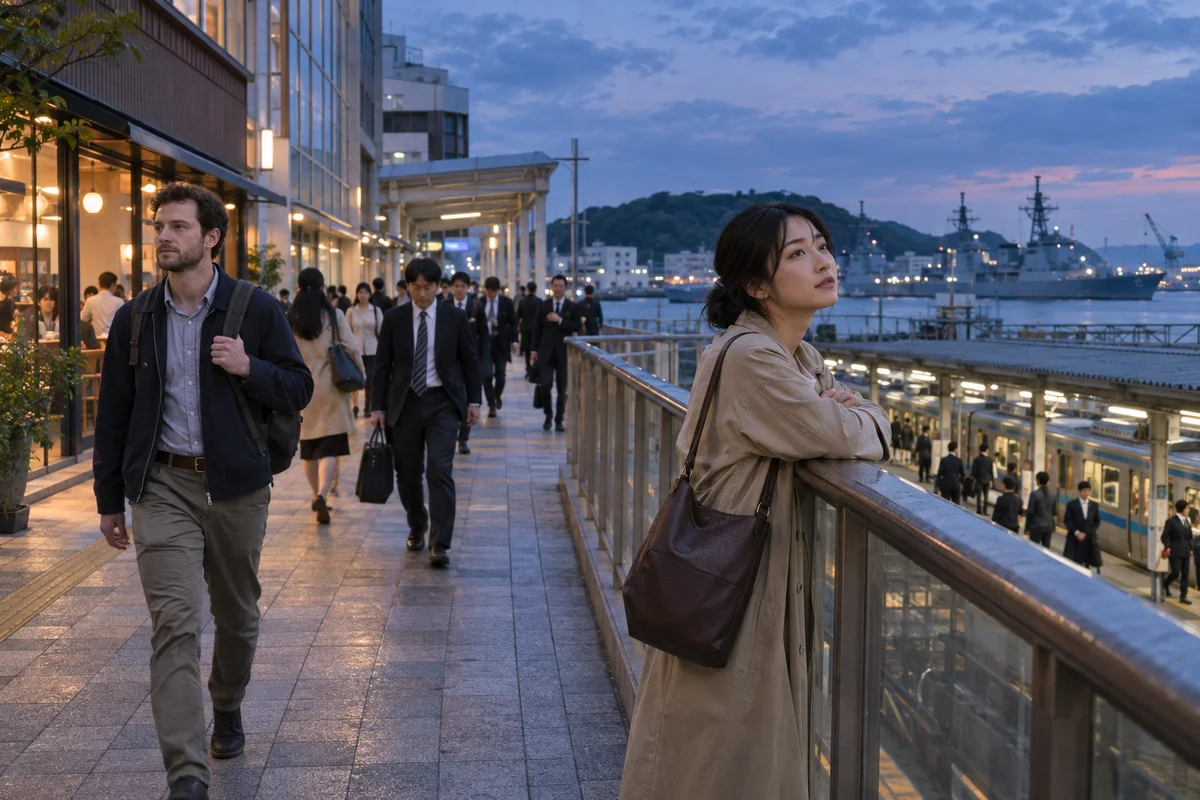
Lives run in separate lanes. If you're connected to the base, your days often revolve around coworkers, unit events, and other families. If you're a Japanese local, you see Americans every day but rarely cross into their routines. Both sides are close, physically, and still don't mix much.
People rotate in and out. Plenty of foreigners come to Yokosuka for a few years and then move on to the next posting or job. That turnover makes some people hesitate to invest, on both sides. Why build something if someone might leave?
It's also a commuter town. Lots of residents ride the Keikyu or JR lines to Yokohama and Tokyo. Work in the city, home at night, repeat. That leaves less time for meeting anyone locally.
The flip side is good news. Yokosuka is small enough that regulars recognize you. The stretch from Yokosuka-Chuo to Shioiri is walkable, so once you pick one place and keep showing up, you start seeing the same faces fast.
It helps to think of Yokosuka in four zones. The first three sit between Keikyu's Yokosuka-Chuo and Shioiri stations, and you can walk between all of them.
The area around Yokosuka-Chuo Station is the city's main downtown. From the pedestrian deck outside the station, shopping streets fan out with restaurants and cafes that stay busy into the evening.
This is your base camp. It's easy to reach from anywhere in the city, so it's the natural place to suggest "let's grab coffee near Chuo" to someone you met at an event. Find one cafe here you like and make it your default.
A short walk from Chuo, Dobuita Street is a shopping street of roughly 300 meters lined with sukajan (embroidered souvenir jacket) shops, military surplus stores, and places to eat. Being right next to the base, it has a long history of American visitors.
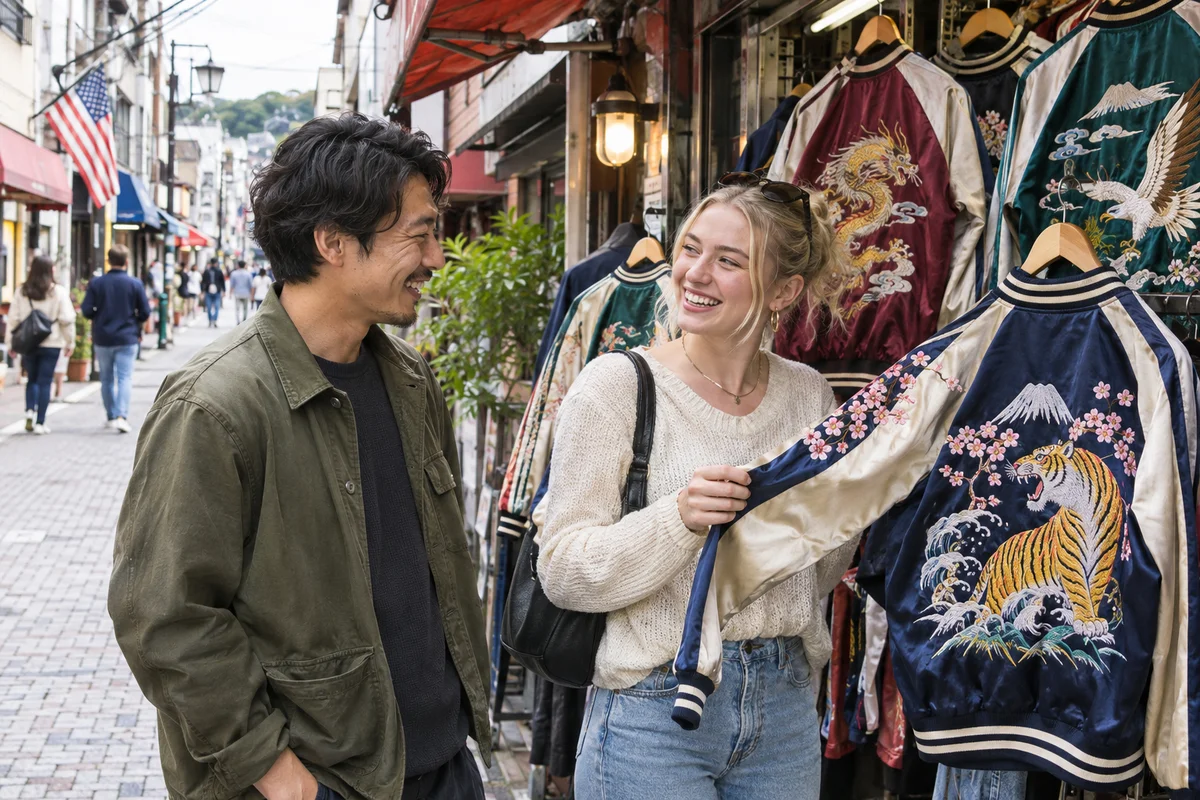
Dobuita isn't a place to force conversations. It's a place to wander. The jackets and the local food are instant conversation starters, and once you have a Japanese friend, it's a fun street to explore together, each of you explaining a different half of its history.
Right by Shioiri Station you'll find the Coaska Bayside Stores mall and Verny Park, a waterfront park with a rose garden that's also a short walk from JR Yokosuka Station. The roses peak in spring and autumn.
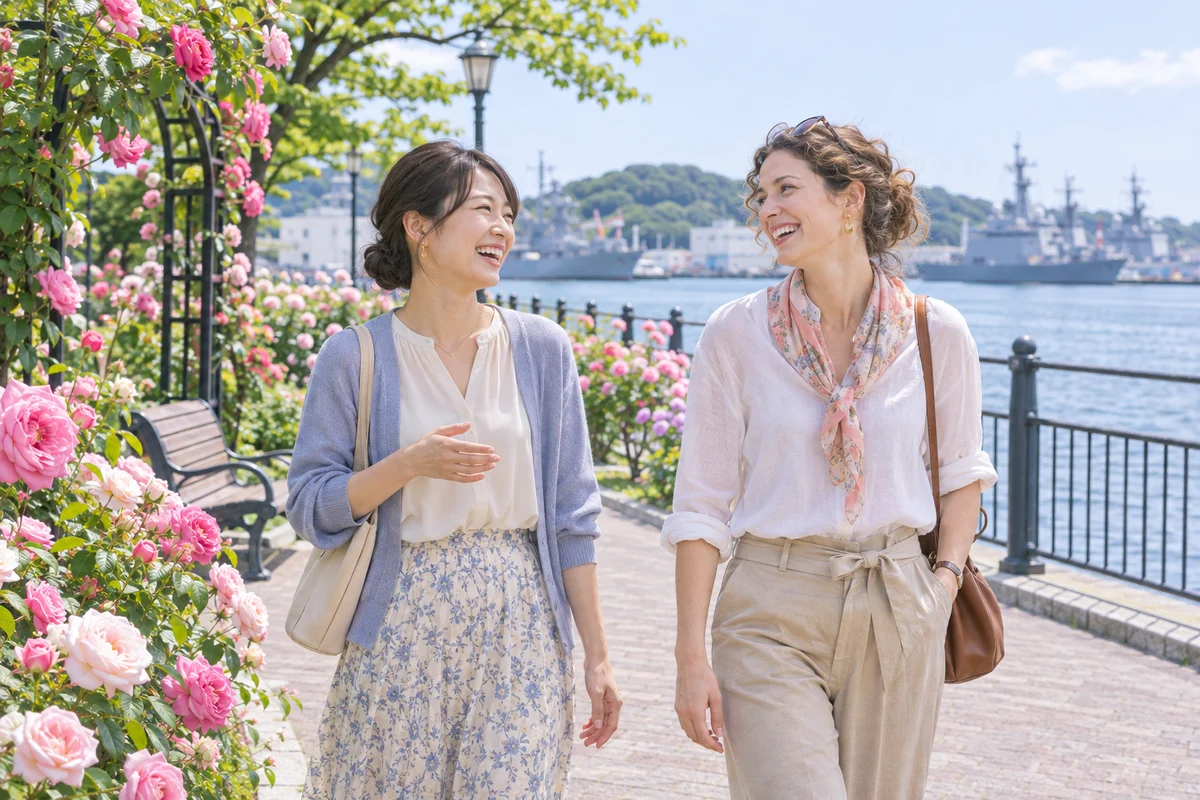
The park is named after Verny, a French engineer who helped build Yokosuka's shipyard in the 1860s, and that history is one reason Yokosuka is a sister city of Brest, France. Practically speaking, Verny Park is the perfect spot for a second meetup. Walking along the water with the roses beside you, the conversation keeps itself going.
Head south or west and the city opens up: the beach at Kurihama, the lighthouse and coastal trail at Kannonzaki, and Mount Ogusu, the highest point on the Miura Peninsula.
Hiking and coastal walks take the pressure off talking. On Meetup, small groups have posted language exchange hikes up Mount Ogusu in the past. They're irregular, so search in English for things like "Yokosuka hiking" and see what's current.
If you only check out one organization, make it the Yokosuka International Association (横須賀国際交流協会), a nonprofit that sits at the center of international exchange in the city. It runs a consultation desk for foreign residents, Japanese classes, and foreign language courses.
Its programs include a volunteer-run Japanese conversation salon, foreign language courses, world cooking classes where foreign instructors teach home dishes from their countries, and English-language guided tours of Yokosuka sights. It also trains volunteer guides for those tours.
For a foreigner, the conversation salon is gold: the Japanese volunteers who show up week after week are exactly the kind of locals who want to meet you. Weekly faces beat one-off parties every time. Check the association's website for current schedules and how to sign up.
The association and the City of Yokosuka also run Japanese culture experience classes for foreign residents at the Sogo Fukushi Kaikan (General Welfare Hall), a short walk from Shioiri Station. Attendees try ikebana, origami, calligraphy, kimono dressing, and shamisen. In 2026, sessions were scheduled for June and November.
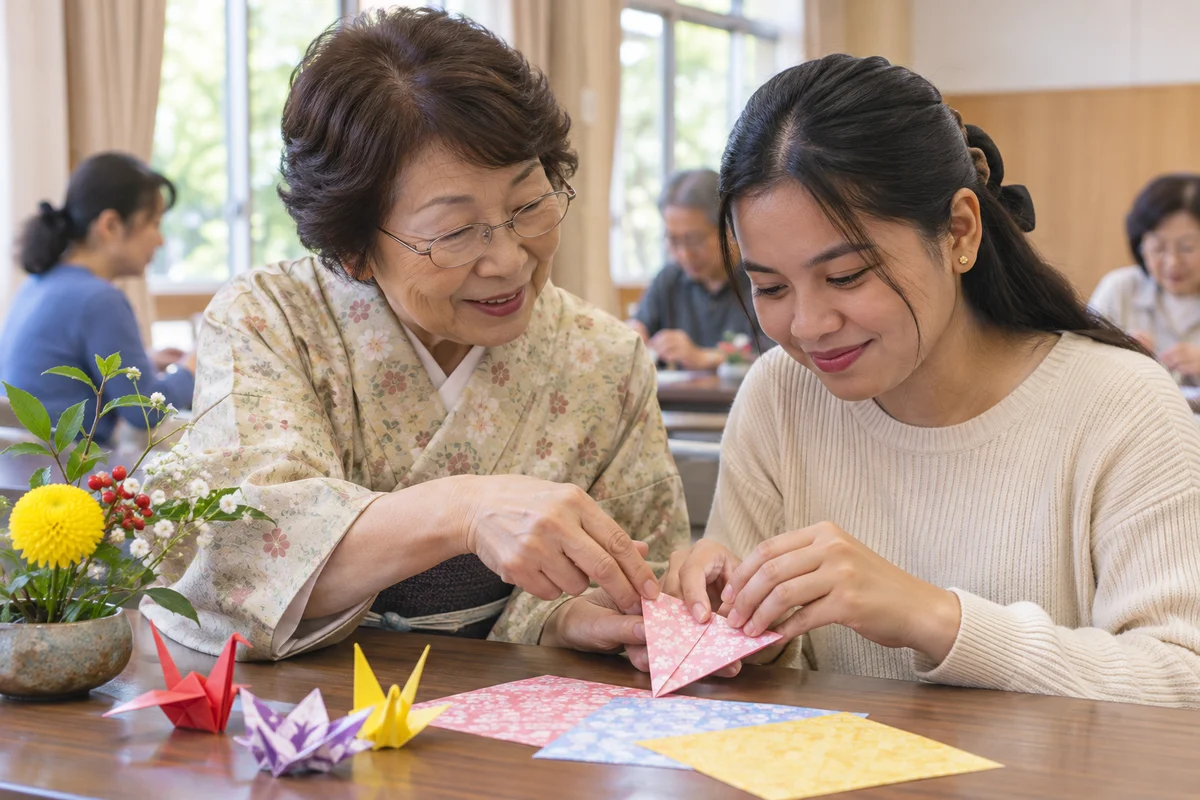
The next big gathering is Japan Festival in Yokosuka, planned for February 28, 2027 at the same hall, with stage performances and exhibits. What makes these events great for friendship is the Japanese side: many locals come to teach or help out. Learning origami from someone gives you an easy reason to talk, and to say hi again next time.
Yokosuka's signature events are the open-base days at the US Fleet Activities Yokosuka. On November 15, 2026, the Japan-US Friendship Day returned after a two-year gap, and about 16,500 people came despite the rain.
These aren't guaranteed every year, though. The Yokosuka Spring Festa planned for March 2026 was canceled. Entry requires specific ID, so check the city's website for the latest details. Treat them as a fun day out that gives you more to talk about, not as your main friendship strategy.
Yokosuka has four sister cities, all port towns: Corpus Christi in the US, Brest in France, Fremantle in Australia, and Medway in the UK.
City Hall also employs coordinators for international relations from the US and France, who sometimes run events for residents. The office in charge is the city's International Relations and Base Policy Division. Glance at the city's event listings now and then. For wider Kanagawa events, the Kanagawa International Foundation's site is useful too.
Search for foreigner-friendly bars in Yokosuka and you'll get a long list around Dobuita and Chuo. Honestly, touring all of them is slower than picking one. Choose one counter and keep going back.
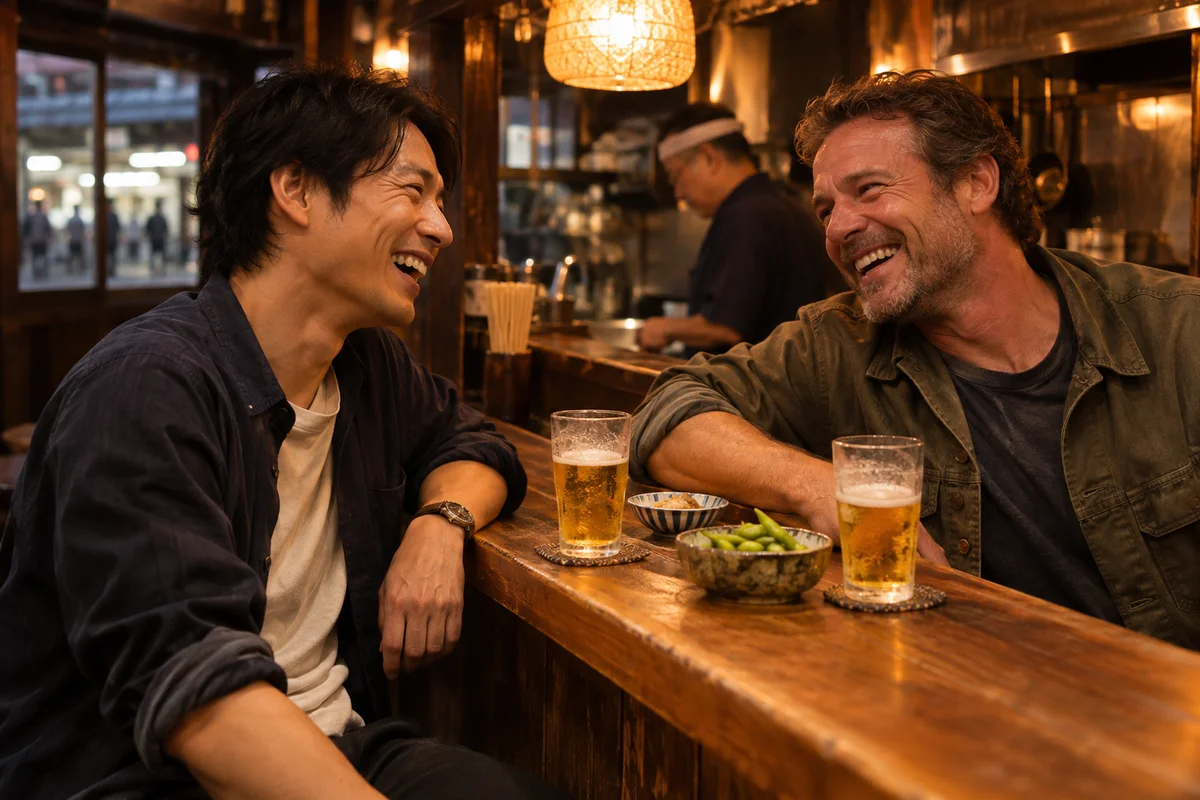
After a few visits the owner remembers you, and owners love introducing their regulars to each other, Japanese and foreign alike. Early weeknight evenings are calmer and better for actual conversation than late weekend nights, when the crowd turns over quickly.
Much of Yokosuka's international community shares information in English rather than Japanese. Search Meetup and Facebook for "Yokosuka" or "Miura Peninsula" and you may find hiking groups or language exchange meetups.
If there's nothing that fits nearby, remember Yokohama is an easy Keikyu ride away and has far more going on. Our guide to making friends in Yokohama covers that side. Start with whatever is closest to your station.
Week 1: Look at the Yokosuka International Association's website and pick one class or event you can actually attend.
Week 2: Find a cafe in Yokosuka-Chuo or Shioiri that could become your regular spot.
Week 3: Go to the class or event you chose. Afterward, swap contacts with just one person you talked to.
Week 4: Go back to the same thing. Invite last week's person for a walk in Verny Park or a coffee.
The most common mistake is trying a different thing every weekend and never returning. Yokosuka has fewer events than Tokyo, so the people you see twice matter most.
Classes and events are one half. The other half is seeing who's actually around you. In a city where foreigners and locals live side by side but rarely cross paths, knowing that someone with shared interests is a ten-minute walk away changes things.
That's why we built SewaYou, a map-based friendship app for finding people nearby and anywhere in the world. Open the map around Chuo, Dobuita or Shioiri to see foreigners and Japanese locals who are around, and reach out to the people whose profiles click with you.
Make Japanese Friends On a Live World Map


The map isn't limited to Yokosuka either. From home, you can explore people in another city or country and build online friendships, no travel plans required. Planning a trip? Get to know people there first and meet when you arrive. And when you or your friends rotate to the next posting, the map keeps you connected across the distance.
Still comparing options? See our roundup of the best apps for making international friends.
Where can foreigners meet locals in Yokosuka?
Start with places you can attend regularly, like the Yokosuka International Association's Japanese conversation salon, cooking classes, and the Japanese culture experience days. For walks and second meetups, Verny Park in Shioiri and Dobuita Street are great. In the evening, becoming a regular at one counter bar in Yokosuka-Chuo is the fastest route.
Is there an expat community in Yokosuka beyond the base?
Yes, though it's spread out. English teachers, people working locally, and foreign residents connect through the international association's programs, English-language Meetup and Facebook groups, and the regulars at local bars. Widening your search to Yokohama adds a lot more options.
What events in Yokosuka are good for meeting people?
The Japanese culture experience classes run by the international association and the city, and Japan Festival in Yokosuka, planned for February 28, 2027. The base's Japan-US friendship events are fun too, but they're sometimes canceled, so check the city's website first.
Do I need to speak Japanese to make friends in Yokosuka?
No. Many locals want to practice English, and at the conversation salon your interest in Japanese is exactly the point. Hands-on activities like cooking classes, origami or hiking make it easy to connect with only a few words in common. Even basic greetings in Japanese will earn you a lot of warmth.
I'm only in Yokosuka for a few years. Is it worth trying?
Absolutely. A few years is plenty of time to build real friendships, and they don't end when you leave. Many people stay in touch long after a move, and a friend in Yokosuka is a great reason to come back.
The trick to making friends in Yokosuka is creating one place where you'll see the same people again. A class at the international association, a walk in Verny Park, a counter where the owner knows your name. Become close to one person there and their circle opens up to you, often faster than you'd expect.
Looking for friends in Yokosuka? Download SewaYou to find people around Chuo and Shioiri for a casual coffee, or explore the map from home and make friends in the countries you're curious about. Your next friend might be closer than you think, or on the other side of the world.
Looking at another city? Check out our city-by-city guide to making friends.