

Yokohama gets overshadowed by Tokyo, but anyone who actually lives here knows it has its own vibe. The harbor, the red brick warehouses, Chinatown, the slower pace, the mix of old port-town charm and sleek waterfront towers. It's the second-biggest city in Japan, but it often feels weirdly quieter and more spread out than you'd expect from the population numbers.
That sprawl is also the main reason a lot of foreigners in Yokohama end up feeling lonely. The city is huge, the expat scene is fragmented across neighborhoods, and most of the flashy international meetups happen in Tokyo. If you're sitting in Kohoku-ku or Totsuka wondering where everyone is, you're not alone.
This guide is about how to make friends in Yokohama specifically, not generic Japan advice you've read a hundred times. Let's get into it.
The first thing to understand is that Yokohama is not a scaled-down Tokyo. It's its own animal. People here are often locals who grew up in Kanagawa, commute into Tokyo for work, and do their social life back in their home neighborhood on weekends. That means the friend-making pace is slower and more neighborhood-based.
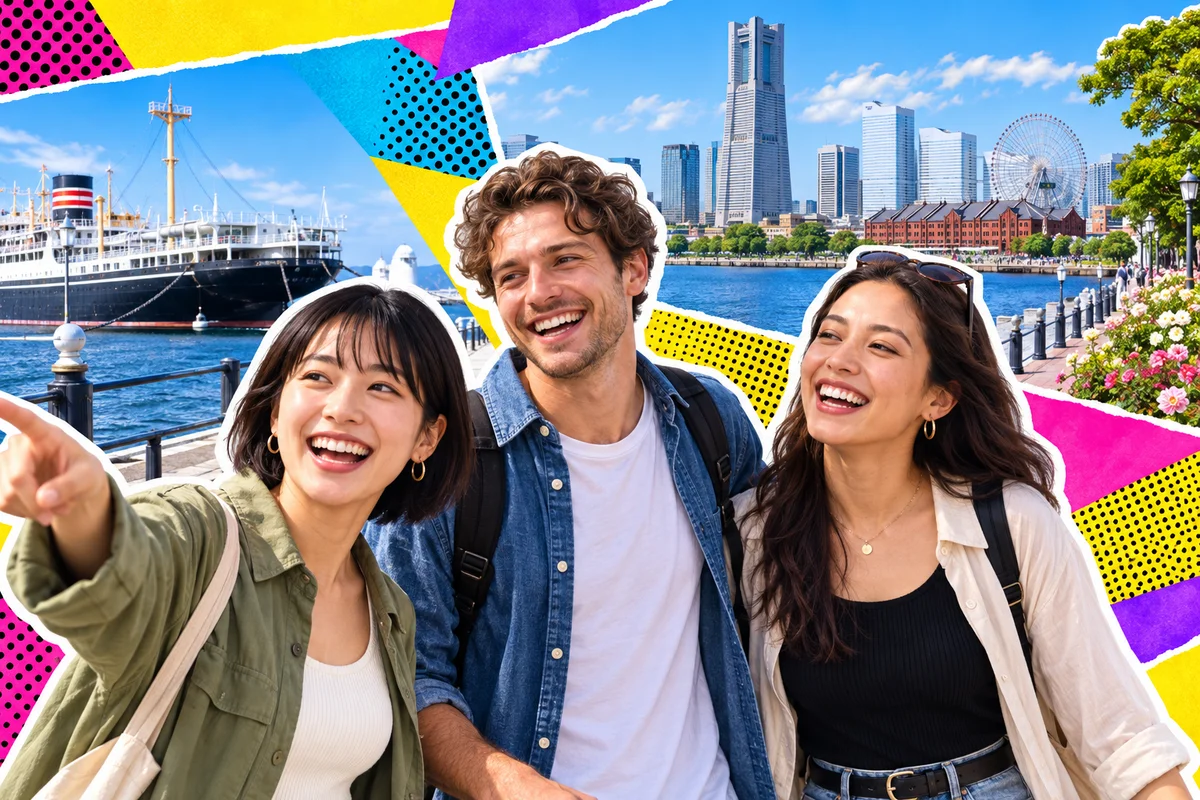
A few specific challenges you'll hit:
The city is geographically massive. Motomachi, Minato Mirai, Shin-Yokohama, Kannai, and Kamiooka all feel like different cities. A "quick drink" with someone on the other side of town is a 40-minute train ride. People default to staying in their own area, which makes random run-ins rarer.
The international community is more scattered. Unlike Roppongi or Shibuya where you'll hear English on every corner, Yokohama's foreign population is more spread out across Naka-ku, Nishi-ku, and the outer wards. There's no single "expat street" here.
A lot of social energy gets sucked into Tokyo. If your coworkers are based in Shinjuku or Shibuya, your after-work plans probably happen there, which means you never build a proper local circle in Yokohama itself.
The "Yokohama is part of Tokyo" misconception. It isn't. People from Yokohama have real pride in the city being its own thing, and if you show up acting like it's just a Tokyo suburb, you'll get polite distance instead of warmth.
Okay, problems acknowledged. Now the fun part.
Minato Mirai is the obvious starting point for most foreigners because it's where a lot of weekend life happens. The Red Brick Warehouse (Akarenga) hosts food festivals, Christmas markets, Oktoberfest-style beer events, and pop-up markets almost constantly. These are low-stakes places to strike up conversations because everyone is already standing around with a beer or a plate of food.
The Cup Noodles Museum and Cosmo World areas also attract a mix of tourists and locals, but the real goldmine for meeting people is the seasonal events. Check Akarenga's event calendar every month and just show up to the food-themed ones. Sports bars around Queen's Square and Landmark Plaza get packed during rugby tournaments, Baystars games, and football season. Walk in alone, sit at the bar, talk to whoever's next to you watching the same screen.
If Minato Mirai feels too polished, Noge is the opposite end of the spectrum. It's a dense grid of tiny izakayas, yokocho-style alleys, and standing bars where the counter seats seven people and you end up in a conversation with whoever sits next to you. This is arguably the best friendship territory in all of Yokohama.
Go to Noge alone, sit at a counter, order something, and just be open. Japanese standing bars have a culture where talking to strangers is not weird. It's expected. Places like Noge Hanasaki Hiroba area and the little alleys near Sakuragicho station are full of tiny spots where a regular crowd forms over a few visits. Becoming a regular at one place, even if you only go once a week, builds genuine friendships faster than any meetup app.
The Motomachi shopping street and the old foreign settlement up on the Yamate bluff have a very different feel. Quieter, more cafe-oriented, more settled. The expat residents here tend to be long-term, often families or people connected to the international schools (Yokohama International School, Saint Maur, Saint Joseph). If you're older or just not into the bar scene, the cafes in Motomachi and around Ishikawacho station are great spots for book clubs, language exchanges, and daytime socializing.
Enokitei, the old Western-style cafe up on the bluff, hosts casual events. Cafe de la Presse near Motomachi has a steady foreign regular crowd. Yamashita Park at sunset is genuinely one of the best spots in the city to fall into casual conversation with dog walkers and runners.
Yokohama Chinatown (Chukagai) isn't just a tourist thing. It has a real community feel after 9pm when the tour buses leave. There are small bars, mahjong parlors, and karaoke places that attract a regular crowd of Yokohama locals and long-term foreigners. If you want a slightly off-beat scene that isn't all sarariman in suits, spend some evenings wandering around after the dinner rush clears.
If you live up in Kohoku, Tsuzuki, or Aoba ward, you don't need to drag yourself down to the waterfront every time you want to socialize. Shin-Yokohama has its own bar scene around the station, and the Nissan Stadium area hosts concerts and sporting events that pull huge crowds. The Yokohama F. Marinos football matches are genuinely great social events. Supporters are welcoming, alcohol is flowing, and you'll absolutely make friends if you go to a few games and join the regular fan section.

Yokohama rewards regulars. Because the city is so spread out and people are so attached to their home areas, bouncing around trying to sample every district will leave you with zero friends. Instead, pick the neighborhood closest to where you live or work, find three or four spots you like (a cafe, a bar, a bookshop, a gym), and keep going back. Within a month or two, the staff will recognize you. Within three, you'll be chatting with other regulars. This pattern works way better in Yokohama than in Tokyo because the local communities are smaller and tighter.
Seriously. If you want an instant conversation topic with literally anyone in Yokohama, know a bit about the Yokohama DeNA Baystars or Yokohama F. Marinos. The city is passionate about its teams, and going to a Baystars game at Yokohama Stadium or a Marinos match at Nissan Stadium is a social event in itself. The Kannai area around the stadium is packed with fans pre- and post-game, and striking up a conversation about the last inning is the easiest small talk you'll ever do in Japan.
Tokyo language exchanges are often massive, impersonal, and full of people hunting. Yokohama's are smaller and way more chill. There are consistent weekly ones in Sakuragicho, Kannai, and Kikuna that pull a steady crowd of twenty to forty people. Search for local community groups on Meetup, Facebook, or event boards posted in international-friendly cafes around Motomachi and Kannai. The smaller size means you'll actually have real conversations instead of getting lost in a sea of people. Going to the same one three weeks in a row will do more than hopping around five different ones.
A lot of foreigners in Yokohama commute to Tokyo for work and feel like they can't do anything local on weekdays. But Yokohama's evening events around Sakuragicho, Minato Mirai, and Yokohama Station are happening right where your train arrives. Instead of going straight home, build the habit of stopping for one drink at a regular spot near your station two nights a week. It turns your commute into social time and you'll meet other commuters doing the same.
Yokohama has some of the best running routes in Japan. The waterfront loop from Yamashita Park through Minato Mirai and up to the Port of Yokohama is gorgeous, and there are casual running groups that meet at Rinko Park on weekend mornings. Yokohama Marathon in October is huge and training groups form in the months leading up to it. Cycling along the Sakuragicho-Motomachi route is similarly popular. These groups are incredibly friendly to foreigners because sport is the universal language, and you'll have a built-in weekly meetup with the same people.
The sprawl problem is real, but here's how to work around it. Accept that your friend group in Yokohama will probably cluster around one or two areas. Don't fight it. Having three solid friends in your own neighborhood is worth more than fifteen acquaintances scattered across the city who you'll never actually see.
The Tokyo gravitational pull is also real. If all your coworkers drink in Shinjuku, occasionally suggest Yokohama alternatives. Take them to Noge for a change. Show them Akarenga. You'll end up being the "Yokohama friend" and that's a fun role to have.
The language piece matters more in Yokohama than in Tokyo. There are fewer English-only social bubbles here, so even basic Japanese goes a long way. You don't need to be fluent. Being able to order, make small talk, and show you're trying flips the social dynamic completely. Yokohama locals respond really well to foreigners who put in even a little effort.
Yokohama's event calendar is genuinely one of the best ways to build your social life. The city leans hard into festivals:

Make it a rule to go to at least one major event per season, and go alone if you have to. These events are specifically designed to be social, and showing up solo is totally normal. Bring a book or just be willing to chat, and something usually happens.
Is it hard to make friends in Yokohama compared to Tokyo? It's different, not necessarily harder. Tokyo has more sheer volume of meetups and international events, so if quantity is what you want, Tokyo wins. But Yokohama has tighter neighborhood communities, and friendships you build here tend to stick because the people aren't going to move away next year for a new job. The locals have roots. If you're patient and commit to a neighborhood, Yokohama friendships go deeper than Tokyo ones in my experience.
What areas of Yokohama are best for foreigners to live in for social life? Motomachi, Yamate, and Naka-ku in general have the highest concentration of foreigners and international-friendly spots. Kannai is great for nightlife and younger single people. Minato Mirai is more family-oriented and polished. If you want to be near the action, somewhere between Sakuragicho and Ishikawacho stations puts you in walking distance of Noge, Kannai, Motomachi, Chinatown, and the waterfront all at once.
Do I need to speak Japanese to make friends in Yokohama? You can get by without it, but you'll be limiting yourself significantly. Unlike central Tokyo, Yokohama doesn't have the same density of English-speaking spots. Basic conversational Japanese (ordering, greetings, small talk about food or weather) will open up a massive amount of the city that stays closed to English-only speakers. Invest in at least N4 level Japanese and your social life will transform.
How do I meet other foreigners specifically in Yokohama? The Yokohama International School community, international churches around Yamate, the Yokohama expat Facebook groups, and the foreign regular crowd at certain Motomachi cafes (Jackie's, The Pie Holic area, and a few others) are the main hubs. Oktoberfest and the Red Brick events always have a strong foreign turnout. Running groups and sports clubs are also heavily mixed. Don't expect one central "expat bar" because Yokohama doesn't really have one.
If you've read this far, you already know that making friends in Yokohama is less about finding the one magic meetup and more about consistently showing up in your neighborhood. But knowing who's around you, right now, in your part of the city, is the missing piece.
Make Japanese Friends On a Live World Map
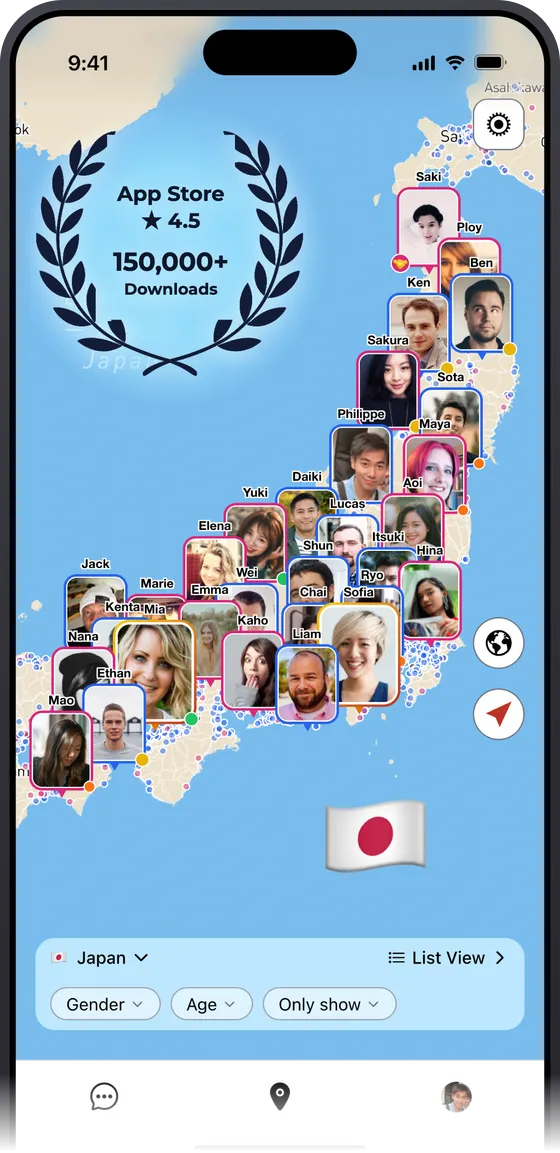
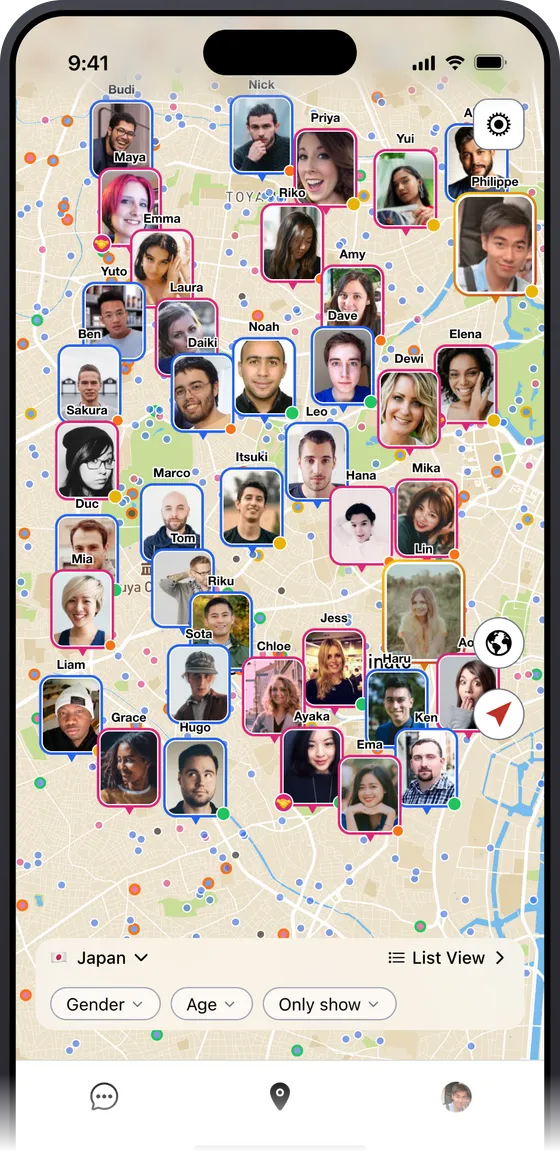
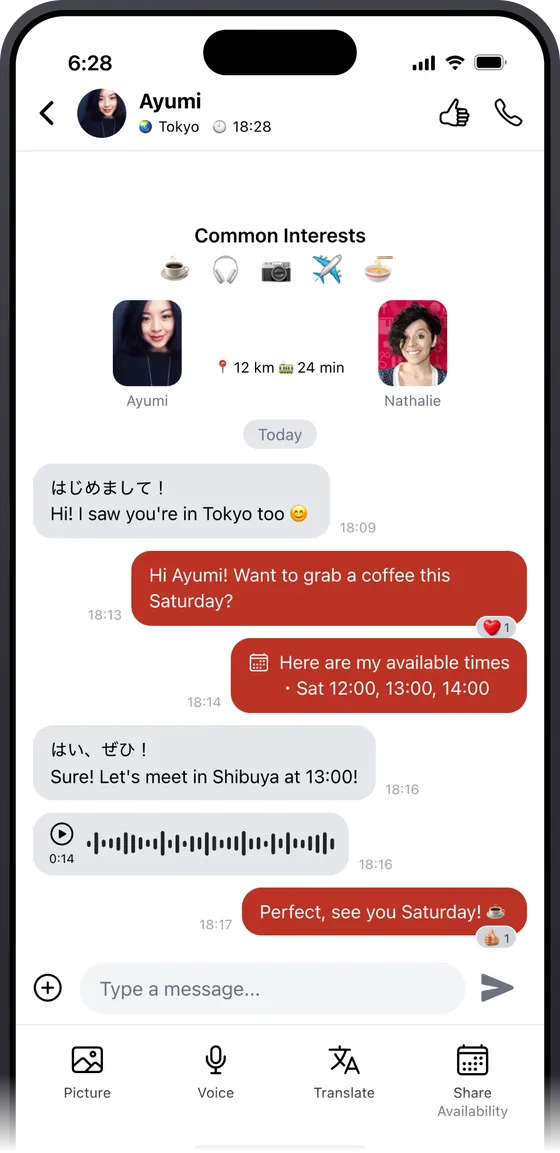


SewaYou is a map-based friendship app where you can find people nearby in Yokohama or anywhere in the world. Whether you're in Motomachi on a Saturday afternoon, grabbing ramen in Noge on a Tuesday night, or looking for a running partner along the Minato Mirai waterfront, you can see who else nearby is open to meeting up. No endless swiping, no vague group chats, just people in your actual area who want to make friends the same way you do.
Download it, drop a pin, and start turning Yokohama into the kind of city where you actually know people.


