

Seoul is buzzing. K-pop, K-dramas, and the whole Korean wave have pulled more foreigners to this city than ever before, and yet somehow, making real friends here can feel surprisingly hard. You land in Incheon, settle into your officetel in Gangnam or your hasukjib in Hongdae, and within a few weeks you realize something uncomfortable: the city is packed with people, you pass thousands of faces every day, but your social circle is still just you and your roommate.
If this sounds familiar, you are not alone. Seoul has one of the most socially active populations on earth, but Korean social life runs on its own rules, and breaking in as a foreigner takes a bit of strategy. The good news is that 2026 is genuinely one of the best times to be building a social life in Seoul. International communities have exploded, the app landscape has matured, and Koreans in their twenties and thirties are more open to cross-cultural friendships than any previous generation.
Here is a practical, Seoul-specific guide to making friends in the city, written for the kind of foreigner who actually wants depth, not just a rotating cast of Instagram contacts.
Before we get into tactics, it helps to understand what you are actually up against. Seoul is not Tokyo, and it is not New York. It has its own specific social dynamics that trip up a lot of newcomers.
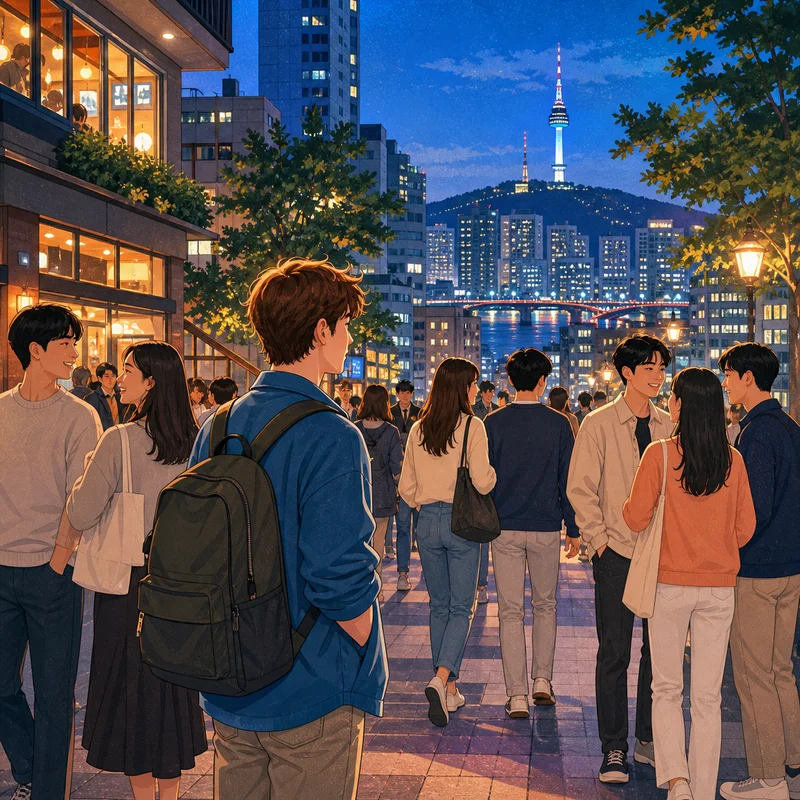
First, Korean friendship groups tend to form early and stay closed. Most Koreans in their late twenties and thirties made their core friends in high school, in their university department, or during their first job. These groups hang out in the same configurations for years, often decades. Breaking into one is not impossible, but it takes time, and cold inserting yourself into a Korean friend group rarely works.
Second, the work culture is brutal. Even in 2026, with all the reforms that have happened in Korean corporate culture, your Korean coworkers are probably exhausted by the time Friday rolls around. The classic image of Koreans drinking soju until 2am every night is outdated. A lot of young Koreans now genuinely want to go home and sleep, or see their one close friend, not entertain a new foreign acquaintance.
Third, there is the language gap. English levels in Seoul have improved a lot, and in neighborhoods like Itaewon, Yongsan, and parts of Gangnam you can get by fine, but deep friendship in Korean requires real Korean. If you are not studying the language, you are going to hit a ceiling with Korean friends eventually.
Fourth, and this one surprises people, the foreigner bubble in Seoul can become a trap. It is very easy to end up in an expats-only social scene where everyone is rotating through the same bars in Itaewon, nobody stays longer than a year or two, and you never actually integrate with the city.
Alright, now that we have set expectations, here is what actually works.
Seoul is enormous, and each neighborhood has a completely different social texture. Where you spend your weekends determines who you meet.
Hongdae is the obvious choice for twenty-somethings. It is loud, young, full of universities (Hongik, Yonsei, Ewha are all nearby), and the street culture around Hongdae Park on weekends is legitimately one of the best places in Seoul for casual social interactions. Buskers, dancers, drinking on the street, outdoor board game cafes, it is all there. If you want to make Korean friends in their early twenties, this is ground zero.
Itaewon and Haebangchon (HBC) are the international hubs. HBC in particular has a tight-knit long-term foreign community, and places like Magpie Brewing, Craftworks, and the smaller cafes along the main drag function as real neighborhood third places where you see the same faces week after week. Itaewon itself is more touristy than it used to be, but the back alleys toward Gyeongnidan still have a strong regulars culture.
Seongsu is where the creative and design-minded crowd hangs out in 2026. It is Brooklyn, basically. The cafes along Seongsu-dong 2-ga are full of designers, photographers, indie brand founders, and the kind of internationally-minded Koreans who are genuinely open to making foreign friends. Shoutout to the pour-over cafes around Seoul Forest if you want to strike up a conversation.
Yeonnam-dong, just behind Hongdae, is where I would send anyone in their late twenties or early thirties who wants a chiller scene. Smaller restaurants, wine bars, bookshop cafes, less chaos. You can actually have a conversation.
Gangnam and Apgujeong are where you go if your social life revolves around upscale dining, gym culture, or the CrossFit/running/pilates scene. There are real communities forming around the running clubs and F45 studios here, but it is a specific vibe.
The actual tip: pick one neighborhood, pick one or two venues in it, and show up every single week for two months. Do not try to sample everywhere. Regulars culture in Seoul is strong once you crack it. The cafe staff start to recognize you, the other regulars start to nod, conversations happen naturally. This is slow but it works.
The classic language exchange meetup is a staple of Seoul foreigner life, and for good reason. Koreans who want to practice English and foreigners who want to practice Korean show up in the same places, and mutual curiosity is a great friendship foundation.
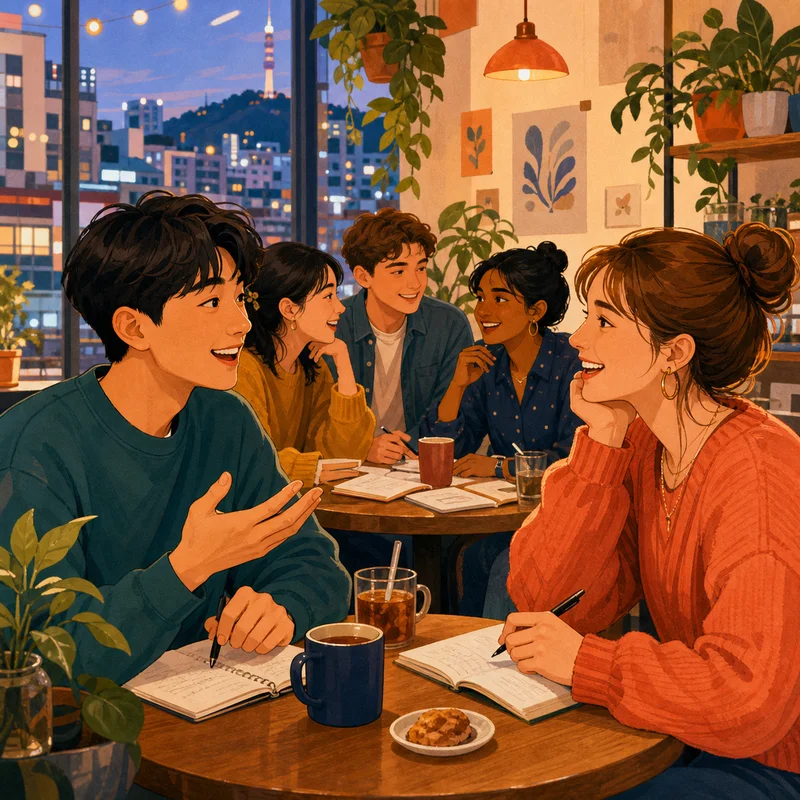
The big public ones at places like Trevia Pub in Sinchon, various cafes in Hongdae, and the rotating meetups that advertise on Meetup.com are hit or miss. Some nights you get great conversations, other nights you get a weird dating energy or a table of three people staring at their phones.
Better option: join a smaller, more structured language exchange, like the one-on-one partnerships you can find through the bulletin boards at Yonsei KLI, Sogang KLI, or Ewha. University language institutes always have Korean students looking for English partners, and these pair-ups tend to evolve into real friendships because you are meeting repeatedly and one on one.
Even better: language meetups organized around a specific activity. Hiking groups that conduct half in Korean half in English. Book clubs. Running groups. The activity gives you something to actually talk about beyond "what is your job, where are you from." These exist and are very findable through Naver Cafe groups and Instagram.
This is the big one. If you want to build real, deep friendships in Seoul, the single highest-leverage thing you can do is join a Korean-majority hobby community.
Some communities that are foreigner-friendly and actually welcoming:
Hiking crews. Seoul has Bukhansan literally inside the city, plus Gwanaksan, Bugaksan, Inwangsan, and a dozen others. Hiking culture in Korea is huge, and hiking crews are weirdly one of the easiest ways to meet Koreans in their thirties and forties. You do not need much Korean to share a thermos of makgeolli on top of a mountain. Try the hiking meetups that post on Naver Cafe, or look for running clubs that do occasional hikes.
Running clubs. The running scene in Seoul in 2026 is genuinely one of the best in Asia. Han River running crews like the ones that meet at Ttukseom, Yeouido, and Banpo on weekday evenings are welcoming to foreigners, and post-run dinners are where the real friendships form. Runners tend to be disciplined, social, and internationally minded. Easy win.
Board game cafes and TRPG groups. Hongdae and Gangnam both have strong board game cafe scenes, and there are English-friendly TRPG (tabletop RPG) groups that play in English or mixed. These are great for the more introverted crowd.
Climbing gyms. Bouldering has exploded in Seoul. The gyms in Seongsu, Mapo, and the bigger chains across the city have active communities. Climbing is basically a friendship machine because you are forced to spot each other, chat between attempts, and naturally hang around.
Korean cooking classes, pottery classes, film clubs. Any structured class where you see the same people weekly for two or three months will produce friendships, full stop.
The rule: pick something you would do anyway, commit to it for at least three months, and do not treat it as a networking exercise. Friendships come from repeated low-stakes exposure, not from trying hard.
There is a whole ecosystem of apps that help you meet people in Seoul, and using them well is a skill.
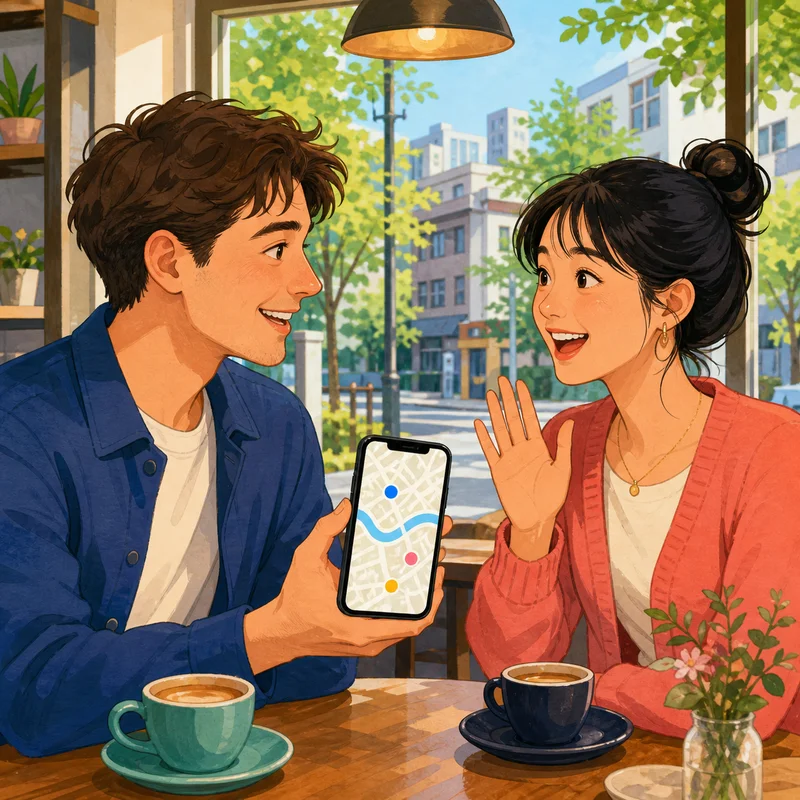
General rule: avoid apps where the default expectation is dating if you actually want friends. The energy bleeds through, and you end up in weird ambiguous situations.
Better: apps and platforms explicitly designed for friendship and activity-based meetups. Look for ones that show you people nearby rather than just matching you randomly across the city. Seoul is a big city, and having coffee in Gangnam with someone who lives in Eunpyeong is a commitment nobody wants to make twice.
You want the kind of app where you can see who is around you in your actual neighborhood, what they are into, and whether there is a realistic chance of bumping into them again. Proximity is the hidden ingredient in friendship, and most apps ignore it.
Use apps as a way to schedule the first meeting, then move it offline as fast as possible. The second coffee should not be scheduled through the app. Swap Kakao IDs or Instagram, put it in a real calendar, treat it like a real friendship attempt.
This is the hack nobody talks about. Seoul is full of foreigners waiting to be invited somewhere. If you become the person who organizes a small hike on Saturday morning, a Sunday brunch in Yeonnam, a Friday night pojangmacha crawl, people will show up, and they will remember you as the person who made it happen.
You do not need to be an extrovert for this. You just need to send one group chat message per week. "Going to Bukhansan Saturday 9am, meeting at Gupabal station exit 1, DM if you want to join" is enough. Start with two or three people, let it grow.
The act of organizing positions you as a social hub almost by default. Over six months, you end up knowing dozens of people, and because you are the connector, they all want to stay in your orbit. This works in any city, but it works especially well in Seoul because the friendship hunger among foreigners here is real and very few people are willing to take the initiative.
Some quick cultural pointers that will save you from missteps:
Age matters. When you meet new Korean friends, they will probably ask your age within the first few minutes. This is not rude, it is functional, because Korean social dynamics depend on age-based seniority. Do not get weird about it.
Paying the bill works differently. In close friend groups it is often one person covers this time, someone else covers next time, rather than splitting every check. If a Korean friend insists on paying, let them, and make sure you get the next one.
Kakao Talk is everything. Nobody texts on anything else. Get Kakao, set a normal profile picture, join the group chats you get added to, actually respond.
Drinking culture is not as mandatory as it used to be. If you do not drink, plenty of Koreans in 2026 are fine with that. Hiking, cafe-hopping, and cafe culture have replaced a lot of the old drinking-only social scripts.
Seoul is roughly comparable in difficulty to Tokyo, but the texture is different. Tokyo can feel polite and distant, with friendships developing very slowly. Seoul can feel warmer initially but has stricter in-group dynamics once people return to their established social circles. The upside of Seoul is that young Koreans are generally more direct and willing to make new friends, especially in international-leaning neighborhoods like Seongsu, HBC, and around the universities.
No, you can start without Korean, especially in Hongdae, Itaewon, Seongsu, and around the big universities. But if you want deep friendships that last beyond a year, you will eventually need at least intermediate Korean. English can carry you through the first six months, but cultural nuance, humor, and the stuff that makes friendship real mostly lives in the Korean language. Start studying on day one, even if you are only planning to stay two years.
For your first year, pick somewhere with a strong foot-traffic social scene. Hongdae, HBC, Seongsu, and Yeonnam are all excellent. Gangnam is fine if you have a specific community there already (gym, running club, job), but it is a harder cold start because the social life is more dispersed and transaction-based. Living within walking distance of cafes, bars, and parks matters more than commute time for your social life.
Plan on six months to feel like you have a few actual friends, and twelve to eighteen months to feel like you have a real community. The foreigners who build lasting social lives here are almost always the ones who stayed committed to one or two communities rather than bouncing between scenes. Consistency beats intensity.
The truth is that making friends in Seoul in 2026 is a numbers game combined with a consistency game. Most of the people who complain that they cannot make friends here are either not showing up to the same places repeatedly, or they are stuck in a foreigner bubble that rotates every six months. Pick your neighborhood, pick your hobby, show up for three months, and Seoul opens up in a way that feels genuinely magical.
Make Japanese Friends On a Live World Map
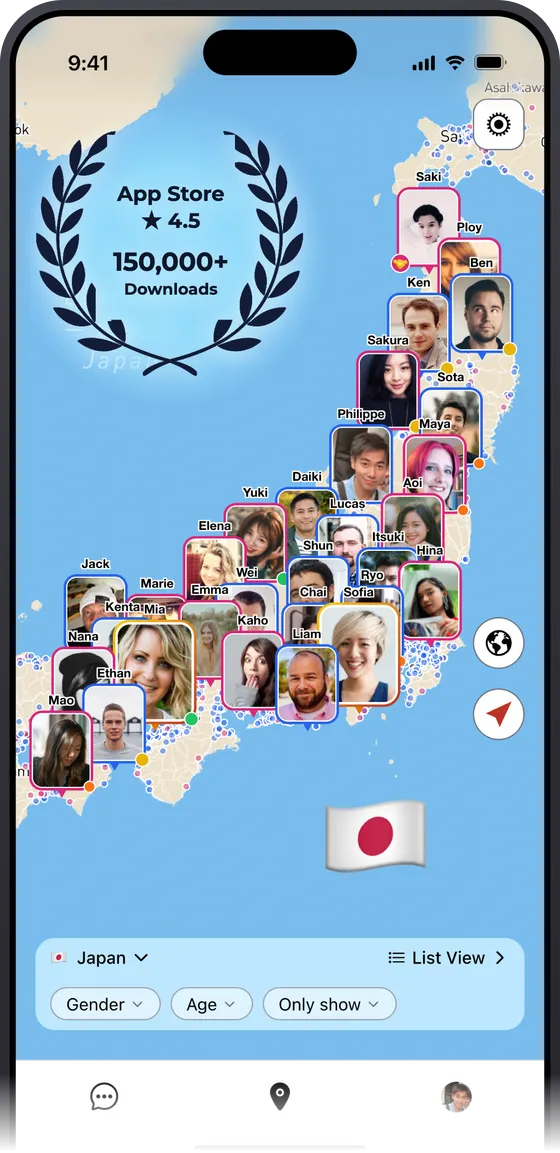
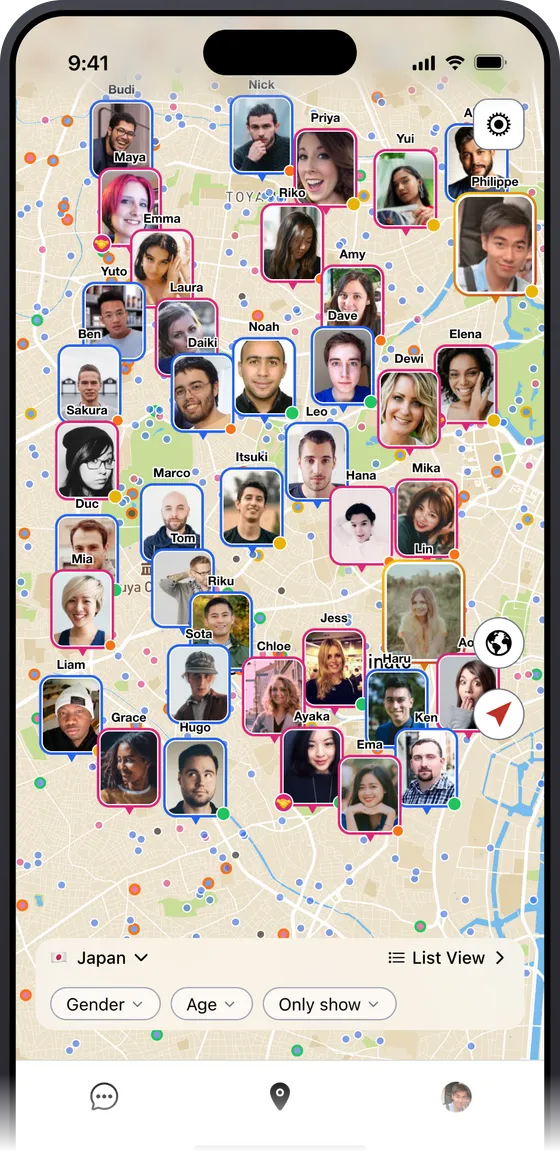
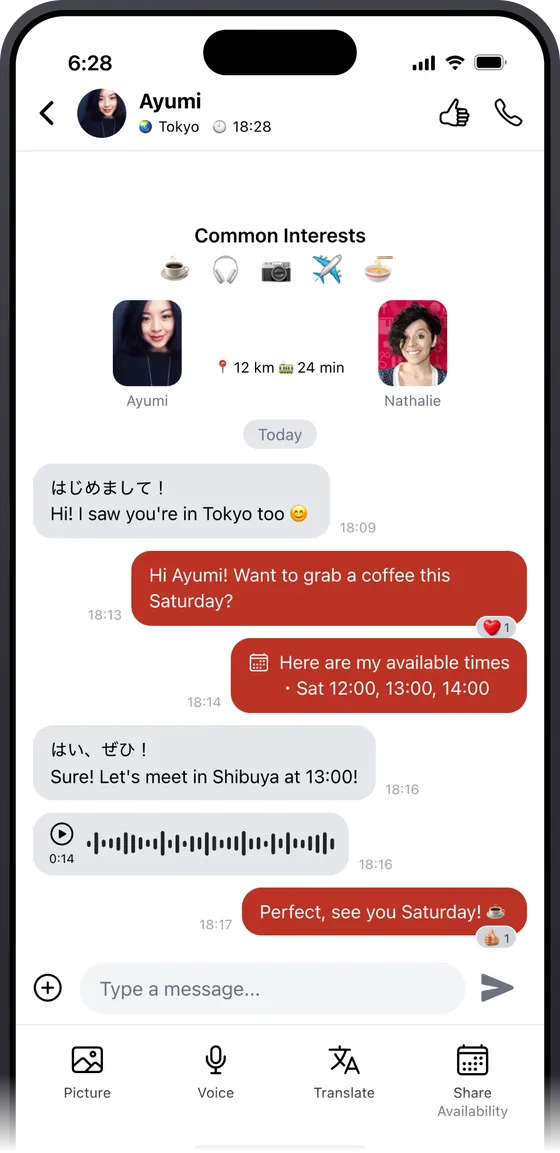


If you want to skip some of the trial-and-error, SewaYou is a map-based friendship app where you can find people nearby in Seoul or anywhere in the world. Instead of matching you with random strangers across the entire city, it shows you people in your actual neighborhood, which, if you have read this far, you already know is the single biggest unlock for building real friendships in a city this big.
See you on Bukhansan.


