Kobe is the city that gets weirdly underrated by foreigners planning a Japan move. Everyone defaults to Tokyo or Osaka. But once you actually live here, you realize Kobe has something neither of those cities can offer: a foreigner-friendly history baked into the streets (Kitano's preserved foreign houses are a tourist draw because Westerners actually built them in the 1880s), a small-enough scene that you'll bump into the same people twice, and the rare Japan combination of mountain hikes 20 minutes from your office and a beach 15 minutes the other way.
Making friends in Kobe is also genuinely different from making friends in Tokyo. There's no "100-person language exchange at the Shibuya HUB" energy. Things are quieter, more relationship-driven, and once you're in, you're in. The flip side: it takes a bit longer to find your first hooks, and you can't rely on volume to do the work for you.
This guide breaks down where the foreigner scene actually lives in Kobe in 2026, which neighborhoods to base your social life around, and the specific moves that work in a smaller city like this one. Whether you just transferred here for a job at a maritime company in Sannomiya, you're teaching English on a JET placement, or you're studying at Kobe University and tired of only knowing classmates, this is for you.
The honest part first. Kobe is not Tokyo. The expat population is smaller, the events calendar is thinner, and there's no neighborhood where you can guarantee bumping into other foreigners on any given Friday night.

Specifically:
The expat community is small but tight. There are maybe a few thousand long-term Western foreigners in greater Kobe. That sounds tiny next to Tokyo, but it means once you meet five people you'll hear about every event going on. The downside: in your first month, you don't know any of those five people yet.
Most language exchanges are in Sannomiya, and there are only a handful. You're not picking from twenty events a week like in Tokyo. You're picking from maybe three regulars. The good news: the same faces show up, so it's easier to build something real.
Japanese friends are easier to make here than in Tokyo, but harder than in Osaka. Kobe locals are notably more reserved than Osakans (who will start a conversation with you on the train) but more open than central Tokyo (where strangers genuinely don't speak to each other). Lean into the "international city" identity — Kobe people grew up around the Western foreign houses in Kitano, so foreigners aren't novel.
The work-vs-social balance is brutal if you're at a Japanese company. Same Tokyo problem: salaryman hours mean your social window is 21:00-23:00 on weeknights, by which time most cafes are closed.
The expats who DO live here are often there for years. Lower turnover than Tokyo. You make a friend, they're probably staying. Worth the upfront effort.
None of this should scare you. It just means the strategy that works in Tokyo (volume, hop between events) doesn't work as well here. Kobe rewards consistency.
Sannomiya is the de facto center of foreigner life in Kobe. Walk five minutes from the JR station and you'll find the language exchange cafes that have been running for years — the ones where you become a regular, not a one-off attendee.
The format is usually low-key: you sit at a counter or shared table, order a drink, and chat with whoever's there in either Japanese or English. No name tags, no awkward icebreakers. The trick to making this work: go to the SAME ONE on the SAME DAY for three weeks straight. Foreign attendees in Kobe are repeat customers. By visit four, the regulars know your face and start sitting next to you.
Kitano is the old foreign settlement neighborhood up the hill behind Sannomiya. Tourists go for the preserved Western-style houses. But the cafes and small bars there have a long tradition of mixed Japanese-foreigner clientele.
Specific tactic: pick one cafe in Kitano that opens at 8am, go there before work three times a week, order an espresso, sit at the bar, and just exist. The owner will start talking to you within two weeks. The owner will then introduce you to other regulars. This is how friendship works in a smaller Japanese city — through shop owners as social brokers.
Kobe is built against a mountain range. Mt. Rokko trail access is 20 minutes from downtown. There are several run clubs and hiking groups that meet weekly, and they're disproportionately foreigner-friendly because hiking conversations don't require Japanese fluency — you just walk and breathe.
Look for groups on Meetup, Strava clubs, or via the Kobe International Community Center bulletin. Show up consistently. After a couple of months, the group becomes your social circle by default.
Kobe has actual beaches — Suma Beach is a 15-minute train from Sannomiya. The summer beach scene draws a mix of locals, expats, and Osakans who come for the day. There's a small surf community that's welcoming because, again, surfing doesn't require small talk.
If you're not into surfing, even just showing up to one of the beach BBQs in summer (organized loosely on Facebook groups like "Foreigners in Kobe" or "Kobe Internationals") will get you 5-10 new acquaintances in an afternoon.
If you're a student, the Kobe University international student association is a built-in social network. Show up to every event in your first semester, even the awkward ones.
If you're not a student: the Kobe International Association (KIA) runs cultural exchange events open to the public — tea ceremonies, calligraphy classes, mixed Japanese-foreigner dinners. They skew older (30+) and are a great way to meet Japanese people who are deliberately seeking international friendships.
This is where SewaYou genuinely shines in Kobe, more than in Tokyo. In Tokyo, the app shows you 200 nearby foreigners and the choice paralysis is real. In Kobe, you see maybe 30-50 active people in your immediate area — small enough that you can actually message all of the ones who match your interests within a week, and you'll bump into them at the same Sannomiya cafe later.
Map-based apps like SewaYou work better in small cities because proximity actually means something. A friend who lives 1.5km away in Sannomiya is genuinely your neighbor. In Tokyo, a friend "near you" might mean a 45-minute train ride.
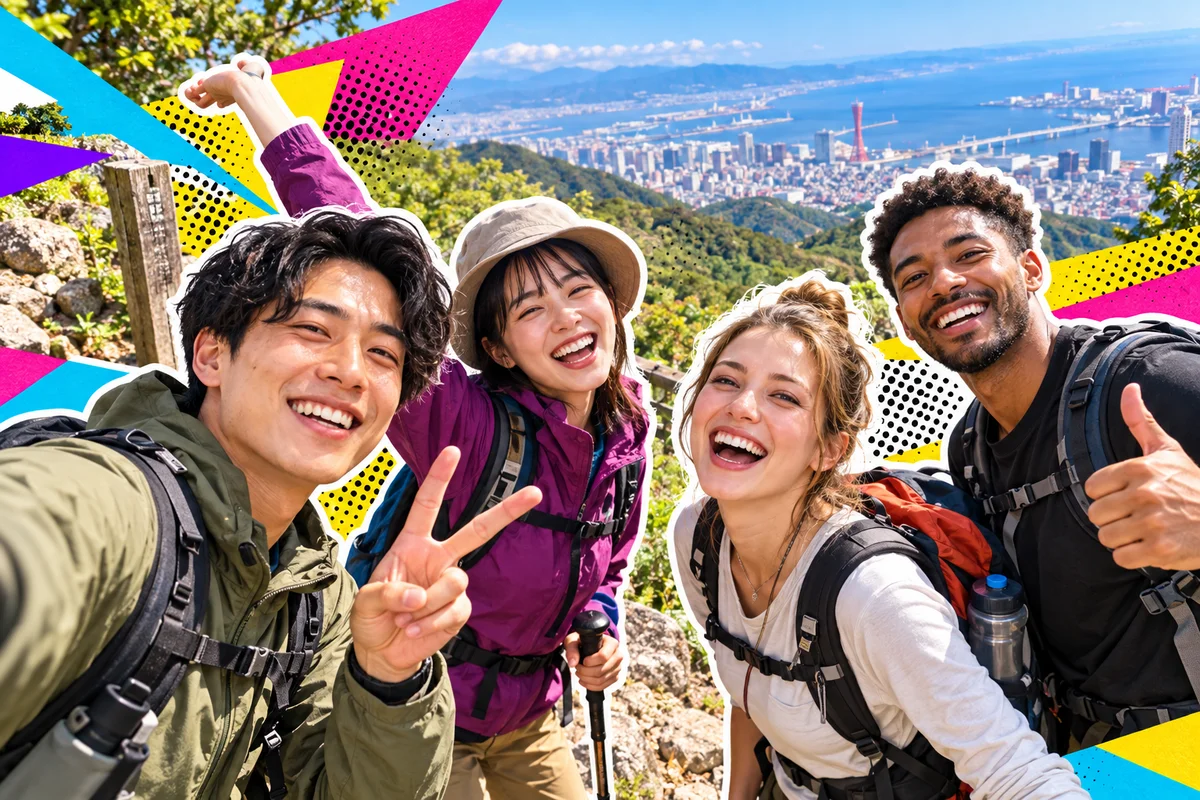
Where you live in Kobe matters more than it does in Tokyo, because the city is small enough that neighborhood = scene.
Sannomiya / Motomachi: Center of expat life. If your priority is making foreign friends fast, live here. Restaurants, language exchanges, bars, cafes all walking distance. Trade-off: rent is the highest in Kobe and the area can feel touristy on weekends.
Kitano-cho: The hilly old foreign settlement neighborhood above Sannomiya. Quieter, more atmospheric, lots of independent cafes. The local community is older and includes longtime foreign residents who've been here for decades. Good for slower-paced friendship-making.
Okamoto / Mikage: The university belt. If you're under 30, this is where most students and young professionals live. Konan University is here, and Kobe University is one stop away. Lots of bars and cheap restaurants oriented to a younger crowd.
Suma / Tarumi: Beach-adjacent, cheaper rent, more laid-back. The Westerners who live here are usually the surf crowd or families who want bigger apartments. Trade-off: you'll commute into Sannomiya for most social events.
Ashiya: Technically not Kobe (it's its own city) but the next station east. Old money, quiet, a lot of long-term foreign residents. Worth knowing about if you want a calmer base, but not where you'll meet people quickly.
If you literally just moved to Kobe, here's a concrete plan:
Week 1: Find your apartment hunt or settle in. Walk the Sannomiya-Motomachi-Kitano triangle on foot at least three times. Make mental notes of cafes, language exchange signs, foreign restaurants.
Week 2: Pick ONE language exchange cafe and go on the same weeknight (Tuesday or Wednesday work best — Friday is too crowded). Just observe the first time. Don't force conversation.
Week 3: Go back to the same cafe, same day. Sit next to someone who looks like a regular. Ask them about themselves.
Week 4: Add a hobby anchor. Sign up for a Mt. Rokko hike, a Suma beach BBQ, or a KIA event. Don't add a second hobby until the first one has 3-4 sessions of consistency under it.
This sounds simple because it is. The mistake foreigners make in Kobe is bouncing between events looking for "the right one." There is no right one. There's just consistency at one or two places, plus a willingness to be the first one to suggest meeting outside the structured event.

Kobe's small enough that the SewaYou approach — seeing who's actually nearby on a map — works better here than almost anywhere else in Japan. You can see at a glance who lives within walking distance of your apartment, who works in Sannomiya during the day, and which cafes are full of other foreigners right now.
The proximity advantage is real: if someone you'd actually want to be friends with lives in Motomachi and you live in Kitano, that's a 10-minute walk away. Suggesting an actual coffee meet-up is low-friction. Compare to Tokyo, where "let's meet up" means mutual scheduling pain across train lines.
Kobe is not a city where you make friends in your first week. It's a city where you make friends over your first three months, and then you keep them for years. The trade-off compared to Tokyo: less variety, less surface-level activity, but deeper roots. The friendships that form in Kobe tend to actually last because the people in them aren't planning to leave next year.
If you're patient, deliberate about your locations, and willing to become a regular somewhere instead of bouncing around — Kobe gives you exactly what most foreigners say they want from Japan but rarely find: a small enough community that you actually have a place in it.
Looking for foreign friends in Kobe?
Make Japanese Friends On a Live World Map
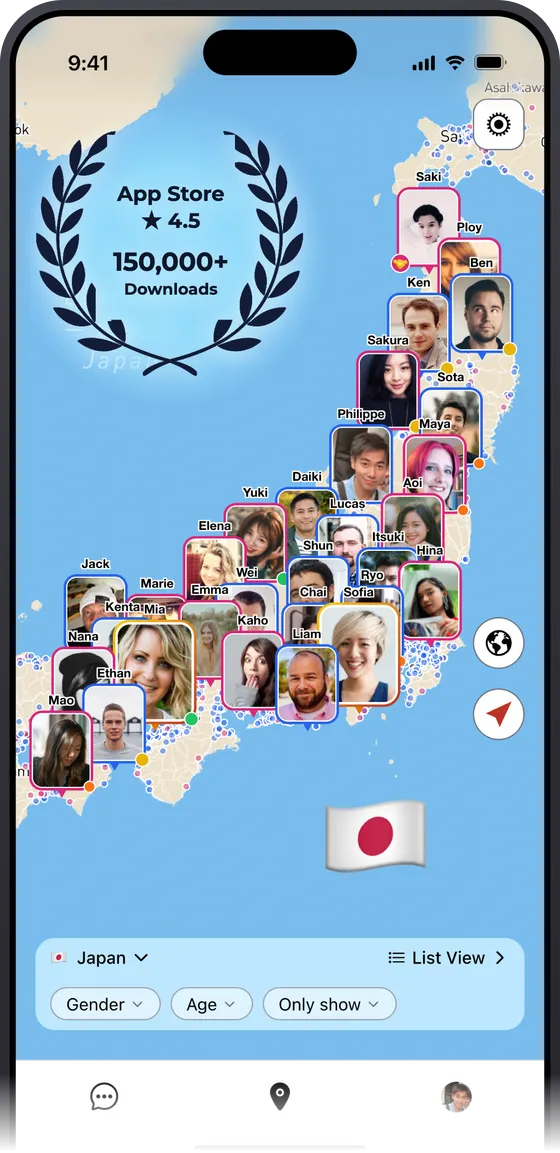
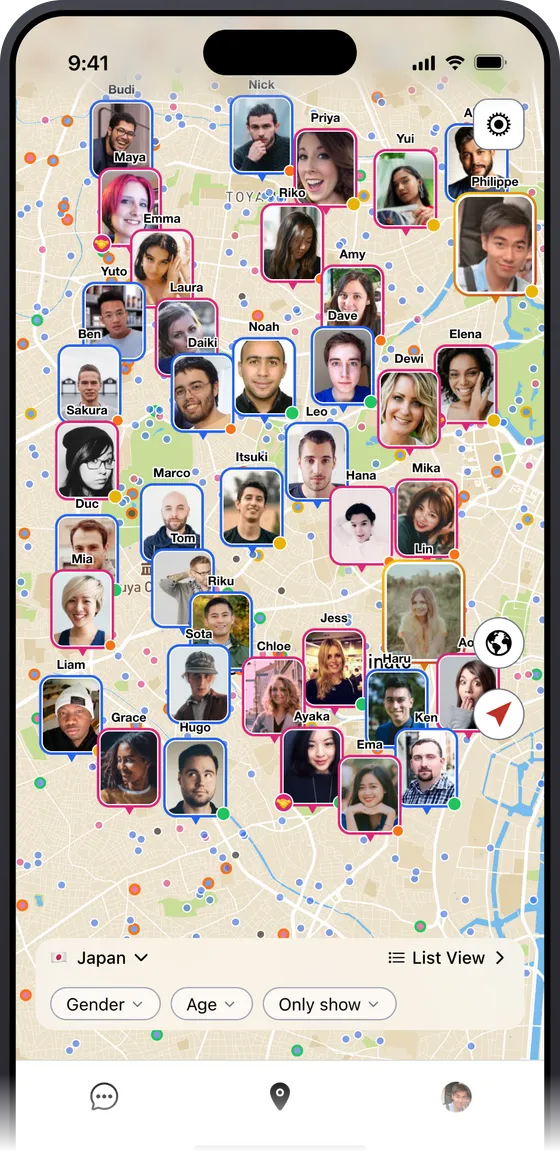
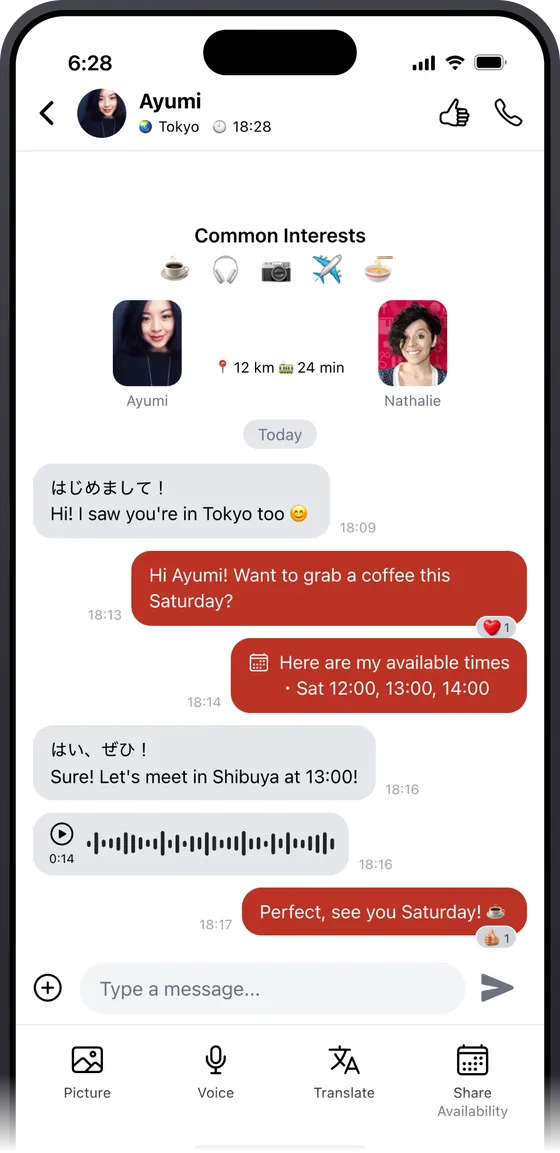


SewaYou is a map-based app that shows you which Japanese locals and other foreigners are actually near you in Kobe. Especially useful in a smaller city like this — proximity actually means something here. Browse the map, find people in Sannomiya or Kitano you'd want to grab a coffee with, and reach out directly.