

A friend of mine from Manila is in her second year at a national university in Kansai. She told me last week about a group project meeting that went like this. She suggested a research angle, the room nodded, one person said "ah, sou desu ne," and within thirty seconds a Japanese classmate offered a similar but slightly different idea and the group built on that one instead. Her version of the idea was technically acknowledged. It was also functionally invisible.
It happened in three consecutive meetings. Then she got feedback at the end of the term that she "should take more initiative."
She asked me, half-joking, if she was being dramatic. She is not.
You are not imagining it.
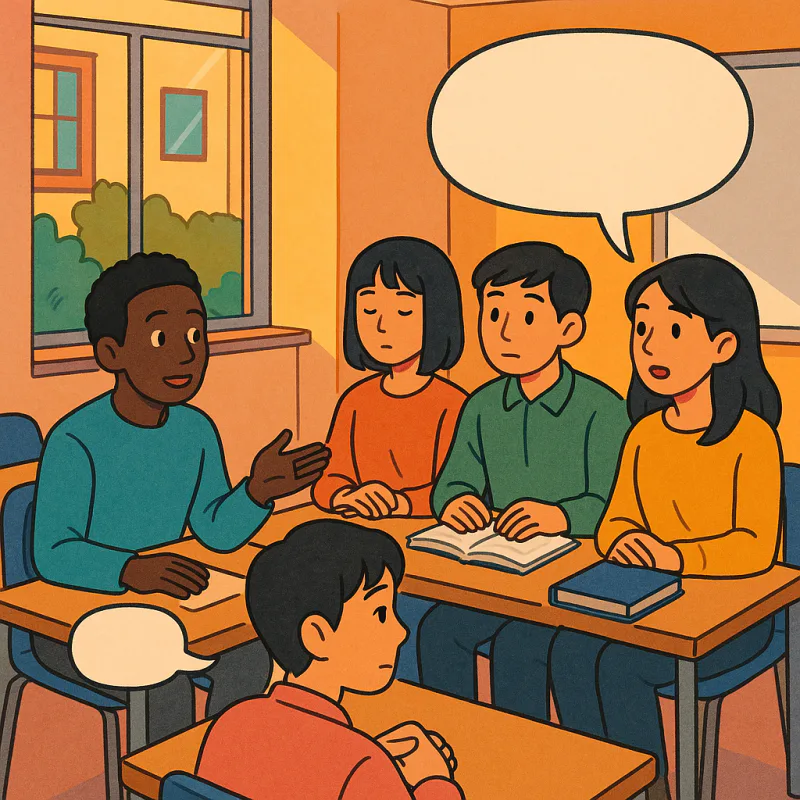
Here is what most foreign students and workers in Japan eventually notice. You offer an idea in a group setting. The group acknowledges it politely. The discussion then moves not to your idea but to one offered by an in-group member, often less novel, sometimes nearly identical. You are not interrupted. You are not corrected. The room simply flows around you.
This is the texture of the thing. It is too soft to point at, too consistent to ignore.
Multiply it across a semester or a fiscal year and the same person who was "acknowledged" in every meeting walks out feeling unheard in every meeting. Because they were.
The pattern shows up anywhere a closed Japanese circle already exists.
In university seminars, the TA chats with the same six students they have known since first year and gives short polite answers to everyone else. In offices, the after-meeting hallway conversation continues among the people who joined the company together. In friend groups, the planning happens in a LINE group that the foreign member gets added to roughly six months late.
The mechanism is the same in every case. The circle was already running before you arrived, and the circle keeps running on its own momentum.
This is the part that helps if you can really sit with it. The people doing this to you are usually not deciding to exclude you. They are running on autopilot, and the autopilot favors people they already have a relationship with.
Japanese group dynamics weight prior trust enormously. New voices are not rejected. They are just not yet weighted. The system assumes you will eventually become known to the group, and until then your contributions are processed like polite noise. Acknowledged, filed, not built upon.
Not against you. Just not for you yet.
The trap is interpreting this as a verdict on your competence or your ideas. It is neither. It is a verdict on your relational position in the room, and that position is changeable.
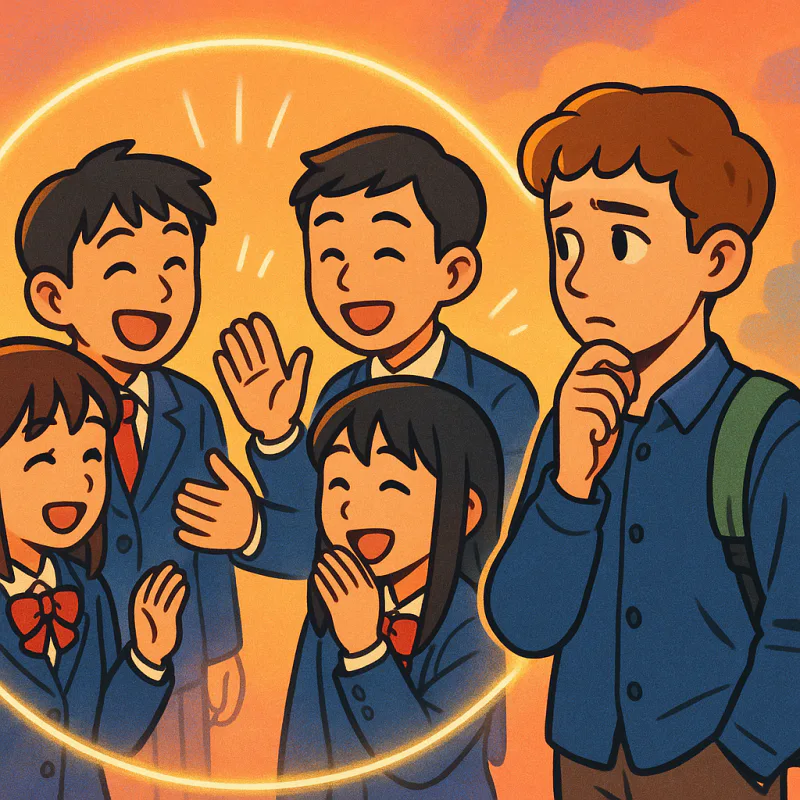
When someone inside a closed circle tells someone outside the circle to "speak up more," they are accidentally being cruel. They are telling you to push harder against the same dynamic that is muting you. More volume does not solve a weighting problem. You can be the loudest voice in the room and still the lowest-weighted one.
This feedback hurts because it sounds reasonable to outside observers and because it gets internalized as a personal failing. It is neither. The right thing to do with that feedback is to take the legitimate kernel of it, which is "be more visible," and route it through the actual mechanism that controls visibility in Japanese groups: trust, not volume.
You do not fix this by talking more in the meeting. You fix it by changing your relational position outside the meeting.
Pick the person in the group who seems slightly more open than the others. Get coffee with them. Ask their opinion on the project before the next meeting. Now when you speak up in the room, you have one person who already knows your thinking and will naturally build on it instead of pivoting away. One ally turns a soft idea into a co-signed idea, and co-signed ideas do not get skipped.
A spoken suggestion can be politely acknowledged and forgotten. A message in the group chat with a clear proposal, a shared doc sent the night before the meeting, a written summary sent after you spoke, these stay visible. Japanese group culture is good at flowing past spoken contributions and surprisingly bad at flowing past written ones, because written contributions create a record everyone has to react to.
The hardest and most important shift. The group you were assigned to, by your seminar, your dorm, your department, is not necessarily where your real social and intellectual life has to live. Foreign students who thrive in Japan almost always have a parallel circle, often built across universities, often built with other internationals plus a handful of curious Japanese friends. That parallel circle is where they actually feel heard, and that confidence then leaks back into the assigned group.

If you are reading this from your dorm room in Japan, doubting whether the way you are being treated is fair or whether you are just bad at this, I want to say two things plainly.
You are not bad at this. Speaking up in a closed circle in a second language is one of the hardest social tasks a person can do, and the pattern you are describing is something Japanese people themselves describe when they move from one in-group to another. It is structural, not personal.
You do not have to fix the assigned group. Some closed circles will not open in the time you have available. That is fine. Your job is not to crack every group you are dropped into. Your job is to build a life in Japan where at least one room exists where your ideas are weighted properly. That room exists. You just have to find it.
If the assigned group around you is feeling deaf this week, the move is not to push harder there. The move is to widen your circle. Find one person outside your seminar, your dorm, your office, who is curious about you as a person and not as a slot in a group dynamic. One real conversation a week with someone new is enough to start shifting your sense of being heard in Japan.
Make Japanese Friends On a Live World Map
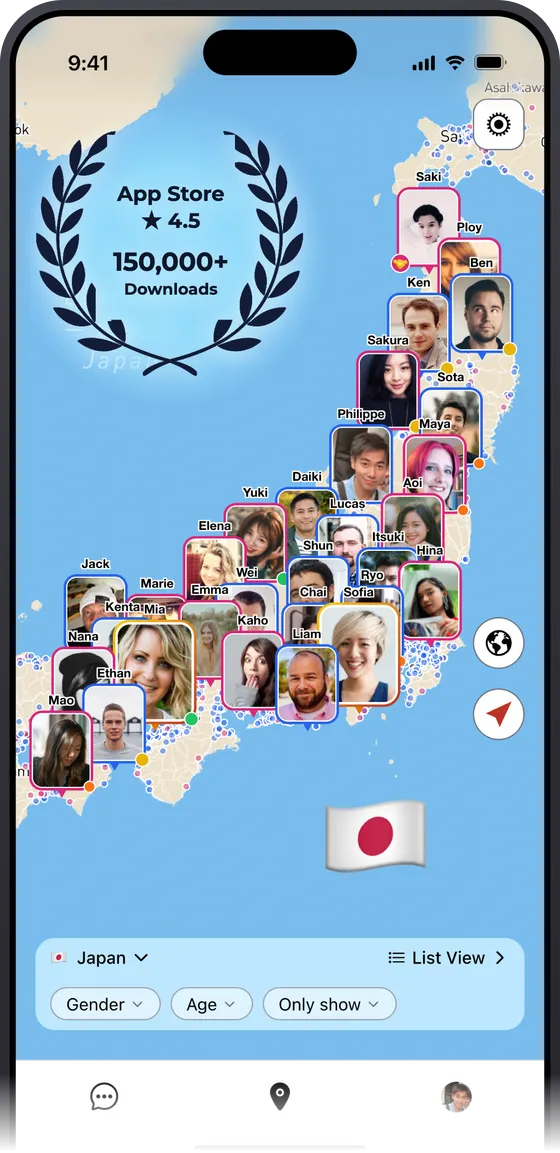
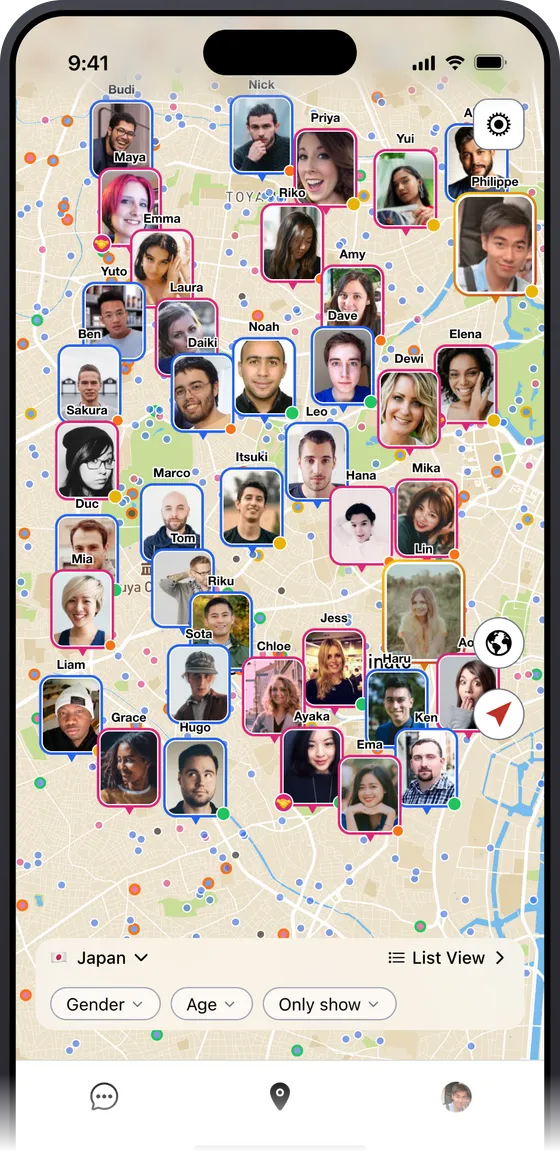
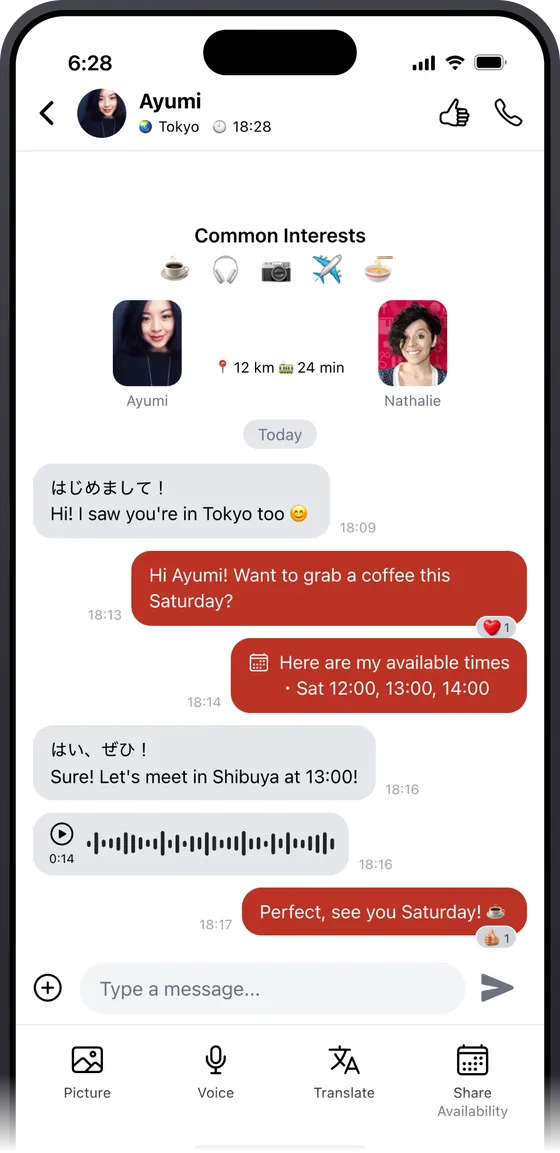


SewaYou is a map-based app that helps you find Japanese people and other internationals near you who actually want to talk. You can filter by language, interests, and proximity, and skip the closed-circle problem entirely by building your own circle from people who are open to new connections by default.
The silent exclusion is real. So is the silent inclusion of the people who are quietly looking for someone like you. Both exist in Japan. The work is finding the second group faster than the first one wears you down.


