
Here's the strange thing about living in Himeji. You walk past foreigners every single day. The castle pulls in visitors from all over the world, there are English teachers in schools across the Harima area, students and researchers at the University of Hyogo, and people working at factories and companies along the coast. And yet, when you want someone to grab a drink with on a Friday night, your phone is quiet.
If that sounds familiar, you're not doing anything wrong. Himeji just has its own social logic. This guide covers how to make friends in Himeji in 2026, with the neighborhoods, organizations and events that actually help, whether you want Japanese friends, other internationals, or both.
Himeji isn't Osaka or Kobe. It's a mid-sized city with a world-famous landmark, and that combination creates three specific problems.
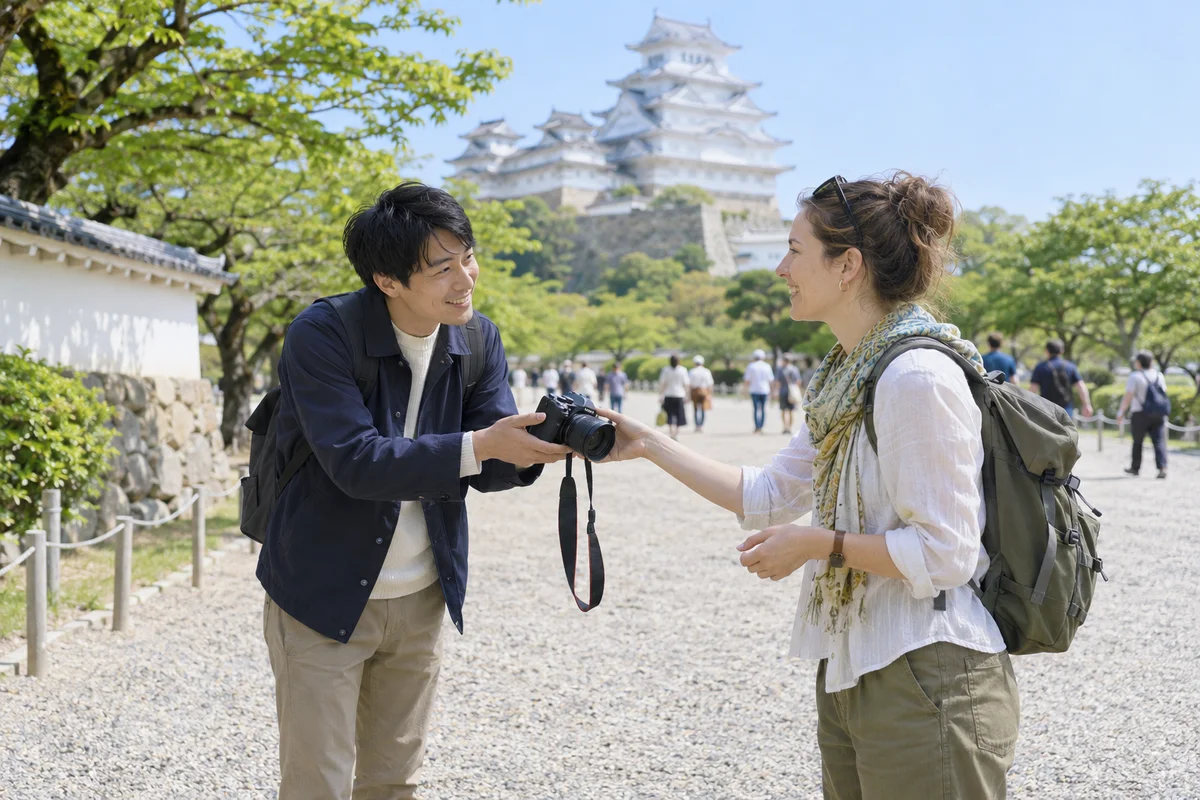
First, most of the foreigners you see are tourists. You can have a great chat with someone at the castle gate, and by evening they're on a train to Kyoto or Hiroshima. Lots of encounters, very little follow-up. That's the classic Himeji experience.
Second, foreign residents are spread out. Some live near the station, some near the factories on the coast, some out by the university campuses in Shosha. There's no single neighborhood where "everyone" hangs out.
Third, a lot of international event listings for the region point to Kobe or Osaka. Search for meetups and you'll often get results for Sannomiya or Umeda, not Himeji.
The flip side? The Himeji expat community is small, and in a small community, people remember your face. Find one way in and your circle can grow surprisingly fast.
For meeting people in Himeji, you mostly need to know the stretch between the station and the castle, plus the university areas.
Walk out the north exit and Otemae-dori runs straight toward the castle. It's the main route for visitors, so it's where you'll see the most foreigners in the city. There are plenty of hotels around the station too, so business travelers and tourists pass through constantly. Spending an afternoon in a cafe here or walking to the castle gives you more chances to start a conversation than you'd expect.
Miyuki-dori is the covered shopping arcade running parallel to Otemae-dori. It's the center of shopping and street snacks, and since it's covered, people come even when it rains. At night, the action moves to Uomachi, west of Miyuki-dori, which is Himeji's main drinking district. Together with the Tatemachi area north of the station, this is where you'll find bars and pubs where foreigners gather. Some izakaya have English menus, and seeing foreign customers isn't unusual.
This building sits just south of the castle, near the end of Otemae-dori. The Himeji International Exchange Center is on the 4th floor, and the Himeji Cultural and International Exchange Foundation has its counter on the 3rd floor. If you'd rather skip the bar scene, or you want to meet foreigners who actually live in Himeji long term, this building is honestly your best bet.
The University of Hyogo has its Himeji Engineering Campus in Shosha and its Himeji Environmental and Human Science Campus in Shinzaike. This is where international students and researchers are. Walking onto campus uninvited doesn't really work, though. Events and public lectures the university opens to the community are the natural way in.
If you're asking "where do foreigners drink in Himeji?", the answer is mostly Uomachi and the Tatemachi area north of the station. That's where you'll find small bars with English menus and a mix of local and foreign regulars.
The strategy is the same as in any Japanese city: pick one place and keep going back. Once the owner knows your name, introductions to other regulars happen on their own. Small bars do open and close, so check recent Google Maps reviews before you go to make sure the place is still running and looks foreigner-friendly.
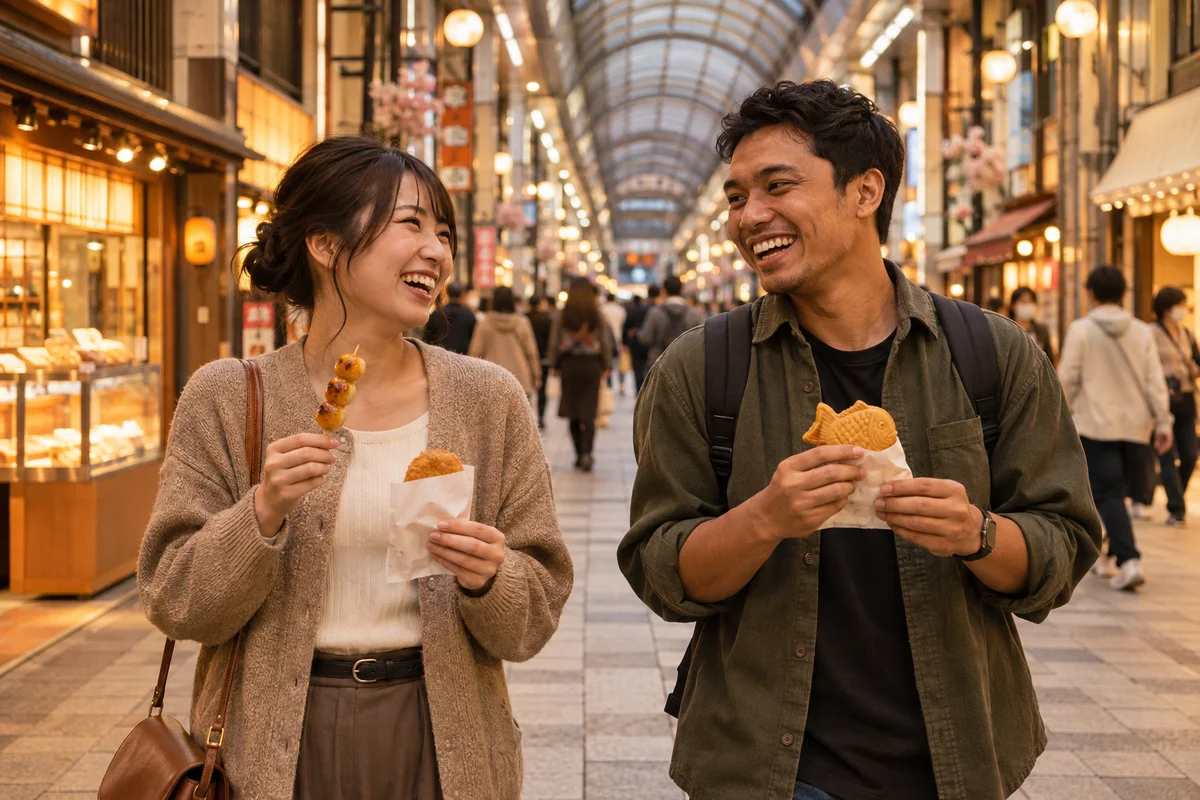
The most reliable starting point for international exchange in Himeji is the Himeji Cultural and International Exchange Foundation. It supports foreign residents, runs international events and handles sister city exchanges. Its website posts things like a Japanese speech contest and international exchange classes introducing cultures from different countries.
What's on changes through the year, so it's worth checking the foundation's website every few weeks.
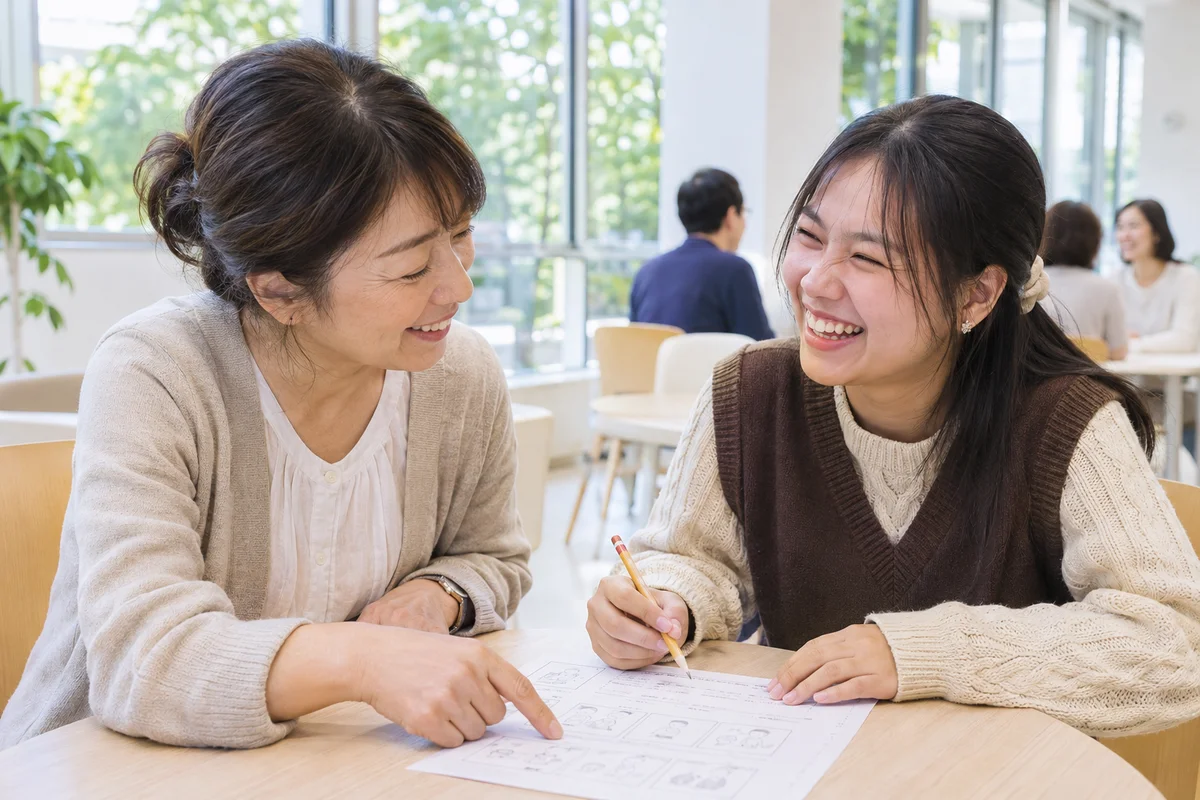
This is the one I'd recommend most. The center runs a program called Nihongo Hiroba, where foreign residents practice conversation with Japanese volunteers. The foundation also holds study sessions for volunteers. If you're a foreigner with good Japanese, or you're simply curious, ask the foundation how you can get involved and what openings there are right now.
The beauty of volunteering is that nobody feels like they're there to make friends. You see the same people again and again, small talk turns into real conversation, and one day you realize you've made friends. And these are people who live in Himeji, not visitors passing through.
The biggest international event in town is the Himeji International Festival (ひめじ国際交流フェスティバル), held every year by the foundation. In October 2026 it held its 28th edition, so it's a well-established event. In spring there's also the International Spring Festival, where groups registered with the International Exchange Center put on stage performances.
The festival brings together people from many countries and lots of international exchange groups in one place. If a group catches your interest, go to its next regular meetup. That's where ongoing friendships start.
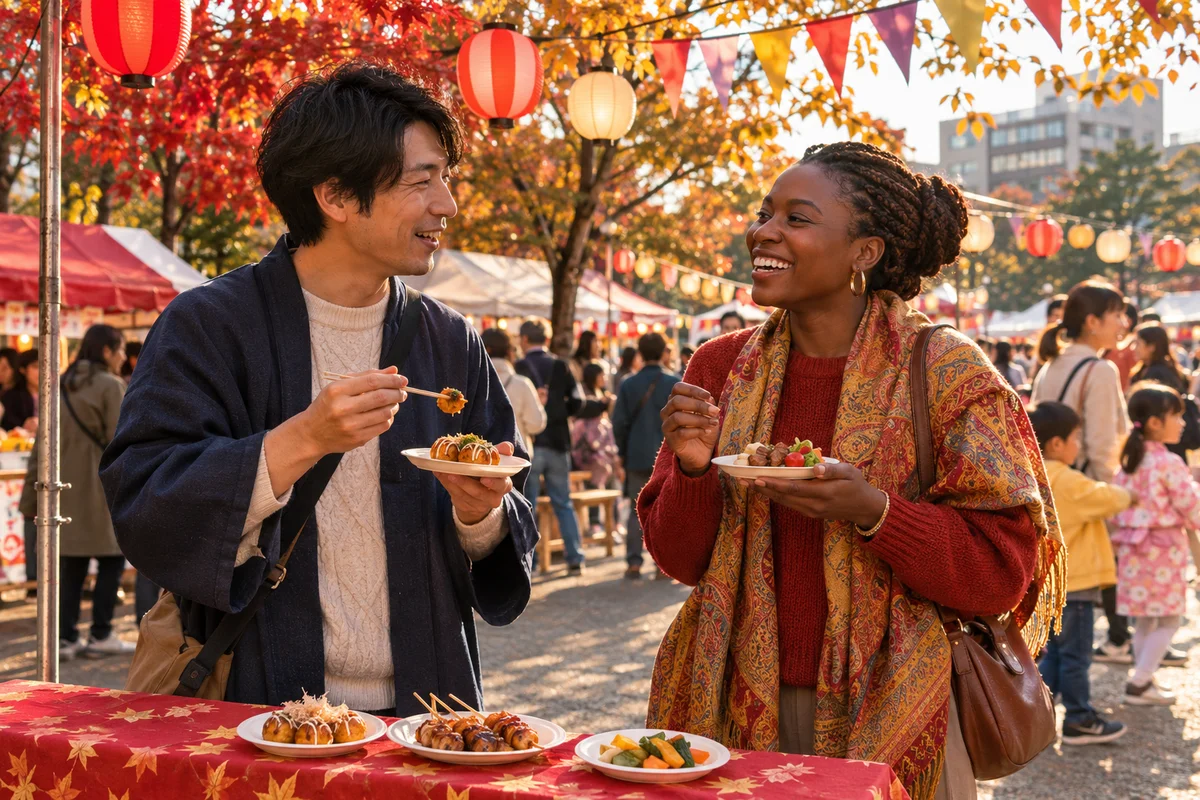
Local festivals are an easy way in. The Yukata Matsuri in June and the Nada Fighting Festival (Nada no Kenka Matsuri) in October draw big crowds, and the festival mood makes it easy to talk to whoever is standing next to you.
Offering to take a photo for someone at Himeji Castle or Kokoen Garden is old-school, but it works. Even if those chats are one-offs, they build the habit of starting conversations, which pays off when you meet people who live here.
In a city where people's daily lives are this spread out, map-based apps make a lot of sense. You can look for people near the station or out around Shosha instead of waiting for luck.
If you're comparing options, our guide to the best apps for making international friends is a good place to start.
The reason a map works well in Himeji is that you search by place, not by luck. Whether people live near the station, along the coast or near the campuses, opening the map shows who's around you. If someone's profile clicks, suggesting a coffee somewhere on Miyuki-dori is a low-pressure first step.
Make Japanese Friends On a Live World Map
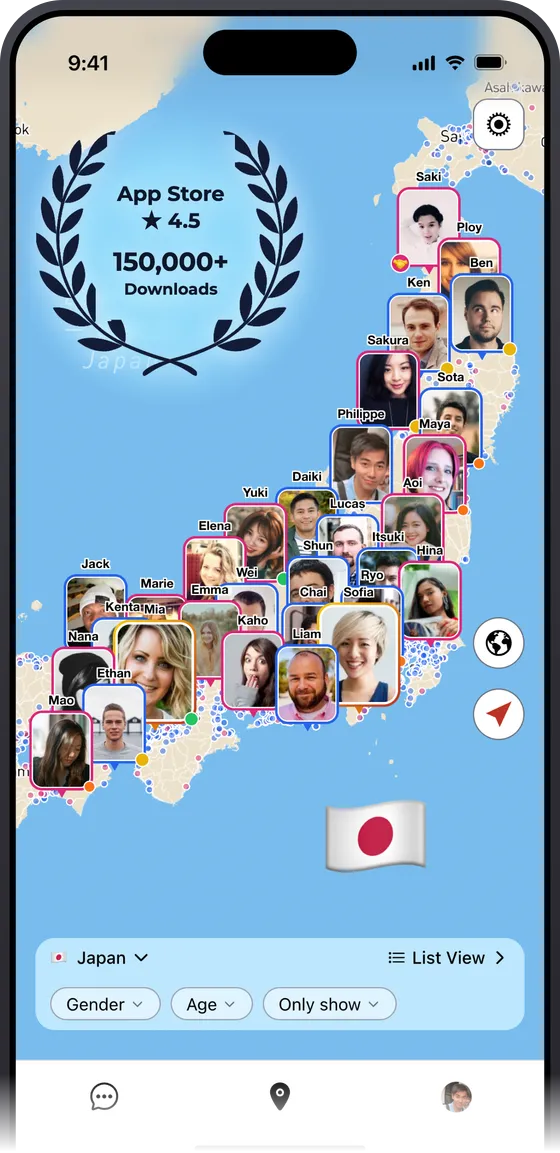
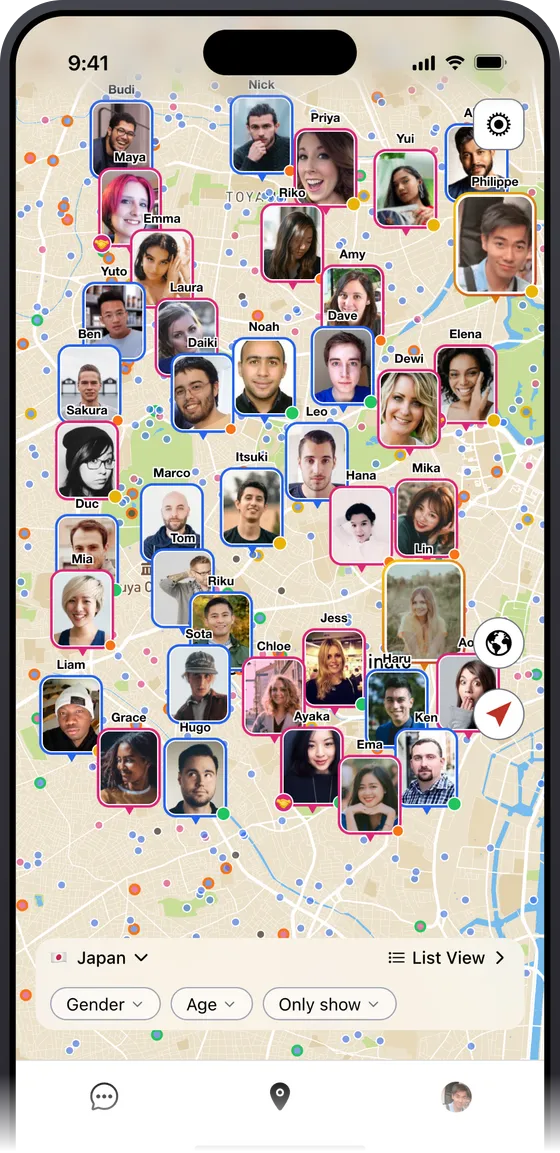
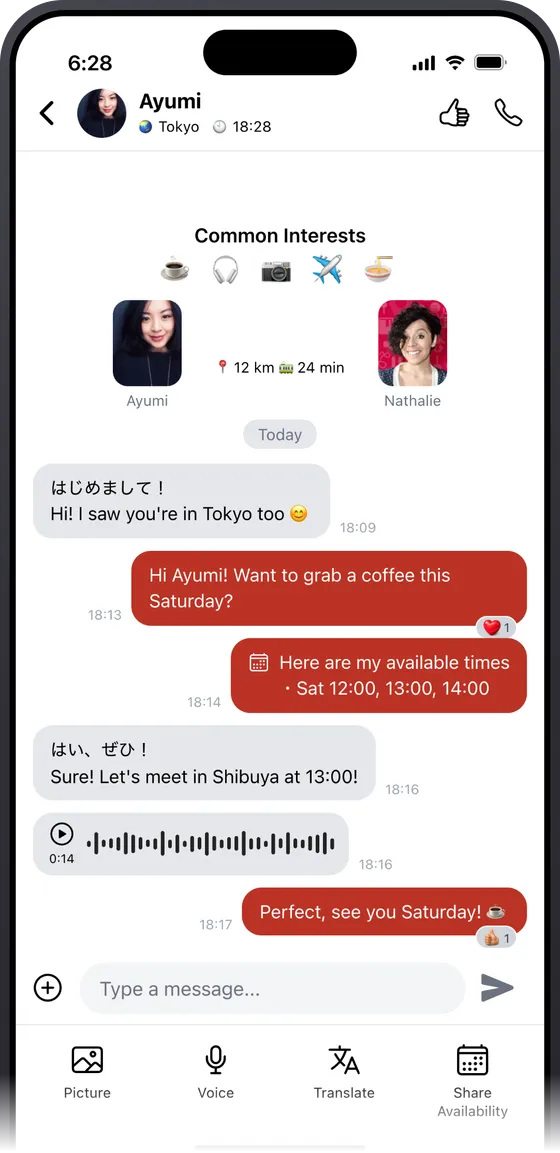


And the map isn't limited to Himeji. SewaYou is a map-based friendship app for finding people nearby and anywhere in the world. Even without travel plans, you can explore a city you've always wanted to see and make friends with people who live there, from home. You could also connect with someone planning a trip to see the castle and show them around the old town when they arrive.
Friends nearby are easy to see again, and friends far away can become long-lasting ones. Both are real friendships.
Week 1: Walk from Himeji Station along Otemae-dori, through Miyuki-dori and around Uomachi. Note bars and cafes with a good vibe and any international event flyers. Stop by Egret Himeji too.
Week 2: Try one thing. A Friday night at a bar in Uomachi, asking about volunteering at the International Exchange Center, or a foundation event.
Week 3: Go back to the same place. Say hi to someone you saw last time.
Week 4: Swap contacts with one person. The community is small, so one connection tends to lead to more.
A common mistake is treating the other person as a personal tour guide or someone to practice a language on. Neither builds friendship. Instead, swap the kind of local tips you both care about, like the best ekisoba stand or the best spot to see the castle at night. Treat people as neighbors, not resources, and things move faster.
Where can I meet locals in Himeji?
At night, try the bars and pubs around Uomachi and the Tatemachi area north of the station. During the day, the castle, Otemae-dori and Miyuki-dori are the busiest areas. If you'd rather meet people without drinking, volunteering at the International Exchange Center in Egret Himeji or joining events by the Himeji Cultural and International Exchange Foundation are your best options.
Is there an expat community in Himeji?
Yes, but it's small and spread out: English teachers, university students and researchers, people working for local companies, and people married to locals. The foundation's events, the International Exchange Center and a few regular bars are where those circles overlap.
When is the Himeji International Festival?
It's held every year in autumn. There's also the International Spring Festival. Dates and venues change from year to year, so check the Himeji Cultural and International Exchange Foundation website.
Do I need to speak Japanese to make friends in Himeji?
It helps a lot, but you don't need to be fluent. Many locals are happy to mix Japanese and English, and many foreign residents are studying Japanese too. Being curious about Himeji matters more than perfect grammar.
What's the best first step?
Pick one place and keep showing up: a regular bar, volunteering at the International Exchange Center, or a foundation event. Go two or three times. In a small community, one friendship quickly opens the door to others.
Himeji is a city where you'll see foreigners all the time, but the step from small talk to friendship is one you have to take yourself. The upside of a small community is that once you take it, things move quickly.
Looking for friends in Himeji? SewaYou is a map-based friendship app for finding people nearby and anywhere in the world. Meet someone near Himeji Station for coffee, or connect from home with people in a country you'd love to visit, with or without travel plans. Download SewaYou and start building your circle.
Exploring other cities? See our city-by-city guide to making friends, or check out nearby guides on how to make friends in Kobe and how to make friends in Okayama.