Maybe you're an English teacher who just got placed in Fujisawa. Maybe you're a student at Keio's Shonan Fujisawa Campus, or you moved to the coast because you wanted to surf before work and still commute to Yokohama or Tokyo. Whatever brought you here, you've probably noticed that Fujisawa is full of foreigners on paper and weirdly hard to meet people in real life.
You're not wrong. Tourists pour into Enoshima every weekend, surfers line the beaches at Tsujido and Kugenuma, and international students study up north in Shonandai. But nobody tells you where the people who actually live here hang out. This guide covers the neighborhoods, the organizations and the habits that turn strangers into friends in Fujisawa in 2026, with both Japanese locals and other internationals.
Let's be honest first. Fujisawa is not Tokyo. There isn't a language exchange party every night, and there's no single "foreigner bar" where everyone ends up. The people are here. The ways to meet them are just hard to see.
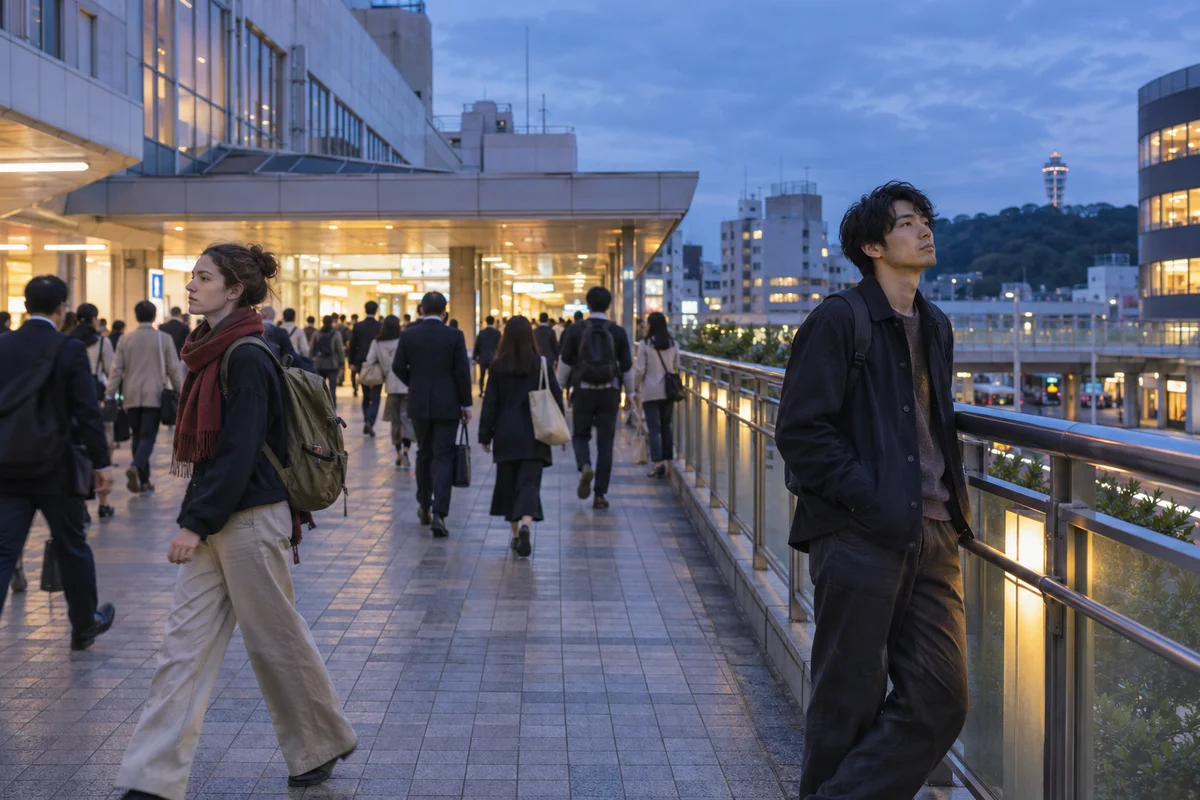
In my view there are three reasons for that.
First, Fujisawa is partly a commuter town. A lot of people ride the Tokaido Line or the Odakyu Line to Yokohama and Tokyo every day, so life becomes work in the city, home in Fujisawa. Foreigners fall into the same pattern. Their friends end up near the office, not near their apartment.
Second, travelers and residents are mixed together. Enoshima gets plenty of foreign visitors, but most come for a day or a night. You can have a great conversation with someone on the beach and they're gone by morning.
Third, the city is split into very different areas. The station area, the beaches and the university district up north each have their own crowd and their own rhythm. If you don't know which one fits you, months can slip by while you drift between them.
The flip side is good news. The sea and the town sit close together, so once you pick one area and keep showing up, you start seeing the same faces. Fujisawa rewards picking one place over trying to cover everything.
It helps to think of Fujisawa in four parts. All of them are a short train ride or bike ride from each other.
Fujisawa Station is the natural hub. The JR, Odakyu and Enoden lines all meet here, so it's easy to reach from anywhere in the city. Sunpearl Plaza by the North Exit is also where the Fujisawa International Festival is held each autumn.
Both exits are packed with restaurants and cafes busy with people heading home from work. Find one cafe near the station you actually like. Then when you meet someone at an event, "want to grab a coffee at Fujisawa Station?" becomes an easy follow-up.
Katase Beach and Enoshima, a short ride on the Enoden or Odakyu, are where you'll see the most foreigners in Fujisawa. Many are tourists, but you'll also spot foreign residents walking the shore on weekends.
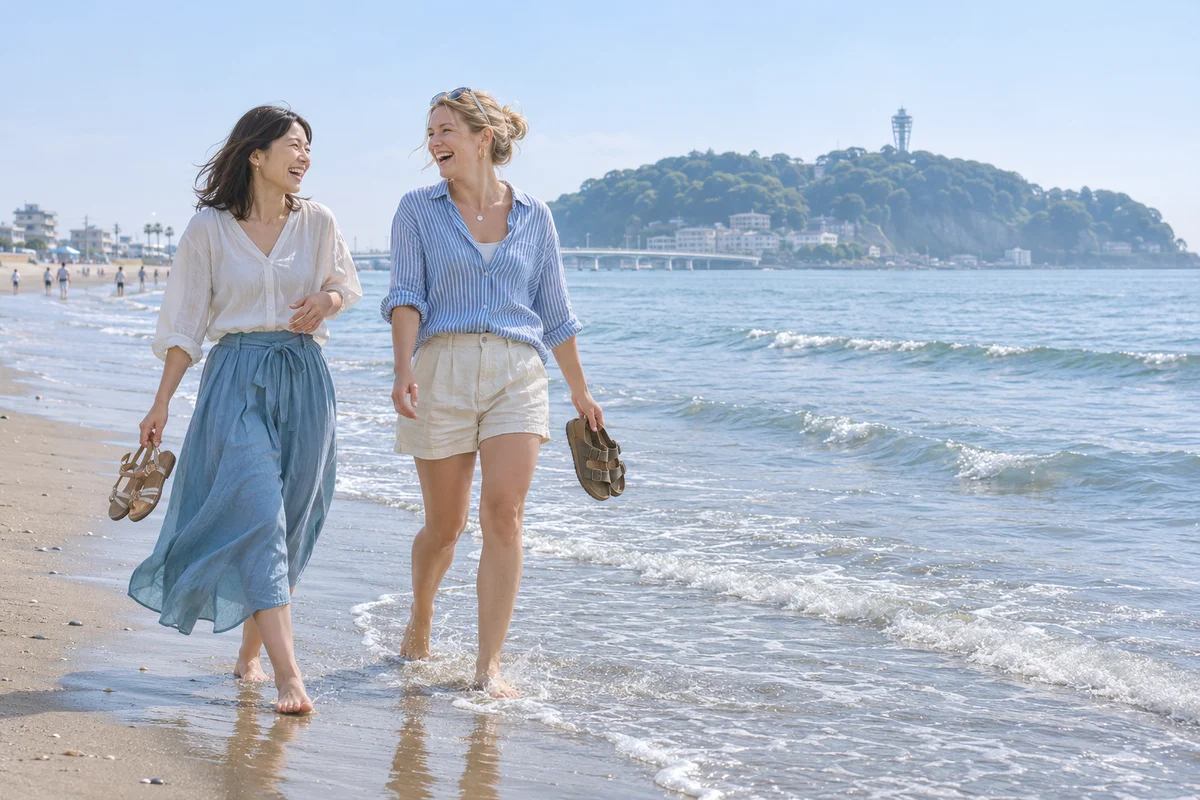
Honestly, this area works better as a place for the second meeting than the first. Walk to Enoshima with someone you met at an event and the scenery gives you something to talk about the whole way.
Tsujido and Kugenuma Kaigan are where surf and beach culture runs deep. Plenty of foreigners live here because they love the ocean, and people become familiar faces through early-morning sessions or the cafes along the coast.
If you surf, keep going back to the same break. That's the fastest route. If you don't, a regular morning run or walk along the shore works too. Nod at the same people enough times and a greeting turns into a conversation.
Up in the north of the city, buses run from Shonandai Station to Keio University's Shonan Fujisawa Campus (SFC). SFC has the GIGA program, where students can earn a degree entirely in English, so there are international students there. Next door at Mutsuai-Nichidaimae is Nihon University's College of Bioresource Sciences.
If you're not a student, the natural way in is through lectures and events the universities open to the public. Shonandai also has a citizens' center where local Japanese classes are held.
If you only do one thing on this list, make it this. The Fujisawa International Festival started in 2004 and is usually held in autumn at Sunpearl Plaza outside the North Exit of Fujisawa Station.
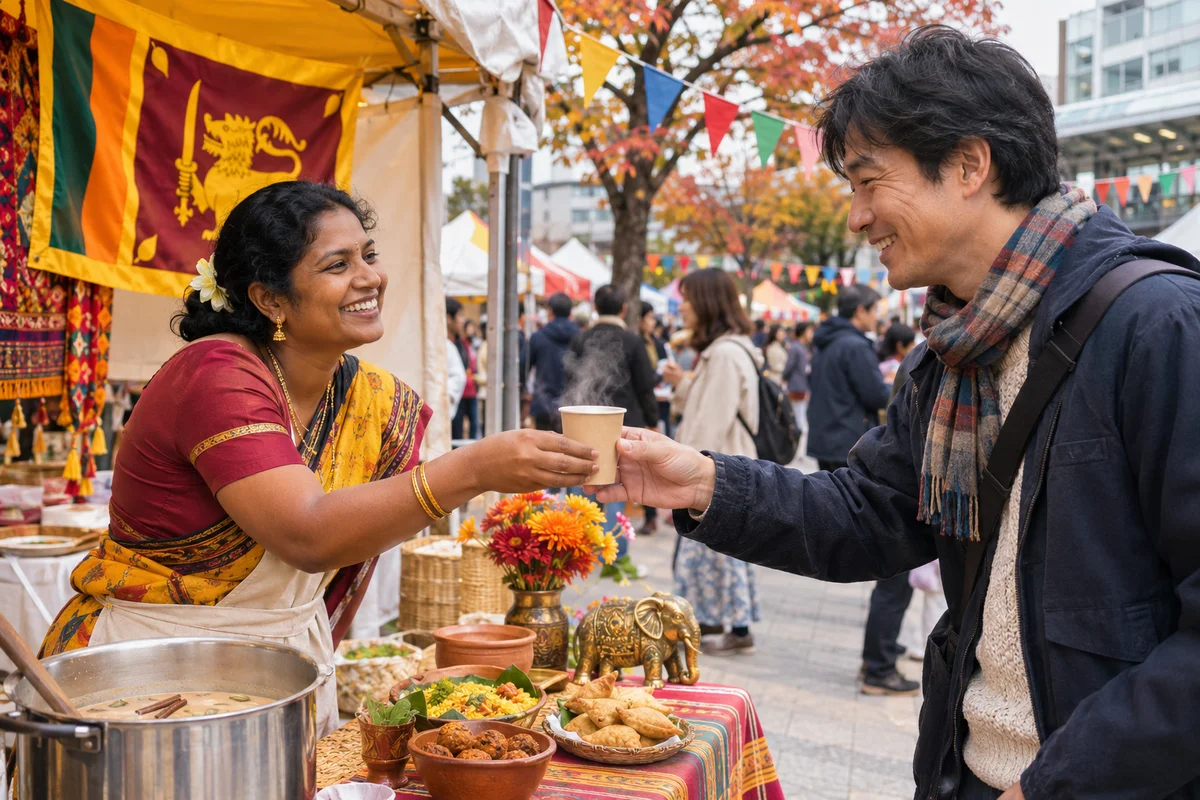
The 2026 edition took place on October 25 with 22 booths introducing food, crafts and traditional culture from around the world. There was ukiyo-e woodblock printing, a booth where you could chat over tea from different countries in easy Japanese, and a stage with songs and dances. It's run by a committee of local international exchange groups, which is the real point. Talk to the people behind the booths. That's how you find a group to join for the rest of the year. Check the Fujisawa city website as autumn approaches for the next date.
Fujisawa has ties with Miami Beach in the US, Kunming in China, Boryeong in South Korea and Windsor in Canada. Each relationship has a citizens' association behind it, and groups such as the Shonan Miami Beach Friendship Association, the Shonan Japan-China Friendship Association, the Shonan Japan-Canada Friendship Association, the Shonan Japan-Korea Friendship Association and the Shonan Japan-Germany Society help run the festival.
What's great about these groups is that people from that country and Japanese people who love it work side by side. Start with a country you love and you'll never run out of things to talk about. Meeting someone at an event and heading out to eat afterward happens naturally.
Fujisawa has several Japanese classes for residents with roots abroad, held at places like Fujisawa Kominkan (community hall) and the Shonandai Citizens' Center. The city has also run introductory courses for people who want to start volunteering at these classes.
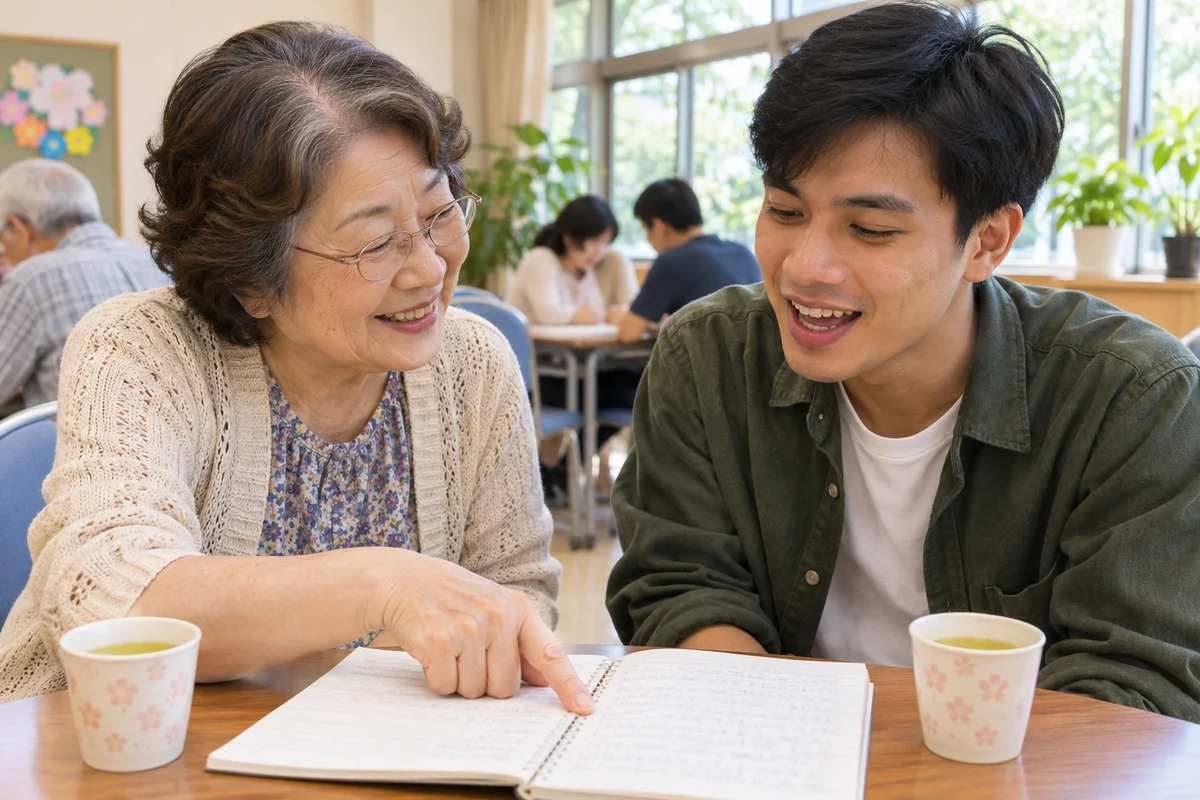
This one is for foreigners whose Japanese is already decent, and for Japanese locals reading along too. Weekly contact beats one-off events almost every time, and a class gives you exactly that. If you're still learning Japanese yourself, joining a class as a student puts you in the same room every week with people in the same boat. For a list of classes and course dates, contact the city's international affairs section (人権男女共同平和国際課).
For a very Shonan way to meet people, try a beach cleanup. On Katase Beach, the NPO Umi-Sakura has held more than 200 cleanups, and companies and other groups organize their own cleanup events along the coast too.
The beauty of picking up trash together is that you don't need much language to work side by side. It's also a good place to meet foreigners who moved to Shonan because they love the ocean. Dates are announced on each group's website or social media, so check before you go.
Search "foreigner bar Fujisawa" and you'll probably be disappointed by the lack of a clear answer. In my opinion, you're better off choosing one small place with a counter near the station and going back regularly than hunting for a famous expat bar.
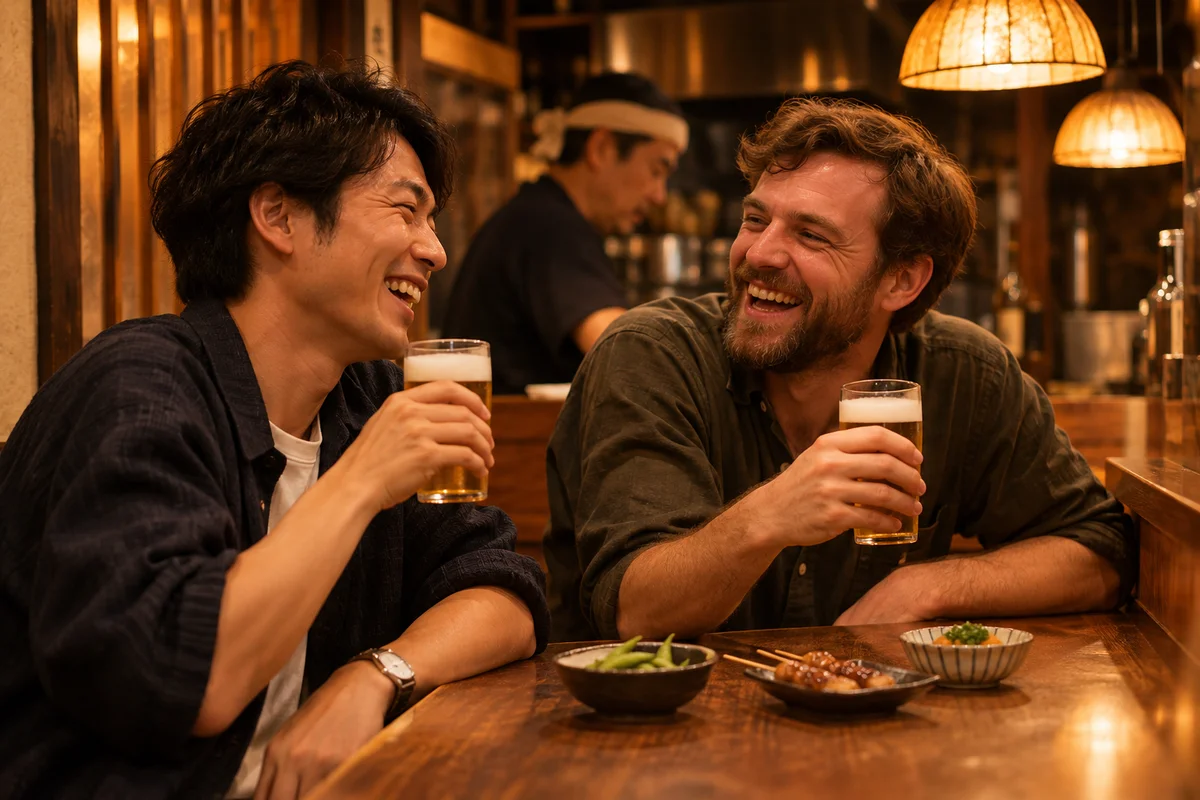
Go a few times, let the owner learn your face, and you may get introduced to the other regulars, foreign and Japanese. In summer, the beach cafes and seaside spots also draw foreigners on weekends. Earlier evenings tend to be better for real conversation than late nights.
Fujisawa's international community often shares information in English rather than Japanese. Search Meetup or Facebook for "Shonan" or "Fujisawa" and you may find gatherings in the Shonan area. Some groups meet around Fujisawa, Tsujido or Kamakura, so pick the ones closest to your station.
For Kanagawa-wide information, the Kanagawa International Foundation is worth bookmarking. It collects international exchange events and Japanese classes across the prefecture.
Week 1: Look at the international exchange page on the Fujisawa city website and pick one event or Japanese class you can actually get to.
Week 2: Find one cafe near Fujisawa Station that you could see yourself going to regularly.
Week 3: Go to the event or class you picked. Afterward, swap contacts with just one person you talked to.
Week 4: Go back to the same gathering. Invite last week's person for a walk to Enoshima or a coffee.
The most common mistake is showing up once at a bunch of different places and stopping there. Fujisawa has fewer events than Tokyo, so the people you can see again and again in one place are worth far more.
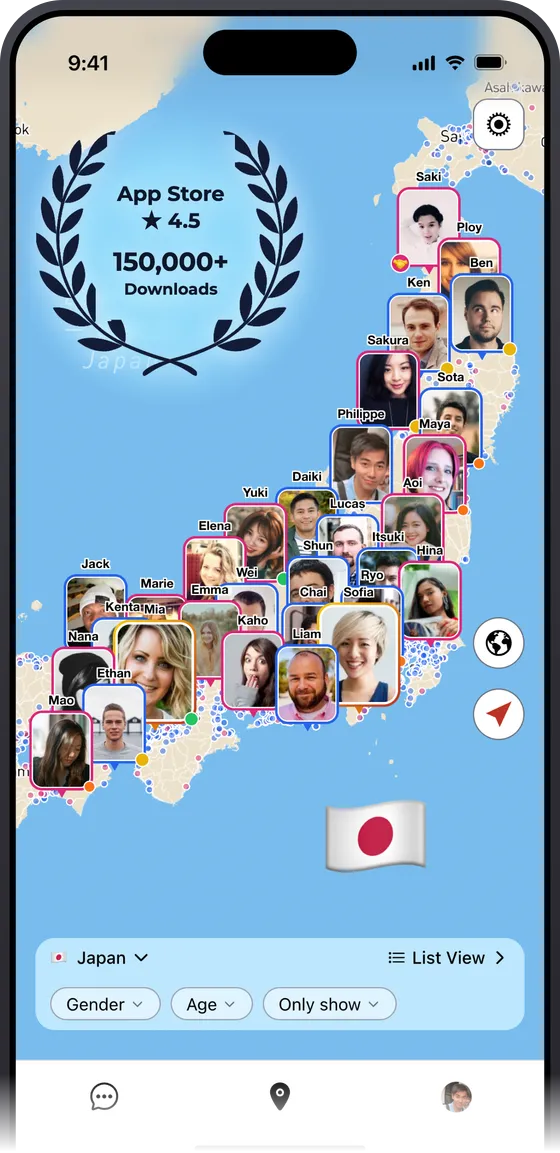
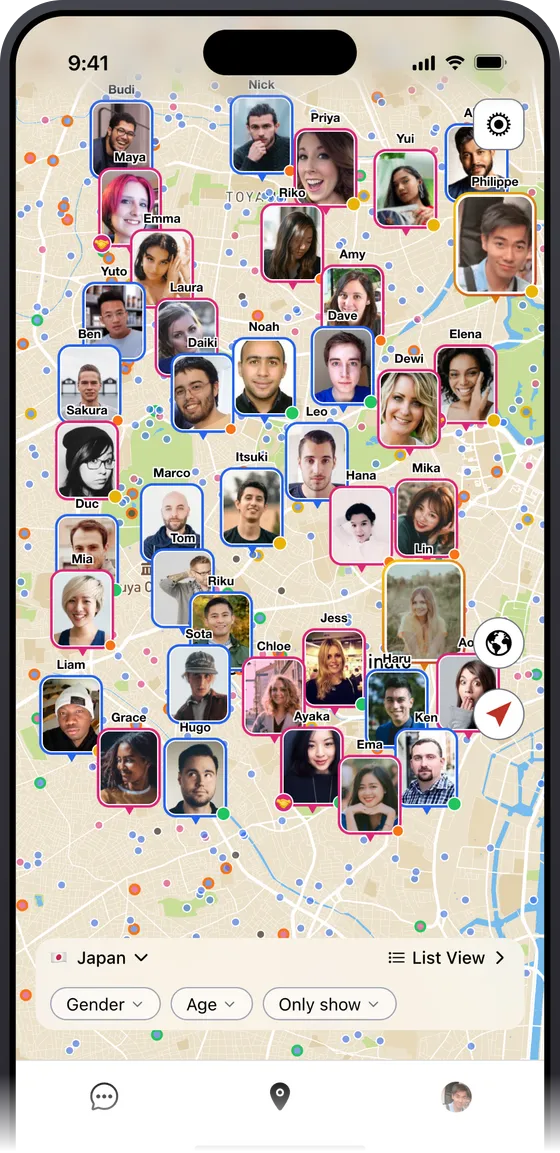
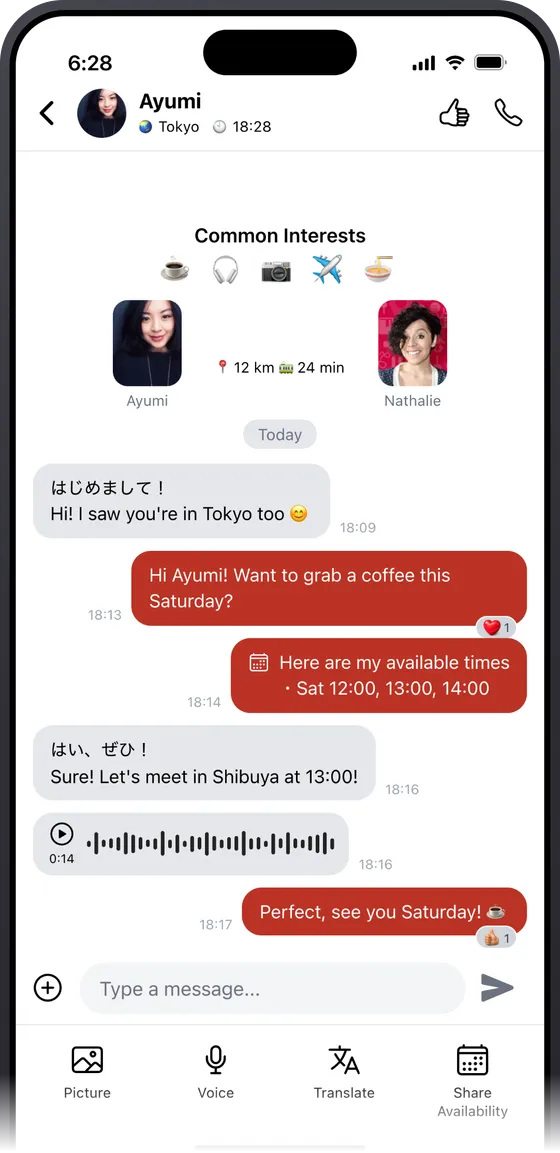
On top of events and classes, a map can help. Fujisawa's people are spread across the station area, the beaches and the university district, so seeing that someone you'd get along with lives ten minutes away by bike makes a real difference.
And the map doesn't stop at Fujisawa. From home, you can explore people in another city or country and build friendships online. You don't need travel plans to make friends abroad, and if you get to know people in a place you want to visit, you'll have someone to meet when you finally go. The traveler you met on Enoshima, or the exchange student who went back home, can stay part of your life too.
Make Japanese Friends On a Live World Map


If you're comparing options, our guide to the best apps for making international friends covers more of them. Elsewhere in Kanagawa, see how to make friends in Yokohama.
Where can foreigners meet locals in Fujisawa?
Start with the Fujisawa International Festival, usually held each autumn at Sunpearl Plaza outside the North Exit of Fujisawa Station. Beyond that, the sister-city friendship associations, the city's Japanese classes and the beach cleanups on Katase Beach are all good ways in. In the evening, becoming a regular at a small counter bar near the station works well.
Is there an expat community in Fujisawa?
Yes, though it's spread out. You'll find English teachers, international students around SFC, surfers along Tsujido and Kugenuma, and families who commute to Yokohama or Tokyo. Information tends to travel in English, so search Meetup or Facebook for "Shonan" or "Fujisawa," and check the Kanagawa International Foundation for events across the prefecture.
When and where is the Fujisawa International Festival held?
It started in 2004 and is usually held in autumn at Sunpearl Plaza outside the North Exit of Fujisawa Station. The 2026 festival took place on October 25. It can be called off in bad weather, so check the Fujisawa city website for the next date.
Does Fujisawa have an international center?
As far as we could find, Fujisawa doesn't have a facility called an "international center." The city's international affairs section (人権男女共同平和国際課) handles international exchange, including the festival and Japanese classes. For prefecture-wide information, the Kanagawa International Foundation is a useful resource.
Can I make friends in Fujisawa if my Japanese is limited?
Yes. Activities where you do something together, like the festival or a beach cleanup, don't need much conversation to start with. English-language groups around Shonan are another way in, and joining a Japanese class as a student puts you in a room full of people who get exactly where you're coming from.
The trick to making friends in Fujisawa is having one place outside work and home where you'll see the same people again. It can be the autumn festival, a Japanese class or the beach at sunrise. Get close to one person there, and their friends become your friends faster than you'd expect.
SewaYou is a map-based friendship app for finding people nearby and anywhere in the world. Meet foreigners and Japanese locals around Fujisawa Station or along the Shonan coast for a coffee, or explore another country from home and make friends online. Download SewaYou today and start growing your circle from Fujisawa.
For other cities, see our guide to making friends in Japan, city by city.