

You've finally matched with someone on a language exchange app. Or you're at an international event. Or your coworker introduced you to their Japanese friend.
Now what do you say?

"How's the weather?" feels boring. "Teach me Japanese!" feels demanding. And standing there in awkward silence definitely isn't working.
After talking to hundreds of people who've successfully made Japanese friends, we've identified the conversation starters that actually work — and the ones that fall flat.
Before we get to what works, let's understand why typical conversation starters struggle in Japan.
"Where are you from?" gets old fast. Japanese people get asked this constantly by foreigners. It's not offensive, but it's also not interesting.
Direct personal questions feel intrusive. Asking about someone's job, age, or relationship status early on can feel too forward in Japanese culture.
Language anxiety is real. Many Japanese people want to speak English but feel nervous about making mistakes. Starting with something that requires complex answers adds pressure.
The best conversation starters are specific, low-pressure, and give the other person an easy way to respond.

Instead of: "Nice to meet you!" Try: "I love your bag — is that from a Japanese brand?" or "That book looks interesting, what's it about?"
Why it works: It's specific and genuine. You're showing you actually noticed something about them as an individual, not just treating them as a "Japanese person to practice with."
In Japanese: 「そのバッグ素敵ですね。日本のブランドですか?」
Instead of: "What do you do for fun?" Try: "I'm looking for a good ramen place around here — do you have a favorite?" or "I want to try a Japanese drama. Any recommendations?"
Why it works: Japanese people often love giving recommendations, especially about food, travel, and entertainment. It's an easy question to answer, and it shows you value their opinion.
In Japanese: 「この辺でおすすめのラーメン屋さんありますか?」

Instead of: "How long have you been studying English?" Try: "I just started learning Japanese last month — it's so hard but I love it. Have you been studying English long?"
Why it works: By sharing your own vulnerability first, you make it safe for them to share theirs. It also shifts the dynamic from "interview" to "exchange."
In Japanese: 「先月から日本語を勉強し始めたんですけど、難しいけど楽しいです。英語はどのくらい勉強してますか?」
Instead of: Generic questions Try: "So we both swiped right on SewaYou — what made you want to meet people from other countries?" or "I noticed we both listed hiking as an interest. Do you have a favorite trail around Tokyo?"
Why it works: You already have something in common — that's why you're talking. Acknowledging it creates instant rapport.
In Japanese: 「ハイキングが趣味って書いてましたね。東京周辺でおすすめのコースありますか?」
Instead of: "Have you traveled abroad?" Try: "What's the most surprising thing you've experienced when traveling?" or "If you could live anywhere for a year, where would you choose?"
Why it works: These questions invite stories and opinions, not just yes/no answers. They're more interesting to answer and reveal more about the person.
In Japanese: 「海外に行って一番びっくりしたことって何ですか?」
Starting is only half the battle. Here's how to keep the conversation going:
Listen actively and follow up. If they mention a ramen place, ask what they usually order. If they talk about a trip, ask what surprised them most.
Share related experiences. Connection happens when you find common ground. "Oh, I've been there too!" or "I've always wanted to try that!"
Don't interrogate. Balance questions with your own stories. A conversation isn't an interview.
"Can you teach me Japanese?" — Makes you seem like you just want free lessons.
"You speak English so well!" — Can feel patronizing, especially if their English isn't that advanced.
"Is it true that Japanese people...?" — Asking someone to represent their entire culture is awkward.
"I love anime/sushi/Japan!" — Not bad, but very generic. Everyone says this.
"Why is Japan so...?" — Questions starting with "why" about cultural differences can put people on the defensive.
Here's what actually matters more than any specific phrase:
Be genuinely curious about the person, not just their culture.
Japanese people can tell when you're treating them as an individual versus when you're treating them as a "Japanese person" to check off your cultural experience list.

The best conversations happen when both people forget about the language exchange aspect and just... talk. Like regular humans.
Ask questions you'd want to be asked. Share things you'd genuinely want to share. And remember that the person across from you is probably just as nervous about making a good impression as you are.
Make Japanese Friends On a Live World Map
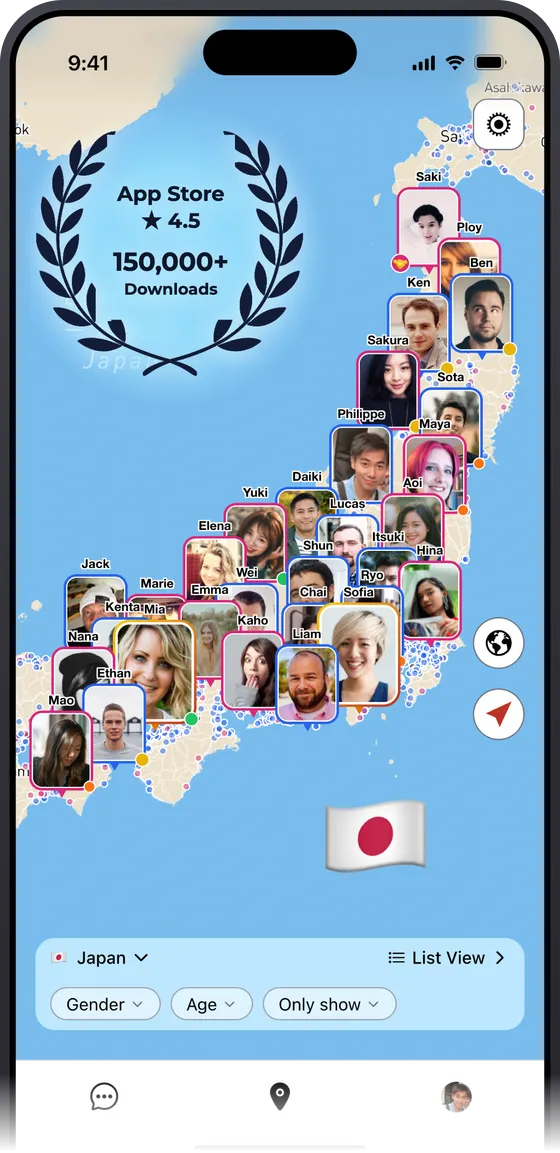
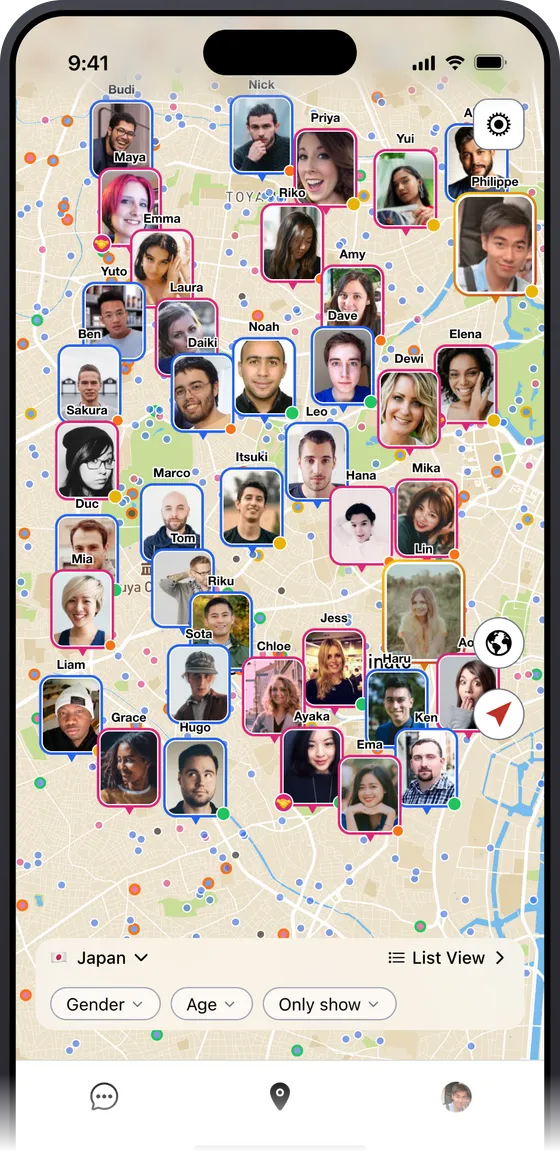
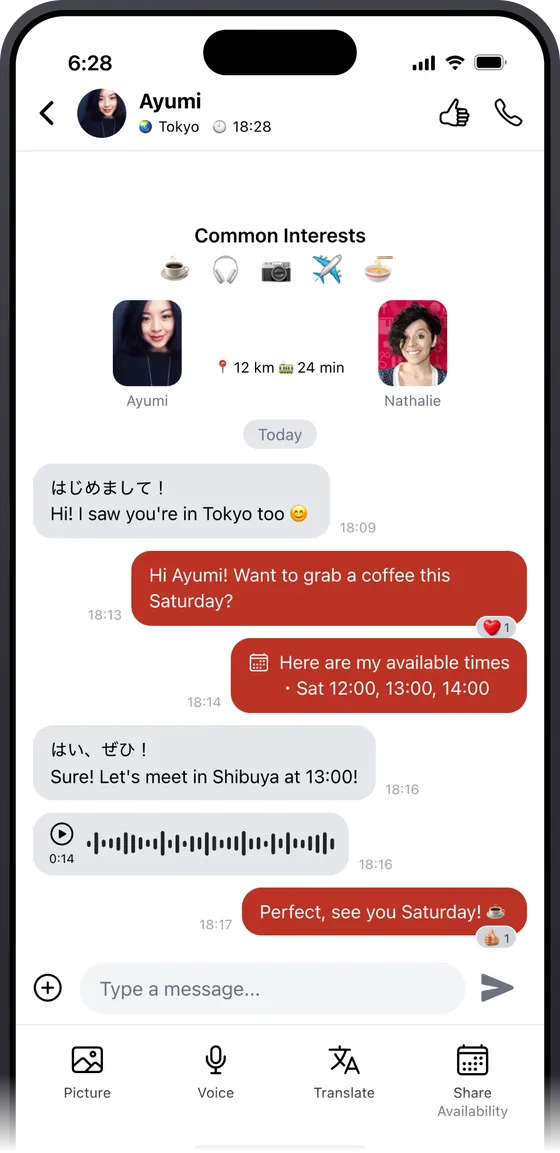


The best way to get better at conversations is to have more of them. SewaYou connects you with people in Japan who are actively looking to meet internationals and practice language exchange.
Find someone nearby, try one of these conversation starters, and see where it goes. The more you practice, the more natural it becomes.
Your next great conversation is waiting.


