

Shibuya is the neighborhood every foreigner in Tokyo passes through, but most don't actually live in it. The famous crossing, the constant tourist density, the high rent — Shibuya looks intimidating to live in, and for some good reasons. But Shibuya also concentrates more foreigner-relevant social infrastructure (language exchanges, international bars, Japanese tech offices full of internationally-minded people, English-speaking shops) than any other single Tokyo neighborhood. If you base your social life around Shibuya, you can find your people faster than almost anywhere else in Japan.
The trick: Shibuya isn't one neighborhood, it's eight overlapping micro-zones with totally different vibes. Saying "let's meet in Shibuya" is meaningless. Saying "let's meet at the Hachiko exit" or "in Center-gai" or "in Dogenzaka" — that maps to specific scenes with specific people.
This guide breaks down where in Shibuya the foreigner-friendly scene actually lives in 2026, which spots produce real friendships vs. one-night-stands, and what's overrated. Whether you just got hired at one of the tech companies (Cyberagent, GMO, DeNA all have offices here), you're an exchange student at one of the surrounding universities, you work in fashion or media, or you just want to use Shibuya as your social anchor — this is for you.
The honest framing. Roppongi has more dedicated foreigner-bars but skews dating-focused. Shinjuku has more nightlife volume but is more chaotic. Daikanyama is calmer but has way fewer events. Shibuya hits the sweet spot: dense enough that there's something happening every night, but with enough non-dating social infrastructure (cafes, hobby-based events, hobby communities) that you can build actual friendships, not just a swipe history.
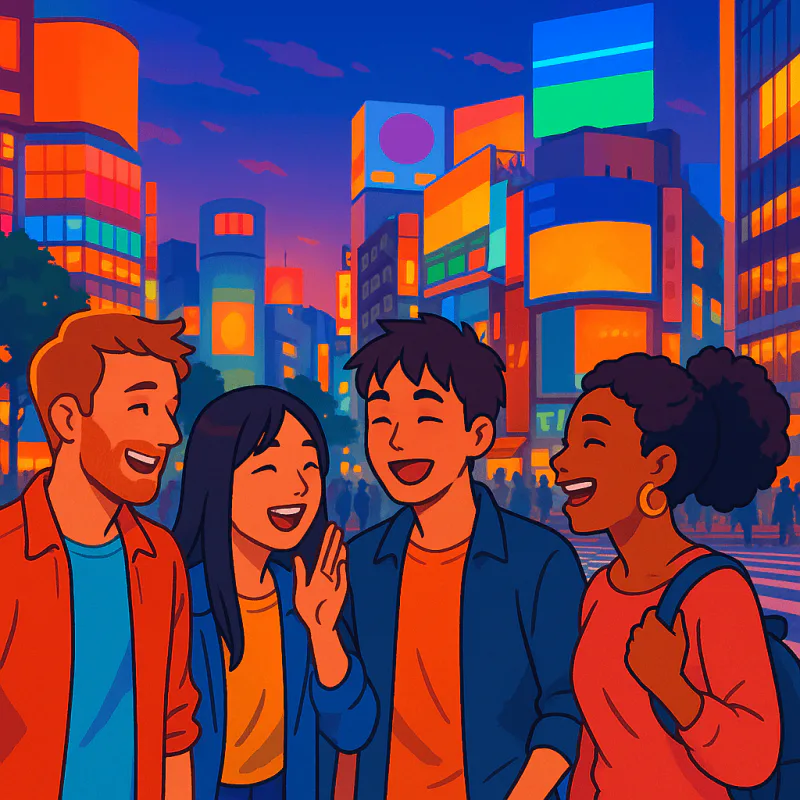
The specific dynamics:
The international tech company concentration matters. Cyberagent, GMO, DeNA, and a flock of smaller startups all have Shibuya offices. Their employees are disproportionately younger Japanese who actively want international colleagues and friends. If you're in tech, this is your social goldmine.
Universities feed in. Aoyama Gakuin, Komazawa, and Keio's Hiyoo campus are all within easy reach. The student population means there's a genuine after-class scene at Shibuya cafes most weekday evenings.
Language exchange events are concentrated here. Most of the regular Tokyo language exchanges (HUB pub Shibuya nights, smaller weekly events at cafes) are in Shibuya. If you can only attend events in one neighborhood, this is the right one.
The Hachiko exit is a logistics curse. It's where everyone says they'll meet, then it's chaos, then nobody finds anyone. Use less-busy meeting spots — Tower Records in front, Shibuya Sky entrance, Mark City — to actually find your friends.
Center-gai is overrated. It's tourist-heavy, loud, and most of the bars there are forgettable. The actual scene is in the small streets around it.
The classic. Once or twice a month HUB pub does a language exchange event that draws 100+ people. The vibe is overwhelming and dating-adjacent, but if you treat it as a numbers game and look for the small clusters of people who actually want platonic friendship (often the Japanese women in their 30s and the older male foreigners who've done these events for years), you can find good repeat-attendee crowds.
Better: smaller weekly meetups in cafes around Shibuya — search Meetup, Internations, or Facebook for "Shibuya language exchange." The smaller events (15-25 people) produce better conversation and repeat attendees.
If you work in tech: Shibuya hosts dozens of meetups per month — startup events at WeWork or smaller venues, language-specific dev meetups (Tokyo Rust, Tokyo Go, Tokyo TypeScript), product-design meetups. Most welcome English speakers and have explicit international vibes.
These produce some of the deepest foreigner-Japanese friendships in Tokyo because shared technical interest creates real conversation, not just "where are you from."
Bouldering exploded in Tokyo over the last decade. There are 4-5 gyms within Shibuya/Daikanyama/Ebisu walking distance. The crowd is mixed Japanese-foreigner, the activity makes small talk natural (everyone watches each other climb), and the after-climb dinner ritual is its own social hook.
Become a regular at one gym (3x/week for a month). The same faces will show up. By month two you'll have a climbing crew that turns into a dinner crew that turns into actual friends.
Yoyogi Park, just past Shibuya station, has multiple weekly run clubs. Tokyo Gaijin Runners and similar clubs are explicitly foreigner-friendly. They meet 1-2x per week at fixed times.
Like bouldering, running is a low-pressure activity that creates natural friendship windows. The post-run nomikai (drinking session) is where the real connecting happens.
Specific cafes in Shibuya have known foreigner clienteles. Streamer Coffee (Shibuya/Harajuku area), the third-wave coffee spots in Daikanyama, Blue Bottle in Aoyama. Pick one cafe, go on the same morning 2-3x per week, sit at the bar or shared table, and let the regular dynamic kick in.
This is exactly the use case map-based apps like SewaYou were built for. Shibuya is dense — you'll see hundreds of nearby foreigners and internationally-minded Japanese. The trick is filtering: use the app's filters (interests, languages) and only message people who pass your "would I actually want to meet this person" bar.
The advantage in Shibuya specifically: someone who shows up on your map is genuinely a 5-15 minute walk away. Suggesting "want to grab coffee at the Streamer in 20 min" is realistic.

Center-gai / Hachiko Exit area: Tourist-heavy, loud, mostly skip for actual hangouts unless you're meeting someone right at the station.
Dogenzaka: Slopes up west of the station. Better bars, more diverse crowd, less tourist density. Some great smaller-venue events here.
Ura-Harajuku / Shibuya-Harajuku transition: Cafes, third-wave coffee, fashion crowd. Daytime social scene lives here.
Nampeidai / Shoto: Just west of Shibuya, more residential, calmer cafes. If you live here you walk into Shibuya for events but escape to quiet at home.
Aoyama side: East of Shibuya, more design-firm and creative-industry crowd. Different vibe, more older expats.
Daikanyama (technically next door): Calmer, more design-y, café culture, where you go for a quieter version of the Shibuya scene. Many Shibuya-based foreigners actually live in Daikanyama and walk in for events.
Week 1: Walk Shibuya-Harajuku-Daikanyama on foot, by yourself, two or three times. Get comfortable with the geography. Note cafes, gym signs, language exchange flyers.
Week 2: Pick ONE recurring activity (a bouldering gym, a running group, OR a specific weekly language exchange) and attend it once. Don't add a second activity yet.
Week 3: Go back to the same activity. Talk to one person. Get their Line.
Week 4: Add a parallel activity (cafe regular OR Shibuya tech meetup OR weekend hike from Yoyogi). Two anchors max in your first month.
By month two: one Line group from your activity. By month three: regular weekend plans with people you didn't know existed when you started.

Counterintuitively, Shibuya's dense crowd works in your favor for friendship. In a quieter neighborhood, you might attend three events per month. In Shibuya, you can attend three per week without trying. The volume means more opportunities for the right person to be at the right place.
The density also means people don't have to commit to a long commute to meet you. "Let's grab coffee in Shibuya" is something a Tokyo person says yes to without thinking. Suggest the same in, say, Adachi, and you're asking for a major schedule sacrifice.
In Shibuya specifically, map-based apps like SewaYou solve a different problem than they do in smaller cities. Here, the issue isn't "are there foreigners around?" (yes, hundreds). It's "which of these hundreds are actually worth my time, and which are 3 minutes away right now?"
Filter aggressively. Send fewer, better messages. Suggest immediate meet-ups ("free at the Tower Records cafe in 30?") rather than scheduled future ones. The density means people are flexible and a same-day coffee is very possible.
Shibuya rewards both volume players (attend everything, meet many people, stick with the few who click) and depth players (pick one activity, become a fixture, build a small tight group). Both work. The mistake is being neither — attending one event in random places, never returning, never becoming known anywhere.
If you can commit 2-3 hours per week to ONE recurring activity in Shibuya for two months, you'll come out the other side with a real friend group. That's the playbook. The neighborhood does the rest.
Looking for foreign friends in Shibuya?
Make Japanese Friends On a Live World Map
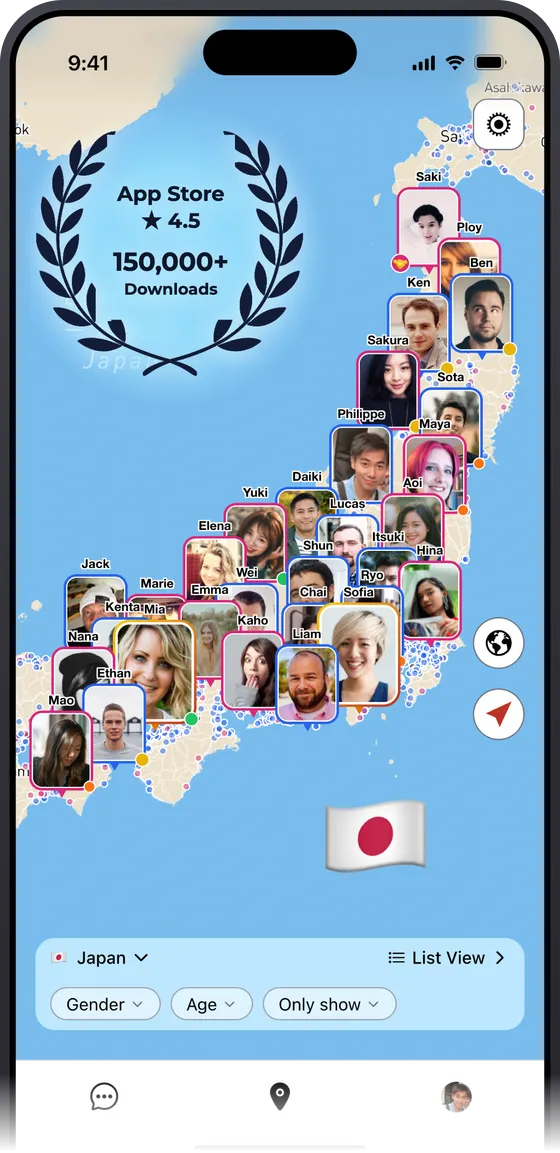
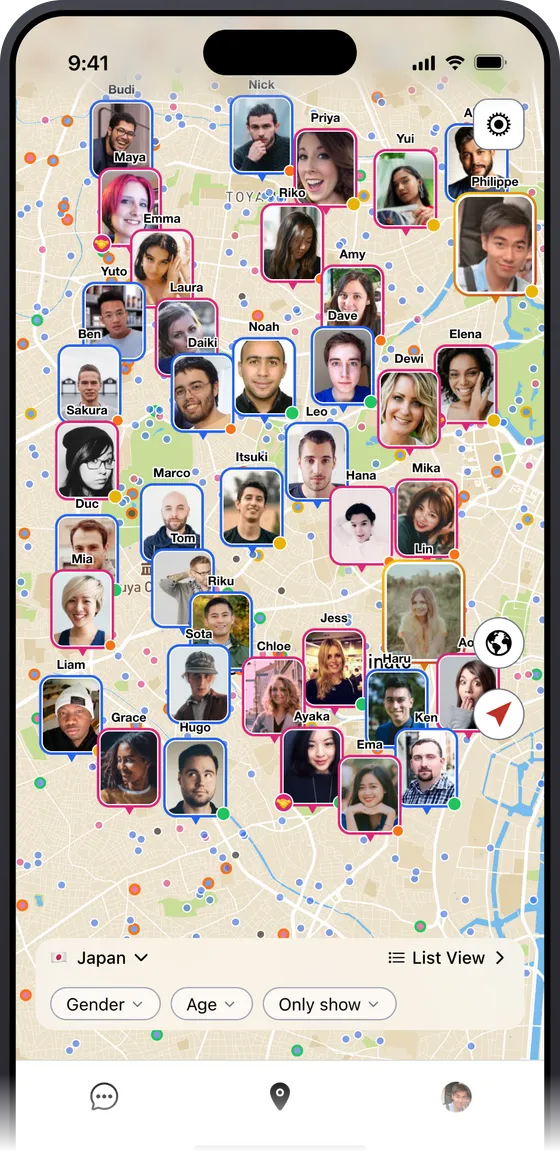
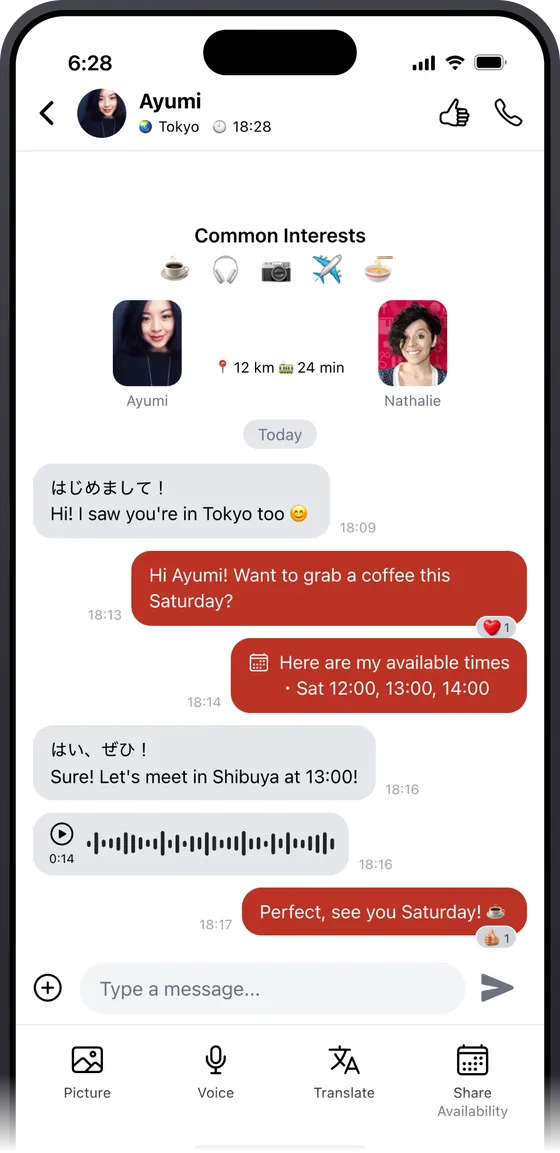


SewaYou shows Japanese people and foreigners actually near you on a live map. In Shibuya, that means dozens of potential friends within a 10-minute walk at any given time. Skip the swipe-fatigue of generic apps — see who's nearby, suggest a coffee at one of the Shibuya cafes you both already go to, and just meet.


