

Sendai is the city most foreigners only think about during cherry blossom season or the Tanabata festival. Then a few people move here for graduate school at Tohoku University, or get assigned to one of the local offices, and discover something the JET Programme alumni network has known for years: Sendai is an unusually pleasant place to live, and the foreigner community is small enough that everyone knows everyone within a year.
Making friends in Sendai is harder than Tokyo if you measure it by raw event volume — there isn't one. It's easier than Tokyo if you measure it by depth, because the same fifteen Westerners and the same forty Japanese internationally-minded people show up at every event, and within a few months you'll know all of them.
This guide covers exactly where the Sendai foreigner scene actually meets in 2026, what to expect from a much smaller city than the capital, and the specific moves that work in Tohoku. Whether you're at Tohoku University, doing JET in a nearby town and coming into Sendai on weekends, working at one of the international companies, or studying Japanese at a language school — this is for you.
The honest version. Sendai is the biggest city in Tohoku (the northeastern region of Honshu) but "biggest" here means about a million people, which is about the same as Birmingham or Cologne. The foreigner population is a few thousand. There are no twenty-event-per-week scenes.

What this actually means:
The scene fits in one neighborhood. Aoba Ward, specifically the area around Sendai Station and Kokubuncho, contains 90% of foreigner-friendly cafes, bars, and language exchange events. You don't need to navigate seven train lines to find your people.
Japanese language matters more here than in Tokyo. Tokyo has enough English-speaking Japanese that you can get by socially with N5-level Japanese. Sendai is more like N4 minimum to participate fully. The flip side: you'll improve faster because there's less English to fall back on.
JET Programme is the dominant pipeline. A huge chunk of the long-term foreigner community in Sendai came in through JET, either as ALTs in nearby Miyagi towns or as CIRs in the city. They have a built-in social network. As a non-JET, you'll need to find a way in.
Tohoku University is a parallel scene. International students at Tohoku University (which has a large grad school international program) form their own community. Easy to plug into if you're a student. Harder if you're not — but they do public events.
Winter is brutal and social life shrinks. December to February, people stop going out as much. If you arrive in winter, lower your expectations for the first few months.
The good news: Sendai is the kind of city where if you become a regular at one place, the entire foreigner community will know about you within a month.
Kokubuncho is Sendai's nightlife district. Most of the foreigner-friendly bars are here — the kind where a single Westerner walking in alone gets greeted by name within three visits. Bars like Shaft, Macabar, and a rotating set of small basement spots have hosted the same crowd for years.
Tactic: pick ONE bar. Go on a Friday or Saturday for three weeks. Order whatever the regular drink is. Talk to the bartender. The bartender will introduce you to other regulars by your fourth visit. Sendai friendship-making works through these social brokers.
Tohoku University runs an International Festival in autumn and a series of smaller monthly events at the IRIDeS / international house. Even if you're not affiliated with the university, you can attend most of the public events.
These are gold for meeting both Japanese students who actively want international friends AND newly-arrived foreigners who don't know anyone yet. Attendance overlap is high — the same Japanese students often go to multiple events looking for foreigner friends to practice English with.
Even if you're not on JET, the JET community in Miyagi prefecture has monthly social events that are open to all foreigners (and their Japanese friends). These tend to be in Sendai because that's where the JET ALTs from rural Miyagi come on weekends.
Find them via the AJET (Association of JETs) Facebook page or via word-of-mouth at any of the Kokubuncho bars. Once you've met one JET person, they'll add you to the relevant Line group.
Sendai International Relations Association runs language exchange events at their center near Aoba-dori. These are smaller and more structured than what you'd get in Tokyo — usually 15-25 people, organized into language pairs, with actual facilitators.
Goes well: you learn names, you can find one or two people you genuinely click with, and the SIRA staff will tell you about other community events. Goes less well: the format is a bit formal compared to a casual cafe meetup, so it's not ideal if you wanted a beer-and-chat vibe.
Like Kobe, Sendai is mountain-adjacent. There are several active hiking groups (mostly via Meetup or Facebook) that head into the Zao or Sendai-shi mountains on weekends.
Hiking is a great Sendai social activity because:
Map-based apps like SewaYou over-deliver in Sendai for the same reason they over-deliver in Kobe: the small size means proximity is meaningful. Within a 2km radius around Sendai Station, you'll see most of the active foreigner community on a map. Easy to message a few people, easy to actually meet up because everyone's a 15-minute walk away.
In Tokyo, the map shows hundreds of people and you don't know where to start. In Sendai, the map shows maybe forty, and several of them are at your nearest cafe right now.

Aoba Ward (around Sendai Station / Kokubuncho): Center of foreigner life. Walking distance to bars, cafes, language exchanges. Higher rent for Sendai (still cheap by Tokyo standards). Live here if you're prioritizing social life.
Around Tohoku University (Aobayama / Kawauchi): University belt. Lots of students, cheap rent, lively cafes, but smaller social scene if you're not affiliated with the university.
Izumi Ward: Suburban-ish, larger apartments, family-friendly. Some long-term Western residents live here. Trade-off: you'll commute into Aoba for most social events.
Taihaku Ward (Nagamachi area): Residential, growing, has a foreign community of mostly company-transferred families. Quiet, decent shopping, away from the bar scene.
Week 1: Walk Sendai Station ↔ Kokubuncho ↔ Aoba-dori on foot. Map every cafe, every English-friendly restaurant, every language exchange flyer.
Week 2: Show up to ONE thing — a SIRA event OR a Tohoku Uni public event OR a Friday night at one specific Kokubuncho bar.
Week 3: Go back to the SAME thing. Talk to one person you saw last week.
Week 4: Get added to one Line group. From there, the rest unfolds — Sendai's small enough that one Line group connection multiplies into the whole scene within a month.
The mistake to avoid: trying to attend every event in your first month. There aren't many events in Sendai. Bouncing between them spreads you thin and you don't become a regular anywhere.

The argument for SewaYou in Sendai is the same as in Kobe but stronger: the city is small enough that your map view captures essentially the entire foreigner community. You're not picking from a sea of hundreds — you're picking from a curated forty, most of whom are within a 20-minute walk.
This makes the "swipe through endless profiles, get tired of it, never actually meet anyone" failure mode less likely. You see the whole pool, you pick the few who look interesting, you message them, and when you focus on nearby people, meeting up is easier to arrange. You can also explore other areas anywhere on the world map.
Sendai foreigners are usually here for one of three reasons: a fixed-term graduate program, a JET assignment, or a specific job. That means turnover exists, but the people who choose to stay long-term tend to be deeply rooted. The friendships you build here, if you stay, are some of the most durable in Japan because the small community forces you to keep showing up to the same places, with the same people.
Three months of consistent showing up at one or two anchor activities, plus regular use of the local foreign-friendly cafes, plus one Line group connection — that's the playbook. It works. You just have to be patient and not compare it to Tokyo's volume.
Looking for foreign friends in Sendai?
Make Japanese Friends On a Live World Map
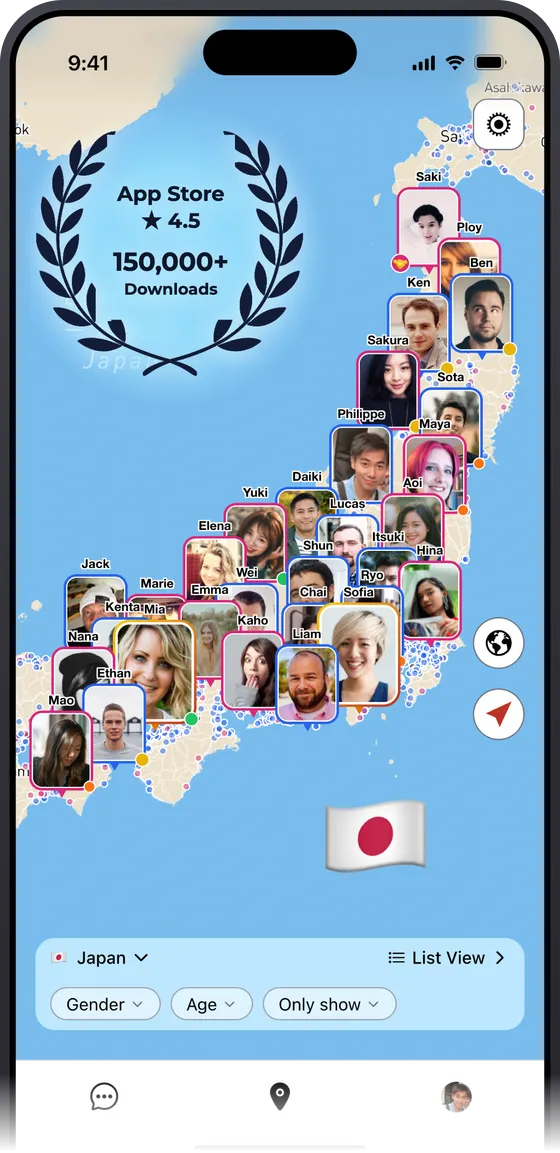
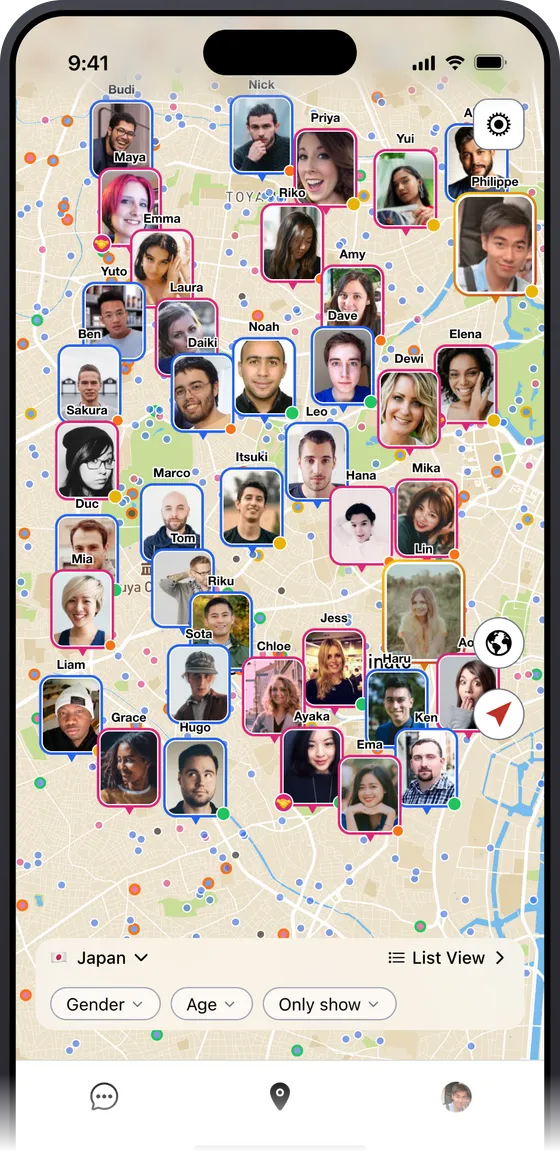
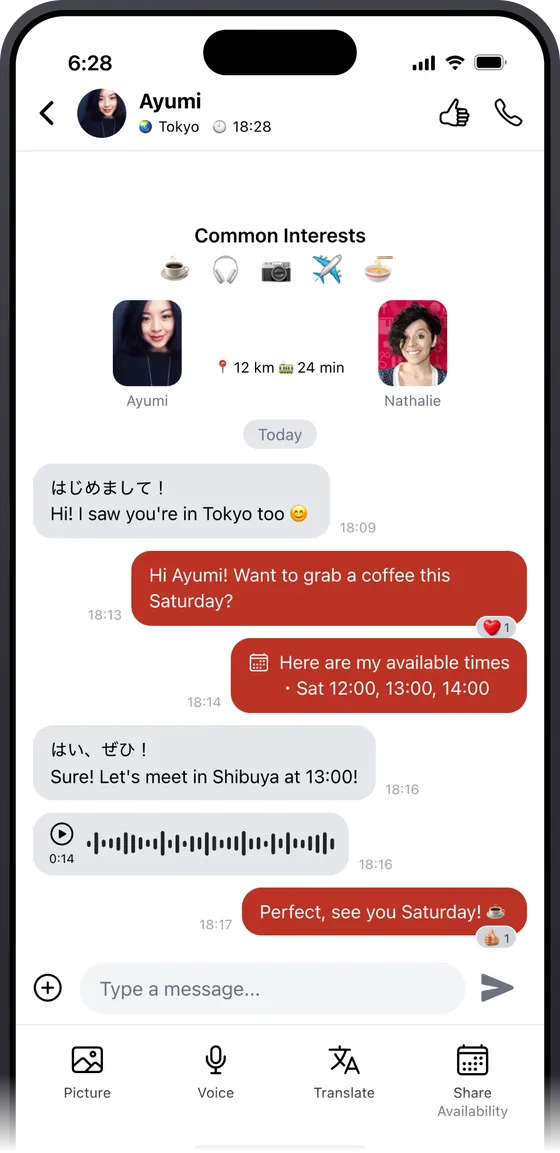


SewaYou shows you Japanese locals and other foreigners actually near you in Sendai on a live map. The smaller the city, the better this works — most of Sendai's foreign community is within a 2km radius of Sendai Station, and the map captures it cleanly.


