

So you've landed in Osaka, or maybe you've been here a while, and you're starting to realize something nobody warned you about: making friends in Japan's "friendliest city" is actually kind of hard. Yes, Osakans have a reputation for being warmer and more talkative than people in Tokyo. Yes, the locals will chat you up at the izakaya counter. But chatting and actually becoming friends are two very different things, and a lot of foreigners in Osaka end up feeling stuck somewhere in between.
The good news? Osaka is genuinely one of the best cities in Japan for building a social life if you know where to look. It's smaller and more walkable than Tokyo, the locals are famously approachable, and the foreigner community here is tight-knit without being cliquey. This guide breaks down exactly how to make friends in Osaka in 2026, with real neighborhoods, real venues, and the stuff that actually works.
Before we get into the how, let's talk about why Osaka is its own animal. Tokyo is enormous, spread out, and socially fragmented. Osaka is the opposite. The city is compact enough that you can bike from Umeda to Namba in half an hour, and once you start hanging out in the same few neighborhoods, you'll start bumping into the same people.
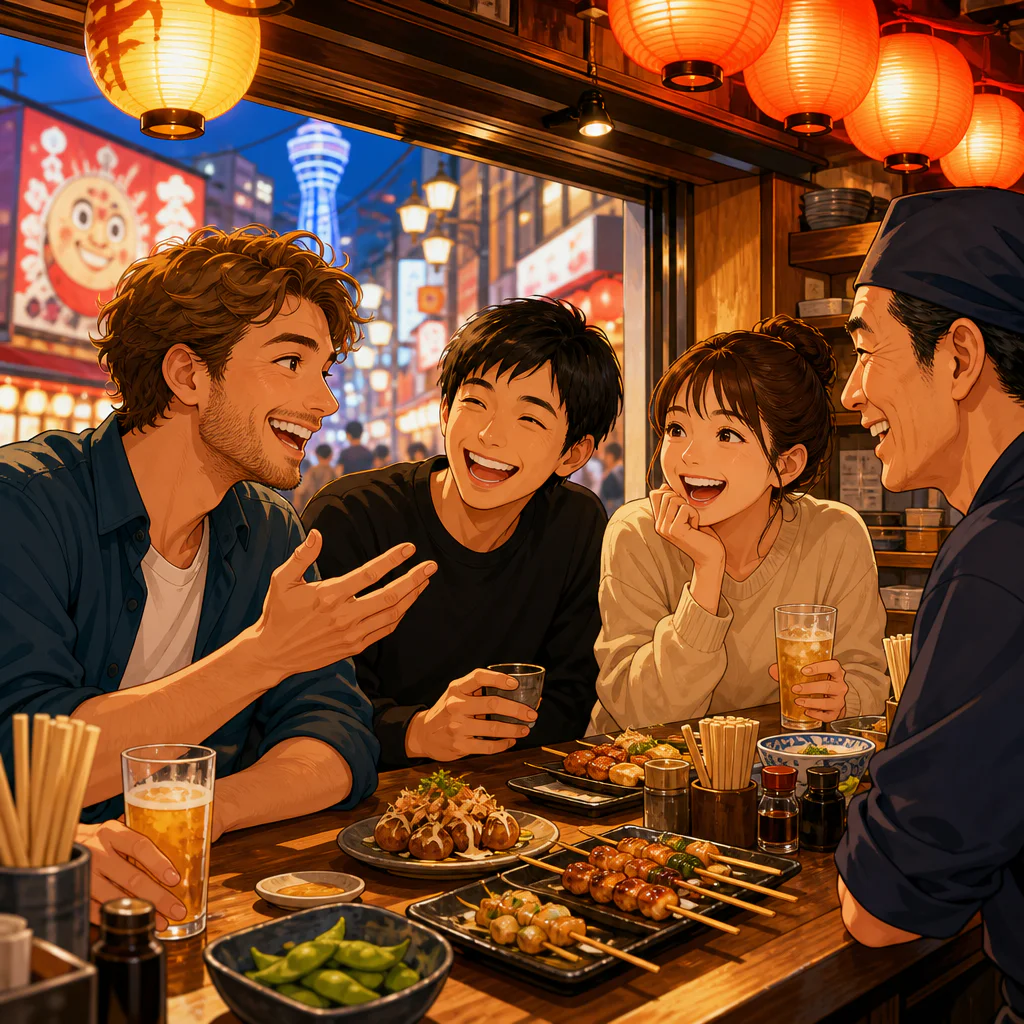
Osakans also tend to be more direct than Tokyoites. They'll tease you, they'll roast each other, they'll actually ask what you think instead of dancing around it. For a lot of foreigners, this is a huge relief. The flip side is that the local humor is fast, it's regional, and if your Japanese is intermediate, you'll miss a lot of it. That's okay. Laugh anyway. Ask what the joke meant. People appreciate the effort more than perfect comprehension.
The challenge most foreigners hit in Osaka specifically is this: the city feels friendly from day one, but that initial warmth doesn't automatically turn into lasting friendship. You'll have amazing conversations at a bar, swap LINE contacts, and then never hear from that person again. This is normal. It's not you. Japanese friendships tend to form through repeated exposure in shared contexts, not one great night. You need to build the contexts.
Not all of Osaka is equal when it comes to meeting people. Here's where foreigners and locals actually mix in ways that can lead to real friendships.
Nakazakicho is probably the single best neighborhood in Osaka for the slow-burn friendship thing. It's that hipster pocket between Umeda and Tenma with the old wooden buildings, the indie cafes, the record shops, and the tiny bars where the owner knows everyone's name. Places like Salon de AManTO, Taiyo no To, and the little coffee shops along the backstreets are full of creative types, both Japanese and foreign, who are actually open to new faces. Become a regular somewhere. That's the move.
Tenma and Tenjinbashi is where the actual drinkers hang out. The Tenma area, especially the streets under the train tracks, is packed with standing bars (tachinomi) where you're physically pressed up against strangers. It's almost impossible to not talk to someone. Tenjinbashisuji is the longest shopping street in Japan, and the cross streets are full of tiny, seven-seat bars where the bartender will introduce you to the other customers within minutes.
Amerikamura (Amemura) skews younger and is heavy with streetwear kids, artists, and music nerds. The area around Triangle Park is where skate kids congregate. Bars like Circus and Socore Factory host events where foreigners and locals genuinely mix.
Shinsaibashi and Namba are obvious tourist zones, but the side streets and the area stretching toward Horie have actual local scenes. Horie especially has become a second wave of the Nakazakicho vibe, with specialty coffee, vintage shops, and a slightly older, more design-y crowd.
Tsuruhashi and the Korean Town area is underrated. The grilling smoke, the cheap sake, the mix of long-term foreign residents (many of Korean descent who have been here generations) and curious locals, makes it a great place to become a regular.
Avoid trying to build your core social life in Dotonbori. It's beautiful, it's fun for a night, but it turns over too fast. You'll meet tourists, not friends.
If you take one thing from this whole guide, take this. Pick a small place (seven to fifteen seats max), go once a week, sit at the counter, and order the same drink. That's it. Do this for two months.
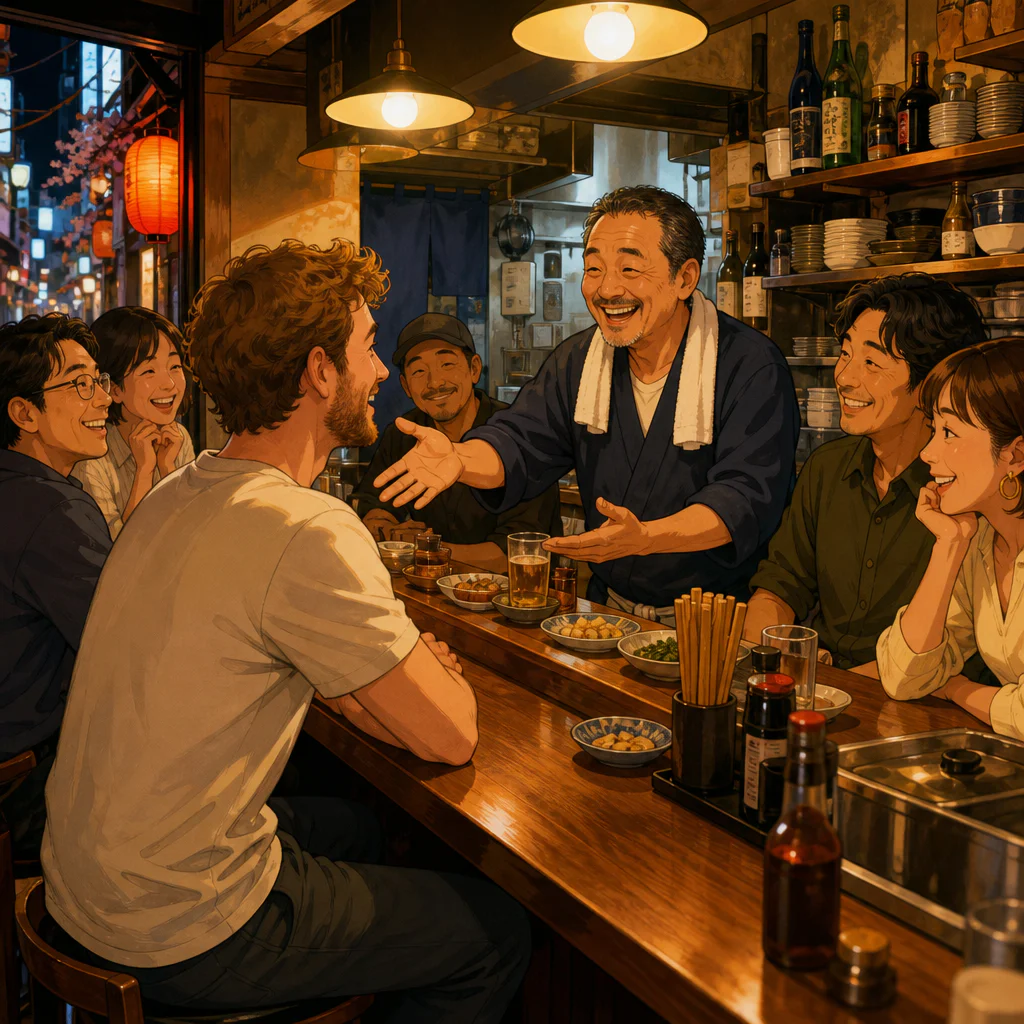
Here's why it works in Osaka specifically. The city has thousands of these tiny owner-operated bars called "snacks" (スナック) and standing bars. The whole business model is based on regulars. The mama or master will remember you by visit three, start asking about your life by visit five, and by visit eight they'll be introducing you to other regulars like you're an old friend.
A few specific spots that are known for being welcoming to foreigners without being foreigner-exclusive: Rogin's Tavern in Moriguchi if you want something slightly off the beaten path, Bar Augusta Tarumi in Umeda for whisky and good English, anywhere along the Ura-Namba alleys for cheap tachinomi, and the standing bars tucked along Hozenji Yokocho. Try a few, find one where the vibe clicks, then commit.
The mistake foreigners make is bar-hopping constantly. Novelty is the enemy of friendship here. Repetition is the whole point.
Meetup has lost steam in a lot of places, but in Osaka it's still surprisingly active, and there are a handful of consistently good recurring events. The key is picking something that requires repeated attendance with the same people. One-off parties are fine but rarely produce friends.
Options that actually work in Osaka:
Pick one. Go every week for three months before deciding if it works. Most people quit after two visits and blame the city.
The dating app fatigue has pushed a lot of people toward friendship-specific apps, and this is where your phone can genuinely help, but only if you use apps that prioritize proximity and in-person meetups. The generic "meet people online" apps don't tend to translate well in Osaka because the friction of actually scheduling something across a city is too high.
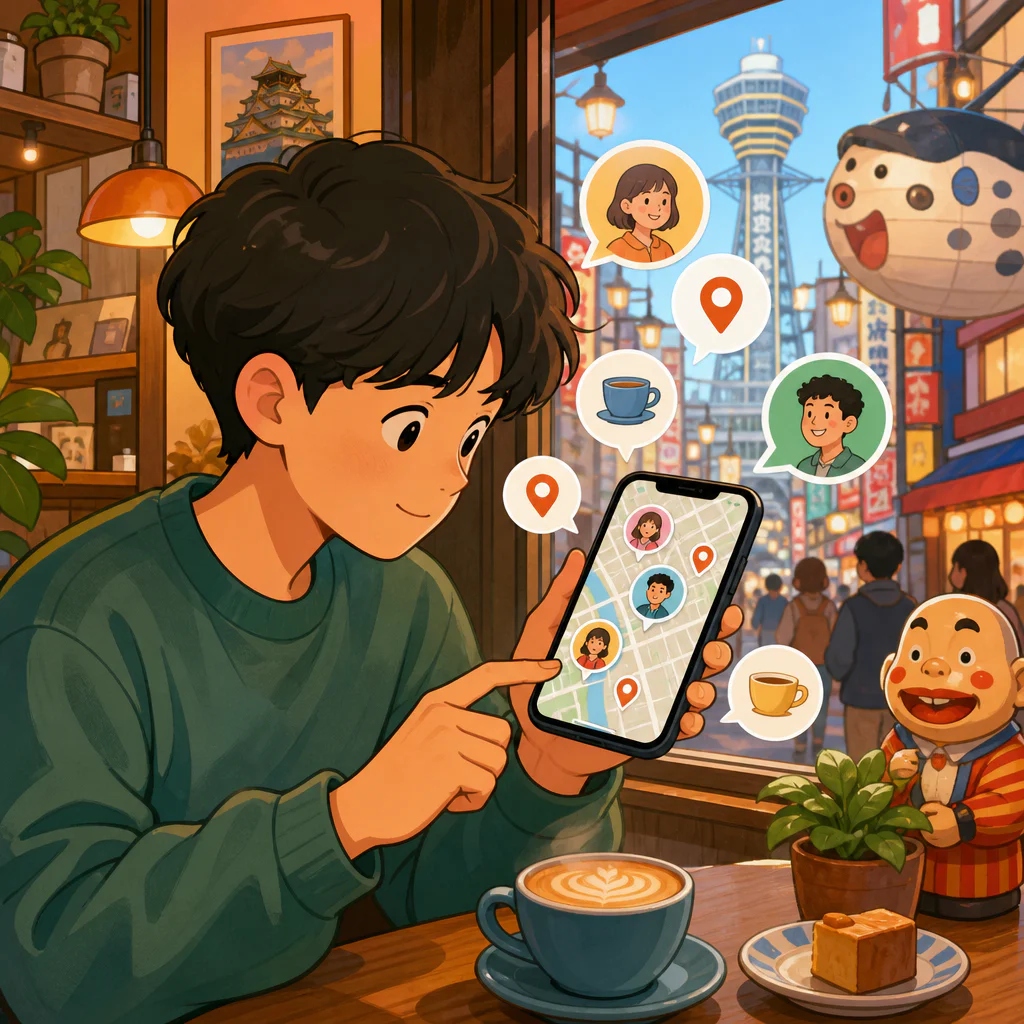
What works is apps that show you who's nearby right now. If you're already at a cafe in Shinsaibashi and the app tells you someone with overlapping interests is fifteen minutes away, the cost of saying "want to grab a coffee" is basically zero. That's the kind of low-friction interaction that Osaka rewards.
The other thing that works is being specific in your profile. "I want friends" is too vague. "I'm a foreigner in Osaka looking for someone to do weekly ramen walks with" is specific, weird, and way more likely to get a response. People respond to concrete invitations.
Osaka has a packed calendar of recurring events where foreigners and locals mix naturally. Treating these as social opportunities, not just entertainment, changes everything.
Tenjin Matsuri in late July is one of the three biggest festivals in Japan. The boat parade along the Okawa River is beautiful, but the real social magic is in the beer tents and the side streets around Tenmangu Shrine. Go with at least one person, but be willing to get separated and talk to strangers.
Osaka Castle Park on weekends is a whole scene. In good weather, the lawns fill up with people having picnics, playing music, doing slacklining and capoeira, flying drones. Show up with a speaker and a blanket and people will wander over.
The monthly flea markets at Shitennoji and Hanazono Shrine are where you'll find the vintage kids and the collectors. Easy conversation starters because you're both looking at the same weird thing.
Osaka Comic Con in the spring, plus the various niche cons that pop up at Intex Osaka, are obvious wins if you're into that scene.
Baseball at Koshien (technically Hyogo but culturally Osaka) when the Tigers play is almost a religious social experience. Go once. Make friends in the outfield stands. Learn the cheers.
The rule is simple: events are only useful if you actually talk to people there. Going alone can be an advantage because it forces the conversation.
Your Japanese doesn't need to be great, but it does need to include some Kansai dialect if you want to properly integrate in Osaka. This is non-negotiable. People here use Kansai-ben constantly and standard Japanese can feel weirdly formal.
Basics to pick up:
Using even a few of these will get you instant warmth from locals. They love hearing foreigners use Kansai-ben, and they'll tease you about it, which is exactly the dynamic you want. The goal isn't to sound native. It's to signal "I actually live here, I'm paying attention."
A few things trip up foreigners in Osaka specifically.
The "gaijin bubble" is real but avoidable. There's a sizable long-term foreigner community in Osaka, and it's easy to fall entirely into it. That's fine for the first few months but it gets small fast. Force yourself to maintain at least half your social investments in mixed or Japanese-majority contexts.
Bar friendships often stay at the bar. You'll have amazing conversations with someone, exchange LINE, and then realize you only ever see them when you're both at that specific bar. This is fine actually. These are called "bar friends" and they're a legitimate category. But don't confuse them with closer friendships.
Work colleagues rarely become weekend friends. Japanese work culture still tends to silo work and personal life. If you're teaching English or working at an international company, your coworkers are great but you probably need to build a separate social network too.
Winter is brutal for social life. Osaka winters are cold and gray and everyone retreats. Don't take it personally if December through February feels quiet. Use that time to become a regular somewhere warm.
Language plateau hits hard around month six. You'll get comfortable enough to have surface-level conversations everywhere, and then you'll realize you haven't had a single deep conversation in Japanese in weeks. This is when people give up. Don't. Push through by committing to one context where you only speak Japanese.
Making friends in Osaka as a foreigner in 2026 isn't a matter of finding some secret venue or magic app. It's a matter of committing to a few specific places and activities, showing up repeatedly, and letting the natural warmth of the city do its work. Pick one small bar to become a regular at. Join one hobby group that meets weekly. Put yourself in the event calendar. Learn a bit of Kansai-ben. Don't bail after two months.
The foreigners who build great social lives in Osaka aren't the ones with the best Japanese or the most outgoing personalities. They're the ones who decided early on that building a life here was worth the patience it requires.
Make Japanese Friends On a Live World Map
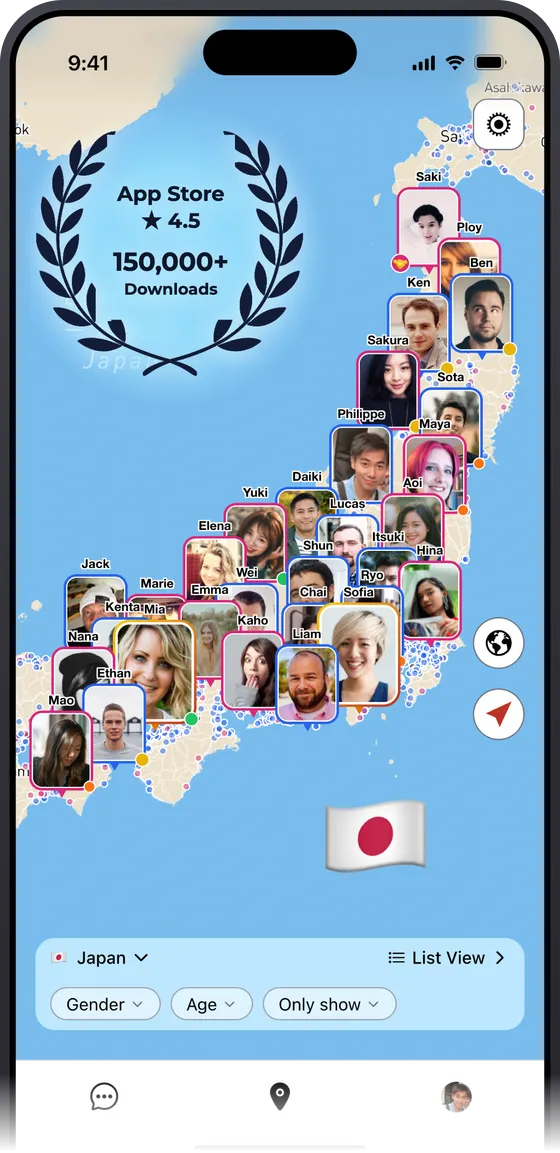
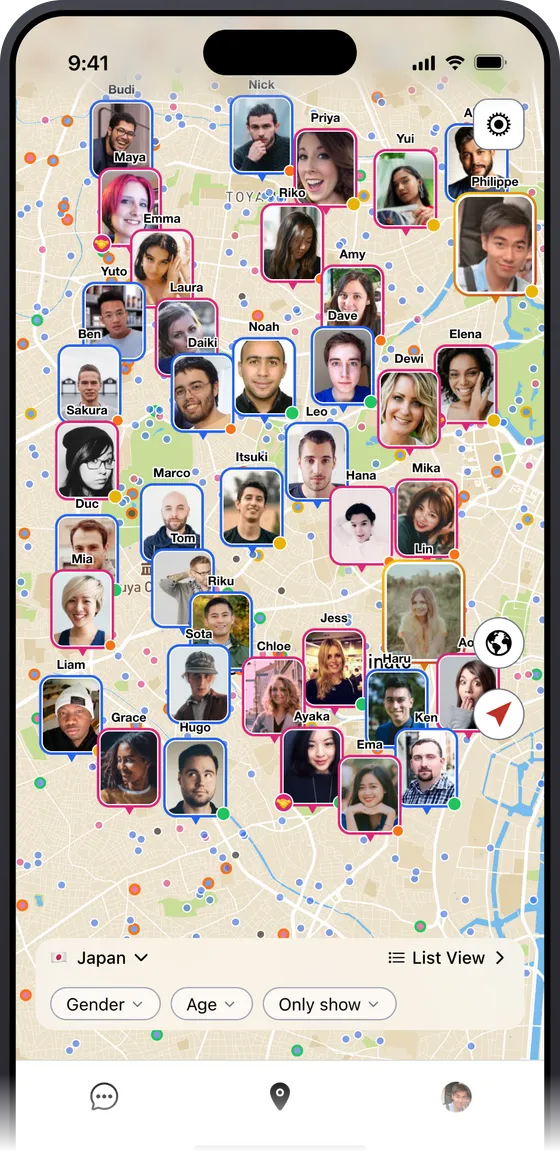
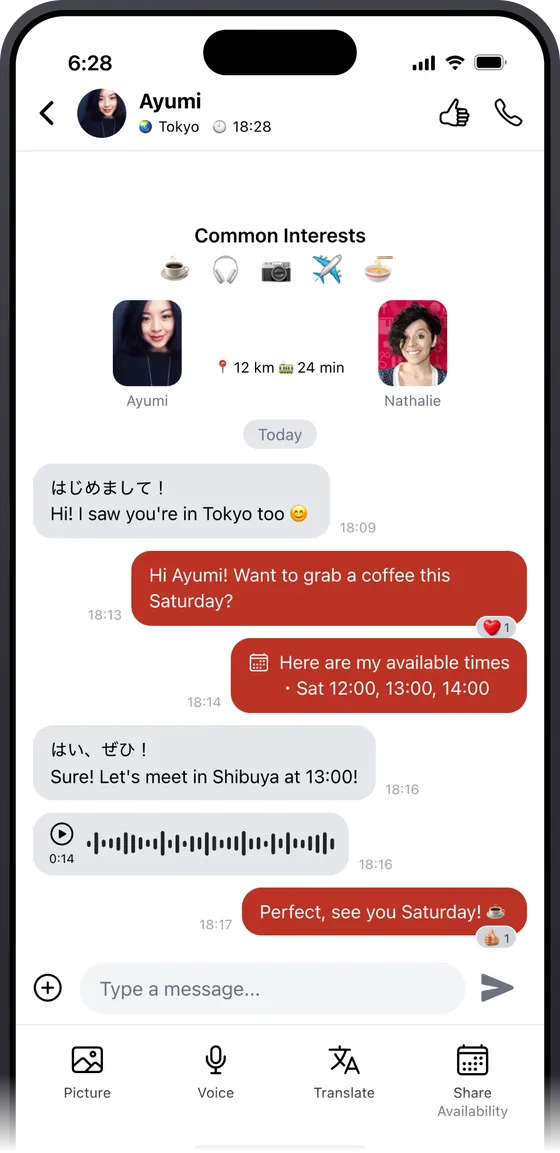


If you want to speed up the "meet people who actually live near you" part, that's exactly what we built SewaYou for. SewaYou is a map-based friendship app where you can find people nearby in Osaka or anywhere in the world. Open the map, see who's around you in Nakazakicho or Namba or wherever you're hanging out, and reach out to the ones whose profiles actually match what you're looking for. It's the low-friction way to stop thinking about making friends and start actually meeting them.
Is Osaka friendlier than Tokyo for foreigners?
Generally yes, at the surface level. Osakans are more likely to strike up conversation, tease you, and pull you into a group at a bar. But "friendlier" doesn't automatically mean "easier to make close friends." The initial warmth is real, the path from warmth to friendship still takes the same repeated effort it takes anywhere. The advantage is that Osaka's compact size and regular-based bar culture make that repetition easier.
Do I need to speak Japanese to make friends in Osaka?
You can get by in English in the main foreigner-friendly neighborhoods like Nakazakicho, Amemura, and parts of Namba. But your social life will be much richer with even basic Japanese, and specifically with a few Kansai-ben phrases sprinkled in. Aim for enough Japanese to order, make small talk, and laugh at jokes you only half understand. Locals care way more about effort than accuracy.
What's the best area in Osaka to live if I want an active social life?
Nakazakicho, Tenma, and Horie are the three best bets for foreigners who want to walk out their door and be in the middle of things. Nakazakicho has the indie cafe and creative crowd, Tenma has the drinking and regular-bar scene, Horie has the design-y slightly older crowd. All three are central, all three have strong foreigner populations without being overwhelming, and all three have great public transit.
How long does it take to make real friends in Osaka?
Plan for six months to build a solid core group of three to five close friends, and a year before you feel like you actually have a social life. The first three months are mostly surface-level meetings. Months three to six are when you figure out who among those people you actually want to invest in, and they in you. Anyone telling you they had a deep friend group in month two is either lying or defining "friend" very loosely. Patience is the whole game.


