Nagasaki doesn't feel like a place where you'd be lonely. You see foreigners everywhere: on the slopes up to Glover Garden, around Oura Church, in Shinchi Chinatown, and all over the Hamanomachi arcade on days when a cruise ship docks at Matsugae. So why is it so hard to actually make friends here?
If you're an English teacher placed here, an exchange student at Nagasaki University, someone who came for work at the shipyards or the port, or you just moved here with a Japanese partner, you've probably noticed the gap. Lots of faces. Not many friends. This guide covers how to make friends in Nagasaki in 2026, both Japanese locals and other internationals, with real neighborhoods, real organizations, and the habits that actually work.
Nagasaki has been a port city connected to the world for centuries. Dejima was Japan's window to the West during the Edo period, and the hillside around Glover Garden was a foreign settlement in the late 1800s. That history is why the city still draws so many international visitors, and why foreign cruise ships call here so often.
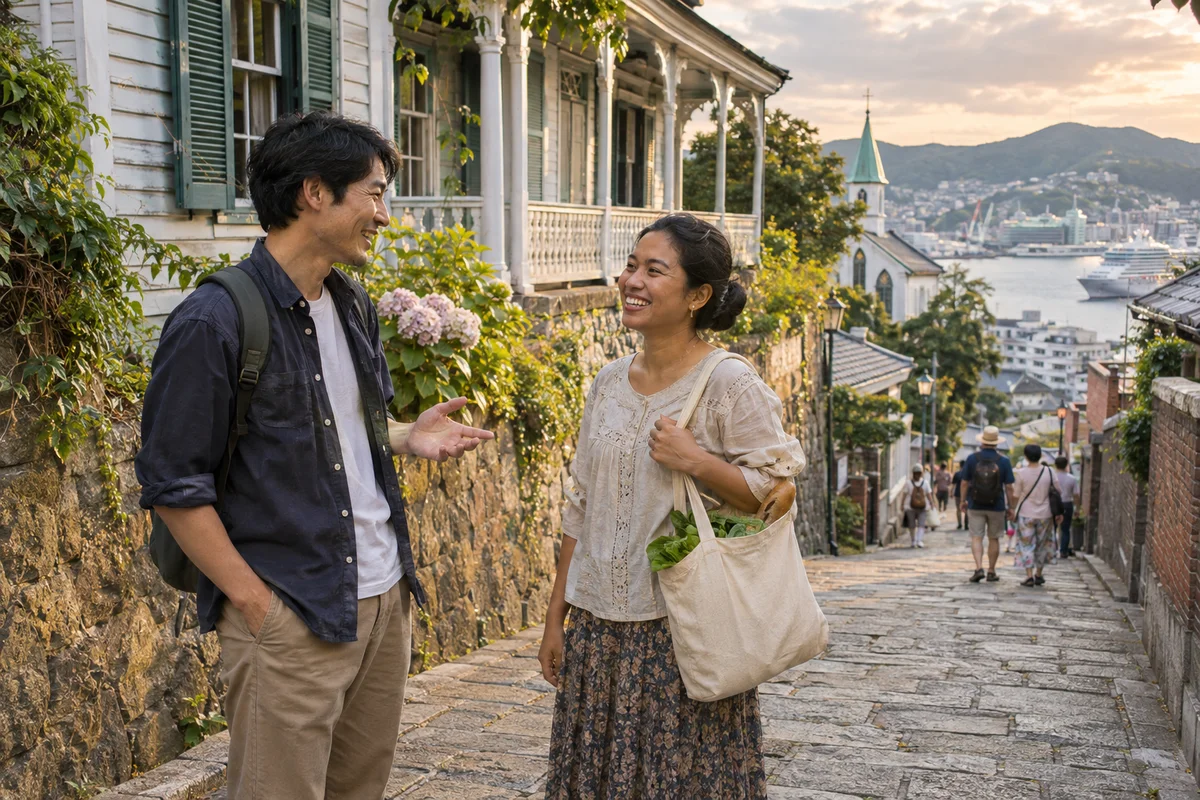
But here's the catch. Most of the foreigners you see are tourists. Cruise passengers are back on the ship by evening. You can have a great conversation with someone at Glover Garden, and you'll never see them again.
The long-term international community is real, it's just hard to spot. Students, ALTs and English teachers, researchers, people working in shipbuilding or at the port, people married to locals. They're here, but Nagasaki doesn't have one obvious "go here and you'll meet everyone" scene the way a bigger city like Fukuoka does.
Then there are the hills. Nagasaki is a city of slopes, so people's daily lives get split between hilltop neighborhoods, the downtown flats, and the university area. Random run-ins with the same person happen less than you'd expect.
The upside? The community is small. Once you're in, you start recognizing faces fast, and every new friend tends to introduce you to two more.
You really only need to know four areas, and the streetcar connects all of them.
Shianbashi and Doza are Nagasaki's main nightlife district. Shianbashi Yokocho is packed with tiny bars, and the Doza side has snack bars and izakaya. If foreign residents are out for a drink on a Friday night, odds are they're somewhere around here. Some bars have English-speaking owners or foreign regulars. Small places open and close, so check Google Maps before heading to a specific one.
Hamanomachi and Shinchi Chinatown are the daytime center. The covered arcade is where the city shops, and Chinatown is right next door. Tourists and locals mix here, and in winter the whole area becomes part of the Lantern Festival.
Dejima, Oura and Matsugae are the history and harbor zone: Dejima, Oura Church, Glover Garden, and the cruise terminal. It's the most touristy part of town, so meetings here tend to be one-offs. The exception is the Nagasaki International Association, based on the first floor of the Dejima Koryu Kaikan. It's the prefecture's hub for international exchange and multicultural support, and it's where long-term residents tend to cross paths.
Bunkyo-machi is home to Nagasaki University's main Bunkyo campus. There are a lot of international students in this area, and the cafes and set-meal spots near campus are where you'll run into them. It's within walking distance of Urakami.
If people ask where foreigners hang out at night in Nagasaki, the answer is almost always Shianbashi and Doza. On weekends you'll find students, English teachers and people in town for work dropping in for a drink.
The strategy is the same as anywhere in Japan, only easier because the city is smaller. Pick one place and keep going back. Once the owner knows your name, they'll start introducing you to the other regulars, foreign and Japanese. Skip the bar-hopping. A simple "Have you lived in Nagasaki long?" at the counter is a perfectly good opener.
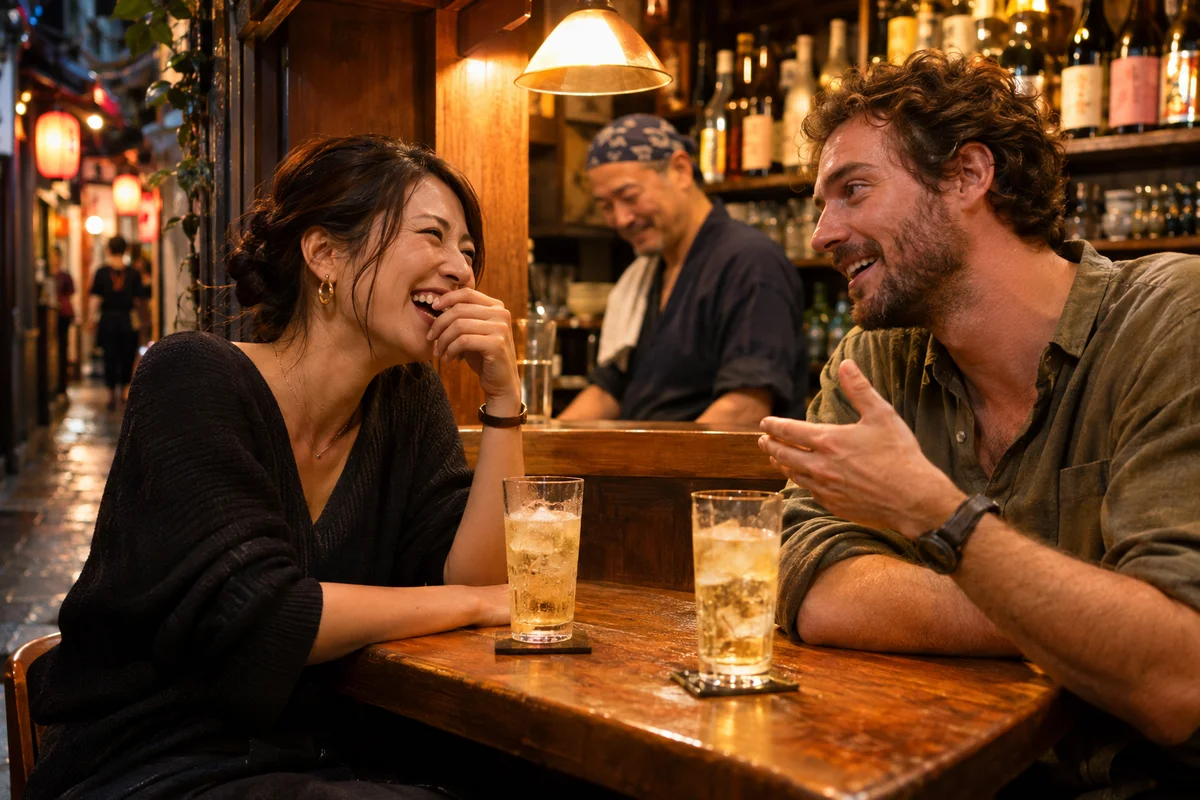
Not into the bar scene? The Nagasaki International Association is the most reliable way to get involved without a drink in your hand. Its website lists events and classes, plus volunteer programs like interpreting, host families, and multilingual support during disasters.
Volunteering works because nobody is there "to make friends." You show up for the same purpose a few times, and friendships happen on their own. The office keeps weekday daytime hours, so check the website for current openings.
Nagasaki City's international affairs office publishes a list of international exchange and cooperation groups active in the city. It includes friendship associations for specific countries and groups that run language classes, small circles you'd never find with a generic search for "Nagasaki expat community."
If there's a country or culture you're connected to, this list is a great shortcut.
Nagasaki University runs events bringing international and Japanese students together. Its 2025 international student exchange event was open to people from the local community, with Japanese cultural performances like taiko drumming, yosakoi dance and bon odori. Easy to walk into even if you're not a student.
The format isn't guaranteed to repeat every year, so keep an eye on the university's news pages. Meet one international student and you'll quickly meet their friends, and their friends' friends.
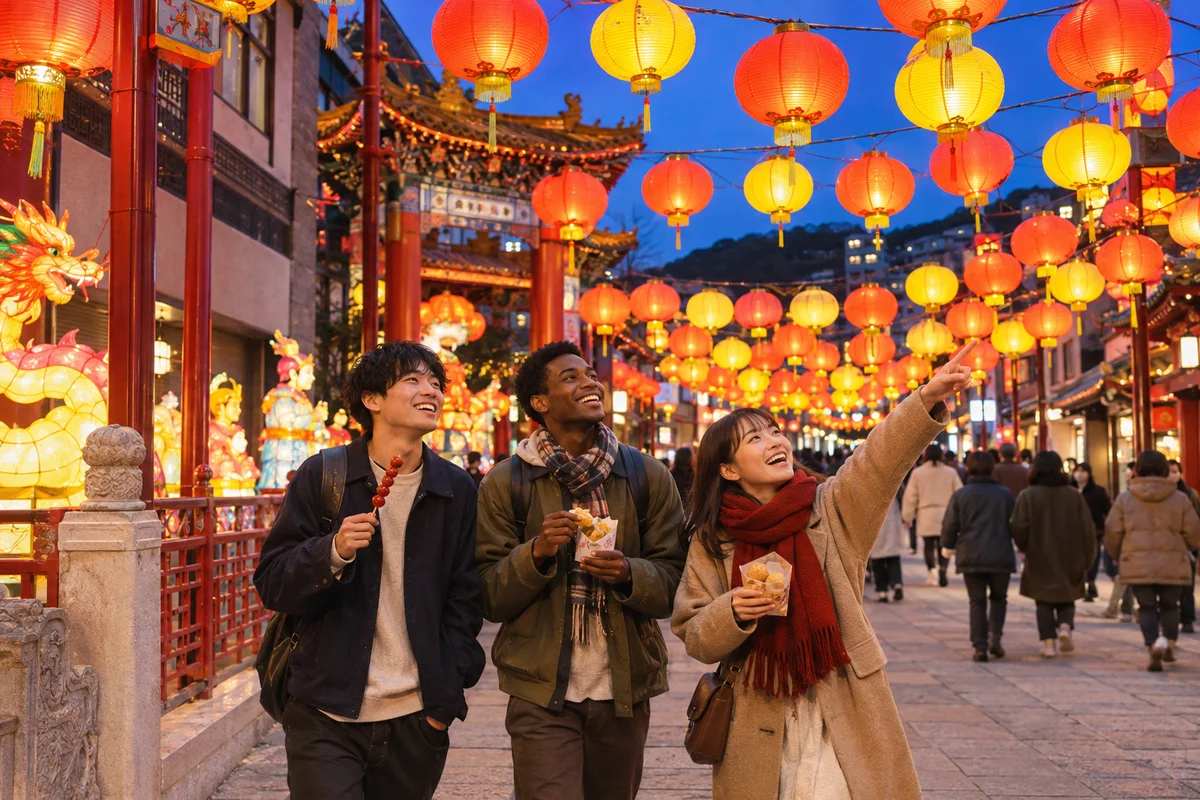
Nagasaki's calendar is one of the best things to do in Nagasaki to meet people. The big one is the Lantern Festival around February. In 2026 it ran from February 6 to 23, with venues including Shinchi Chinatown, Minato Park and the Hamanomachi arcade.
Under thousands of lanterns, it's easy to say "beautiful, isn't it?" to the person taking photos next to you. And it isn't only tourists: foreign residents bring their friends too, so it's a good night for meeting other locals.
In early October there's also Nagasaki Kunchi, the autumn festival of Suwa Shrine, held October 7 to 9 each year. Neighborhood performances spill into the streets, and it's a great conversation topic with locals who have strong opinions about their district's dance.
In a city where the hills scatter everyone, a map-based app saves you from waiting on luck. You can look for people around Hamanomachi or near Bunkyo-machi instead of hoping you'll bump into them. For a wider look at your options, see our guide to the best apps for making international friends.
Make Japanese Friends On a Live World Map
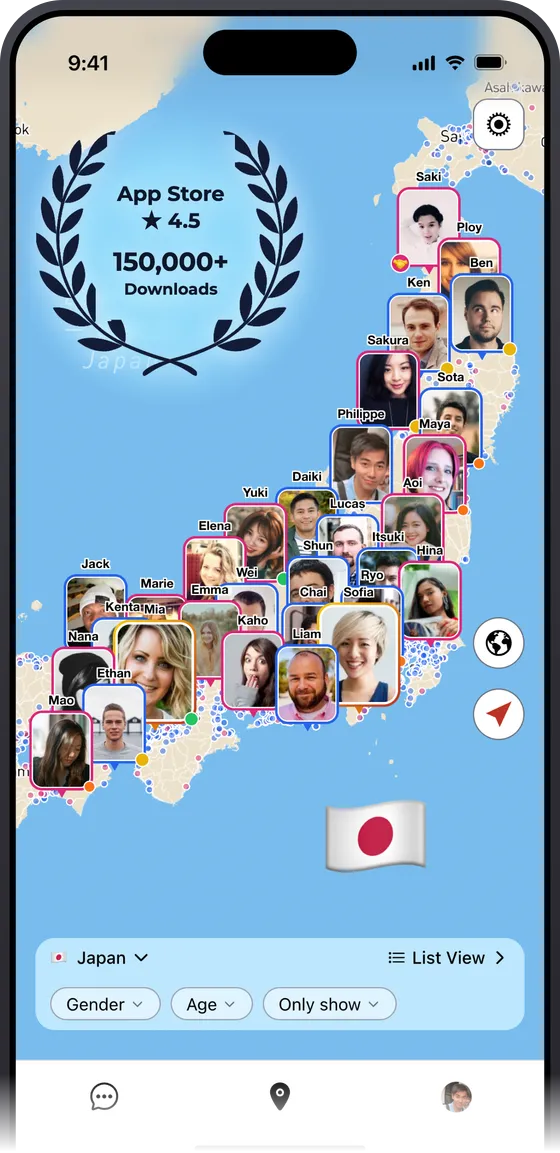
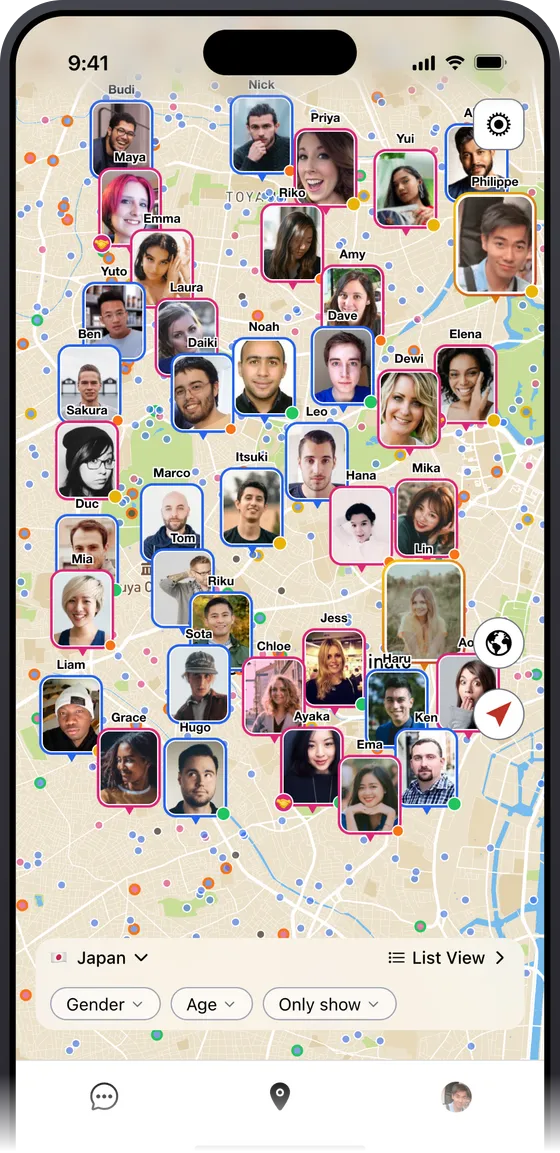
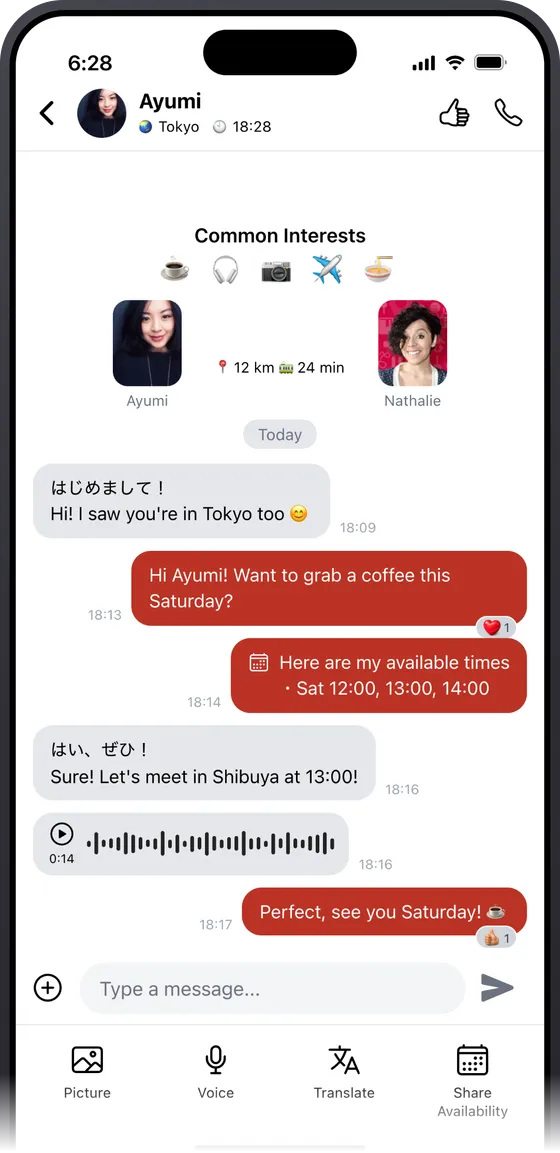


This is what we built SewaYou for. It's a map-based friendship app where you can find people nearby and anywhere in the world. In Nagasaki, you can see who lives within walking distance or a streetcar ride away, check their profile to tell a resident from a visitor, and suggest coffee in Hamanomachi.
The map doesn't stop at Nagasaki. Without any travel plans, you can explore a city or country you're curious about from home and make online friends who live there. You can also connect with someone before they move to Nagasaki and show them around Dejima when they arrive. Nearby friends are easy to see again, and faraway friends can last for years.
The international community here is small, so the best move is to keep showing up at one place.
For your first month, pick just one: a bar in Shianbashi, volunteering with the international association, or a university event. Go two or three times. Visit two is "oh, you're back." Visit three is when you swap LINE. That pace is enough.
One trap to avoid is treating locals as your personal English or Japanese tutor. They're Nagasaki residents with lives of their own. Trade local knowledge instead: your favorite champon shop, the best spot for the night view from Mount Inasa, where to eat after Kunchi. That's what makes people want to see you again.
At night, the bars of Shianbashi and Doza. During the day, around Hamanomachi and Shinchi Chinatown. If you'd rather skip the drinking, try events and volunteer programs at the Nagasaki International Association in the Dejima Koryu Kaikan, or Nagasaki University's international student events.
Yes, though it's smaller and less visible than in Fukuoka or Tokyo. It's made up of students, English teachers, researchers, people working in shipbuilding and at the port, and people married to locals. The international association and Nagasaki City's list of international groups are the easiest ways in.
Centuries of trade history, from Dejima to the Glover Garden settlement, make it a popular destination, and foreign cruise ships call at the port often. There are also universities with international students. Because so many are tourists, focus on places where long-term residents gather.
It helps a lot, but you don't need to be fluent. Many locals are happy to mix Japanese and English, and plenty of foreign residents are learning Japanese too. Being curious about Nagasaki matters more than perfect grammar.
Plan on a few months of showing up at the same places. Because the community is small, things can move quickly once you're known as a regular somewhere.
Nagasaki is a city where you'll see foreigners all the time, but friendships only happen when you create the chance. The good news is that the circle is small, so one step in goes a long way.
Looking for friends in Nagasaki? Download SewaYou to find foreigners and Japanese locals near you on the map and meet up in Hamanomachi, or connect from home with people in a country you'd love to visit, no travel plans needed. Send a message to someone who seems interesting and start a new friendship.
Looking at other cities? Check out our city-by-city guide to making friends or nearby Fukuoka.