Hiroshima is the city most foreigners visit for two days, see the Peace Memorial and Miyajima, and never think about again. But there's a sub-population of people who came for a JET assignment, a graduate program at Hiroshima University, or a job at one of the international NGOs based here, and quietly built a life. The scene is small, but it's been there for decades, and the long-time foreign residents have unusually deep roots.
Making friends in Hiroshima as a foreigner in 2026 is more straightforward than in Sendai (warmer climate, more international visitor flow) but less straightforward than in Tokyo (no critical mass of language exchange events). The pattern that works: anchor yourself in one of two or three foreigner-friendly neighborhoods, become a regular, and let the small community absorb you.
This guide covers where the foreigner scene in Hiroshima actually meets, which neighborhoods deliver, and the specific tactics that work in a mid-sized Japanese city. For JET ALTs commuting in from Akiota or Hatsukaichi, Hiroshima University students, World Friendship Center volunteers, and anyone who moved here for work or post-disaster cleanup work — this is for you.
The honest landscape. Hiroshima city has about 1.2 million people. The Western expat population is in the thousands, dominated by JET alumni who stayed, peace-related NGO workers, university faculty, and a slowly-growing tech-and-language-school crowd.
What you'll notice quickly:
The peace community shapes everything. The Hiroshima Peace Memorial Museum, the Hibakusha (atomic bomb survivor) testimony programs, World Friendship Center, and various international NGOs around peace work form a real social network. If you have any peace-studies or international-affairs interest, you have an instant in.
JET ALTs from rural Hiroshima Prefecture come in on weekends. This is true of all Tohoku/Chugoku regional capitals — the prefectural ALTs come to the big city for social life. So the Hiroshima city foreigner scene gets a big weekend boost from outsiders who are also looking to make friends.
Hiroshima University is in Higashi-Hiroshima, not Hiroshima city. This is a critical detail nobody tells you. The main university is 40 minutes east by train. So the international student community is largely separate from the Hiroshima city foreigner scene. If you're a Hiro Uni student, you'll mostly socialize in Saijo (the Higashi-Hiroshima neighborhood) and only come into the city for events.
Hiroshima people are notably welcoming. The local culture has a "we're internationally known and we like that" pride. Hiroshima locals tend to engage with foreigners more readily than, say, Sendai locals. Use this — it makes the Japanese-friendship-making side easier here than in most cities of comparable size.
The bar scene is concentrated and intimate. Nagarekawa is the main entertainment district, plus a handful of foreigner-frequented bars across Hatchobori and Kamiya-cho. You'll learn the map within two weeks.
Hiroshima has 4-5 pubs and bars that have been the foreigner crossroads for years. Mac Bar, Molly Malone's, and similar Irish-pub-or-Western-bar spots in Nagarekawa or Hatchobori draw a regular foreigner crowd plus internationally-curious Japanese.
Tactic: same as everywhere small. Pick one. Show up Friday or Saturday for 3-4 weeks. Become a known face. The bartenders here are deliberate community connectors and will introduce you to people once you're a regular.
The World Friendship Center has been running peace-themed and cultural-exchange events for decades and is one of the most reliable ways to meet long-term foreign residents AND internationally-minded locals. They host conversation-style English/Japanese exchange evenings, dinners, and sometimes guided tours.
These skew older (40+) and slower-paced than a bar scene, but the people you meet are usually in Hiroshima for the long haul, which means the friendships actually last.
If you have any volunteer flexibility, the Peace Memorial / various peace-adjacent NGOs accept English-speaking volunteers for tours, translation, and event support. This is BOTH meaningful work AND a way to integrate into a tight-knit community of like-minded people.
Bonus: many of the staff are Japanese in their 20s-40s who specifically want international colleagues. Friendship-formation is fast.
If you're not at the university but want to meet international students: Higashi-Hiroshima city's Saijo neighborhood (40 min train from Hiroshima city) hosts the international dorm and the campus. There are public events most weeks. Worth the trip if you specifically want to be friends with grad students who are usually in their late 20s and intellectually engaged.
The Hiroshima Toyo Carp baseball team is a city religion. Mazda Stadium is one of the most fun ballparks in Japan. Going to a game alone is genuinely fine — fans engage with foreigners openly, the food is good, and you'll absolutely make conversation in the stands or at the concession lines.
If you go to 4-5 games over a season, you'll have casual baseball acquaintances who are happy to meet up for actual hangouts later.
In a mid-sized city like Hiroshima, the SewaYou-style map approach catches the actual local foreigner community pretty completely. Within a 3km radius of central Hiroshima, you see most of the active expat users plus internationally-curious Japanese.
Use it as a complement to the in-person scene, not a replacement. The friendship hook in Hiroshima is consistency at one or two places. Apps help you find the next person to grab coffee with between scheduled events.

Naka Ward (Hatchobori / Kamiya-cho / Nagarekawa): The center. Walking distance to Peace Park, the bar scene, language exchange spots. If your priority is social life, live here. Higher rent for Hiroshima (still much cheaper than Tokyo).
Minami Ward (Hijiyama / Danbara): Residential, easy commute, slightly cheaper, has its own neighborhood vibe. Some long-term foreign families live here. Quieter scene.
Higashi Ward / Asa-Minami: Suburban, family-friendly, much cheaper rent, but you'll commute for any social plans.
Saijo (technically Higashi-Hiroshima, separate city): Only relevant if you're a Hiroshima University student or staff. Don't live here if you work in Hiroshima city — the commute is too long.
Week 1: Walk the Naka Ward triangle (Peace Park ↔ Hatchobori ↔ Nagarekawa) on foot. Identify every English-speaker-friendly venue (bars, cafes, signs in English).
Week 2: One thing per week. Either a Friday at one of the foreigner-friendly bars, OR a World Friendship Center event, OR a Carp game.
Week 3: Go back to the same thing. Recognize one face.
Week 4: Add a structured anchor — start volunteering somewhere weekly, OR commit to attending a specific monthly event (peace-related, language exchange, hiking).
By month two you'll have a Line group from one of the activities. By month three the Hiroshima foreigner community will know your name.
Counterintuitive claim: Hiroshima is easier to make real friends in than Tokyo, even though there are vastly fewer foreigners. The reasons:
The catch: you need to commit to consistency. Bouncing around event-to-event doesn't work in a city this size. Pick anchors and become known there.
The argument for SewaYou here is the same as Kobe and Sendai: in a mid-sized Japanese city, a map-based view of who's actually nearby is more useful than in a megacity. Most of the active foreigner community in Hiroshima is within a 3km radius of central Naka Ward. You can see them all, message the few who look like good potential friends, and actually follow through on meeting up because everyone's a short bike or train ride away.
In Tokyo, "let's meet up" is a logistics problem. In Hiroshima, it's just "want to grab a coffee at Mac Bar this Saturday?" and the answer is yes because everyone's already going to Mac Bar this Saturday.
Hiroshima foreigners who stay 3+ years usually have a deep, stable social circle that includes both Japanese friends and other long-term foreigners. The first 6 months are the work. After that, it largely runs itself.
If you're moving here, give yourself the first three months to become a regular at 2-3 anchor places, plug into one volunteer or hobby community, and let the small-city dynamic do the rest. You won't have Tokyo's volume, but you'll have something most Tokyo foreigners never get: actual community.
Looking for foreign friends in Hiroshima?
Make Japanese Friends On a Live World Map
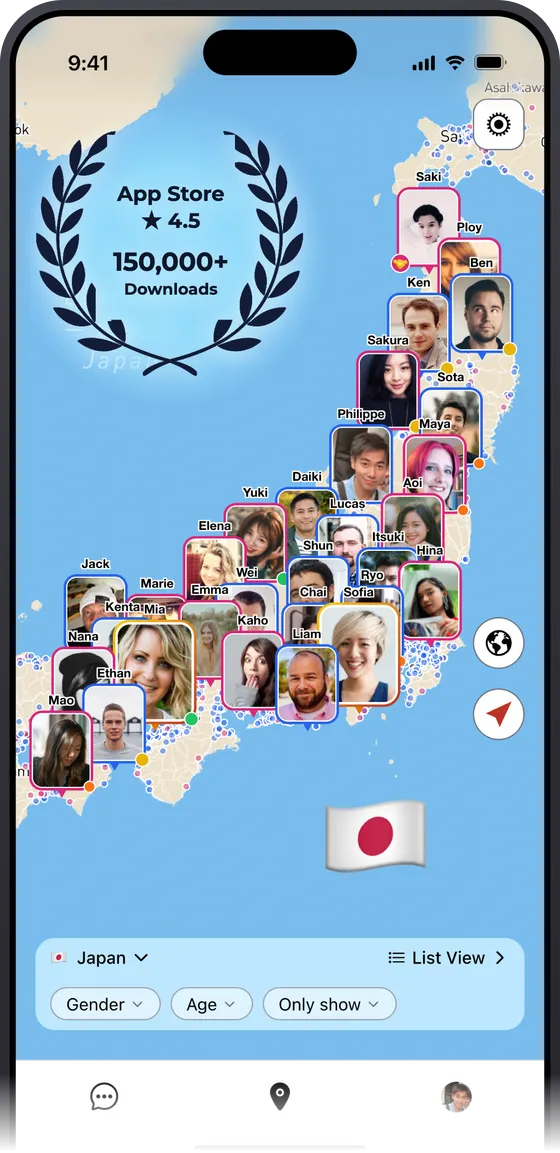
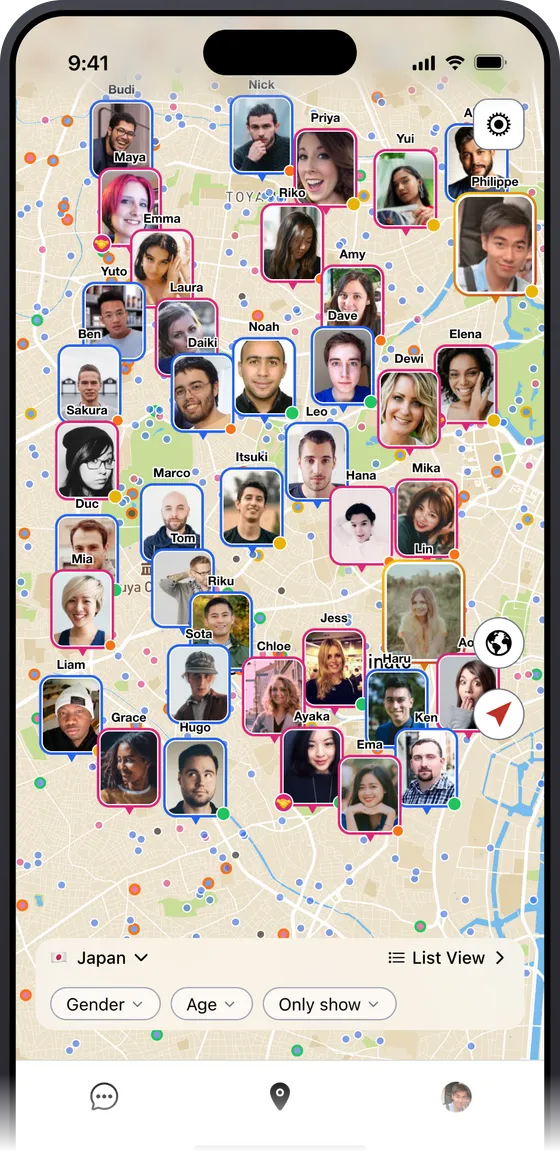
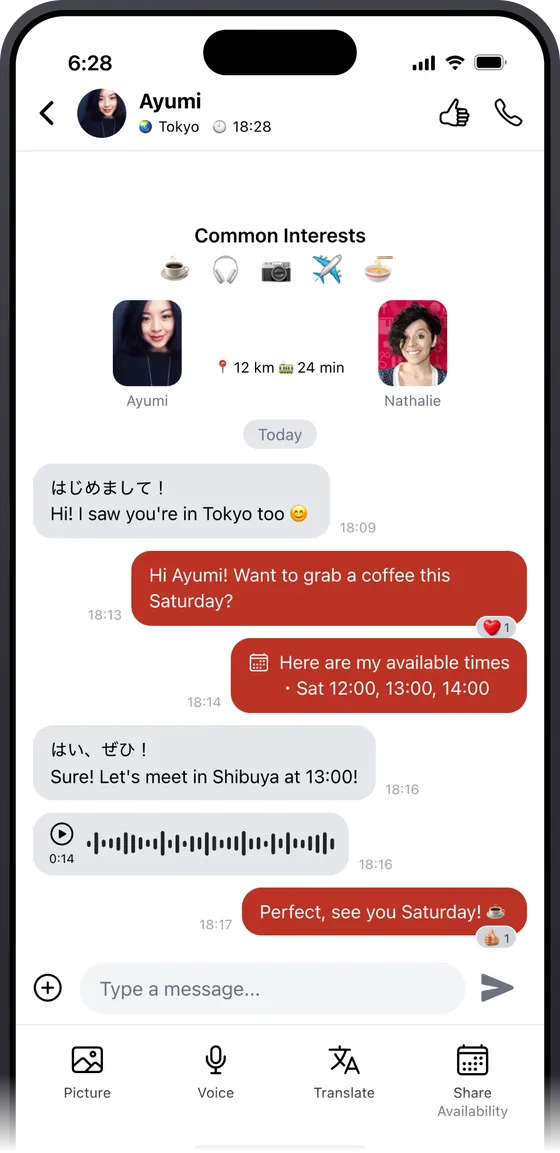


SewaYou shows Japanese locals and other foreigners actually nearby in Hiroshima on a live map. Especially useful in a mid-sized city — the active foreigner community is smaller and more concentrated, so the map view captures most of who's actually around. Find people in Naka Ward, Hatchobori, or Hijiyama and reach out directly.