

Ask any foreigner who actually speaks Japanese how they learned their most-used vocabulary, and you'll hear the same pattern over and over: "There was this one time I completely froze at a register..."
Not "I studied Genki chapter 7." Not "I did a Wanikani streak." A story. Usually an embarrassing one. Often involving a confused staff member and a line of customers behind them.
There's a reason for that. And it has huge implications for how you should actually be spending your study time.
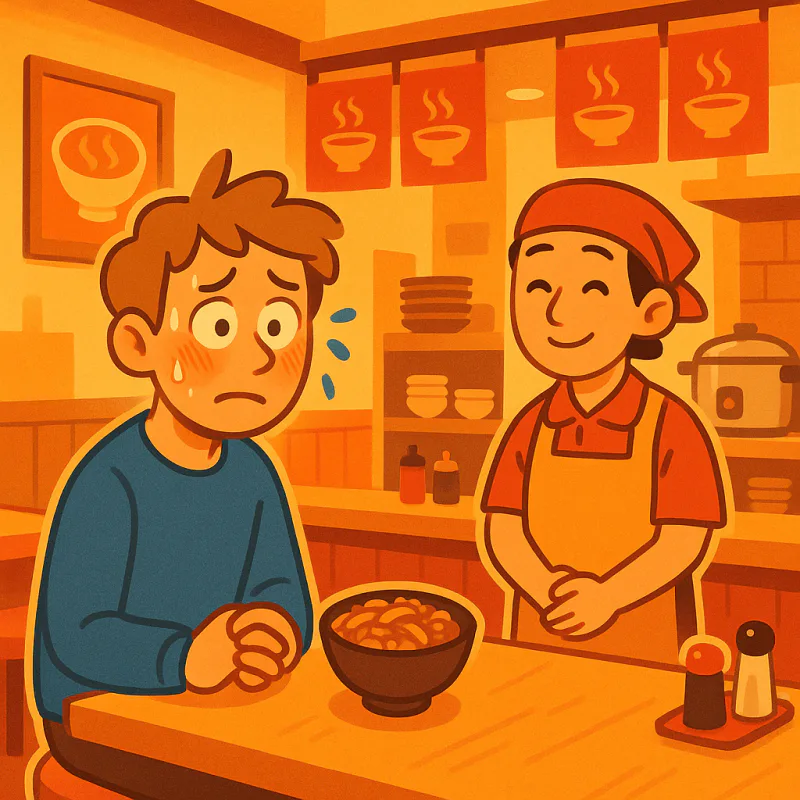
Here's a pattern I've watched play out with dozens of foreigners in Japan.
Someone spends a year in classrooms. They can read. They can write. They pass JLPT N3. Then they go to order rice at a gyudon place, the staff asks "小・中・大?" (small, medium, large) — and they freeze.
They stare. The staff stares back. Their friend translates. They feel their soul leave their body.
And they will never, ever forget those three characters again. 小. 中. 大. Burned in. Permanent.
Meanwhile, the 200 words they drilled in flashcards last week? Half of them are already gone.
This isn't a bug in how humans learn languages. It's the feature.
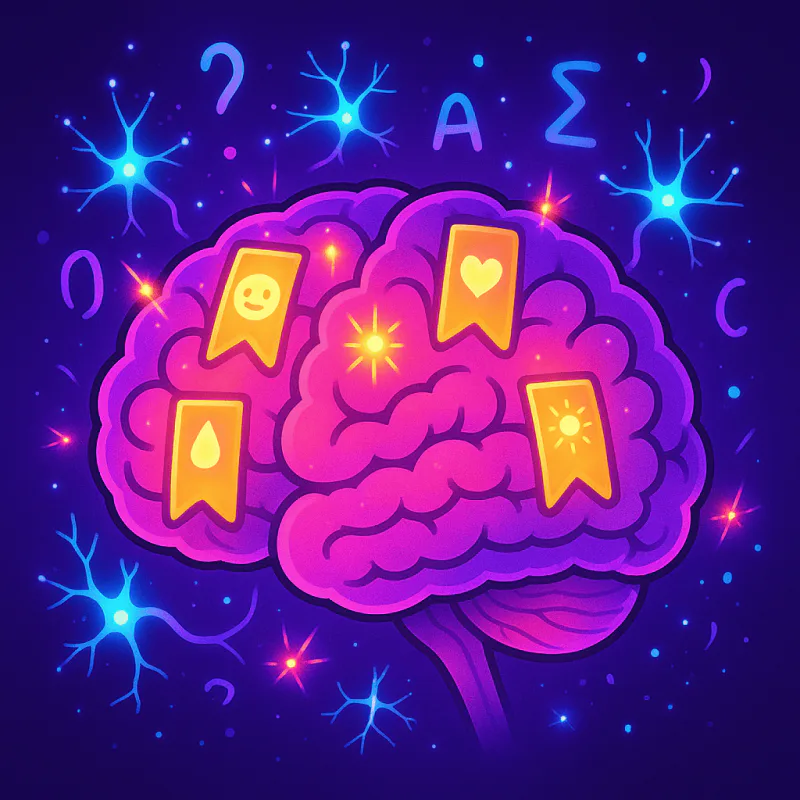
Your brain has two distinct systems for remembering things. The boring one is the rote-memorization system you use when you cram for a test. The powerful one is the emotional-memory system — the one that remembers exactly where you were when something shocking happened.
Embarrassment activates the second system. Hard.
When you freeze at a counter and feel every pair of eyes on you, your brain flags that moment as "critically important, must not repeat." It tags the surrounding vocabulary with an emotional bookmark so strong that you'll recall it instantly for the rest of your life.
This is why people who hold N1 after two years of study still sometimes say きっぷ (ticket) when they mean きって (stamp) at the post office — but they'll never, ever forget the word for "change" (お釣り) after the one time they held up a line of twenty commuters at 7-Eleven.
Textbooks are designed to avoid the exact thing that makes vocabulary stick.
Classrooms are "safe." The teacher doesn't embarrass you. The pace is controlled. If you don't understand, you get a gentle repeat with no social consequence.
That's comfortable. It's also why three years of classroom Japanese can leave you unable to order a coffee.
The vocabulary you drill in a low-stakes environment gets stored in a low-stakes part of your brain. The vocabulary you use when you're sweating at a convenience store register gets stored in the same part of your brain that remembers your first kiss.
Guess which one you can access faster when you need it.
If embarrassment is the cheat code, the question becomes: how do you expose yourself to more of it, faster?
Not by reading more textbooks. Not by adding another flashcard app. By actually using Japanese in situations where mistakes have weight.
The moment you default to English, the pressure disappears — and with it, the learning. Cafes, small restaurants, neighborhood shops, local gyms. Places where nobody speaks English and you have no choice but to stumble through.
You will say the wrong word. You will get confused. You will feel stupid. That's the point. That's the emotional bookmark your brain needs.
Apps are frictionless. They're also forgettable. An app never makes you feel anything — no waiter is impatient, no clerk is confused, nobody is waiting behind you.
Real conversations with real humans create real stakes. And real stakes create real memory.
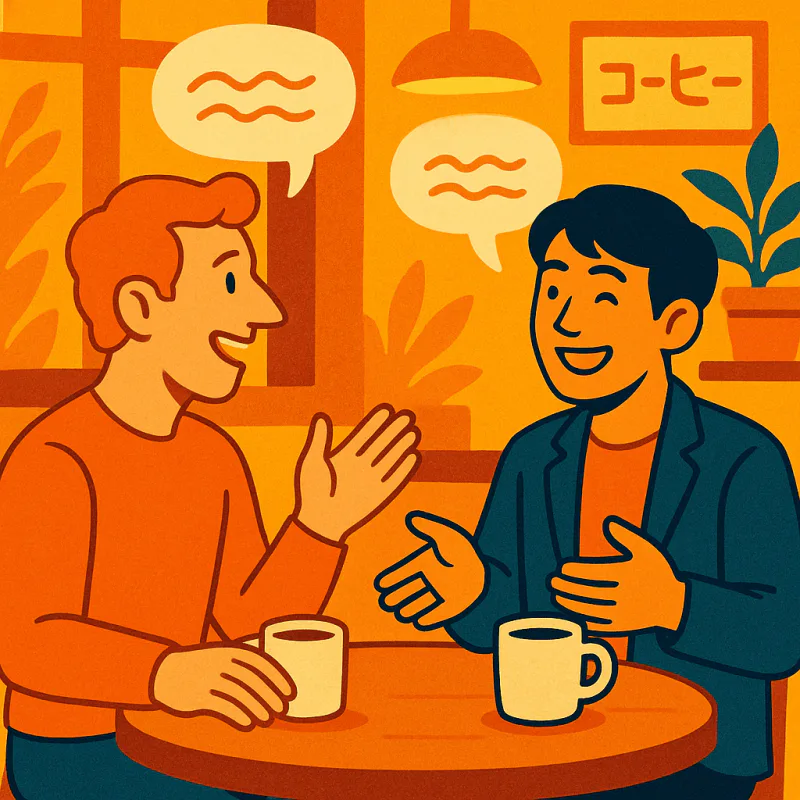
When you blank on a word mid-conversation, don't switch to English. Don't pull out your phone. Sit in the silence. Point. Gesture. Use the wrong word.
Every second of that awkwardness is your brain writing the correct word to permanent storage.
The people who learn Japanese fastest aren't the ones who avoid these moments — they're the ones who seek them out.
When a Japanese person gently tells you "あ、それは〇〇じゃなくて、△△ですよ" — that's pure gold. That's the moment the word gets burned in.
But this only happens if you're in conversation with someone patient enough to correct you and you're vulnerable enough to have made the mistake in the first place.
Language exchange partners, local friends, regulars at your neighborhood bar. These people will accidentally teach you more than any textbook can.
Most people studying Japanese are optimizing for not feeling stupid. They drill in private, they avoid conversations until they're "ready," and they measure progress by JLPT levels.
The people who actually become fluent are optimizing for the opposite. They're in the situation. They're getting things wrong in public. They're collecting embarrassing stories every week.
Those stories are their vocabulary list.
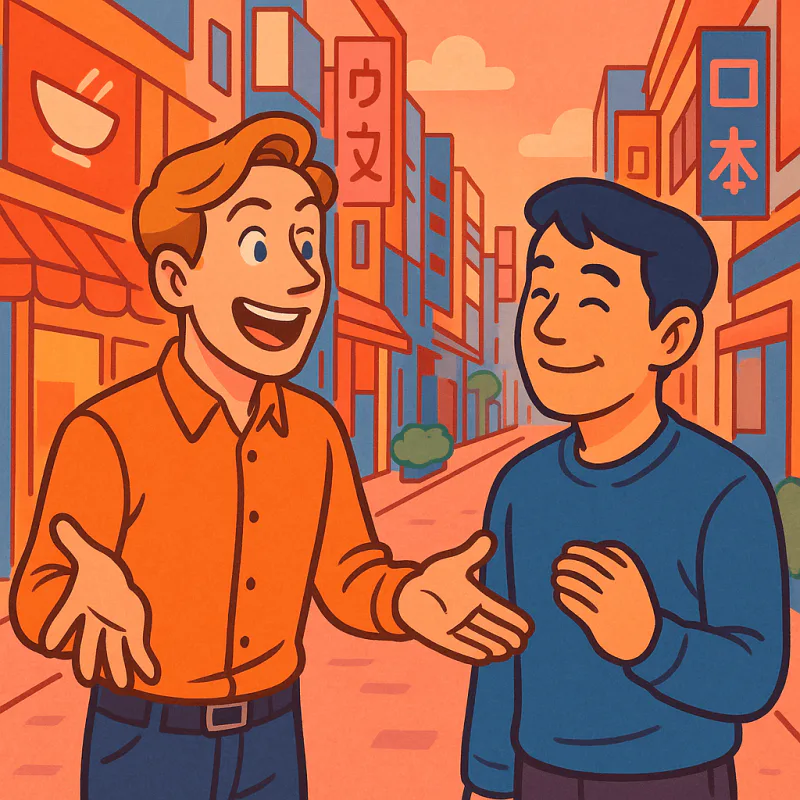
If you want to accelerate this on purpose, here's what works:
Find a regular Japanese-speaking environment. A local cafe, a sports circle, a language partner you meet weekly. The consistency matters — you need repeated exposure to social pressure.
Set a rule: no switching to English for the first 30 minutes. Even if you're struggling. Even if it's awkward. That's where the magic happens.
Debrief after every mistake. When you say the wrong thing and get corrected, don't just laugh it off and move on. Write it down. The combination of emotional charge + immediate review is the strongest learning mechanism humans have.
Put yourself in rotation with native speakers regularly. Not once a month. Not "when you feel ready." Weekly, minimum.
That last one is the hard part — finding native speakers to actually practice with consistently, especially if you don't live in central Tokyo. Meetup events are rare, language exchange partners flake, and classroom environments don't produce the stakes you need.
Make Japanese Friends On a Live World Map
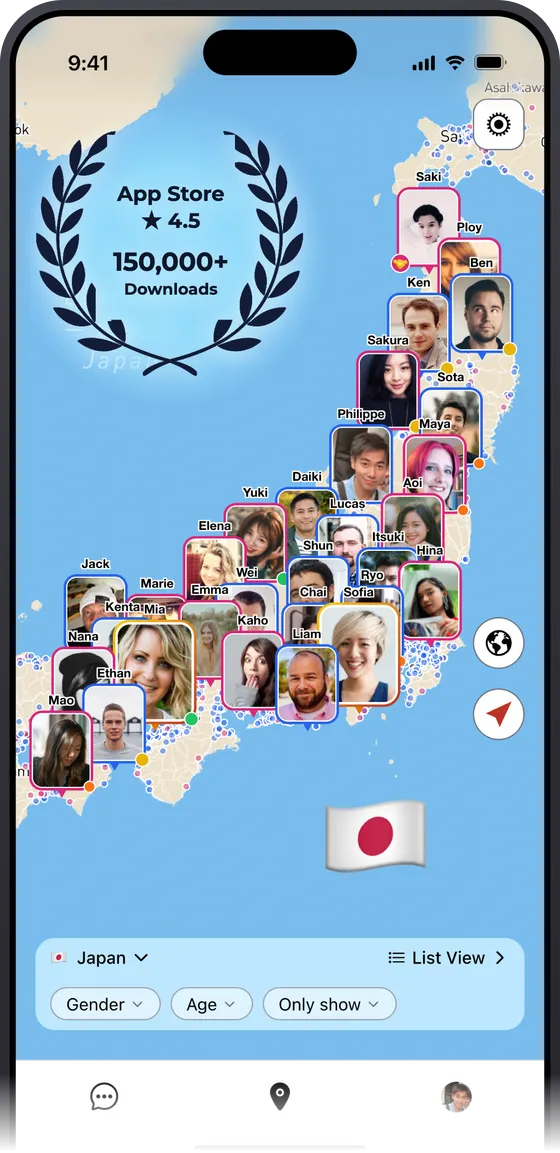
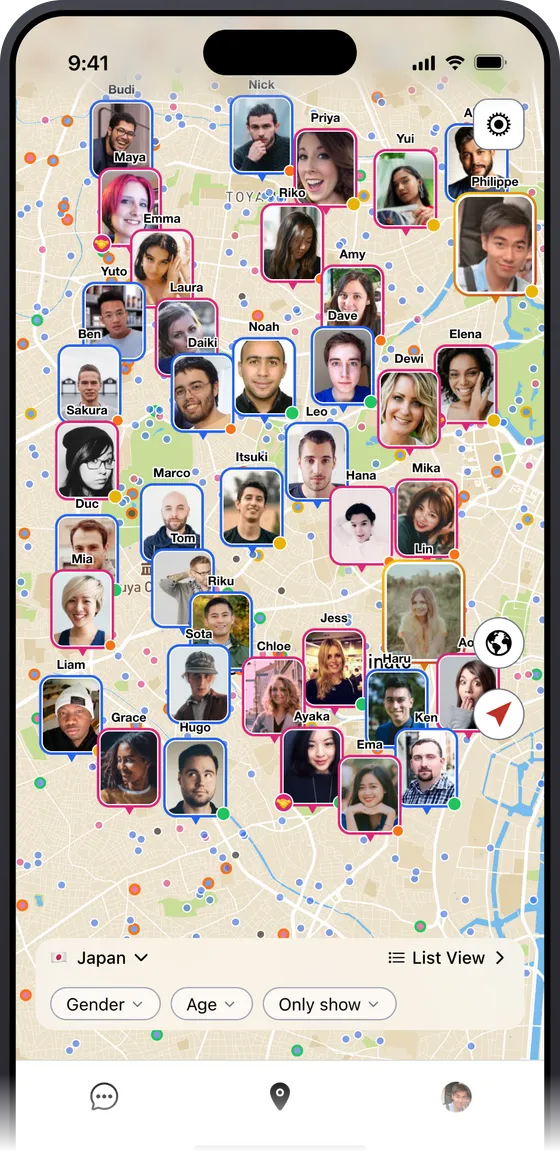
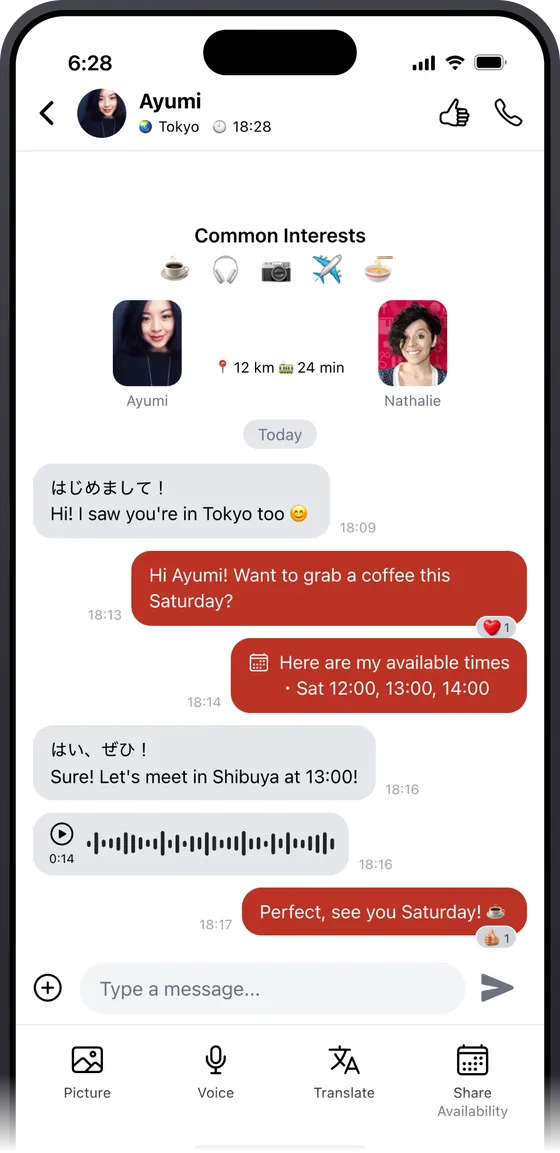


This is exactly why SewaYou was built around local, map-based connections. Instead of hoping you'll run into a Japanese person organically, you can see who's actually nearby and arrange regular meetups — the kind of repeated, real-world conversations where the embarrassing-but-unforgettable moments actually happen.
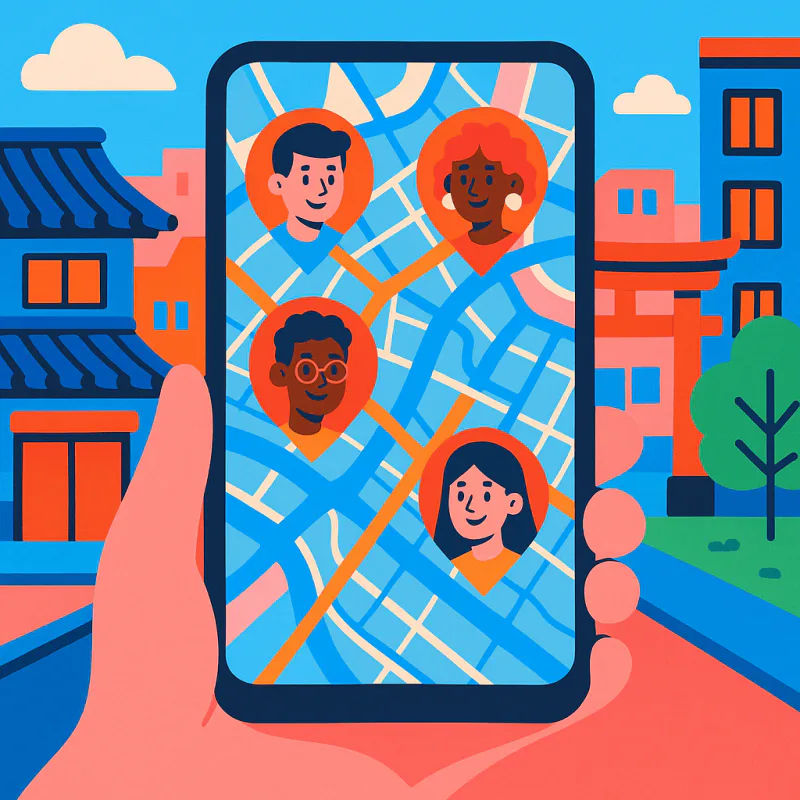
The fastest Japanese learners I've met share one trait: they have a collection of embarrassing stories they tell with a smile.
The one who mixed up 最適化 (optimization) and 性的 (sexual) in a business meeting. The one who spent two years thinking everyone was discussing kimchi when they were saying 気持ち (feelings). The one who still orders 切符 (tickets) at the post office by accident despite holding N1.
None of these people are ashamed of these stories. They're proud of them — because every one of those moments represents a word that's now theirs forever.
If you're studying Japanese and you don't have stories like this, you're not putting yourself in enough real situations. The flashcards aren't going to save you. Only the awkward encounters will.
Your next level of Japanese isn't in a textbook. It's at a cafe counter, three stations from your apartment, waiting for you to walk in and order something wrong.


