

Here is a small story that stuck with me. A parent I know has a kid in a Japanese nursery. Every autumn the school runs an international flag event for its festival. A few weeks before, each child gets sent home with a blank white square of paper to decorate and bring back.
This parent's Japanese was shaky, so they filled in the blank the obvious way. International flag event, blank square, decorate it. Clearly you draw your own country's flag. So that is what they did. Careful stripes, correct colors, the whole thing. They did it the first year. They did it the second year. They did it the third year.
Then one night it hit them. If this is a flag event, are all the Japanese kids just drawing the Japanese flag? Is my kid the only one turning up with something different every year? And the bigger, colder thought right behind it. Have we been doing this wrong the whole time?
So they finally asked the teacher. The answer was that it does not have to be a flag at all. The kids can draw anything they like. Cars, princesses, Pokemon, a dog. For three years, one family had been solemnly painting a national flag while every other kid drew whatever made them happy.
It is a funny story. It is also, if you have ever lived somewhere that speaks a language you are still learning, a little too familiar.

When you do not fully understand the language around you, life hands you a lot of blank squares. A form with a box you are not sure about. A note from the city office. An unspoken rule everyone else already seems to know. You cannot ask about all of them, so you do the human thing. You guess, and you move on.
Most of the time the guess is close enough and nothing bad happens. That is exactly what makes it dangerous. You are never punished for the wrong guess, so you never find out it was wrong. The flag parent was not doing anything harmful. Their kid still had fun. The mistake could have run for ten years and nobody would have stepped in to correct it.
That is the quiet tax of living abroad. Not the big dramatic failures, but the small assumptions you carry for years, each one making you a little more of an outsider than you actually needed to be.

Here is the part that makes it sharper in Japan specifically. People are polite. Genuinely, warmly polite. And politeness means that when you do something slightly off, most people will just let it slide rather than embarrass you by pointing it out.
So you get a strange kind of silence. You are not wrong loudly. You are wrong quietly, for a long time, surrounded by kind people who would never dream of telling you. The teacher was not hiding anything. It simply never occurred to anyone that the foreign parent had been reading the whole thing differently, because nobody asked and nobody told.
You can go a very long time like this. Doing the slightly odd thing at the shrine, over-formalizing an email, bringing the wrong gift, drawing the flag. None of it blows up. All of it just quietly marks you as someone still standing a little outside the circle.
Notice what actually ended the three-year flag saga. Not a class. Not an app. Not another year of guessing. One short question to one person who knew.
That is the thing the vocabulary apps and grammar drills cannot give you. What breaks the cycle of silent misunderstandings is a real person you feel comfortable asking the small, dumb questions. Wait, is this normal? Am I supposed to bring something? Does it have to be a flag? The questions are tiny. The problem is having nobody low-stakes enough to ask.
A good local friend is basically a walking answer key to the country you live in. Not a teacher, not a service. Just someone who will laugh with you and say, oh no, you can draw whatever you want, and save you two more years of careful stripes.

Of course, the friend who could answer your small questions is usually the exact one you do not have yet. And most apps hand you a list of usernames three train lines away who never turn into a real coffee.
SewaYou is a map-based app that shows you real people near you who also want to meet new friends. You set the map to your own neighborhood and find locals and fellow residents who are genuinely close by, close enough to actually meet. You can also explore anywhere on the world map. When you focus on your own area, the people you find are people you could sit across from and ask the small stuff, the person who tells you it does not have to be a flag before you paint your fourth one.
Make Japanese Friends On a Live World Map
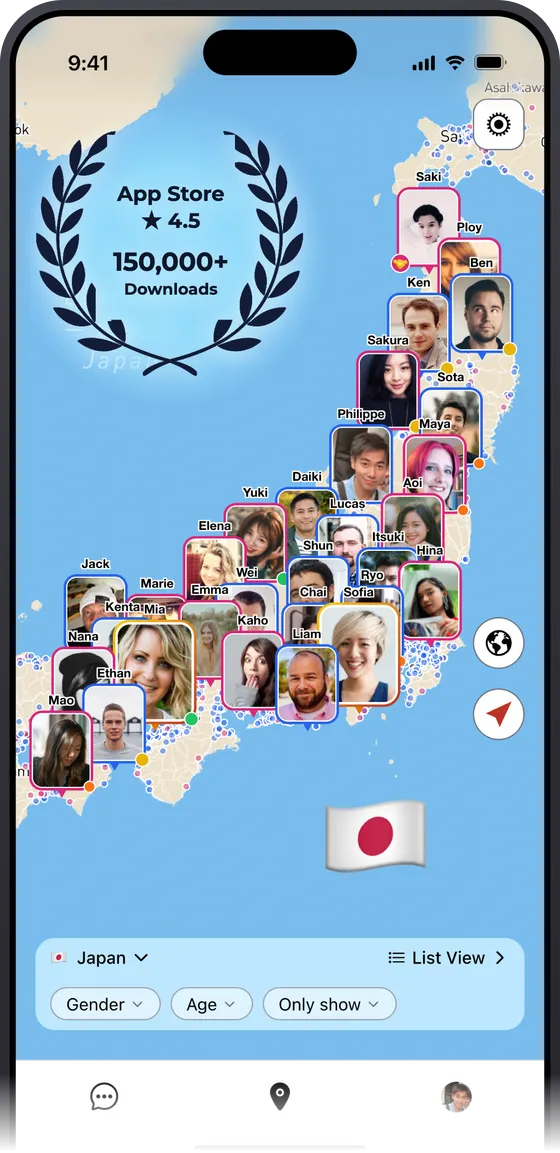
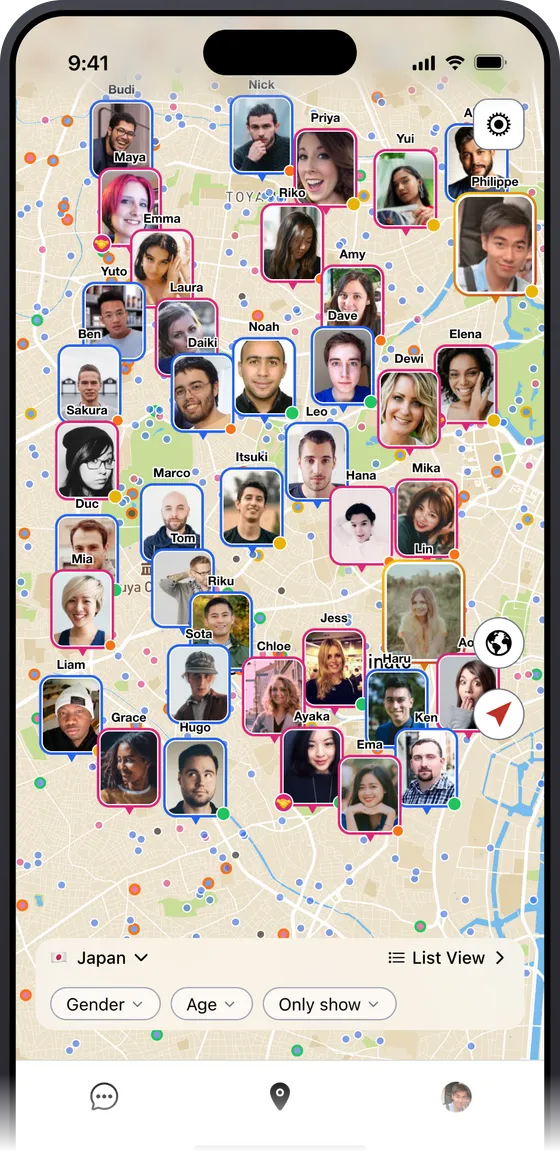
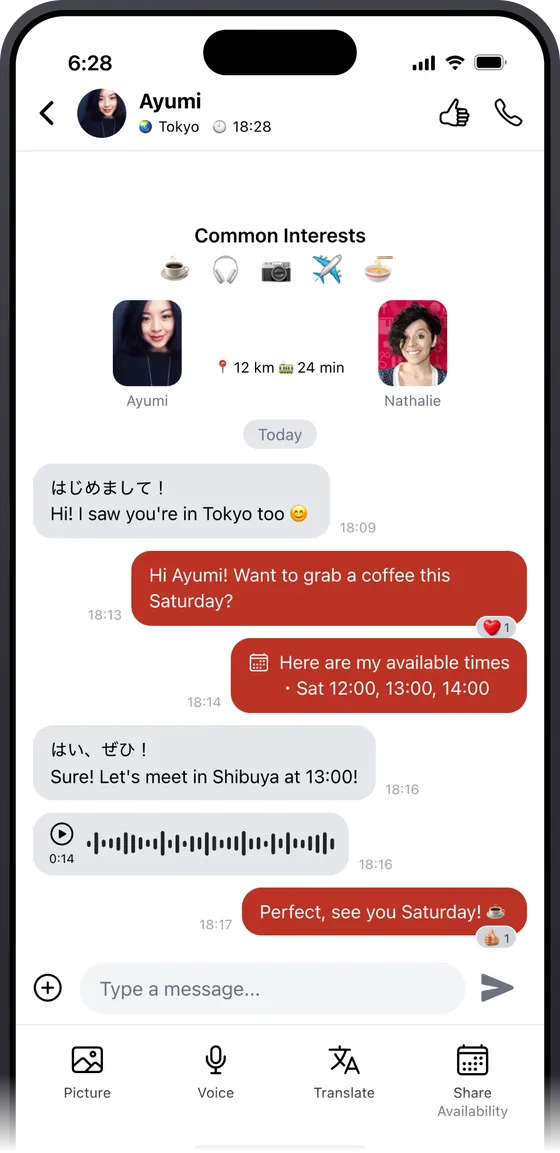


So laugh at the flag story, then take the point. You are going to misread things while you live here. That is fine, it is part of the deal. What you want is not to never be wrong, but to have someone nearby who will gently tell you when you are. Tonight, set the map to your area, read a few honest profiles, and message two people who could one day be the friend who saves you from year four. Being new somewhere is not the problem. Having no one to ask is.
For the version of this where the one person you do have is already stretched too thin, When You're New in Japan, You Only Have One Person to Ask.
For widening the circle past the same few faces, Five Years In and Still in the Foreigner Bubble? Here's How to Actually Get Out.


