
"I'm probably only here for a year or two. Is it even worth learning Japanese?"
If you're on a one-year contract, a working holiday, a study program, or a visa you're not sure you'll renew, you've probably asked yourself this. And the voice in your head usually answers fast: Japanese takes years. You'll leave before you get anywhere. Why bother?
I listened to that voice for a long time. I put off starting because I couldn't promise myself I'd stick with it until I was "fluent." Looking back, that was the wrong question to ask.

Yes, Japanese takes a long time. Watching dramas without subtitles or chatting comfortably about anything with a coworker usually takes years of steady work. Anyone promising fluency in three months is selling something.
So managing expectations is fair. The problem is when "be realistic" quietly turns into "if you'll stop before fluency, it's all wasted."
There's no finish line in a language. Native speakers keep learning new words their whole lives. Wherever you stop, you stop somewhere in the middle. No finish line means no failure. If you spend one week learning to read hiragana, you learned one week's worth of Japanese, and that's real.
"But I'll forget it all once I leave." Honestly? You'll forget a lot. A language you only used for a short time fades fast if you stop using it. I won't pretend otherwise.
Still, it doesn't go back to zero. Relearning something is generally faster than learning it the first time, and I've felt this myself. When I came back to a language I'd dabbled in for a few months and dropped, the sounds and the shape of the script returned much faster than I expected.

And it's not only vocabulary that stays. You keep small things: why people say otsukaresama at the end of the day, how a sentence can leave the important part unsaid, what a neighbor actually means by "chotto..." Those change how you read the people around you, even after the words slip away. Forgetting is not the same as wasting.
So if you might leave next spring, how should you study? My suggestion: don't set a level goal like "pass JLPT N2" or "become fluent." Set goals tied to the life you're living right now.
Each of these fits into a month or two. Each one pays off the moment you do it. If you leave Japan afterward and never open a textbook again, nothing was lost.
Study that doesn't borrow from the future. When you stop assuming you need years ahead of you, you focus on what's useful and fun today. Funny enough, that's often what keeps people going longer than they planned.

The fastest way to make short-term study worth it is to use it on someone. A textbook konnichiwa is just a word. Said to a real person who smiles and says "Oh, you speak Japanese!", it turns into a memory, and often the start of a conversation. A few words can open a friendship.
Low-pressure language exchanges are perfect for this. You don't need to be good. A simple opener works:
Keep it short: twenty minutes over coffee, or a few messages a week. If you want more ideas, here's our guide on how to find Japanese language exchange partners.
SewaYou is a map-based friendship app for meeting people nearby and anywhere in the world. While you're in Japan, you can find people around your neighborhood who'd like to practice English or just chat. After you leave, you can keep those friendships going online, or explore another city or country from home and connect before your next trip.
Make Japanese Friends On a Live World Map
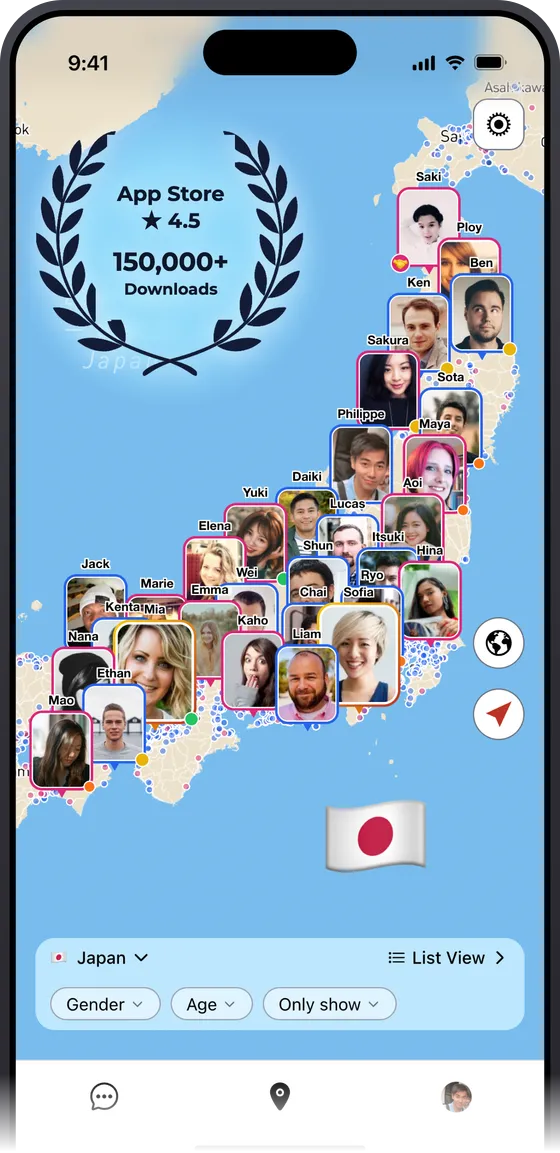
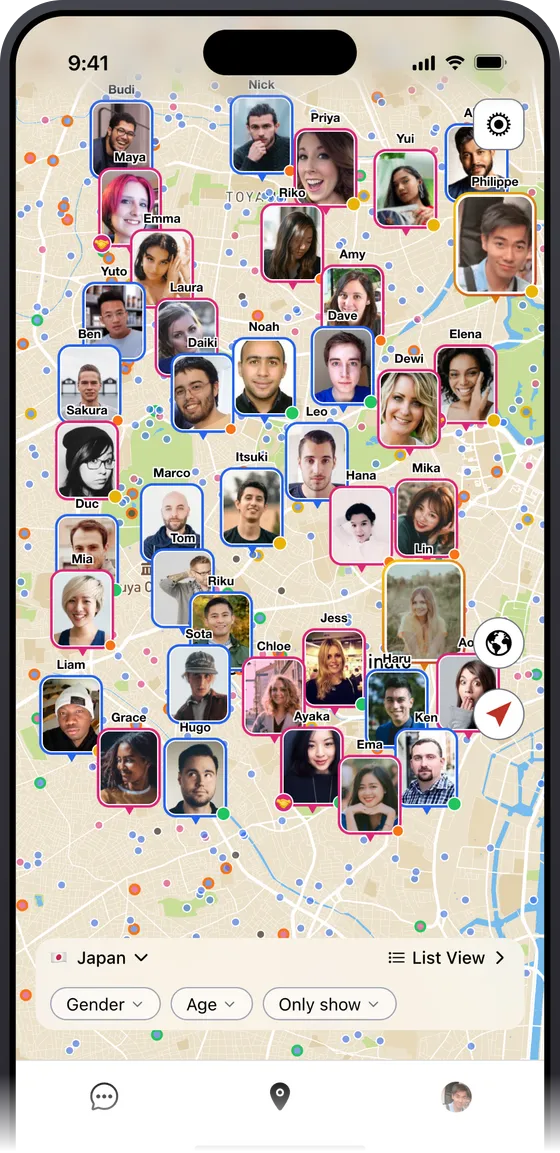
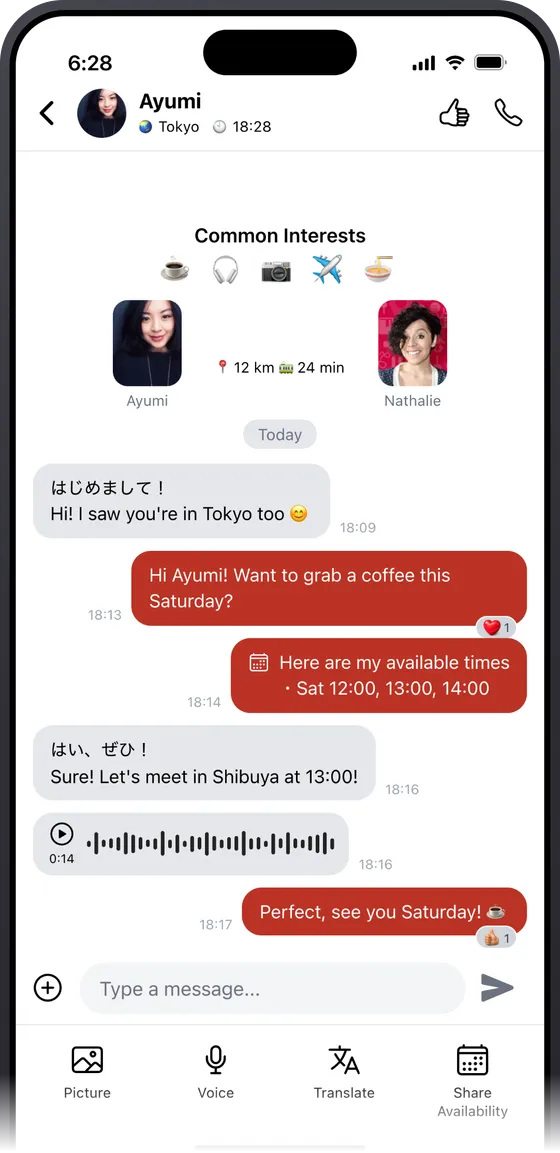


Start with one line of Japanese and switch to English when you get stuck. The words you learn for real conversations are the ones that stick.
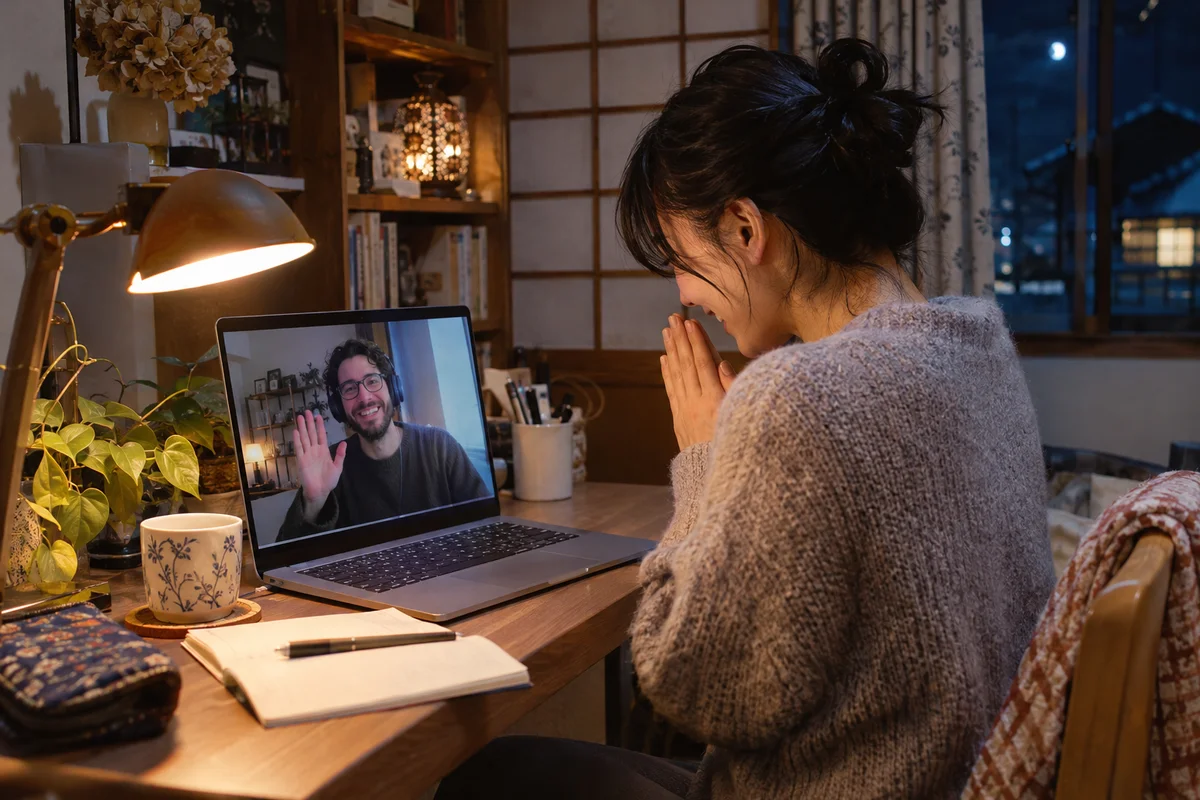
A short stay is not a reason to wait. The Japan you live in now is the best classroom you'll get, and you don't need a five-year plan to use it.
Want to try your first few words on someone real? SewaYou helps you find people nearby and around the world, right from the map.