

You spent years getting to N1. You can read a novel without a dictionary, follow a fast news clip, and sit an exam that filters out most learners. Then you open your mouth in a normal conversation and it comes out stiff. Slightly too polite. A half beat behind everyone else. Correct, but nobody actually talks like that.
If that is you, here is the thing nobody says out loud. This is completely normal, and it is not a sign you did anything wrong. You did the hard part. The reason you still sound like a textbook is that the textbook, and the test, were never built to fix this.

Here is the part that reframes everything. The JLPT has no speaking section at all. It measures reading, vocabulary, grammar, and listening comprehension. You can score in the top band without ever saying one sentence out loud to another human.
So of course you sound stiff. You trained on, and got certified in, the skill of taking language in. Sounding natural is a different skill entirely. It is producing language, live, while a real person reacts to you in real time. The test never grades your mouth. It was never going to. Passing it and still sounding textbook is not a contradiction. It is exactly what the exam was designed to allow.
When you listen closely to how people actually talk, the gap is almost never vocabulary. You already have the words. The gap is everything around the words.
It is the timing of your aizuchi, the うん and へえ and そうなんだ you drop in while the other person is still talking. It is leaving out particles nobody says out loud. It is ね and よ and じゃん landing in the right spot, the little fillers, and knowing the exact moment to stop being polite. The gap is rhythm, not vocabulary. None of that lives in a grammar book. You cannot flashcard your way into it, because it is not knowledge. It is a set of motor habits you only pick up by being in the room with people.

The usual advice is more immersion, and it is not wrong, but it hides a trap. Watching a thousand hours of drama and anime is input. It is the same category of skill the test already certified. It grows your comprehension and it does very little for your output.
Sounding natural is a production skill, and production only calibrates when someone reacts to what you just said. The pause, the laugh, the slightly confused look, the way they finish your sentence for you. That feedback loop is the whole engine. Input alone never calibrates output. A screen cannot do it, because a screen never reacts to you. And a lot of anime Japanese is a register that would sound strange coming out of you at a normal cafe anyway.
So what does work? Boringly, the same thing that worked for every fluent-sounding person you have ever met. You talk to a small number of real people, regularly, in person, about nothing important.
It is not one big language-partner session a month. It is the same few faces, over and over, until your mouth stops translating and starts just responding. Someone you see enough that the greeting goes automatic, then the small talk goes automatic, then one day you notice you said じゃん without deciding to. Repetition with real humans is the only thing that files the stiffness off. Certification cannot. More input cannot. Only people can.

The honest obstacle after N1 is not motivation. It is access. You already want this. You just do not have a steady handful of nearby people to be casually bad, then casually fluent, in front of. Language-exchange chat apps hand you endless text with strangers across the city who flake before you ever meet, and text is the one format that does nothing for how you sound out loud.
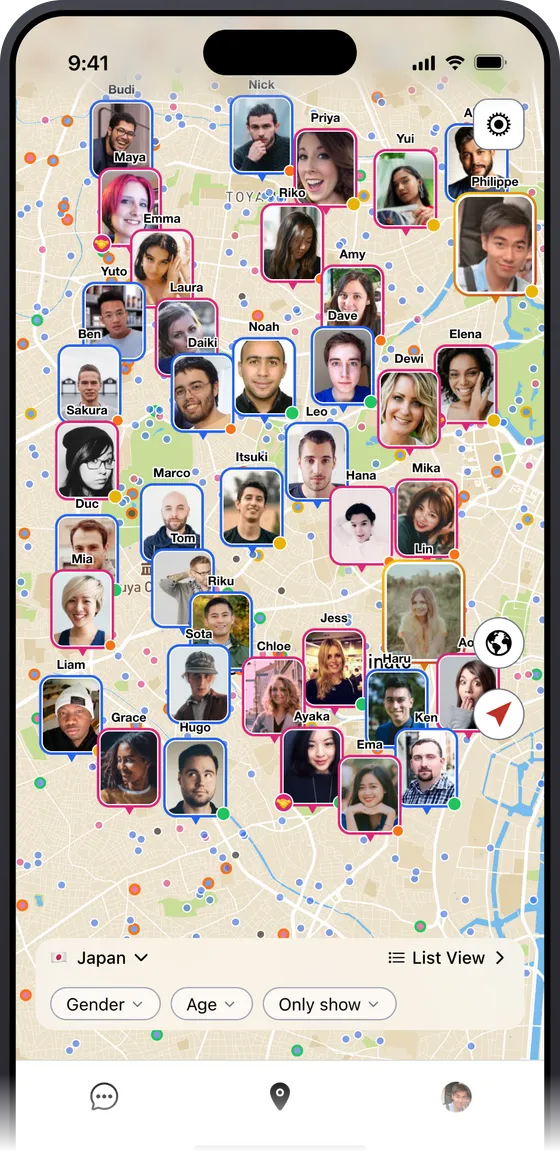
What you need is the opposite. Real people near you, the same ones, close enough that seeing them again is easy.
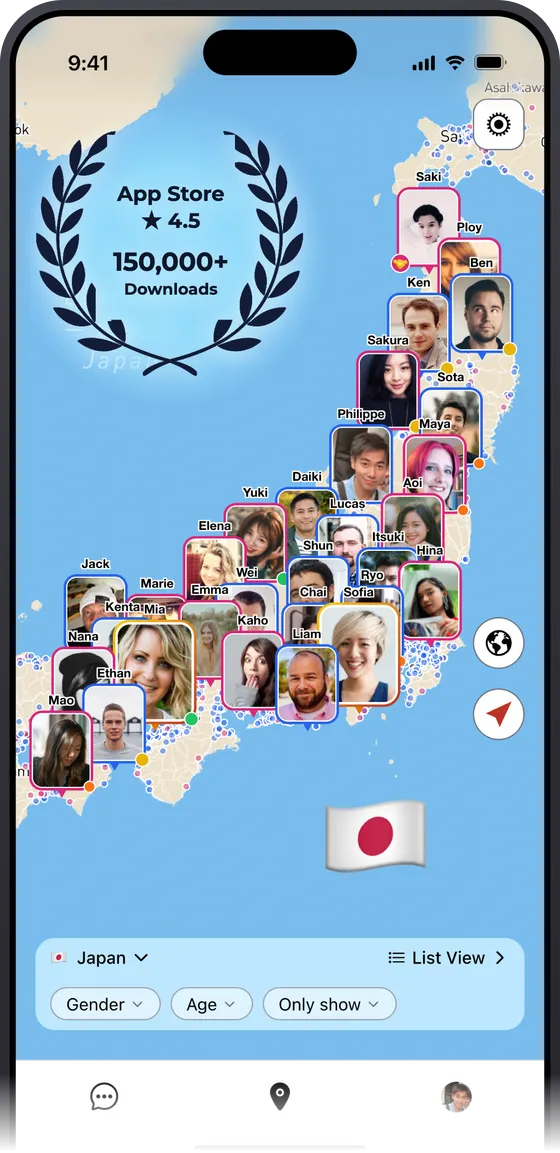
SewaYou is a map-based app that shows you real people near you who also want to meet up. You set the map to your own neighborhood and find locals and residents who are genuinely close by, not a list of usernames on the other side of the city. You can also explore anywhere on the world map. When you focus on your own area, the people you find are people you can realistically see again next week, which is the entire point when you are trying to build the kind of regular, low-stakes conversation that finally sands the textbook off your Japanese.
Make Japanese Friends On a Live World Map
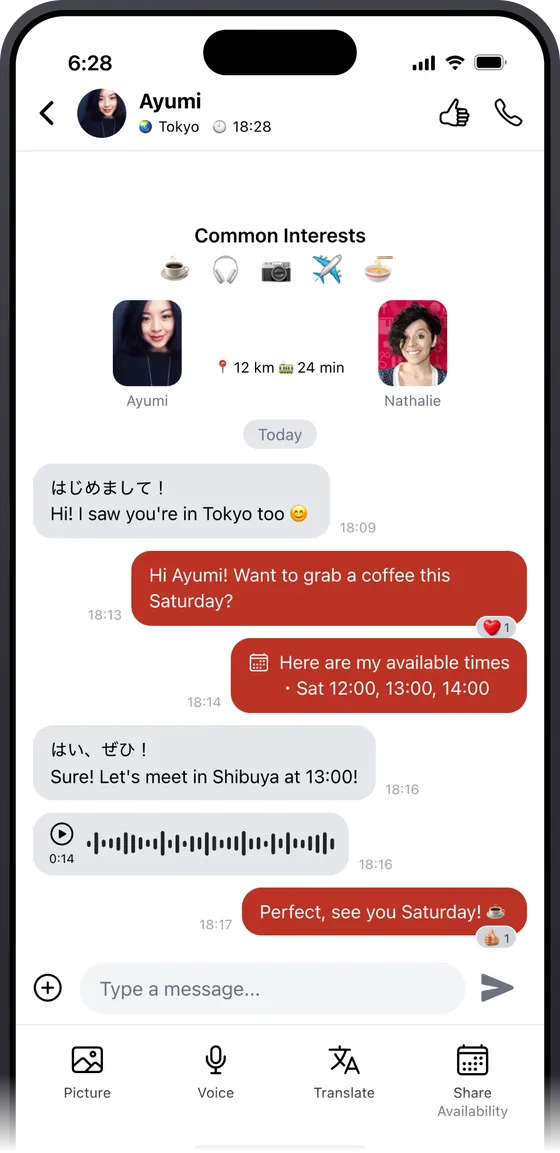


So stop treating the stiffness as a study problem. You are done with the study problem. You cleared it. What is left is a people problem, and it has a people solution. Set the map to your area tonight, find two or three residents nearby, and go have a genuinely unremarkable conversation about the weather. Do that every week with the same faces. That, not another textbook, is how you finally start to sound like yourself in Japanese.
On why the certificate and the feeling of fluency come apart, Five Years of Japanese and Still Not Fluent.
On the fastest way to fix your spoken Japanese, Your Embarrassing Japanese Mistakes Are Your Best Teacher.


