

A guy I met in Shibuya last month told me he'd been studying Japanese for five years and felt like a fraud. He could read novels. He watched dramas without subtitles. He'd just passed JLPT N3 and was signed up for N2 in July. And he still froze when the konbini clerk asked if he wanted his bento heated.
I hear this story so often it has become its own genre. Five years in, still not fluent, quietly convinced you are the slow one. You are not. The timeline you were sold was fiction, and the way most learners study is the actual reason they plateau.
Five years is not a failure. It is the start.
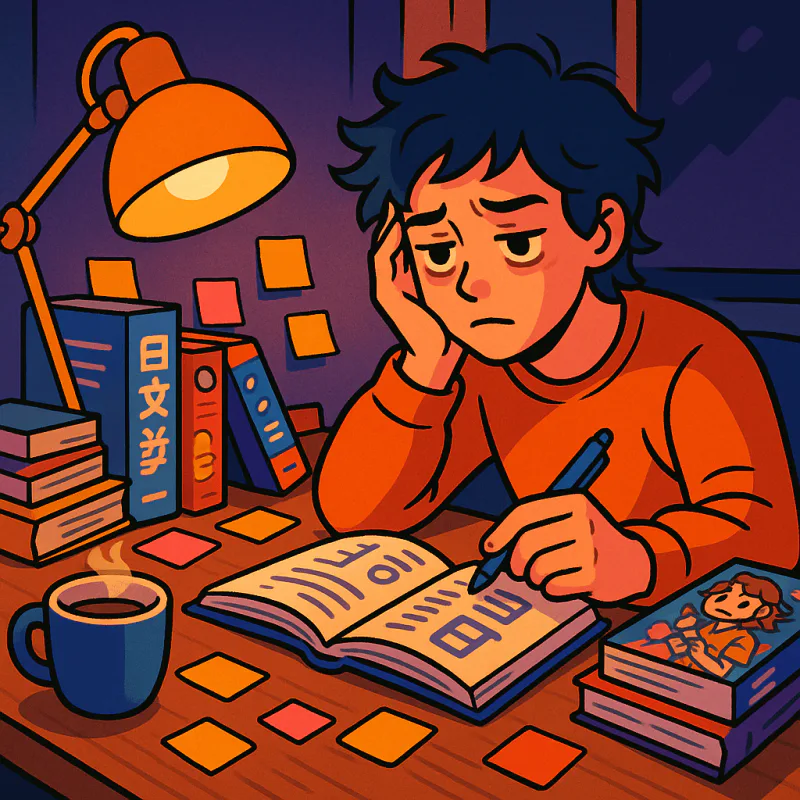
Every beginner starts with the same fantasy. Three years to fluency. Maybe four if you tell yourself you are slow. The bedroom-polyglot videos with thumbnails like "Fluent in 6 Months" feed it, and so does every Reddit comment from someone who learned Japanese while also being half Japanese, or while living with a Japanese partner, or while doing nothing else with their life for two years straight.
Here is the part nobody puts in the thumbnail. Most adult learners with full-time jobs take seven to ten years to reach genuine conversational fluency in Japanese. Not survival sentences. Not "I can read a graded reader." Real, "I forgot we were speaking Japanese," fluency. That is not the bad news. That is the road.
If you measure your progress against the fantasy, you will quit at year three. If you measure it against the road, year five looks exactly like the middle of it.
There is a pattern I see again and again with learners who hit walls around N3. They have spent thousands of hours with apps, textbooks, anime, graded readers, podcasts, and YouTube. What they have not done, in any meaningful quantity, is had real conversations with a real Japanese person who is not paid to be patient with them.
Reading and listening build comprehension. Speaking is its own muscle, and it grows almost nowhere except in actual back-and-forth conversation. You can grind ten thousand Anki cards and still freeze at the konbini, because freezing at the konbini is a speaking-muscle problem, not a vocabulary problem.
The intermediate plateau is mostly this. The input side of your brain has been fed for years. The output side has barely left the starting line.

When you talk to a Japanese friend over coffee, the input is qualitatively different from anything an app produces. You hear the 「えっと」 and 「なんか」 and 「まあ」 that smooth out real speech and that no textbook ever properly teaches. You hear which of your sentences land and which ones get a polite "ah, sou nan da" that secretly means they have no idea what you just said.
You learn to fail in real time. You stumble, recover, ask again, get a softer version of the word, and remember it forever because it cost you something. You learn what is rude, what is funny, and what makes someone lean in. You learn to sit through a thirty-second silence without panicking.
The output muscle only grows under live load. No amount of solo study replaces a friend across a table.
I know why people put this off. You are intermediate, you are self-conscious, your grammar wobbles, and the idea of subjecting a real Japanese person to your half-formed sentences feels like an imposition. So you tell yourself you will start speaking when you are "ready," and you grind another deck of flashcards instead.
This is the trap that kills the most learners.
The fastest improvers I know are not the ones with the prettiest grammar. They are the ones who started speaking before they were ready and let the cringe wash over them. They found one or two Japanese friends. They met them weekly. They talked about nothing important, badly at first, and less badly month by month. The grammar caught up because the mouth was already moving.
You do not need a tutor for this. A tutor is a paid context, and paid contexts make you polite and stiff. You need a friend who will tolerate your bad Japanese in exchange for you tolerating their curiosity about your country. That trade is not weird. It is the oldest trade in language learning.

If you have been at this for five years and you can read books, watch shows, and have rough but real conversations, you are not behind. You are roughly where most honest adult learners are at the five-year mark. The accounts on social media claiming fluency in eighteen months are either lying, were already bilingual, redefined fluency to mean "I can introduce myself," or had a life situation you do not have.
The thing that separates people who eventually get there from people who quit is not talent. It is whether they keep showing up after year three, when the rocket-ship phase is long over and the climb feels flat. Show up another five years. That is the entire game. The plateau is not a wall. It is the road.
The guy in Shibuya I started this with? He has read seven novels in the last seven months. He has had real conversations on three trips. He is signed up for N2. By any reasonable standard he is doing extraordinarily well, and he still feels like a fraud, because the fantasy he started with set the bar in the wrong place. If he keeps going, he gets there. If he quits because year five does not look like the YouTube thumbnail, he doesn't.

If the missing piece at the intermediate plateau is conversation, then the missing piece is a person. Apps can teach you a language. They cannot give you a friend who patiently lets you be bad at it.
Make Japanese Friends On a Live World Map
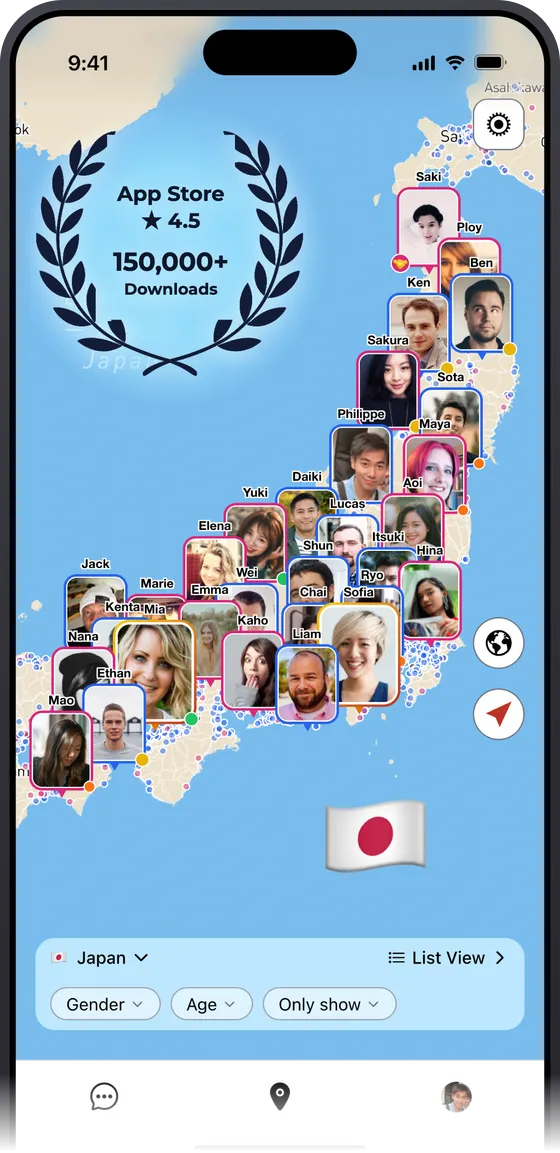
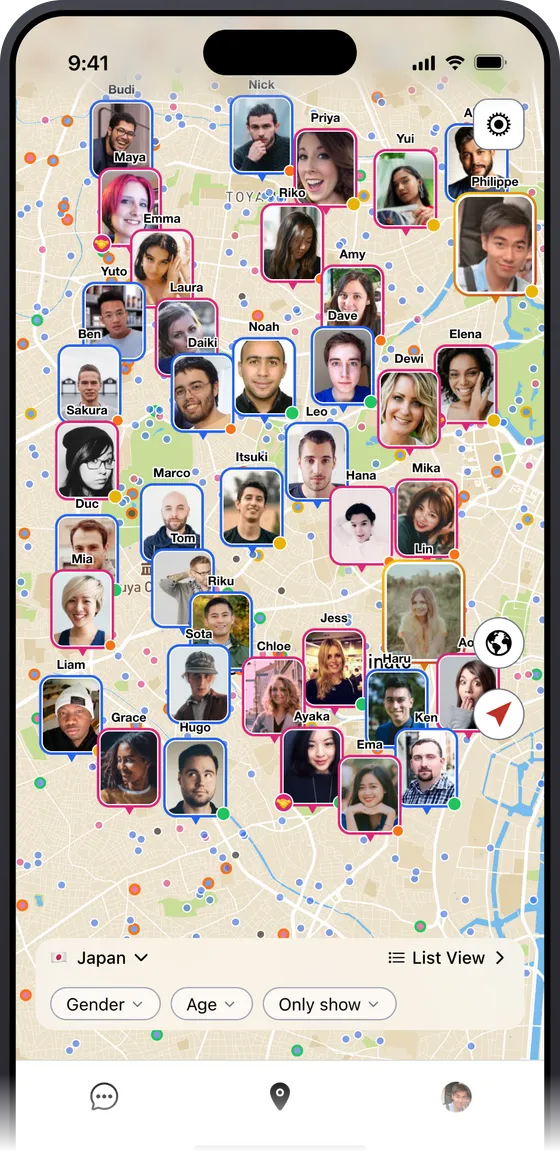
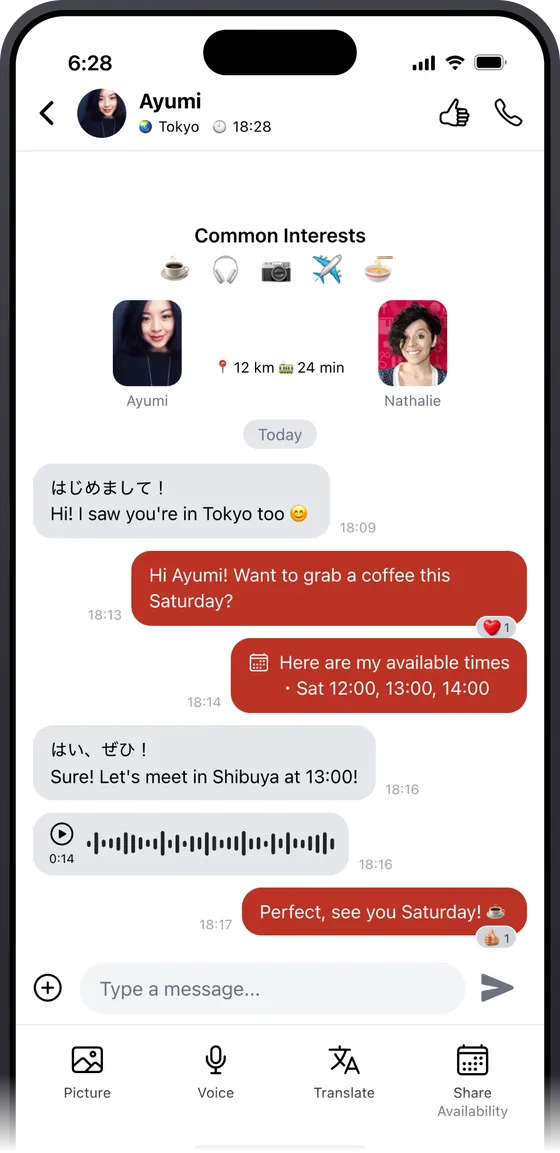


SewaYou is a map-based app for finding people near you who actually want to meet up in person. Locals who want a foreign friend, foreigners learning Japanese, both opting in upfront. You can explore anywhere on the world map, but for regular practice in person, focus on your neighborhood and suggest a coffee where you can try out your Japanese.
Five years is a long time to study alone. Don't make it ten.


