

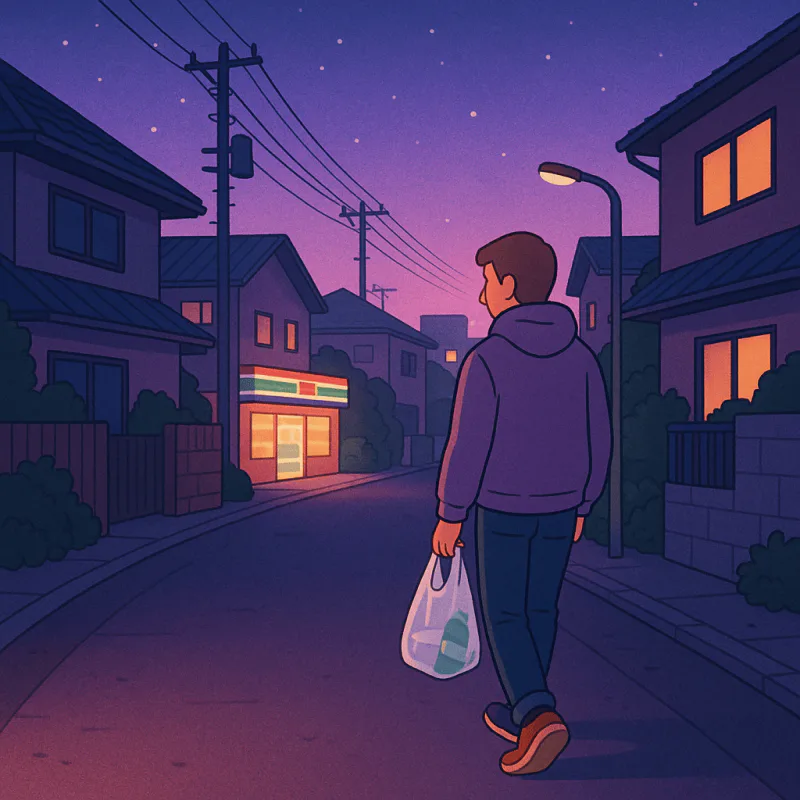
It's 11pm. There's a typhoon warning. You walk into a FamilyMart with rain dripping off your jacket, and there it is, perfectly arranged like someone read your mind ten minutes ago: warm canned coffee, a stack of disposable umbrellas at the register, those little towel packets in a basket near the door, instant ramen lined up where wet hands can grab them.
Nobody you know designed that. Nobody you'll ever meet decided where the towels should sit. And yet the whole layout feels like a small act of love directed at the exact version of you walking through that door.
This is the part of Japan that hits foreigners the hardest in their first year. It's also, quietly, the part that hurts the most after a few years living here.
Because the konbini will care for you in ways that no human in your life is currently caring for you. And if you're not paying attention, that becomes the only kind of care you ever get.

There's a term in design culture called anticipatory service. It's the idea that the best service isn't responsive ("how can I help you?") but predictive ("here is the thing you didn't know you needed yet").
Japan is the world champion of anticipatory service. The konbini is just the loudest example.
Think about the patterns you stop noticing after a while:
Every single one of these is someone, somewhere, deciding that future strangers matter enough to design for. None of those people will ever meet you. Most of them will never know if it worked. And yet they did it anyway.
This is genuinely beautiful. I don't want to take that away from anyone. The first time you really notice it, it can move you to tears.
But there's a shadow side, and most people who live here long enough eventually feel it.
Here is the uncomfortable thing about anticipatory care: it gives you the feeling of being known without anyone actually knowing you.
The cashier ringing up your warm coffee at 11pm doesn't know your name. They don't know you got dumped last month. They don't know you have a parents' anniversary coming up and you don't know what to say. They don't know you've been awake since 5am because the apartment upstairs has been arguing in a language you can't follow.
They are kind. They are efficient. They will hand you your bag with both hands and a small bow. And then you walk back into the rain.
Multiply this by every interaction in your week, the train station staff, the post office, the pharmacist, the ramen shop owner who remembers your usual order, and you start to live inside a beautifully padded room of low-stakes warmth. Everyone is nice. Almost nobody is close.
This is fine for a while. Honestly, for a lot of people coming from less polite cultures, it's a relief at first. The friction is gone. Nobody is rude. Everything works.
Then one day you realize the warmest interaction you had this week was with a vending machine.
Japanese people are not immune to this, but they have a lifetime of social scaffolding around them that you don't. Family within driving distance. School friends from age six. Coworkers they've known for fifteen years. The infrastructure of anticipatory care is a supplement to their human network, not a replacement.
For a foreigner, especially one in their first three years here, the math is different.
You probably don't have family in the country. Your school friends are scattered across other continents and timezones. Your coworkers are pleasant but the relationship usually ends at the office door. Your Japanese isn't yet at the level where you can be your real self in the language. So most of your day-to-day human contact is transactional, and Japan's transactional contact is so smooth, so warm, so attentive, that it can feel like enough.
It is not enough. But it can feel like it for a surprisingly long time.
I've seen people go a full year here only realizing in retrospect that they hadn't had a single conversation longer than ten minutes that wasn't with a coworker or a service worker. They felt fine the whole time, because Japan was taking care of them. The system loved them. They just didn't have anyone in their life who knew them.
Here is a quiet little check I sometimes give to people who tell me they're "doing okay" in Japan but seem a little off:
Look at your last seven days. Add up every interaction you had with another human that lasted more than fifteen minutes and was not transactional, not work, not online text. So no Slack, no LINE replies, no checkout chat, no Zoom meetings. Real conversations with a real person, in person or on a real call, where neither of you was getting paid to be there.
How many?
If the answer is zero or one, you're in the konbini trap. The infrastructure is doing all the heavy lifting of "social support" in your life, and you've stopped noticing because the infrastructure is that good.
This isn't a moral failing. It's actually a tribute to how well-designed Japan is. The country has built such a thorough cocoon of anticipatory care that you genuinely can survive years inside it without ever needing another human being to remember your name.
The problem is that you also won't thrive there. Not really. Not in the long run.

There is no clever hack here. The konbini trap closes when you put one specific human being in your week, on a recurring basis, who isn't being paid to be there.
That's it. Just one. To start.
Some specifics that actually move the needle:
This sounds soft and obvious. It's also the single most reliable thing I've watched pull foreigners out of the soft fog they didn't know they were in.
The konbini is not the problem. The konbini is a small miracle. Don't stop appreciating the towels by the door, the warm coffee in winter, the cashier who hands you your change with two hands.
The trick is to let the system do what the system does, and to put humans in the seats where humans belong. Logistics for logistics. People for people.
A country can be the best in the world at anticipating your needs and still be a place where nobody knows your story. Those two things are not the same care. Both matter. Only one of them keeps you alive on the inside.

If you read this and felt a little seen, here is the move for this week. Pick one person within a 30-minute train ride from where you live. Could be someone you've met once, someone you keep meaning to message back, a language partner, a former coworker, a neighbor who's smiled at you twice.
Suggest a specific time and place. "Coffee at the Doutor near the south exit, Saturday at 3?" Don't make it a big plan. Don't propose dinner. Don't ask "want to hang out sometime?" because that question will die in a chat thread for three weeks.
Make Japanese Friends On a Live World Map
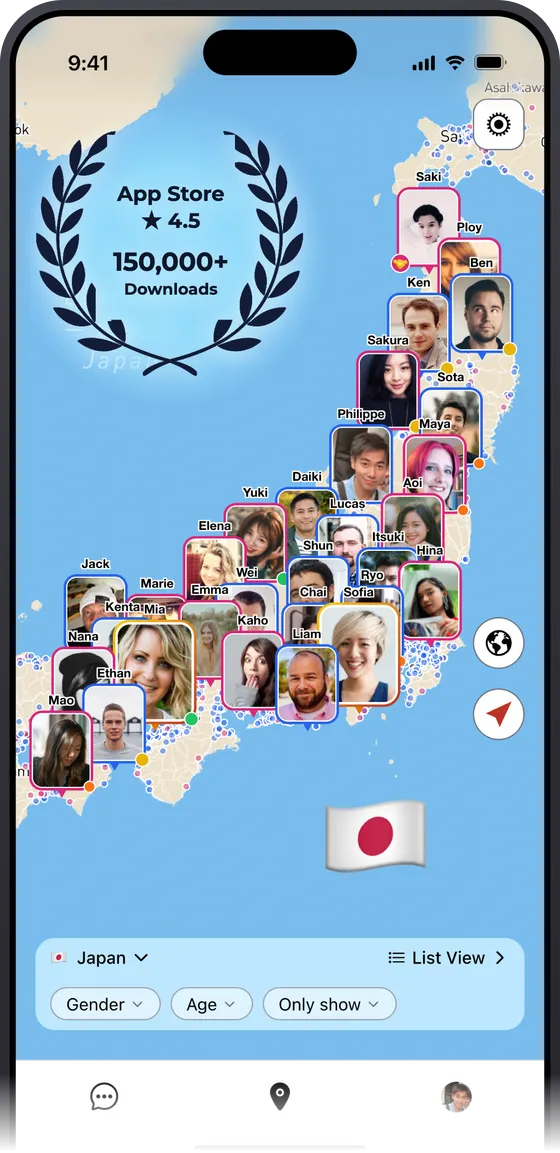
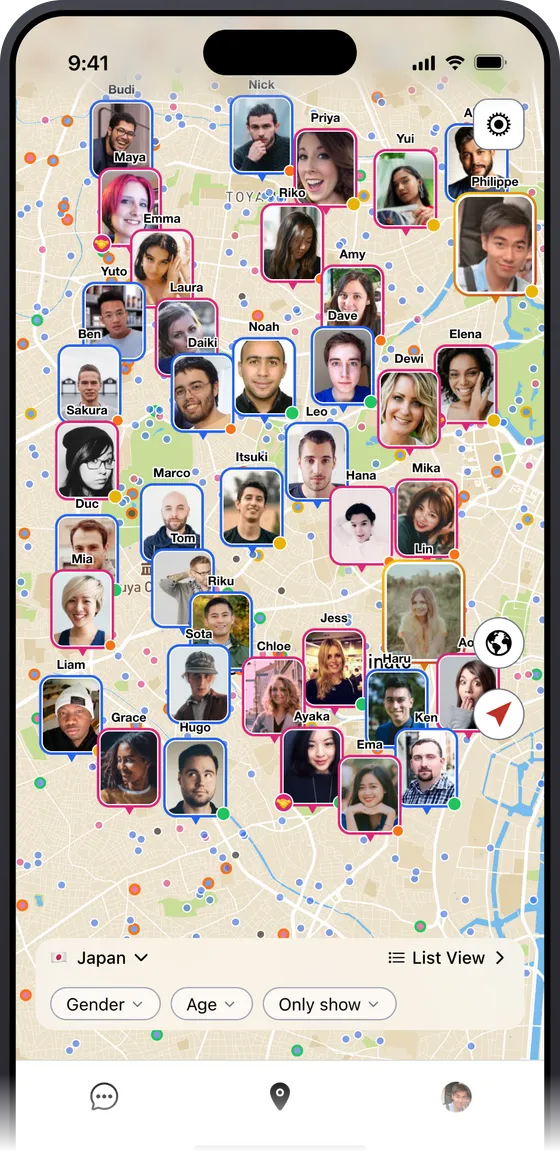
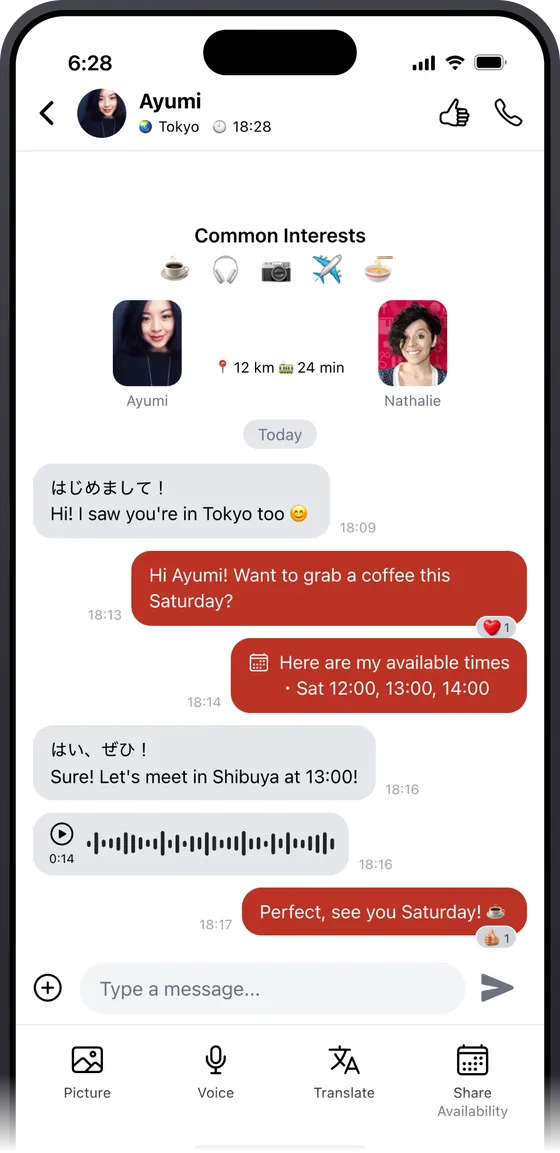


SewaYou is a map-based app built specifically for this. You see who's near you, you propose a meetup, you actually show up because they're two stations away, not twelve time zones. The friction that the konbini removed from your daily life, SewaYou is trying to remove from finding people nearby who want to be in your week.
The konbini will keep being there for you. It always is. But the conversation that keeps you whole? That one needs a name and a face and a Tuesday.
Go put a human in your week. The umbrellas by the door will still be waiting.


