

The first thing that threw me at a Japanese company was not the hierarchy, and it was not the hours. It was sitting through a meeting where a real decision got approved, and slowly realizing the deciding had already happened somewhere I was not.
Everyone nodded. A few people spoke. The proposal passed. And I walked out with the odd sense that I had watched a ceremony, not a debate. Back home, the meeting was where things got fought over and settled. Here, the meeting was where things got confirmed, because the real work had already happened somewhere offstage.

This is nemawashi, the quiet groundwork Japanese teams do before anything reaches a room. Someone walks the proposal around, desk by desk, catching worries in private, adjusting, building agreement one conversation at a time. By the time it hits the meeting, the answer is basically known.
Coming from the US or Europe, you keep treating the meeting as the arena. You save your sharpest argument for it. You wait for the right moment to speak up. And you keep losing, not because your idea was worse, but because you showed up to a fight that was already over.
The people who thrive here figured out that the meeting that matters is the hallway one, the lunch one, the quiet aside before the calendar invite ever goes out. Miss that channel and you will always be a step behind the room.
Decision-making is not the only thing that moves underground. The whole way people say things does too. A flat "no" is rare. Instead you get "that might be a little difficult," or a slow inhale through the teeth, or a "we will consider it" that quietly means never.
Nobody is lying to you. They are being perfectly clear, in a register you have not learned to hear yet. This is the part no textbook prepares you for. You can pass the JLPT and still leave a conversation with completely the wrong idea of what just happened, because the meaning was in the pause, not the words.

Here is the trap. The only Japanese people most newcomers know are their coworkers, and coworkers are the exact people who cannot explain this to you plainly. They live inside the same hierarchy you do. Telling you what your boss really meant, or who quietly killed your proposal, costs them something.
So the invisible layer stays invisible. You feel perpetually half a beat behind, and you assume it must be your language, or that people here are just cold. It is neither. You are missing the context, and you have nobody positioned to hand it to you. You simply cannot read the room from inside the org chart.
That is a lonely spot to sit in. You go home each night having understood every word and missed the whole meaning, with no one to check it against.

The thing that cracked Japan open for me was not a management book or a harder Japanese class. It was a couple of Japanese friends who had nothing to do with my job.
Someone with no stake in my performance review, who I could just ask, "the room went quiet when I said that, what did I do?" And they would laugh and tell me straight, because they were my friend and not my colleague. That is how you actually learn to read the air. Not by studying it, but by having someone replay the tape with you afterward.
One or two locals who are not tangled up in your workplace will teach you more about how Japan really communicates than a year of meetings ever will. They are the decoder ring. And they make the whole country feel less like a test you keep failing and more like a place you are slowly being let into.

The catch is finding those people in the first place. The usual apps hand you a list of usernames three trains away who flake before you ever meet, which is not a friendship, it is just more screen time.
SewaYou is a map-based app that shows you real people near you who also want to make new friends. You set the map to your own neighborhood and find locals and fellow residents who are genuinely close by, not a feed of accounts scattered across the metro. You can also explore anywhere on the world map. When you focus on your own area, the people you find are people you could actually meet for a coffee, which is the entire point of a friend who can finally tell you what that meeting was really about.
Make Japanese Friends On a Live World Map
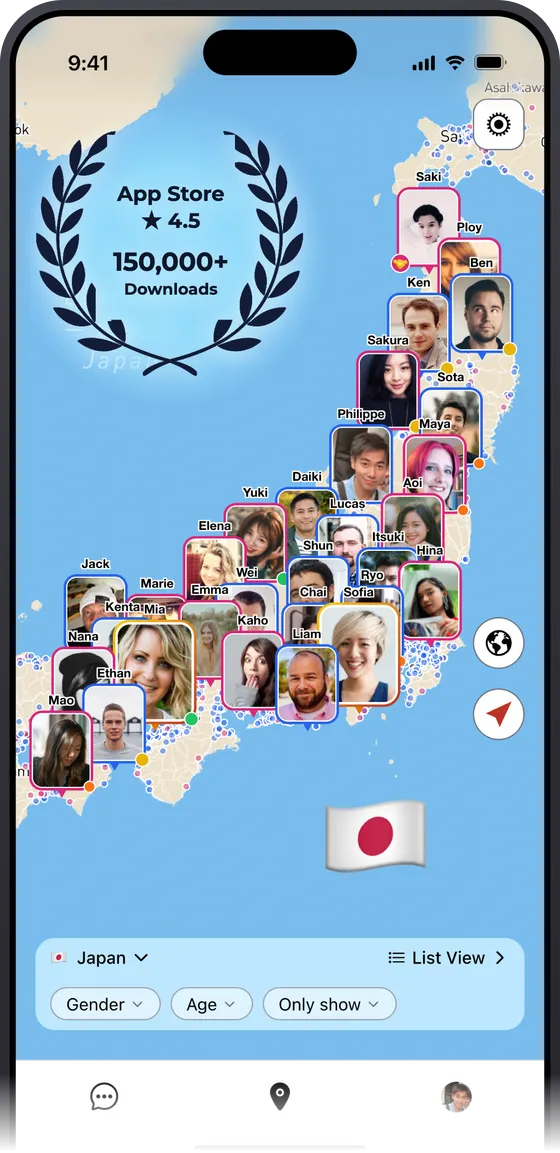
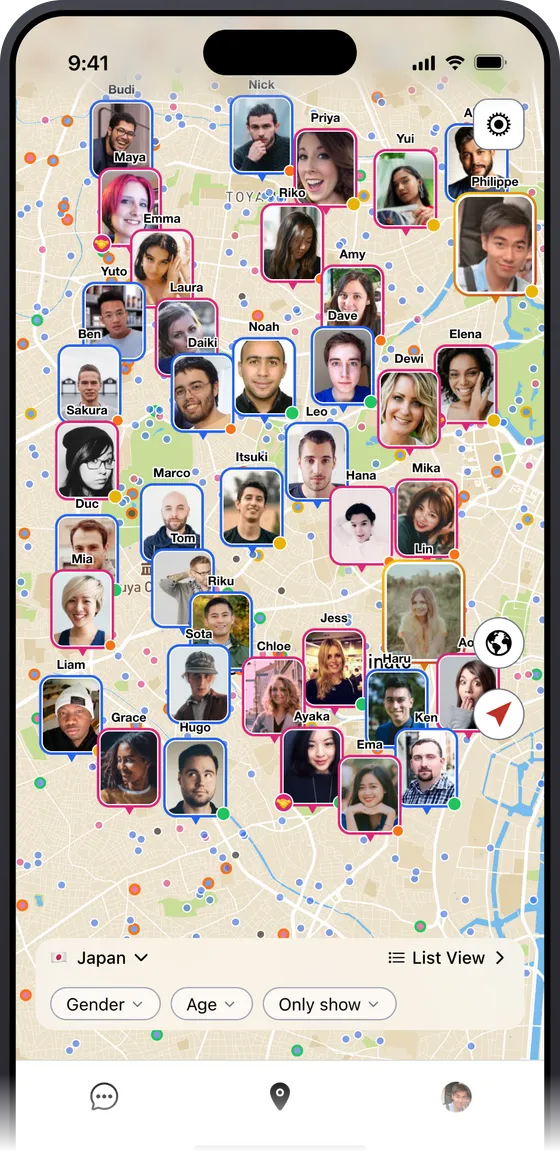
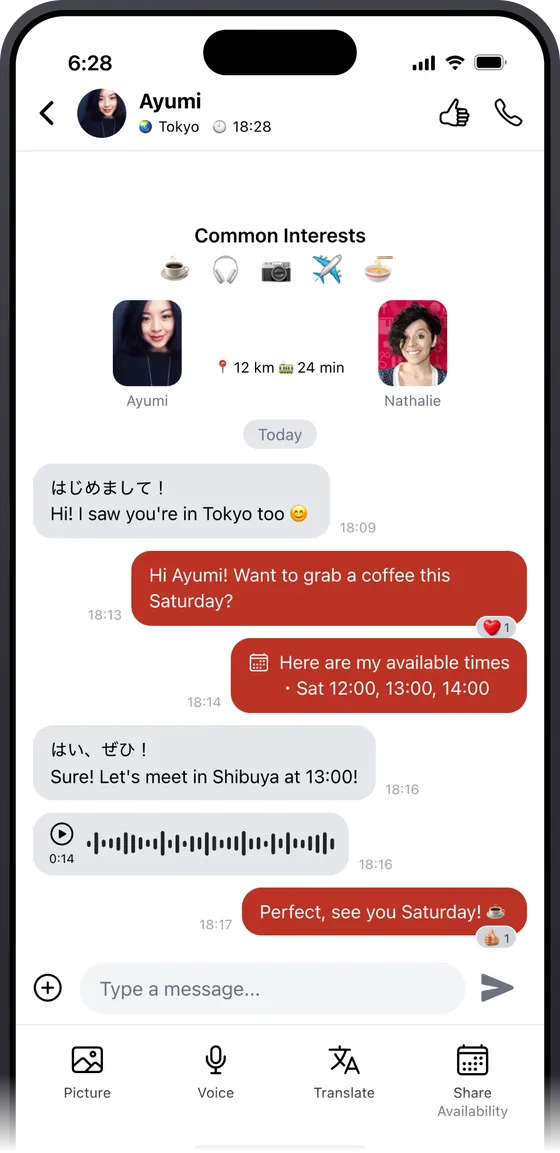


So take the work culture seriously. Learn the nemawashi, sit through the meetings, watch how the room breathes. But do not try to decode Japan alone from inside your own company, because that is the one place built to keep the real answers just out of reach. Tonight, set the map to your area, read a few honest profiles, and message one or two people who will never once sit in your meetings. The subtext of this country is real, and it is learnable. You just need a friend on the outside willing to read it back to you.
For decoding your boss when the signals stop making sense, They Shipped Your Work and Went Quiet. Is That Tatemae, or Are You Actually Failing?.
For the line between workplace harmony and real connection, Your Coworkers in Japan Aren't Your Friends, and Forcing It Is Burning You Out.


