

On your first project, they loved you. Fast, productive, praised in every review. You thought, okay, I can actually do this.
Then somewhere around the two-year mark, the temperature dropped. Your senpai started nitpicking things that never came up before. The schedule got vague. The high-priority tasks quietly went to other people. Messages that used to get a quick reply now sat unread. And when you finally asked, straight out, whether something was wrong, the answer was some soft version of "well, honestly, for a while now."
So you switched projects. New team, clean slate, and you swore you would fix every single thing. It worked, for a few months. They seemed happy. Your work went into the build without changes. And then, right on schedule, the same fog rolled in. Fewer priority tasks. Vaguer plans. The slow fade from the group chat.
Here is the question that eats people alive in this situation. Are they quietly disappointed in me, or is this just how a Japanese workplace feels from the inside?
You genuinely cannot tell. And that not-being-able-to-tell is the actual problem. Not your art. Not your speed. The fact that you are trying to read tatemae completely alone.

You have been collecting evidence like a detective. Praise could be real, could be tatemae. Silence could be disapproval, could be nothing. The clincher you keep coming back to is this one: they shipped my work into a multi-million-yen project without changes, surely they wouldn't do that if they hated it.
Except that reading does not hold either. Work gets shipped as-is for a dozen reasons that have nothing to do with love. The deadline was tomorrow. Reworking it cost more than accepting it. Nobody wanted the friction of asking you to redo it. Or it was genuinely fine, just not the kind of thing that gets you handed the flashy stuff.
"Used without changes" and "trusted with the important work" are two different measurements, and you have been treating them as one. That is the trap of tatemae. It is not that people lie to your face. It is that every signal has two readings, and from where you sit, you cannot rule either one out.
The deeper issue is that you have no baseline.
To know whether "fewer priority tasks" means "we're worried about you" or "we trust you to run on your own," you would need to know what a normal Japanese seishain's third or fourth year actually feels like from the inside. Does everyone get nitpicked more once the honeymoon ends? Do senpai go quiet on people they respect? Is losing schedule visibility a demotion, or just what happens when a project reorganizes?
You do not know, because every Japanese person in your professional life is someone who is grading you. Your senpai. Your leads. Your manager. Each one has power over you, which means each one has a reason to manage what they show you. You are trying to calibrate a ruler using only the people who benefit from you never seeing the marks.

Everyone's fix for tatemae is the same, and it is worthless. Read the room. Watch the actions. Feel the vibe. If reading rooms were easy for you, you would not be in despair right now. And if you are wired in a way that makes indirect social cues genuinely hard, whether that is being foreign, being autistic, or both at once, then "just sense it" is not advice. It is a description of the exact thing you cannot do.
Here is what nobody says out loud. You do not have to read the room if you have one person you can simply ask.
Directness is not a character flaw you need to sand off to survive here. The problem was never that you ask blunt questions. The problem is that you have been asking them to the wrong people, the ones inside the hierarchy who are structurally unable to answer you straight.

Picture a Japanese friend your own age. Not a coworker. Not a senior. Someone who has worked inside a Japanese company, who has quit or moved or stayed, and who has absolutely nothing riding on your performance review.
You tell them the whole arc. The praise, the nitpicking, the tasks drying up, the silence. And in about twenty minutes they do what a year of solo analysis could not.
They separate the cultural from the real. "The senpai going quiet? That one does it to everyone once you're off probation, ignore it." "The tasks drying up? Yeah, that part I would actually ask about, that one's not just vibes."
They tell you the move. Not "read the room harder," but something you can act on Monday. Who to ask, the exact phrase to use, whether to escalate or let it ride.
And maybe the most important thing, they tell you the truth about your work, because they are the one person with no reason to soften it. If it is good, you finally get to believe it. If there is a real issue, you finally get to fix the right thing instead of flailing at all of them at once.
You cannot get that from inside your company. You cannot get it from Google. You get it from one peer who owes you nothing but honesty.
Here is the hard part in real life. Where do you even meet a Japanese person your age who has no connection to your job? For most foreigners, the entire Japanese social circle is built from work, introductions through work, or language apps where the chat never turns into a real meetup. Every one of those either has a power dynamic baked in or never leaves the screen.
Make Japanese Friends On a Live World Map

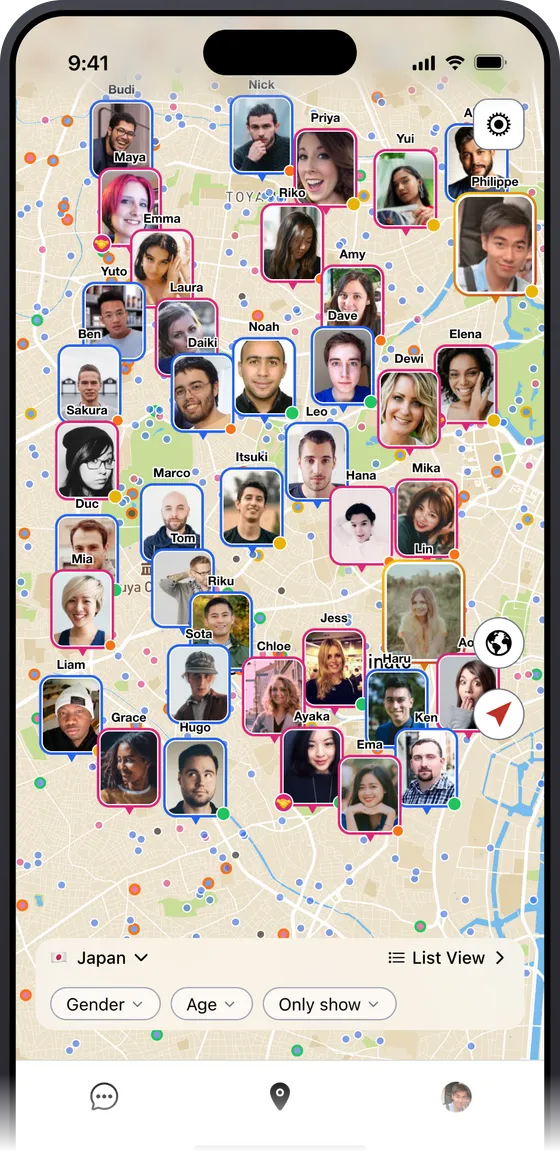
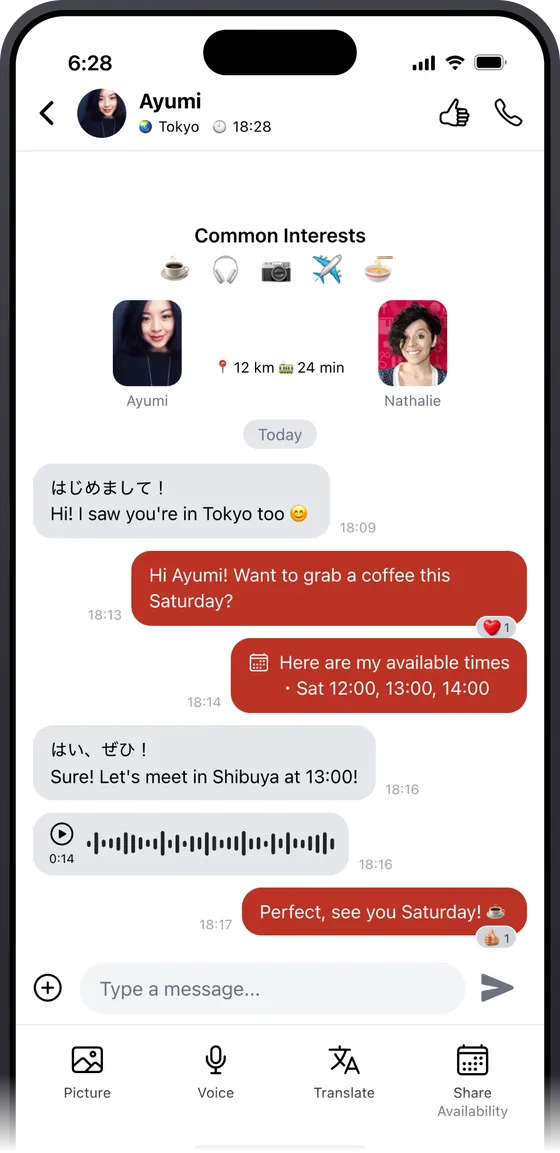


SewaYou is a map-based app for exactly this gap. You see who is genuinely near you, you suggest a coffee, and because they are two stations away instead of on the other side of the world, you both actually show up. Not a language tutor. Not a date. Not a pen pal who ghosts. Just one recurring person in your week who has worked inside this culture and will tell you, plainly, whether the thing your senpai did was normal.

Stop trying to solve tatemae by staring harder at the people who pay you. You will never win that game, because the whole design of the game is that they do not show you their hand.
Instead, get one honest person on the outside. One peer, your age, no stake in your job, close enough to meet on a Saturday. Show them the screenshots. Ask the blunt question. Let them hand you back the baseline you were never going to find on your own.
Your work might be completely fine. You deserve to actually know that. And the only way you ever will is by finally asking someone who has no reason to lie.


