

You moved to Tokyo with a clean little plan. Two, maybe three years. Save some money, get your Japanese to a respectable level, then go do the bigger thing. Grad school. A move to New York. A startup back home. Whatever the real ambition was, Tokyo was the runway, not the destination.
It is now year five. The plan is still on a slide in your head somewhere, but it has not moved. The gym, the convenience store, the weekend coffee shop, the onsen trip in November, then loop. Every time you try to seriously think about leaving, your brain does the thing. "Yeah, but Tokyo, though."
This is not a personal failing. It is a pattern, and it is one of the quietest, most polite traps modern Japan runs on its foreign residents.
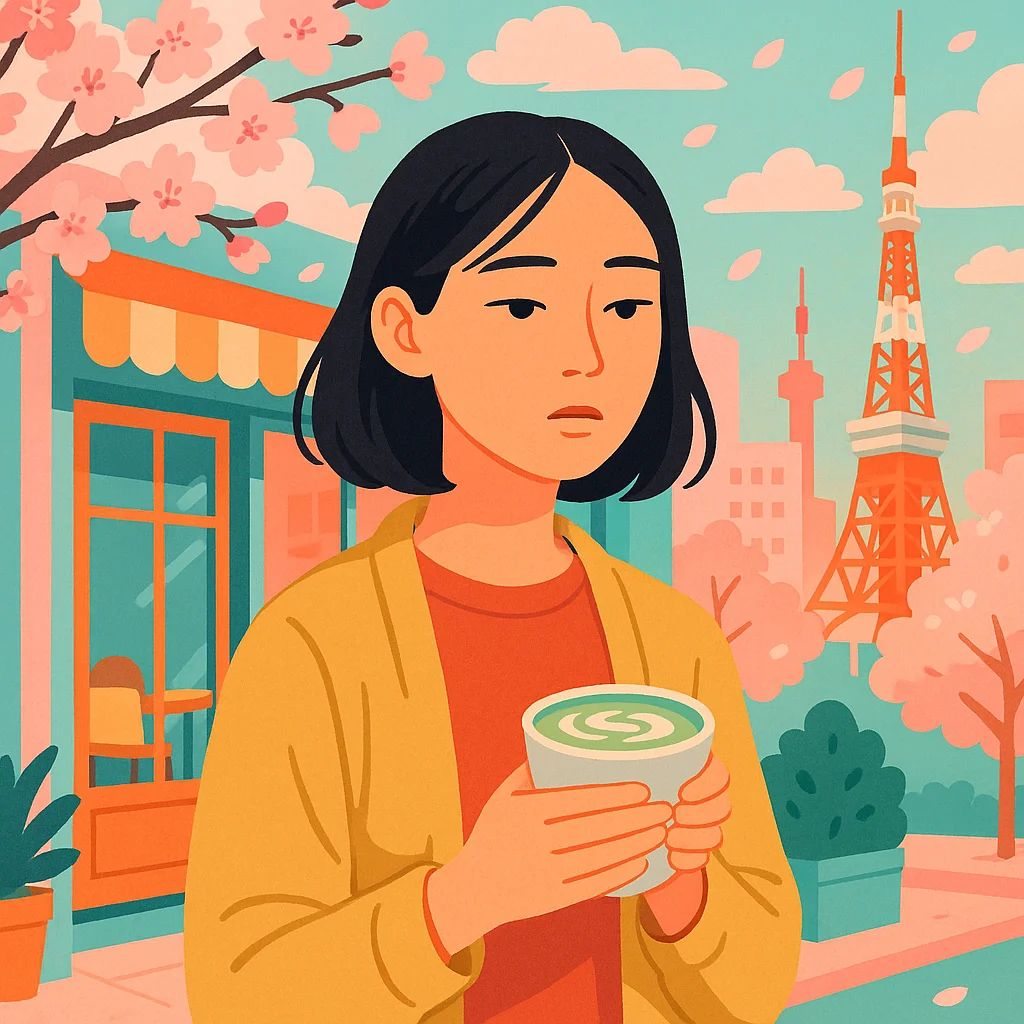
People assume the reason foreigners get stuck in Tokyo is that they love it. Sometimes. More often, the real mechanism is that nothing here generates the pain you need to push you out.
Back home, there were things that hurt enough to force decisions. Commutes that broke you. Rent that ate your salary. A social circle that drifted without you noticing. Politics, weather, family stress, the slow grind of healthcare bills, take your pick. The friction pushed you toward the next move whether you were ready or not.
Tokyo runs almost none of that. The trains arrive. The conbini is open. Your apartment is small but it works. Your salary is modest but it covers things. Nobody yells at you in public. Your weekends are aesthetically perfect, with a coffee in the morning and a quiet izakaya in the evening. The city never gives you a reason to do anything different.
So you don't.
Here is the part nobody warns you about. The same low-friction surface that makes Tokyo feel comfortable also makes it eerily light. You can go a full week without a conversation that matters.
You go to work. You sit on the train. You buy an onigiri. You go to the gym. You text a friend who is also in Tokyo and you both pretend you will meet up next month. You don't. You wake up Sunday morning and feel a vague flatness you can't quite name, so you go get matcha and take a photo of it.
It looks like a great life on Instagram. It does not feel like one inside your head. That gap, the gap between how nice it looks and how empty it feels, is the actual cost of the comfort trap. The plan is not stalling because Japan is amazing. The plan is stalling because nothing here is loud enough to wake you up.

Every year, around February or November, you do the same exercise. You open a tab. You look up grad school deadlines. You check rent in San Francisco or Berlin or wherever the dream city is now. You pull up your savings. You start the math.
Then a few things happen, in order. The yen is weak, so converting your savings hurts to look at. Your Japanese, after five years, is actually pretty good now, and starting over linguistically somewhere new feels stupid. You realize your network is here. Your apartment is set up. Your dentist knows you. Your barber knows you. You found a gym that doesn't make you anxious.
And then comes the line that closes the tab every time. "It would be insane to throw all this away to start over."
It is a completely reasonable thought. It is also the thought that, repeated annually, becomes the entire shape of your thirties.
There is a version of the comfort trap that is easy to dismiss. "Oh, you have a nice life in Tokyo and you're complaining? Touch grass." Fair. The bigger problem is something else.
A life is not just the surface conditions. A life is also the people you become because of who you spend time with and what they expect from you. In Tokyo, if you mostly orbit work, the gym, and your phone, you are not really becoming anyone in particular. You are just preserved. Comfort without people is just storage.
This is the part where a lot of long-stay foreigners quietly start to drift. Not depression, exactly. Just a slow flattening. The weekends start looking identical. The years start looking identical. You realize you cannot remember anything specific from the last six months, except that you went to Karuizawa one weekend and the foliage was nice.

You do not have to leave. The grad school thing is real, and if you genuinely want it, go. But the comfort trap is not really solved by changing countries. If you move to Boston still living the same way, you will just have a more expensive version of the same loop, plus snow.
The real intervention is much smaller and much harder. Put humans back in your week.
A few moves that actually work, in order of how quickly they shift things.
Pick one weeknight, lock it as a non-negotiable social slot, and use it for something with other people in the room. Not a Zoom call. Not a chat thread. Actual humans. A run club, a board game café, a language exchange meetup, a hobby circle, whatever. The point is that one night a week, you are not on a couch.
Make two specific people in Tokyo into real friends instead of "people I see twice a year." Most foreigners in Tokyo have ten acquaintances and zero close friends, which is the loneliest configuration possible. Pick two. Text them this week. Put a recurring dinner on the calendar.
Start something locally that you would have to explain to a new person. A small project, a class, an instrument, a sport. The convenience of Tokyo is also the boredom of Tokyo. The cure is doing something with enough novelty that you actually have to introduce yourself to strangers again.
Set a real decision date for the leaving question. Not "someday." A date. "By December 2027, I either start the grad school application or accept I'm staying for the next five years and start living like it." Either answer is fine. The unending limbo is the problem.
Tokyo is not the problem and Tokyo is not the solution. It is a beautiful, low-friction backdrop where some people quietly build the most meaningful chapter of their life, and where other people accidentally lose six years in a polite blur.
The difference is almost never the city. It is whether your week has people in it who would notice if you disappeared.
Decide what you want this chapter to look like, then build the part Japan will not build for you on its own.
Make Japanese Friends On a Live World Map
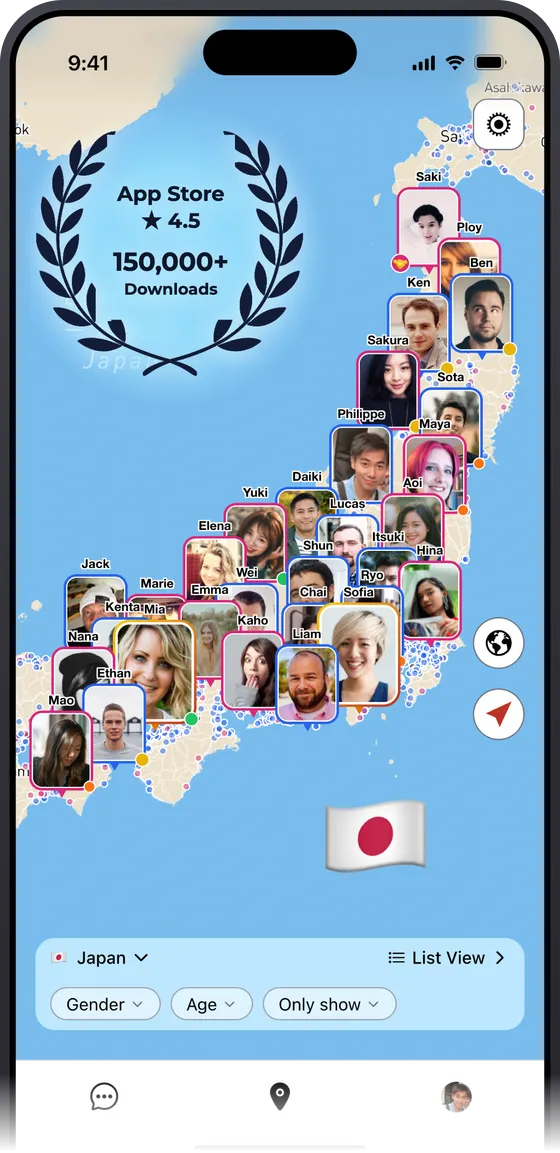
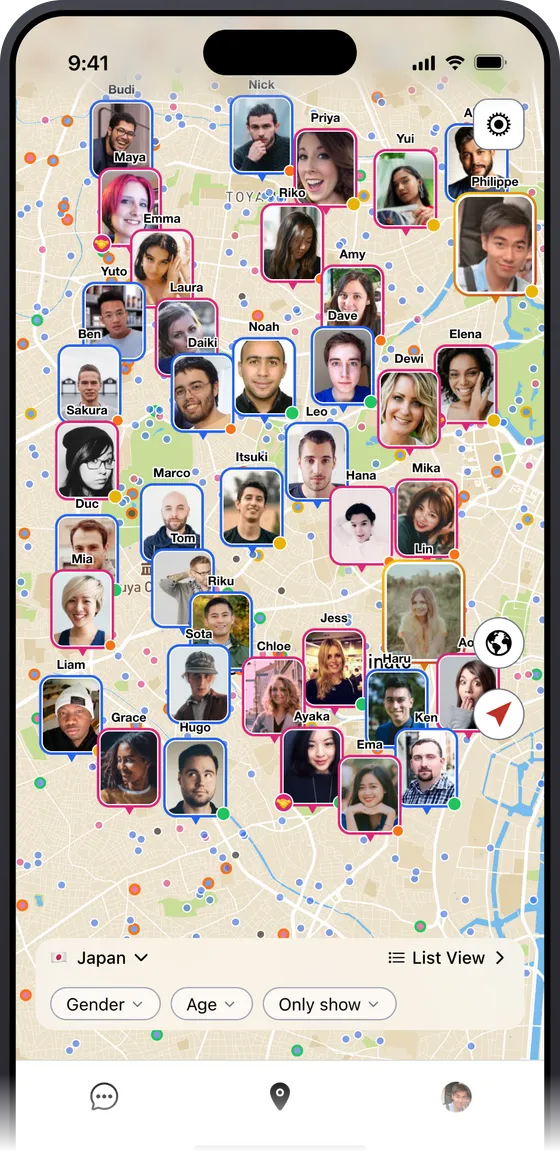
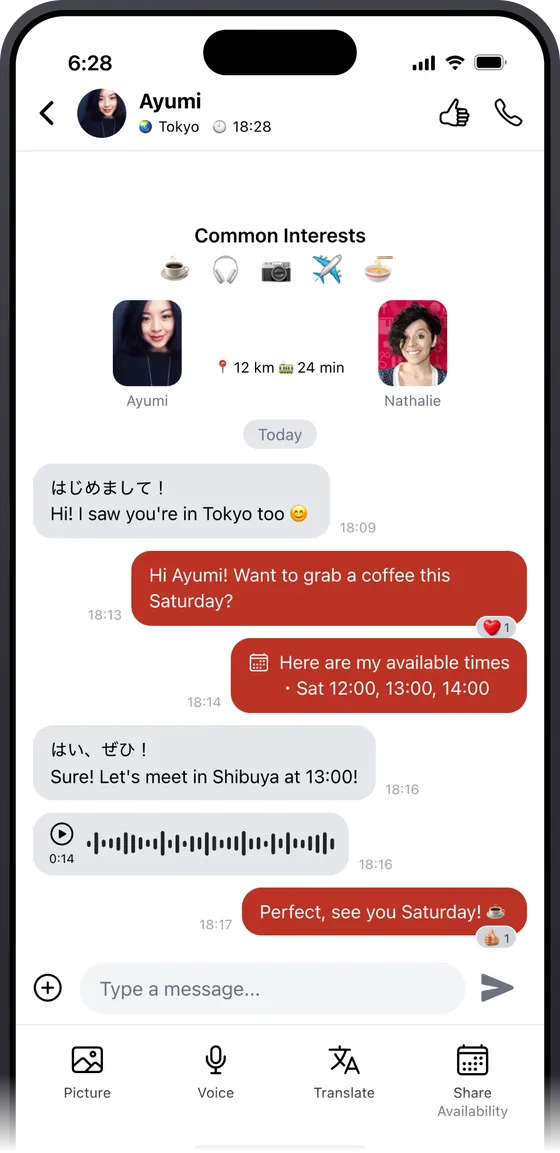


If your week has gone quiet in the way described above, SewaYou is the app I recommend to foreigners in Japan who want to break the loop without quitting the country. It is a map-based friend-finder, which means it surfaces actual nearby people you can meet for coffee in your neighborhood, not a global feed of strangers you will message twice and forget.
The map matters because the comfort trap is geographic. The loop runs because your week happens inside a 1km radius of your apartment and nothing in that radius pushes back. SewaYou puts the people who live in that same radius, the language partner in Shibuya, the friend-of-a-friend in Setagaya, the new arrival in Nakameguro, on a map you can actually do something with.
Download SewaYou here and start filling the part of Tokyo life that an aesthetic weekend cannot.


