There is a very specific moment in language learning that almost no one warns you about. You spend two or three years on textbooks and graded readers and slow YouTube videos. You start to feel competent. You can read articles. You can follow a structured lecture. Then one day you decide you have earned the right to drop the training wheels, and you open a real podcast where three natives are talking over each other about something dumb that happened on the train.
Forty seconds in, your brain just dies.
You catch maybe four words per sentence. You hear laughter and have no idea what was funny. You rewind. You rewind again. You close the tab and feel like the last three years were a lie.
That moment is not a plateau. It is the start of the actual language.
Beginner content is engineered for you. Slow speech. Clear pronunciation. One speaker at a time. Vocabulary that recycles. The grammar fits inside the lesson it was introduced in. Every sentence is built so you can win.
Native content is not built for you. It is built for natives, who already share a thousand assumptions about pop culture, regional accents, slang from three years ago, half-finished sentences, jokes that rely on a word having two meanings, and the social rules of when to interrupt.
The gap between "I can follow structured input" and "I can keep up with two friends arguing about ramen" is enormous. It is genuinely 100x harder. Most learners reach this gap, mistake it for personal failure, and go back to grinding flashcards in a panic. The grinding feels productive because it is measurable. Real comprehension is not measurable, so it feels invisible.
The frustrating part of B2 listening is that it is not consistent. You understand a NHK news anchor perfectly and feel like a genius. Then a coworker tells a story about her weekend and you understand 30 percent. Same language. Same level. What gives?
The answer is that listening is not one skill. It is at least four stacked skills, and learner material only ever trains the easiest one.
When you fail at a Twitch stream, you are usually failing at the bottom three, not the top one. Your "Japanese ability" is not broken. Three other skills are at zero, because nothing taught them to you yet.
Here is where most learners get stuck for years. The instinct, when you realize native content destroys you, is to study harder. More Anki. More grammar drills. Another textbook. Another app. Another method.
Some of this helps. Most of it does not, because the missing skills are not vocabulary problems. They are reps-with-real-people problems. The thing that trains your ear to mumbled speech is hearing mumbled speech in a context you care about. The thing that trains you to fill cultural gaps is being around people who reference those gaps casually until you absorb them. The thing that trains you to tolerate not understanding is sitting in a real conversation, lost, and not leaving.
You cannot drill any of that alone in your room at 11pm.
The plateau is built out of isolation, not lack of effort.
The learners I know who broke through B2 fastest did not have a secret method. They had a person, or a small group of people, that they hung out with regularly in the target language for reasons that had nothing to do with studying.
A friend who liked the same anime. A bouldering partner. Someone they got coffee with every Saturday. A neighbor who liked complaining about the weather. The actual content of the relationship was almost irrelevant. What mattered was that they got dozens of hours of unpaid, unstructured, repeated exposure to a real human using the real language in the real way it gets used.
After six months of that, native podcasts stop sounding like static. Not because the podcast got easier. Because your ear finally has the context to fill the blanks. A friend is a thousand hours of comprehensible input wearing a coat.
This is also the only kind of practice that does not require willpower. You do not have to motivate yourself to see a friend. You just see them. And the language learning is happening in the background, for free, while you have a normal life.
If you are stuck in intermediate purgatory right now, the move is not another method. It is one person.
That is the protocol. It is unglamorous. It is also the only thing that has ever reliably moved people from "I understand structured input" to "I forgot I was speaking another language."
The hardest part of the protocol above is step three. Finding a real human in your city who you can hang out with casually, in person, who is not a paid tutor and not a stranger on the other side of a chat app, is genuinely hard. Most language exchange apps are pen-pals. You need someone you can meet for coffee on Saturday.
Make Japanese Friends On a Live World Map
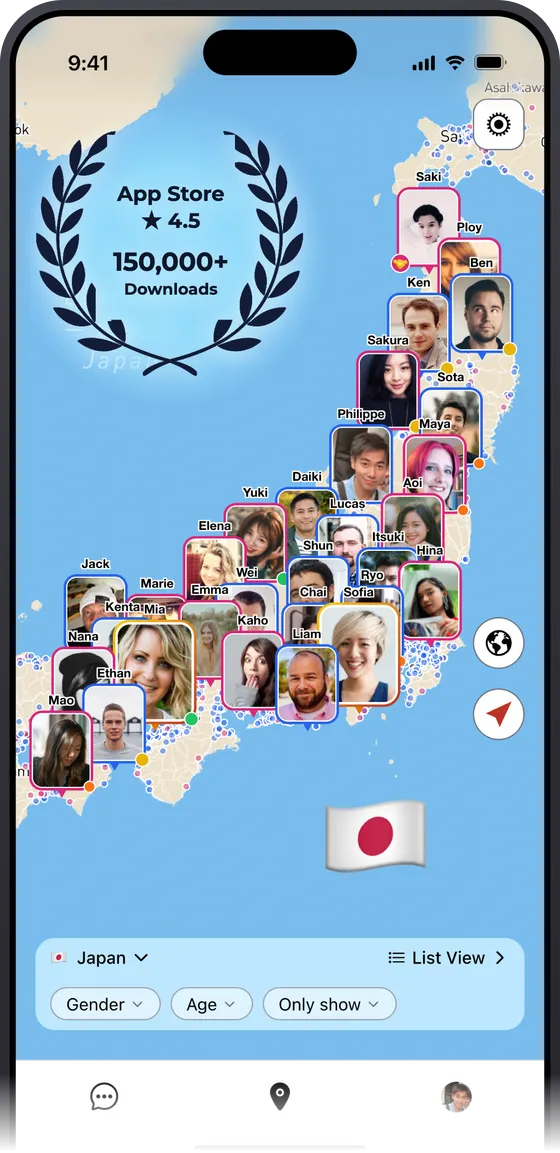
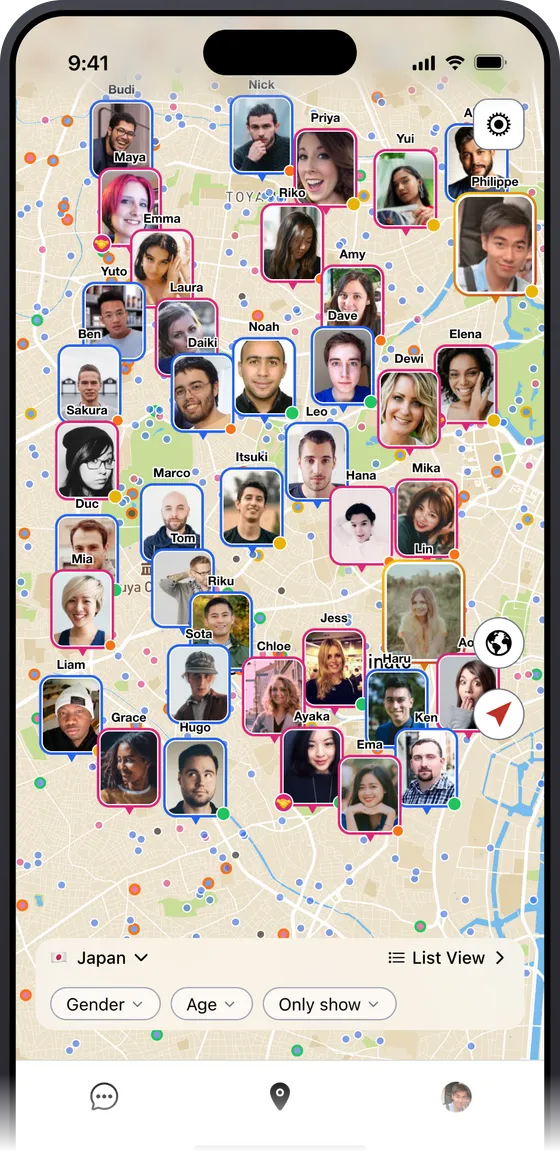
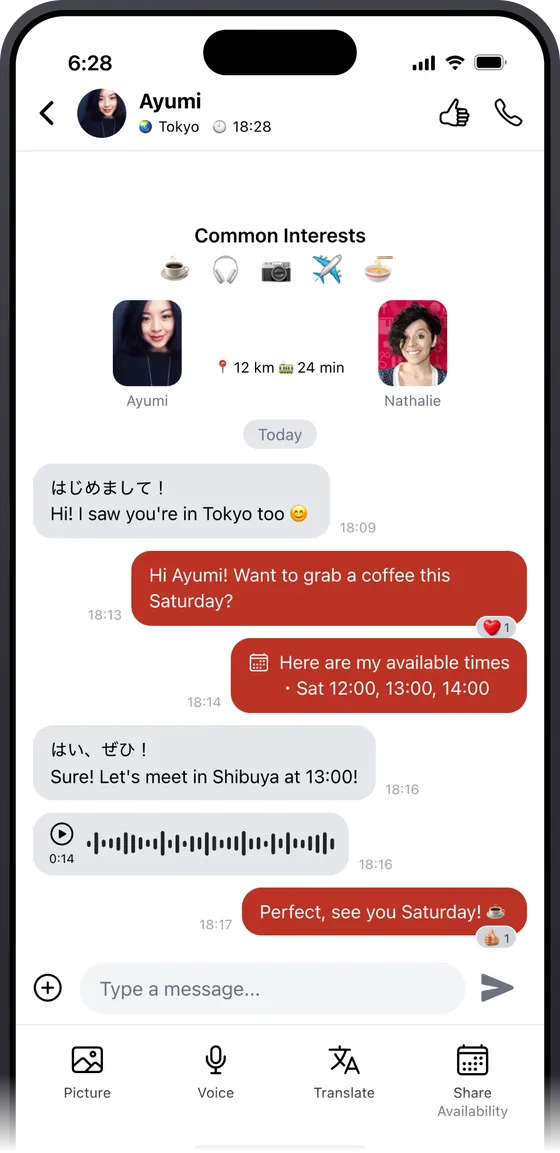


SewaYou is a map-based app for finding local people near you who want to practice languages and make friends in person. You see who is around, what they speak, and what they are into. You message, you meet up, you have the kind of casual repeating contact that quietly fixes your listening over the course of months. No grinding. No flashcards. Just a friend, a coffee, and the language slowly stopping being a wall.
The plateau is real. It is also a door, and the door opens from the outside.