
Spot a Back to the Future shirt in Japan and your brain might jump straight to a possibility: finally, someone to talk movies with. Spot another and a different question creeps in. Is everyone a fan, or am I missing a fashion thing?
It's a fun detail to notice. But a familiar graphic can't tell you why someone got dressed that morning, let alone whether they want to discuss time travel with a stranger.
My take: the useful part isn't solving the shirt. It's having something specific to be curious about. If you're trying to make friends in Japan, that distinction can take a lot of pressure off your next conversation.
Someone might love the film. They might like the colors, have received the shirt as a gift, or simply find it comfortable. Those are possibilities, not an explanation for how common any particular design is in Japan.
The same goes for a baseball cap or a band tee. Recognizing the reference gives you one small piece of information. It doesn't tell you the wearer's nationality, language, personality, or level of enthusiasm.
Treat it as an opening, not an answer. You can be pleased to recognize something without deciding that the person wearing it must be just like you.
That makes room for an answer you didn't expect. Maybe the movie goes nowhere, but the person has a great eye for secondhand clothes. Wouldn't that be worth hearing about too?

Imagine you're already chatting with someone at a language exchange and notice their movie shirt. "I like your shirt. Are you into the film?" leaves them room to say yes, no, or something in between.
Compare that with launching into an obscure reference and waiting for them to get it. What feels like enthusiasm on your side can feel like an unexpected quiz on theirs.
Aim for curiosity without a quiz. These are possible openings, not lines you need to memorize:
Ask one question, then listen. If they say they haven't seen the film, "Fair enough, it's a great design" is a complete, friendly response. They don't owe you a viewing history to qualify for the compliment.
If they are a fan, offer a little of your own taste before asking more. "I like the ridiculous inventions. What part do you enjoy?" feels more like sharing than checking credentials.
A recognizable shirt isn't an invitation by itself. Someone wearing headphones on the train may be enjoying the movie reference and their quiet commute at exactly the same time.
I'd save the opener for a setting where conversation already has some room: before a hobby meetup starts, during a break at a language exchange, or while chatting with an acquaintance. You don't need to turn every interesting outfit into a social opportunity.
Give people an easy way out. If they offer a quick thanks and return to what they were doing, let that be the end. If they turn toward you, add a story, or ask you something back, there's more to respond to.
These aren't foolproof signals. They're reasons to pay attention instead of pushing through a prepared script. A brief exchange can still be pleasant even when it doesn't become a friendship.

Suppose the answer is, "I haven't seen it. I found this at a secondhand shop." You can mourn the movie conversation you imagined, or get curious about the conversation that's actually happening.
"Do you enjoy hunting for clothes?" gives them somewhere to go. If they talk about the print, ask about design. If the shirt was a gift, let them decide how much of that story to share.
The habit worth practicing is follow what they actually say. This matters in language exchange too. When you're concentrating on forming your next sentence, it's easy to miss the detail that would make the next question feel natural.
Keep the exchange mutual. Share a shop you like, explain why the graphic caught your eye, or admit you know almost nothing about vintage clothes. You don't need identical interests to enjoy learning something about each other.
If you do discover a shared love of movies, make the next step small. A possible invitation: "I was thinking of seeing a film this weekend. Want me to send you the details?" Let their answer guide whether you continue planning.

If approaching a stranger feels exhausting, start somewhere with a clearer shared purpose. You can enjoy spotting familiar shirts around town without making your social life depend on a lucky encounter.
Choose a shared reason to talk. SewaYou is a map-based app for finding friends and language exchange partners nearby. Mention something concrete you enjoy, like old science-fiction films or browsing secondhand shops, so a potential friend has something to ask about.
Make Japanese Friends On a Live World Map
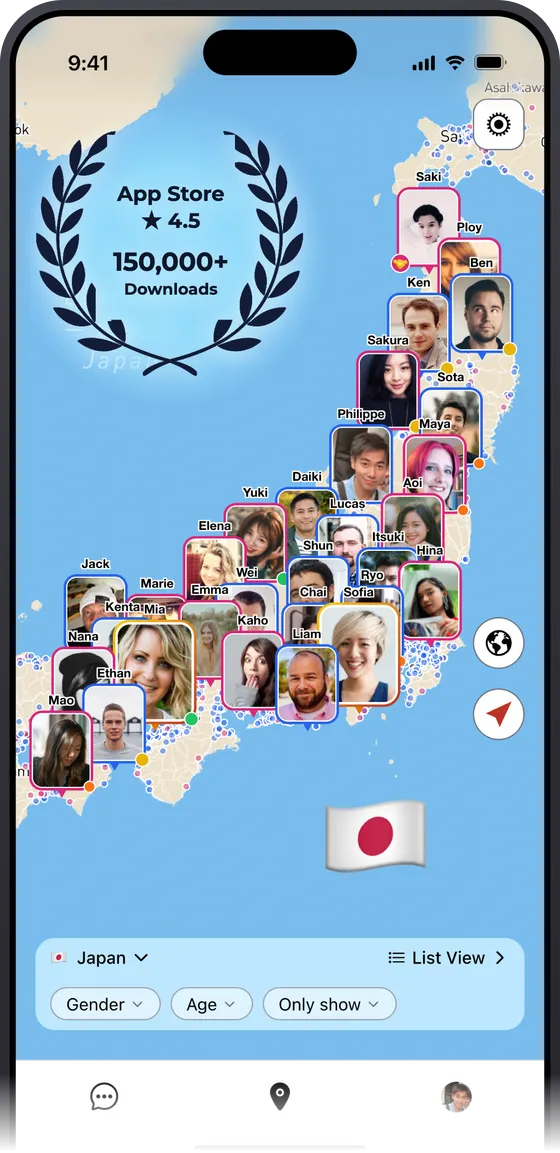
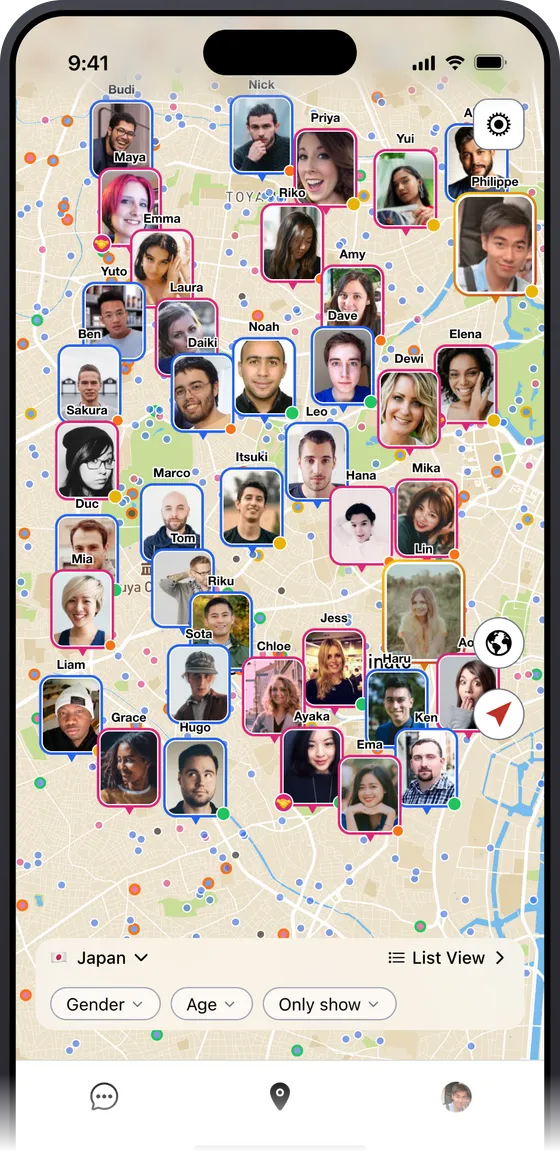
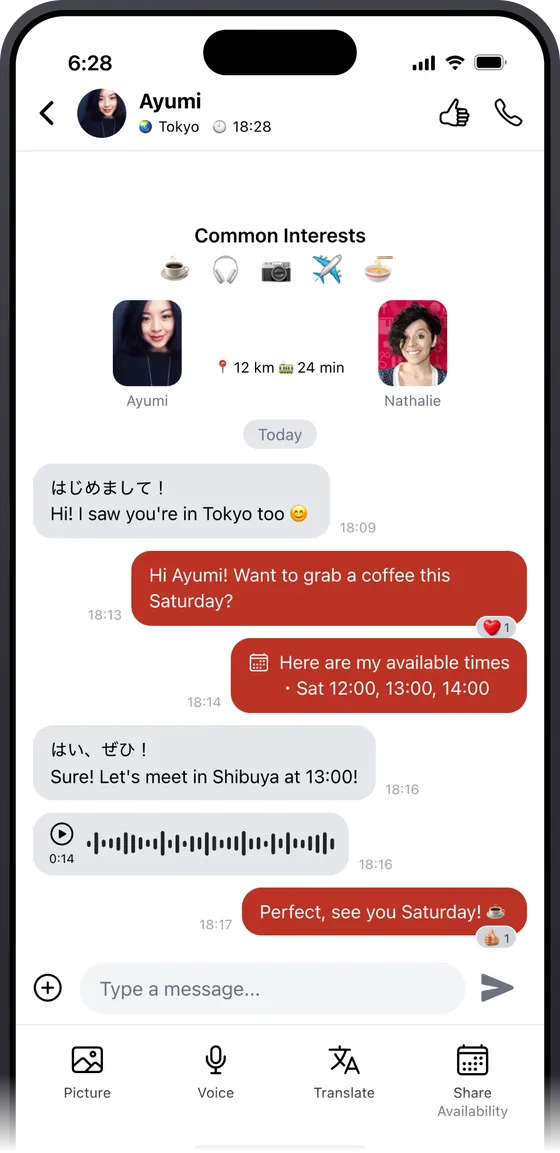


Instead of trying to sound universally interesting, make a small invitation possible: a coffee to swap movie recommendations, or a short walk around a shopping area you both want to explore. Pick a public place and a plan that suits you both.
That familiar shirt can be the first detail you notice. Let the person supply the rest. Download SewaYou and find someone to share your next conversation with.