
Imagine coming home from a city weekend with a feeling you had almost forgotten: conversation felt easy. You met people, made a loose plan, and had somewhere to go after dinner. Back in your quiet town, the evening stretches out again.
Was that just holiday energy? Maybe some of it. But I would take the contrast seriously, especially if your ordinary week has started to feel unbearable.
Wanting friends, dates, and people at a similar stage of life is a reasonable thing to want from the place you live. You do not need a more impressive reason to reconsider your situation.
If your routine connects your apartment, your workplace, and the supermarket, there may be very few chances to meet someone new. Add limited Japanese and transport that does not match your free time, and even a simple invitation can require planning.
Before deciding you are bad at friendship, look at the opportunities your week allows. How many people outside work can you actually talk to? Which activities can you reach and attend again? Can you stay for a conversation afterward without missing your ride home?
Older neighbors can become wonderful friends. Wanting peers as well does not make you ungrateful. Different relationships can meet different needs, and you are allowed to want more than the connections currently available to you.
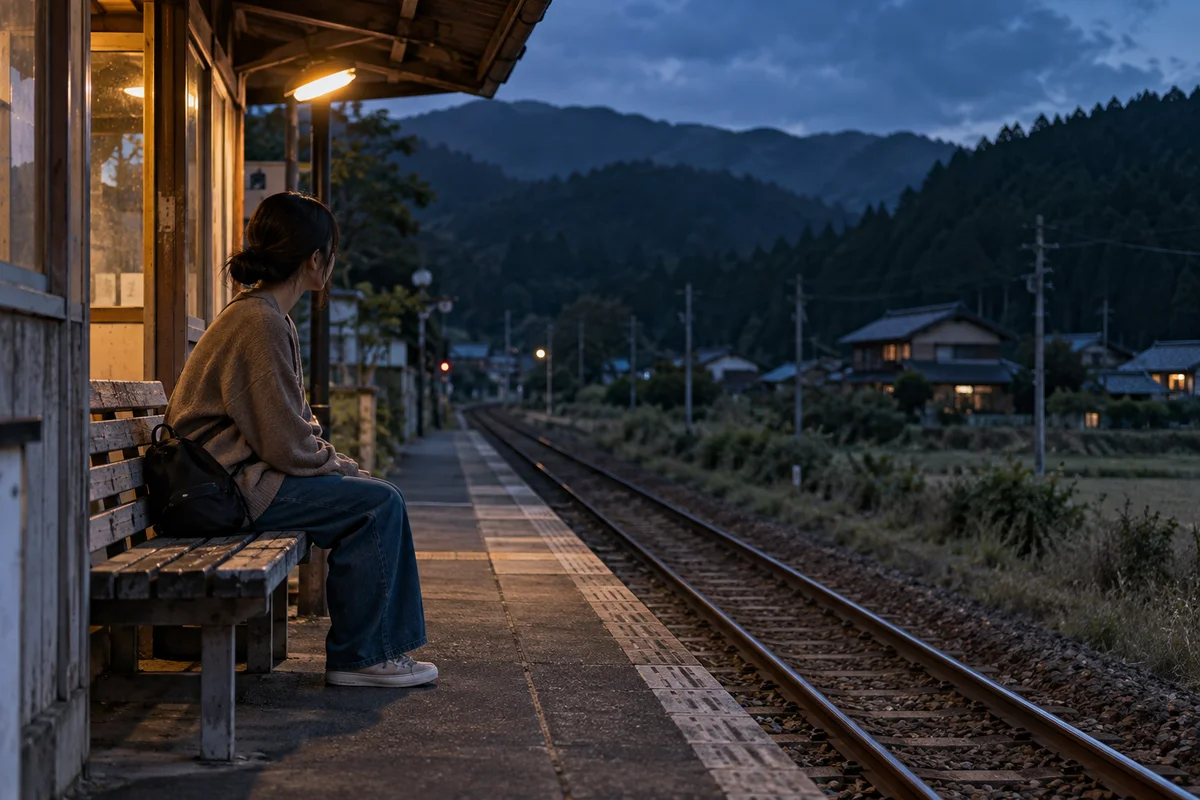
When friends back home start spending more time with partners, their changing availability can feel personal. An unanswered message lands harder when there is nobody else to call. It is easy to turn that into a story about being left behind.
Give yourself permission to name friendship and dating as separate needs. You can want a romantic relationship and also want someone to eat lunch with, complain about work to, or send an ordinary photo from your day. A future partner should not have to be the entire plan for ending your isolation.
Try making an old friendship easier to maintain with a specific invitation: "Could we have a short call on Sunday? I miss catching up." You can ask directly without pretending everything is fine. Then leave some room in your week for people whose routines overlap with yours now.
Advice to "join a club" is frustrating when the nearest suitable club is two trains away. Start with a journey you can afford in both money and energy, including the trip home. Your useful search area might cross town boundaries, or it might be smaller than a map makes it look.
Check your municipality's website or ask an international association about activities open to newcomers. Look for something you would enjoy even during a quiet first visit: a beginner sports session, a craft workshop, a volunteer activity, or a community language class. Availability varies, so ask about the schedule, language expectations, and whether beginners can join before going.
Aim for a reason to see someone again. A repeatable activity gives you something to talk about next time, even if the first conversation is brief. You do not need to leave the room with a new best friend.
Limited Japanese can make this tiring, but you can prepare for one small interaction. Have a translation ready for "I'm still learning Japanese. Could you show me?" Afterward, try a simple follow-up such as "Are you coming next week?" Fluency does not have to be the entry requirement for your social life.

If nearby options are limited, give yourself company between the outings. An online friend you talk with regularly can be part of everyday life, whether or not you ever share a postcode. A weekend trip does not have to carry all your social hopes.
SewaYou is a map-based friendship app for discovering people nearby and anywhere in the world. You can explore another city or country from home, build online friendships without travel plans, connect before a trip, and meet in person when you are nearby.
Make Japanese Friends On a Live World Map
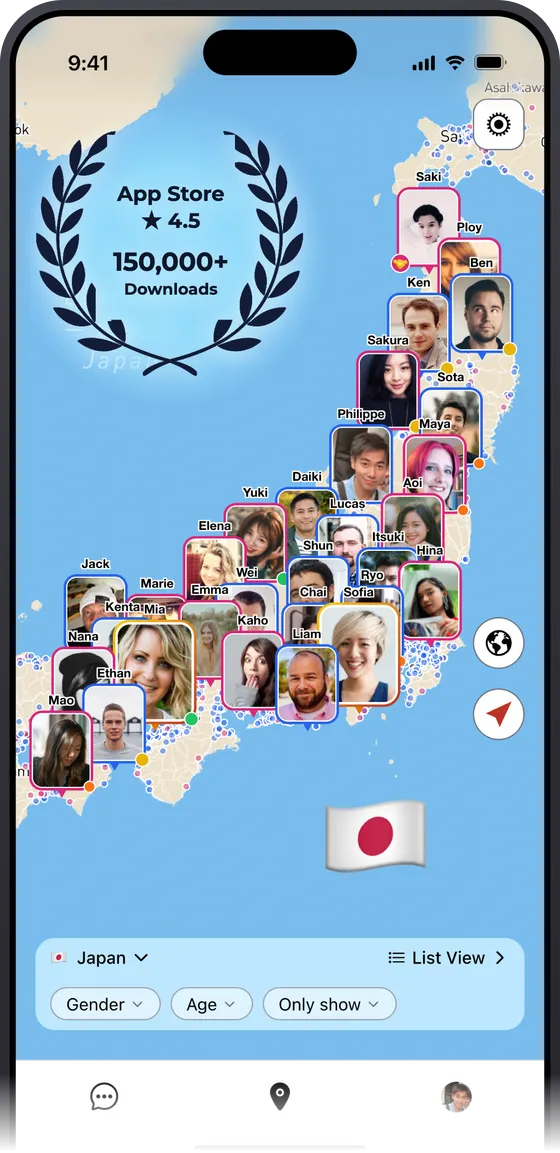
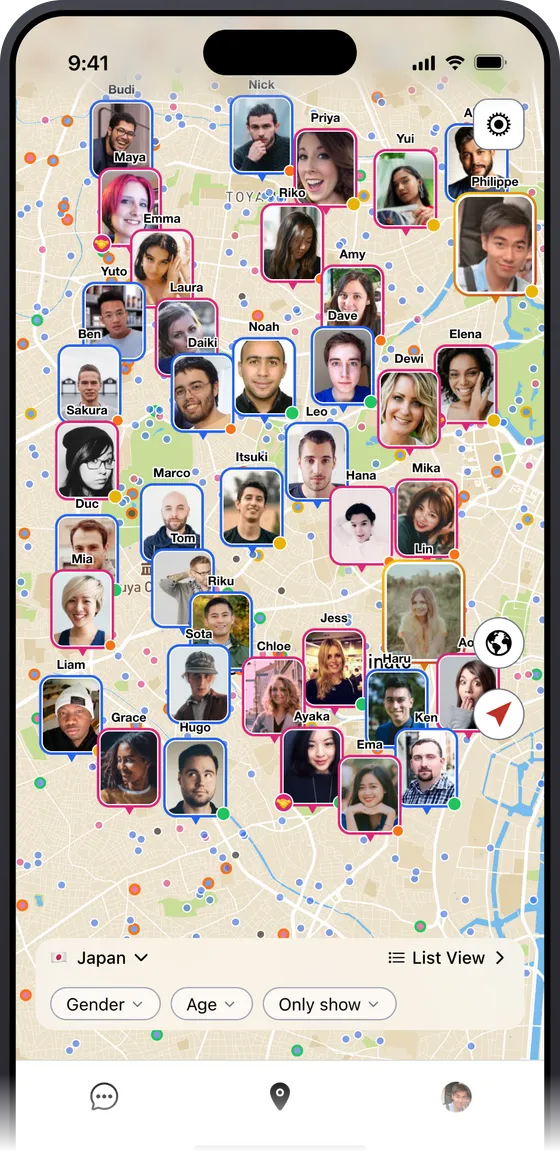
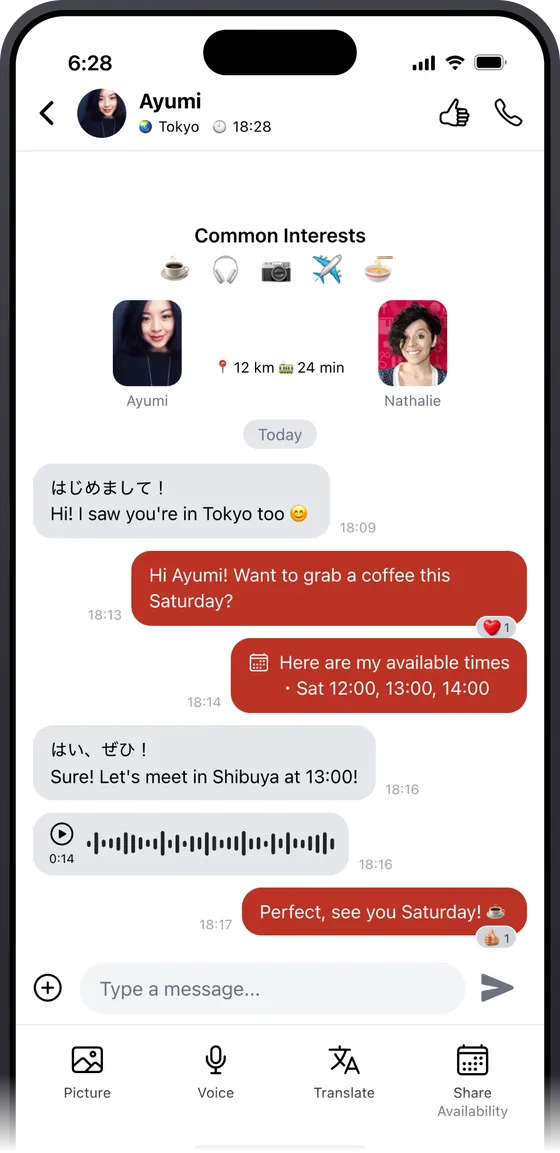


Be specific about the kind of connection you want. A profile could say, "Living in a small town in Japan, learning Japanese, and looking for friends to chat about films and everyday life." When you message someone, pick a shared interest from their profile and ask one easy question.
An app cannot promise that someone compatible lives down the road. If the local map is quiet, exploring farther away still has value. Look for a conversation you both want to continue, without making a future trip a condition of the friendship.
A lively holiday is useful information, but living somewhere includes the commute, rent, errands, and evenings when you are tired. If possible, revisit a candidate city on an ordinary weekday and explore an area you could realistically afford. A regional city or an internal transfer may be worth considering alongside a move to Tokyo.
Use an ordinary Tuesday as the test. Could you finish work, get to an activity you like, and return home comfortably? Would your likely work schedule leave time for those plans? Is there something you would want to attend regularly, beyond the places you enjoyed on holiday?
Compare the practical details before committing:
Check those last details with the appropriate employer contact, official service, or qualified adviser for your situation. Researching a move does not require resigning today. You can build a clearer picture while keeping the stability you need.
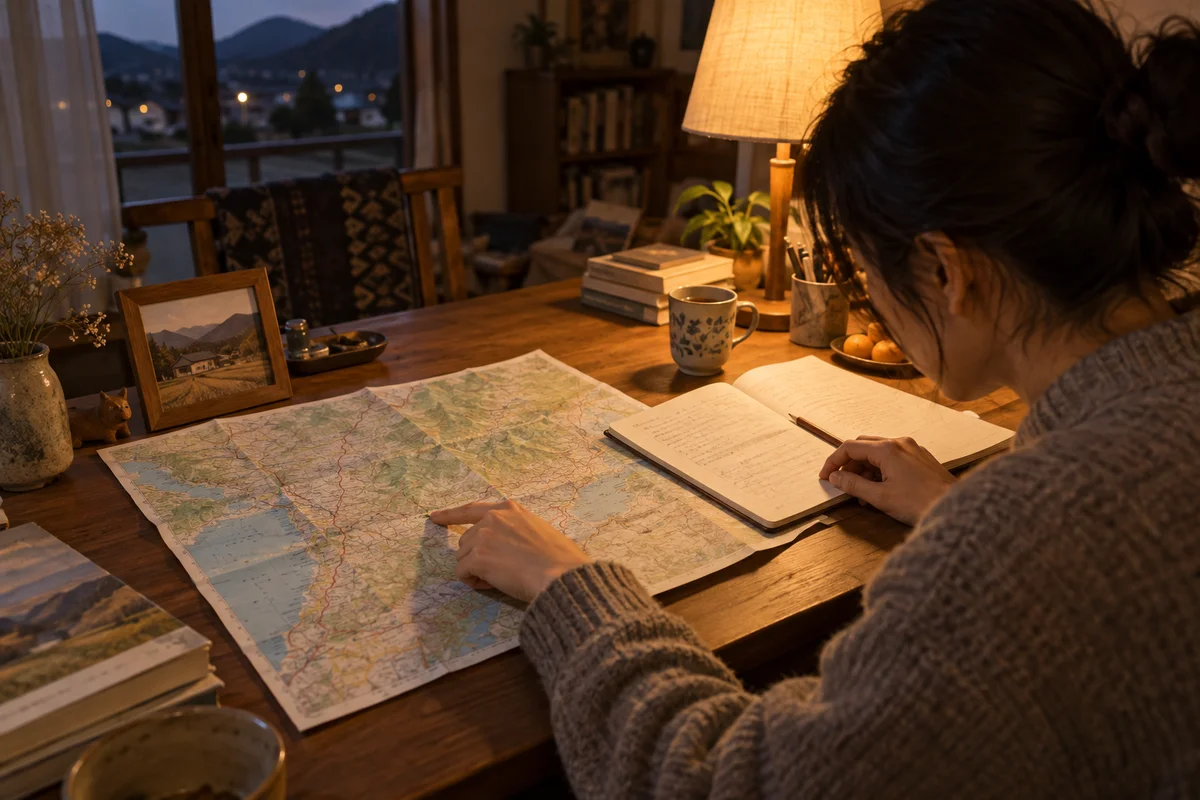
You could choose a manageable review date, perhaps a month from now, and use the time to try one recurring activity, reconnect with an old friend, and research one possible destination. That is a suggestion for gathering information, not a deadline for producing friends.
Notice whether your week feels more connected and whether the effort is sustainable. If you find people you want to keep seeing, great. If the options remain too limited, that tells you something about the fit between your life and the place.
You do not have to exhaust every club or become fluent before deciding to move. Belonging belongs in the decision, alongside salary, housing, and the work itself. Staying can be a good choice, and leaving can be a good choice too.
If loneliness is making everyday life hard to manage, reach out to someone you trust or a mental health professional while you work through the practical choices. You deserve support during the decision, not only after you have solved it.
For one small step today, download SewaYou and start a friendship conversation nearby or anywhere in the world. You can make your circle bigger while you decide where you want to live.