

You've been speaking Japanese for ten minutes. The conversation is flowing. You're proud of yourself. Then they say it.
「日本語、お上手ですね。」
And something in your chest collapses. You weren't trying to be impressive. You were trying to be invisible, just one more person ordering coffee, and now they've put a spotlight on you and named the exact thing you've been working two years to erase.
Or maybe you're on the other side of this. You're Japanese. You've studied English since middle school, you can read a research paper in it, and the second you have to actually open your mouth at a conference your tongue locks up. Because what if your accent makes them assume you don't know what you're talking about. What if they tilt their head and ask "where are you from?" with that smile that you read as "I caught you."
Both of those people are stuck on the same lie. The lie that the goal is to sound native, and that anything short of that is a failure that you should feel a little ashamed about.
It isn't. And the people you're trying to hide from are not who you think they are.

Here's what's actually happening when someone catches your accent and asks about it.
They're a little bored. You're a little interesting. That's it. That's the whole thing.
People who live in their hometown speak with their hometown accent and have lived their hometown life. You walk in with a different sound and a story they haven't heard. Of course they ask. They would ask another Japanese person who showed up in Tokyo with a thick Aomori accent. They would ask another American who showed up in Houston with a Brooklyn cadence. The asking has nothing to do with whether your language is good. It has to do with humans being story-collectors and you walking in carrying a fresh one.
Foreigners in Japan misread this constantly. You hear "どこから来たんですか?" and you assume the subtext is "you don't belong here." Almost never is that the subtext. The subtext is "please tell me something I don't already know about my own afternoon."
You are walking around with a free conversation starter glued to your tongue. Most Japanese people in their twenties and thirties almost never have a stranger walk up to them in a bar and ask a curious question about their life. You walk in and people ask you five.
That is not a tax. It's a gift you keep refusing.
Set this in stone before you go any further: there is no such thing as accent-free. Every native speaker has an accent. They just have an accent that's local to wherever they grew up, which means nobody notices it in that one specific place, and everybody notices it everywhere else.
A native English speaker from Glasgow walks into Houston and gets asked where they're from inside three sentences. A native Japanese speaker from Kagoshima walks into Sendai and gets the same treatment. The asking is not punishment for failing to be native. The asking is the inevitable result of accents existing.
So when you tell yourself "I'll feel okay about my Japanese once I sound native," what you've actually done is set a goal that no one alive has ever reached. Not even Japanese people. Not even the people you are trying to sound like. You have signed yourself up for a forever-failure.
The self-consciousness isn't going to go away by working harder on your pronunciation. It's going to go away by abandoning the wrong target.
Here's what kills conversations and kills friendships in Japan. Not the accent itself, but the panic flicker behind your eyes the moment someone notices it.
When you stiffen. When you switch to English because the other person used one English word and you took it as a verdict on your Japanese. When you stop opening your mouth in group settings because if you stay quiet, no one can hear the foreignness in your voice. When a cashier notices your accent, smiles, and asks where you're from, and you give a one-word answer because answering more means speaking more, and speaking more means more accent.
The accent was never the barrier. The retreat was.
The cashier who asked where you were from would have been delighted to hear "Lyon, in France. I came here three years ago for the food and somehow ended up working in Shibuya" and to ask two follow-up questions and to remember you next time you walked in. Instead she got "France" and a tight smile and a glance at the floor. You didn't fail at Japanese. You failed at the conversation. You treated the accent as a verdict instead of a doorway.
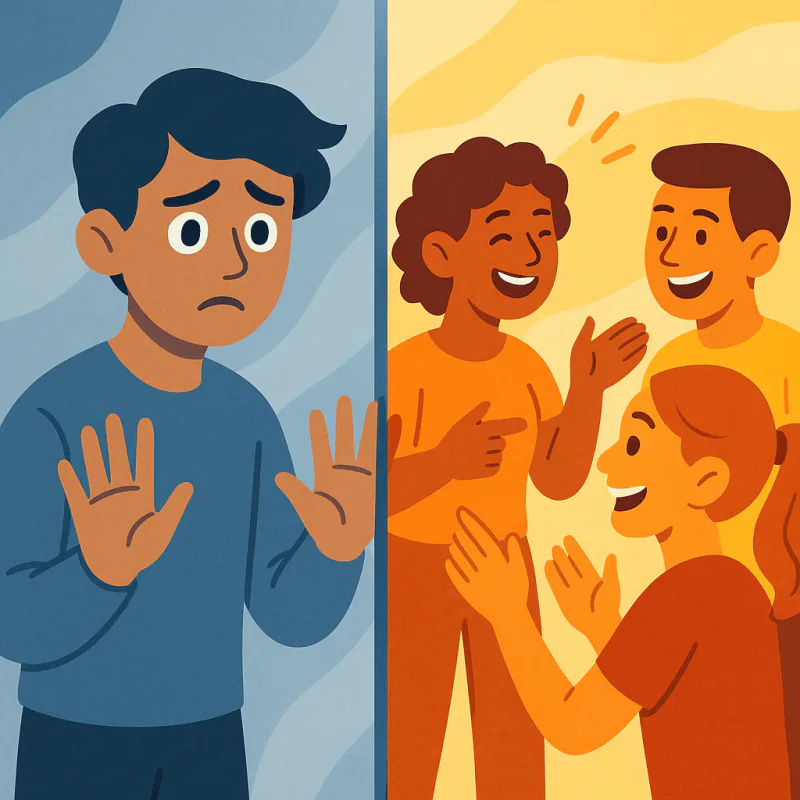
There's a particular thing that happens to foreigners in Japan around the third or fourth year, and it has almost nothing to do with their grammar improving. They just get tired of flinching.
They start answering "どこから来たんですか?" with the long version. They start letting the accent breathe. They tell the small specific stories about how they got here, what their hometown is known for, what made them pick this country instead of Korea or Taiwan or Vietnam. And something flips. The same accent that used to make them want to disappear now makes them the most memorable person in the room.
It works the other way too. Japanese people who stop apologizing for their English and just say what they're trying to say, accent and all, are the ones who actually make foreign friends. The ones still saying "sorry, my English is poor" before every sentence are the ones still alone after a year of conversations.
Because here's the part that the self-conscious version of you doesn't believe: nobody is tracking your accent in the moment. They're tracking whether talking to you was fun. And nothing kills the fun faster than someone signaling, with their entire posture, that they wish they were somewhere else, in a different body, with a different voice.
The accent isn't the bug. The shame is.
Pick one place where you usually retreat. The cafe where you order in your most rehearsed Japanese and bolt before the staff can ask anything follow-up. The colleague who once asked where you grew up and got your single-sentence answer. The tutor who tries to chat for the first two minutes and keeps getting redirected back to vocabulary drills.
Stay sixty seconds longer. Let the accent be there. Give the longer version.
You'll notice two things. Nobody recoils from the accent. They lean in. And you'll feel weirdly lighter at the end of the day, not because you spoke better Japanese, but because you didn't spend the day editing yourself in real time.

The flinching usually disappears not at work, not in a language classroom, but in quiet conversations with people who are not grading you. A peer. A weekend friend. Someone who just wants to know what your week looked like. Those are the people who turn your accent from a confession into a flavor.
Make Japanese Friends On a Live World Map
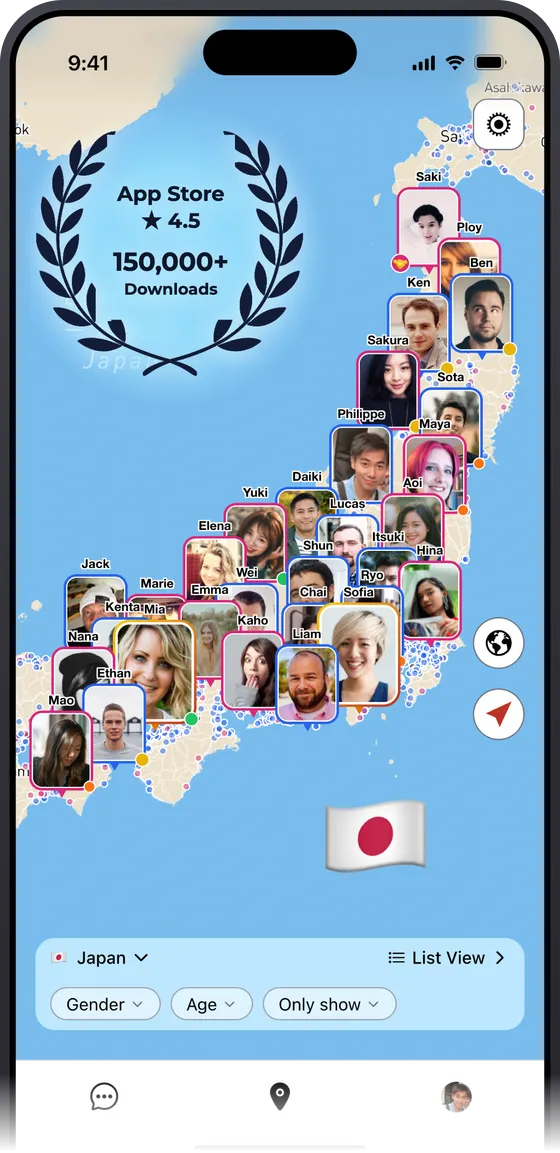
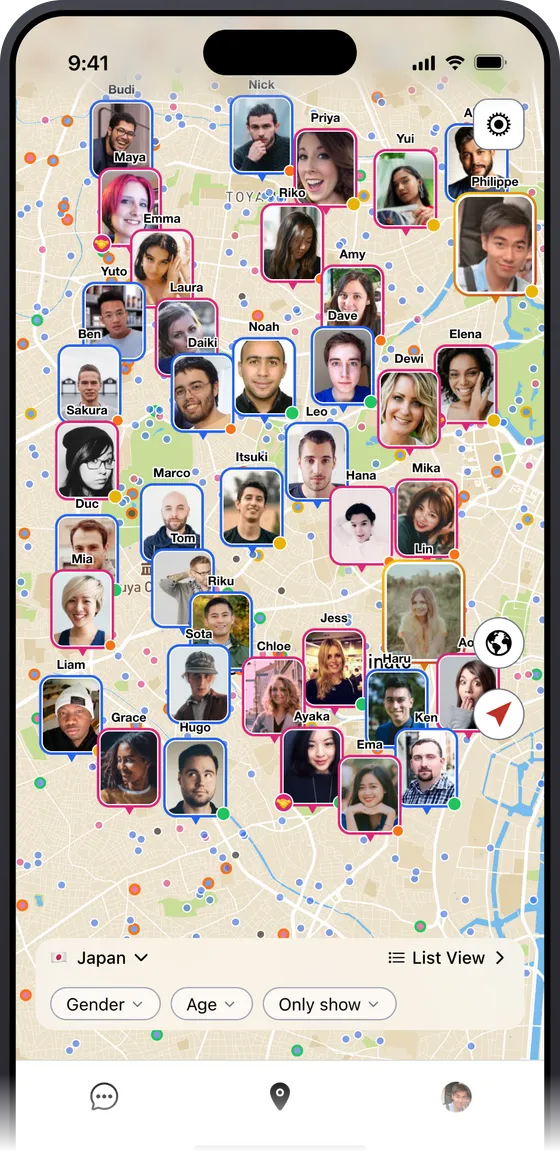
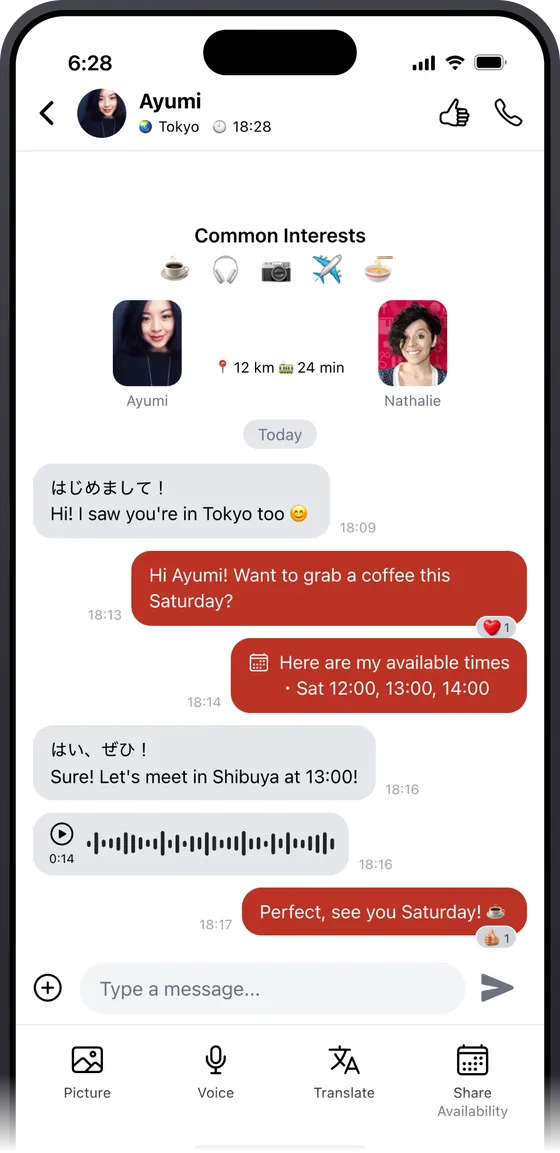


SewaYou is a map-based app built for finding exactly that kind of person. People near you who want to actually meet up and talk, in whatever language you've got, accent included. Nobody is grading anyone. Nobody is auditioning to sound native. You show up, order coffee in whatever Japanese or English you have, and let the accent be the most interesting thing about you for a change.
The people who learn to speak comfortably in Japan are not the ones who erased their accent. They're the ones who stopped treating it as something to hide.


