

I meet this person constantly in Tokyo. They have lived in Japan for two years. They work a full-time job at a Japanese company. And their Japanese is, in their own words, embarrassing.
The strange part is that they are not lazy. They study every day. They keep a kanji streak, they work through a grammar guide, they are thinking about signing up for late-night online classes because it is the only time they have left.
And still, when a coworker asks them a real question, they freeze.
The office taught you to survive, not to talk.

Here is the thing nobody says out loud. A full-time worker in Japan spends all day inside the exact environment that should make them fluent. Japanese voices everywhere. Meetings, emails, the konbini clerk, the train announcements. On paper, it is the perfect language classroom.
So why does the level barely move?
Because none of that input is for you. The meeting is a meeting. The email is a task. The train announcement is noise. You are not inside the language. You are inside a job, and the job only needs you to understand enough to nod, repeat the same five phrases, and get back to your desk.
Immersion is passive until someone makes you speak.

Let me be fair. The kanji app is not bad. The grammar guide is fine. They are good at what they do, which is feeding you input and reviewing it.
The problem is that input alone has a ceiling, and adults hit it fast. You can recognize a thousand kanji and still not produce a sentence in real time. Recognition and production are different machines in your brain, and you can only train the second one by talking.
A full-time job is the perfect excuse to never talk. You are tired. You are busy. You are embarrassed. So you do one more flashcard review, because it feels productive and it costs nothing socially.
Apps give you input, never a partner.
This is the part that stings. People assume that working in a Japanese office means free speaking practice all day. It is the opposite.
Coworkers are not conversation partners. They have a job to do, and slowing down to simple Japanese with you makes their job harder. So they do the kind thing. They switch to English if they can, or they keep it to short, transactional Japanese. They nod. They do not correct you, because correcting you is awkward and nobody pays them to be your tutor.
You can spend two years in that office and have almost no real conversation inside it. The immersion you thought you had was a support role in someone else's show.
Coworkers are not conversation partners.
The people I have seen turn it around all did the same thing. They stopped adding study hours and added a person.
Not a tutor on a stopwatch. Not another app. A real, low-stakes conversation with a Japanese person who is not their boss, not their colleague, and not evaluating them. Once or twice a week. Coffee, a walk, a chat about nothing important.
The magic is that low-stakes conversation is where the frozen part of your brain finally lets go. Nobody grades you. Nobody is waiting for you to finish so they can get back to work. You stumble, you laugh, the other person waits, and somewhere around the second month the sentences start coming out on their own.
One real conversation beats ten flashcard sessions.

The mistake most of us make is the order. We tell ourselves we will talk to people once our Japanese is good enough. So we grind alone for another year, and the year passes, and the Japanese does not move, because the thing we were waiting for never had a chance to happen.
Flip it. Find the person first. The language will catch up, because it finally has a reason to.
That is exactly what SewaYou is for. It is a map-based app that shows you Japanese people near you who actually want to meet and talk with someone from another country. Both sides opted in. No classroom, no grading, no 11pm video call with a stranger behind a paywall.
Make Japanese Friends On a Live World Map
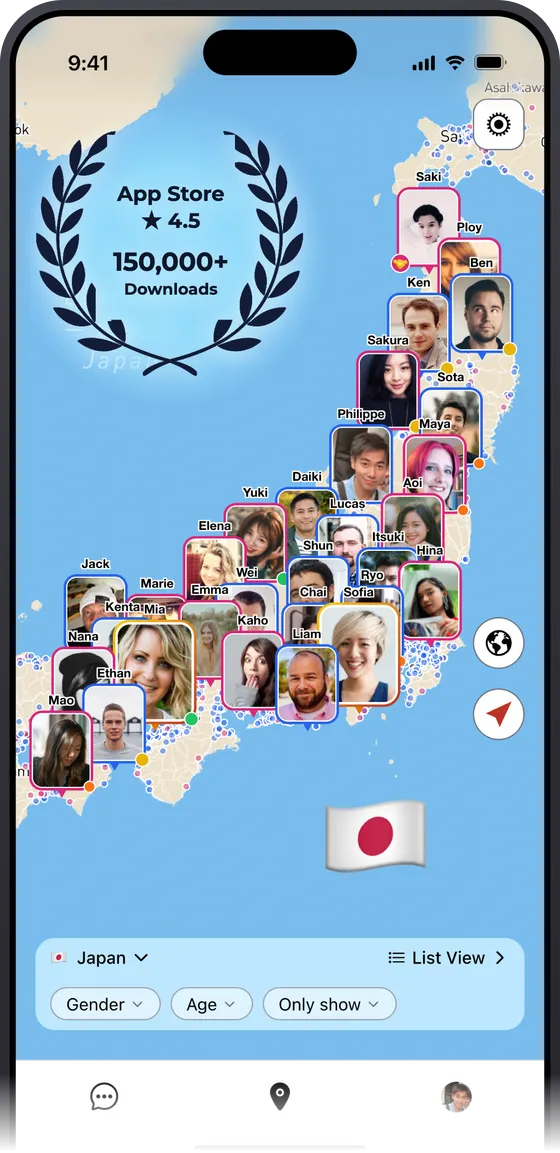
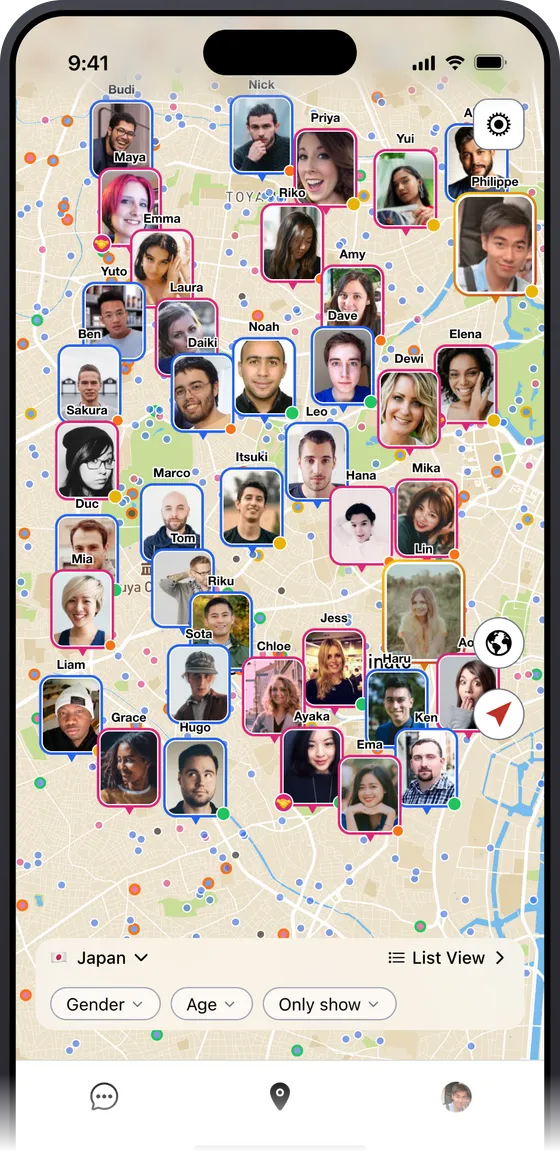
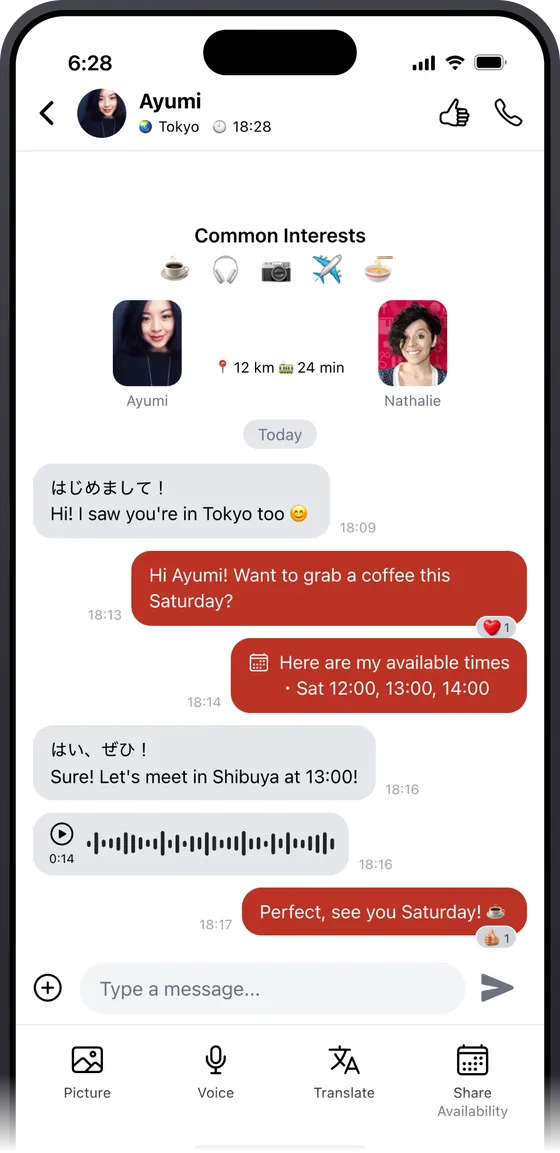


You open it, you see who is around, you send a message, you meet for coffee. It turns the hardest part of living in Japan, which is walking up to a stranger, into the easiest part, which is a pinned person on a map who already wants to talk to you.

Find the person first. The Japanese will follow.
You already did the hard part. You moved here, you got the job, you survived two years. The next step is not another study method. It is a conversation that finally has no stakes, no manager, and no test at the end.
SewaYou puts that conversation a few blocks away. Open it, and go meet the person your Japanese has been waiting for.


