

A guy I met in Shinjuku last spring told me he had been learning Japanese for two years and French for six months and his brain had stopped working correctly. He would try to order a coffee in Japanese and the word for "milk" would come out in French. He would write a French paragraph for class and a Japanese particle would land in the middle of it like a typo. He was making progress in both, he said, but the two languages refused to sit in the same brain.
He thought he was breaking something. He was not. He was experiencing the most predictable thing in language learning, the thing nobody mentions until you are already inside it.
Two unfinished languages, one shelf.
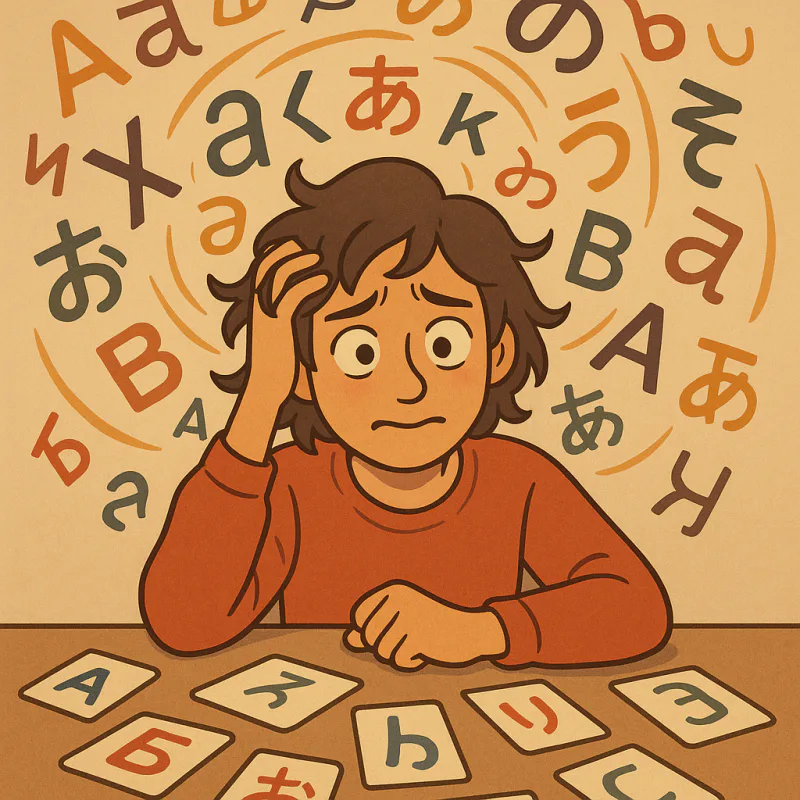
When you are learning a second language as an adult and your first language is solid, your brain has two clear shelves. The new words go on the new shelf. There is no leak.
The moment you add a third language, the system stops working. Your brain has not built a separate shelf for the second new language yet, so it borrows from the closest match. If your Japanese is at N4 and you start Spanish, your brain stores "I do not know" as a single slot. When you reach for it in Japanese, sometimes Spanish answers the phone. This is not because your brain is broken. It is because your brain is being efficient about a shelf that does not exist yet.
The blender phase ends. It usually takes about a year per language to feel like it has its own apartment in your head instead of crashing on the other one's couch. The mistake most learners make is assuming the blending is a sign they should quit one of the languages. It is actually a sign that both are being absorbed, just not separately yet.
Here is the part nobody tells you. The thing where one language feels more comfortable for speaking and the other for reading. Where one comes out faster in arguments and the other in jokes. That is not a malfunction. That is what a working bilingual brain looks like.
The version of fluency people imagine is one where you flip a switch and both languages feel identical. The actual version is where each language activates a slightly different version of you. The Japanese version is more careful and uses fewer adjectives. The Spanish version is louder and interrupts more. The English version is somewhere in between, depending on who you are talking to. Three personalities, three languages, all sharing one skull.
If you only had one language doing this, you would not notice. With two new ones, you notice constantly, because the contrast is in real time. You are not breaking anything. You are watching your own brain build a second resident.
Three personalities in one skull.
Here is the actual problem with simultaneous language learning, and it is not the thing most learners think it is.
The blending gets worse when your languages do not have faces attached to them. If your Japanese exists only inside an app and your Spanish exists only inside a different app, your brain has no anchor for either. It just has two piles of vocabulary that look the same from a neurological distance. The flashcards from both apps have the same color, the same format, the same tap-and-swipe rhythm. Your brain stores them in the same bin.
The fix is not to study harder or build elaborate systems for separating them. The fix is to attach each language to a real human you actually see. Once your Japanese has a face, a friend you meet for coffee in Shibuya, a coworker you eat lunch with, your brain starts filing Japanese under "Yuki" instead of under "vocabulary." The Spanish does the same with a different face. The blender stops blending because the languages are no longer interchangeable abstractions. They are linked to specific people doing specific things in specific places.
This is also why pure app-based learners hit the blender phase worst. They have all the vocabulary and none of the anchors. Their brain has no reason to keep the languages apart because nothing in their actual life depends on which one comes out.
No face, no anchor.
If you are in the blender phase right now, the fix is not to drop one language. It is to make at least one of them physical.
For Japanese, that means finding one person in your city who you see in person at least twice a month. Not a tutor on Zoom. Not a chat app. A human you walk to a cafe with. Within about a month, your Japanese will start to feel different from your other languages, because it will be linked to a place, a face, and a set of jokes that only happens with this one person.
The version of you that has this anchor stops mixing up words mid-sentence. Not because the vocabulary got better, but because your brain has a reason to keep the two languages separate now. One of them belongs to a person. The other one does not yet. The brain prioritizes accordingly.
Languages need bodies attached.
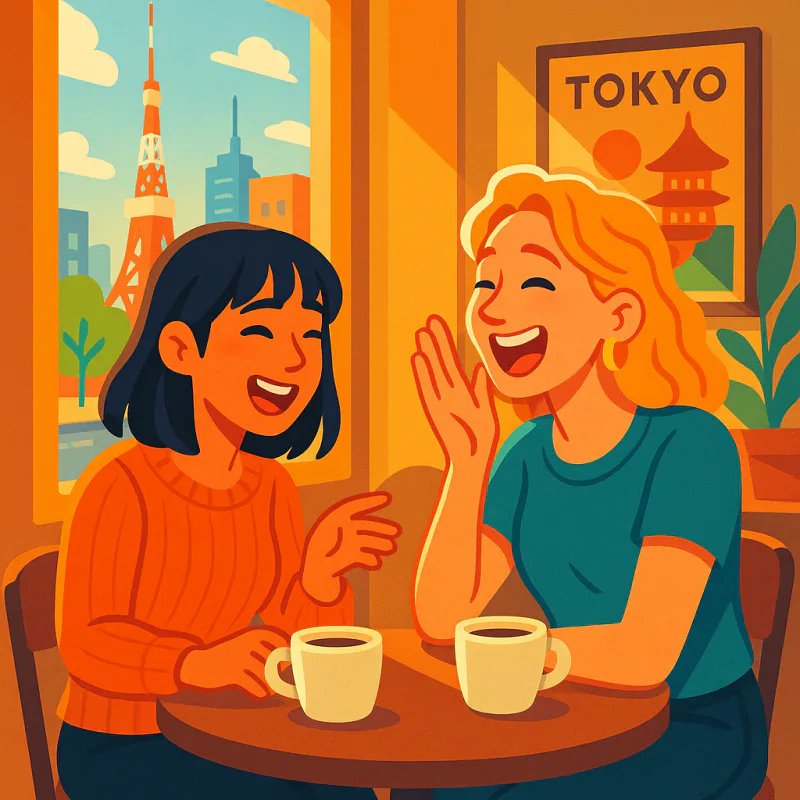
The last thing worth saying. The cross-contamination phase feels embarrassing because every mix-up feels like a small public failure. It is not. The people you talk to in either language do not care, and most of them think it is funny. The Japanese friend whose name you accidentally answered in Spanish remembers the moment as charming, not as evidence that you are bad at languages.
The only person spiraling on the mix-ups is you, alone, after the conversation ended. That spiral is also the blender phase. It ends when you stop treating each mix-up like a verdict and start treating it like a brain in the middle of rewiring itself.
You are not broken. You are halfway through.
The blender means the brain works.

Make Japanese Friends On a Live World Map
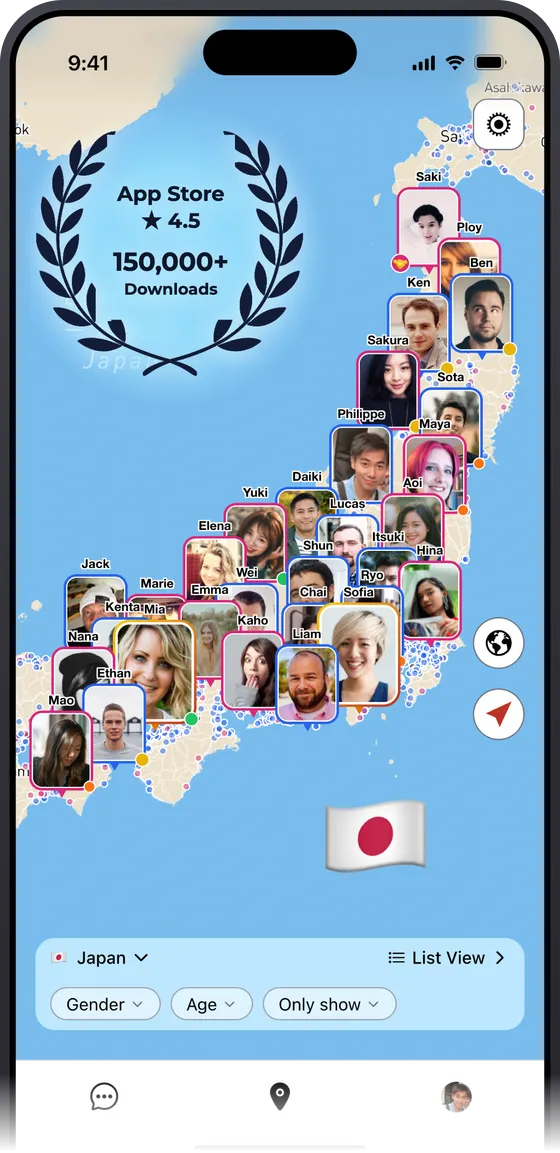
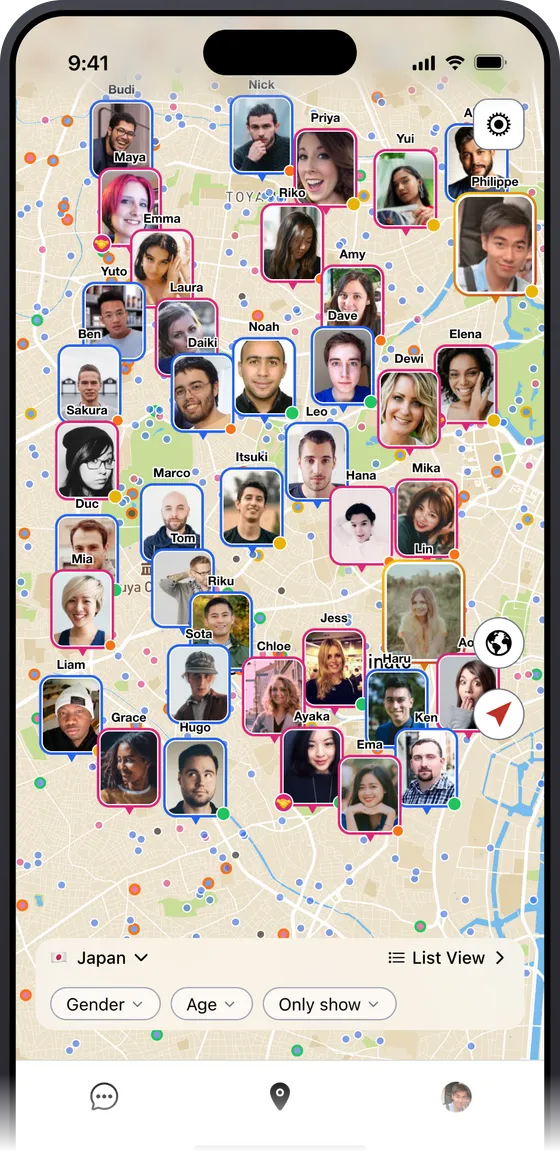
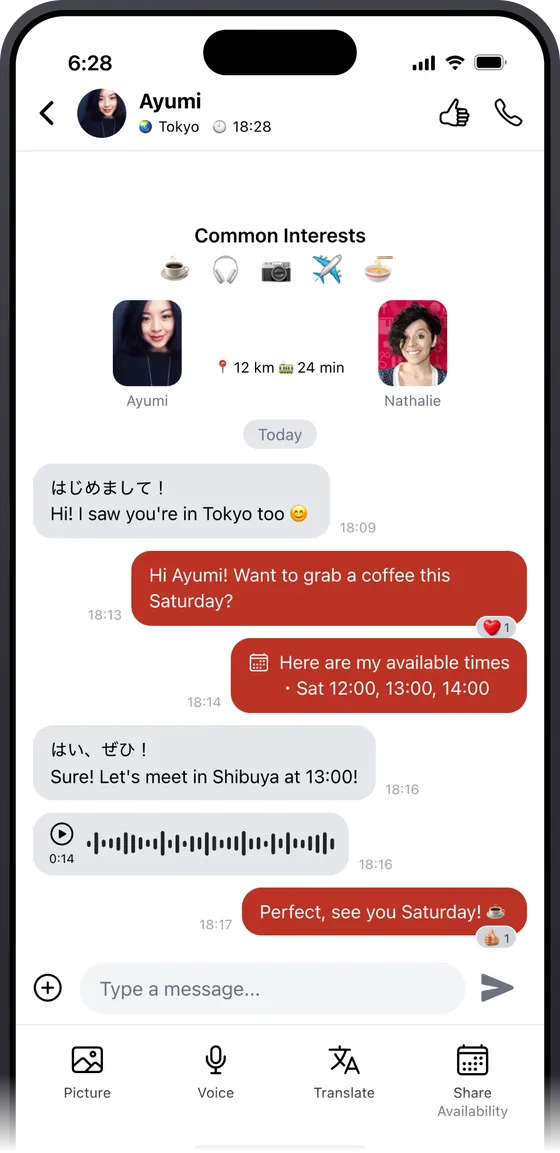


SewaYou is a map-based app for finding Japanese people near you who want to meet in person. The fastest way to get Japanese out of the flashcard pile and into a real human shape is to put a face on it. One friend in your neighborhood, two coffees a month, and your brain stops blending Japanese with whatever else you are learning. The languages start to feel like separate people because they finally are.


