

A man in his forties told me last spring that he had spent eight months trying to learn Japanese before anything clicked. He started with Duolingo. He read two introductory textbooks. He bought a kanji app, a podcast subscription, a Pimsleur course. He printed flashcards. He watched the channel everybody recommends.
Eight months in, he could greet a barista. He could not order anything else.
What finally moved him was not a better method. It was a small online group of four people who agreed to meet every Tuesday and walk through Genki together. The first session was awkward. The fourth session was a habit. By the tenth, he had learned more than in the previous eight months of app-hopping combined.
The methods were never the problem.
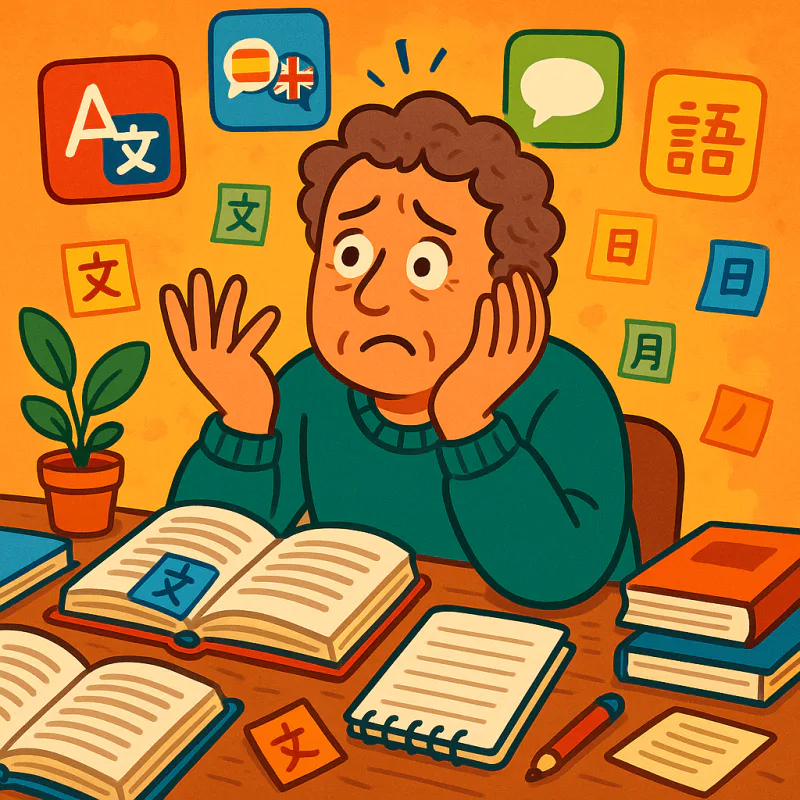
Almost every adult who starts Japanese goes through some version of the same loop in the first year. You begin with the most-recommended app. You hit the wall around month two. You assume the method is wrong, not the situation. You switch.
The new app feels like progress for three weeks because it is new. By week four, you are at the same wall, and you switch again. By month eight you have spent more hours researching study methods than studying. The shelf has six textbooks on it. The phone has nine apps. The actual Japanese in your head is roughly what someone gets from a serious two-month sprint.
This is not a discipline failure. The apps are well made and the textbooks are fine. The problem is that none of them solve the thing that actually breaks adult learners. They all assume you will keep showing up. Adults rarely keep showing up alone.
There is a story people tell themselves about adult language learning that goes like this. Children pick up languages because their brains are wired for it. Adults struggle because that wiring is gone. So you need the right method to compensate.
Some of that is true. Most of it is not. The bigger gap between a child learner and an adult learner is not neural plasticity. It is environment. A child learning a second language is in it for forty hours a week, surrounded by other kids who care whether the child speaks. An adult learning Japanese in their kitchen at 9pm is in it for forty minutes, alone, with no audience and no consequences.
The brain change adults complain about is mostly a stand-in for an environment they do not have. You are not bad at Japanese because you turned thirty. You are bad at Japanese because you are studying it the way nobody actually learns a language, which is alone, on a screen, with nobody waiting for you on the other side of the session.
Adults need a witness.

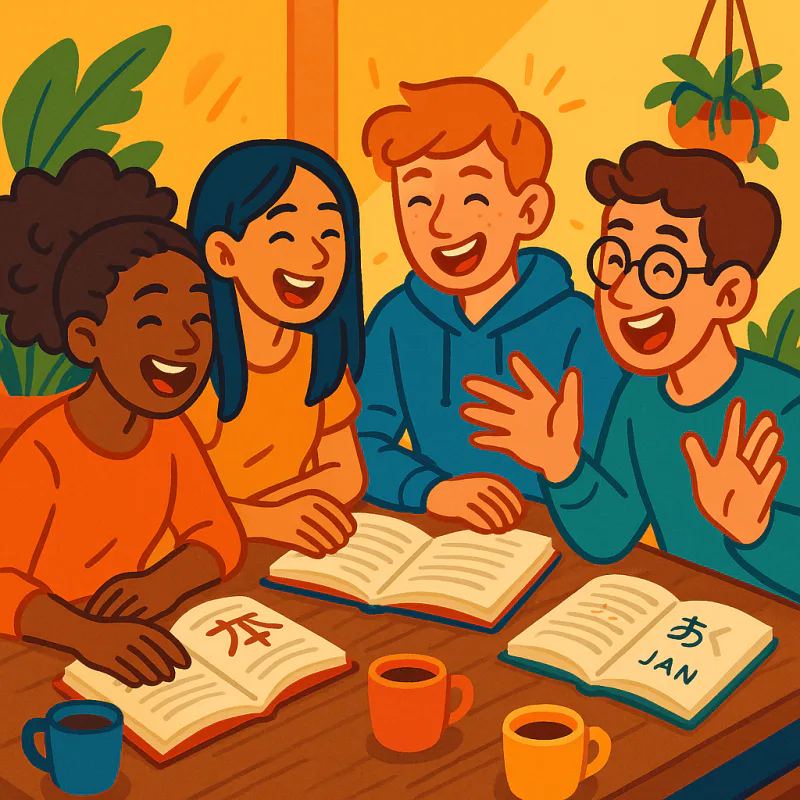
When adult learners describe their breakthrough moment, it almost never sounds like a method change. It sounds like a social one. They joined a weekly group. They found a study buddy on Discord. They started meeting one Japanese friend in person every Sunday. The Japanese improved as a side effect of the schedule, not the other way around.
Here is what the group actually does, and it is not what most people think. It does not teach better grammar. The grammar in Genki is the same grammar in Genki whether you read it alone or with three other people. What changes is everything around the grammar.
The group sets a deadline you cannot quietly miss. It gives you four people who will notice if you skip a chapter. It surfaces the questions you would not have known to ask, because someone else in the group asks them first. It makes the language a thing you do with people, not a thing you do at people. By month three, you stop thinking of Japanese as homework and start thinking of it as a standing appointment, and the standing appointment is what carries you past the wall that broke the previous eight months.
Consistency beats novelty every time.
If you are studying alone, your effective study schedule is whatever you can sustain on willpower. For most adults this is around two to four hours a week, with frequent gaps. The gaps are the killer. Each gap takes a tax on what you knew before it, and the bigger the gap the bigger the tax.
Add one person who is expecting you, and the math shifts. The two to four hours stay roughly the same, but the gaps shrink, because canceling on a person costs more than canceling on yourself. Your effective study time over a year doubles, not because you suddenly developed discipline, but because you outsourced the discipline to a relationship.
This is the thing the apps cannot give you. They can remind you. They can guilt-trip you with a streak. They cannot be disappointed in you, and disappointment from a real human is the most reliable engine adult learners have. Streaks break. Friends remember.
One person changes the math.
The conventional path is method first, people later. You pick the right app, you grind alone for a year, and then once you are intermediate you finally try to find conversation partners. By that point most of the cohort has already quit, because the year alone was the brutal part and most adults do not survive it.
The order that actually works is closer to the opposite. Find one or two people first. Pick a method second. The method does not need to be optimal. It needs to be something you can do together for an hour a week without it falling apart. Even a mediocre textbook done with a friend beats a perfect app done alone, because the textbook gets opened every Tuesday and the app does not.
This is the part where people object that they cannot find anyone in their city, or that their schedule is impossible, or that they are too embarrassed at their level. None of these are real. There is always someone at your level on the internet. There is almost always someone in your city if you live in any city of more than a few hundred thousand people. The embarrassment evaporates in the first session, because the other person is also embarrassed and you are both embarrassed at the same things.
The hard part is admitting that you are looking for a person, not a method. Most adults will say it the other way around for an entire year before giving up.
If you are nine months in and still spinning between apps, the warning sign is not that you have not found the right one. It is that you are still alone. The next app will work the same way the last one did, which is for three weeks. The thing that has not been tried is the part of language learning that requires another human, and that is also the part that runs the engine for everyone who actually gets there.
You do not need a tutor. You do not need a class. You need one regular person who is doing something similar, ideally in your city, ideally in person, ideally for the next six months. Find that person and the rest of the path opens up. Skip that person and you will be writing the same post about your tenth app next spring.
Stop hunting for the perfect app.

Make Japanese Friends On a Live World Map
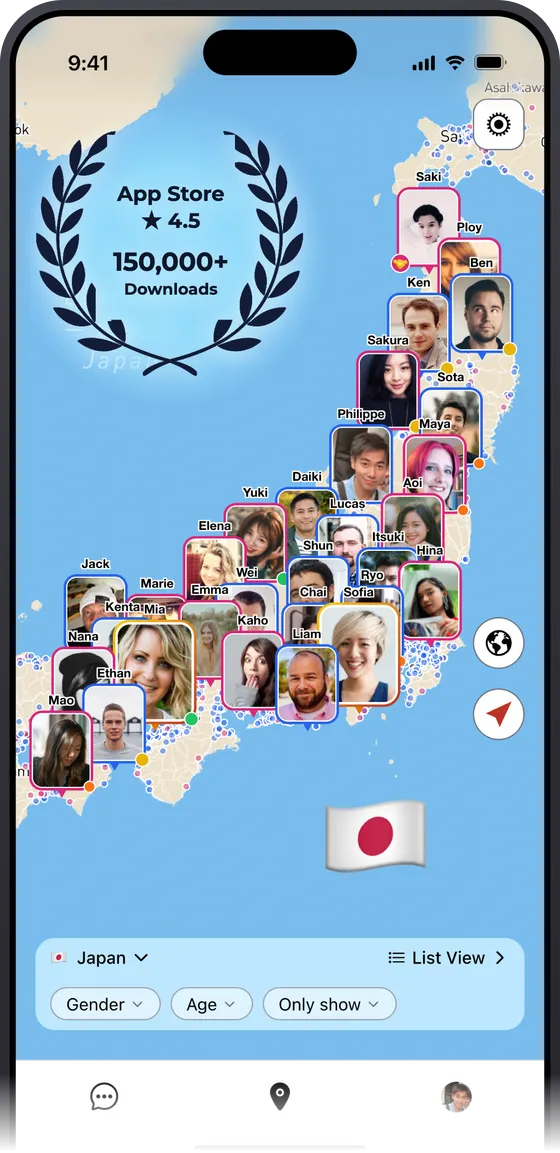
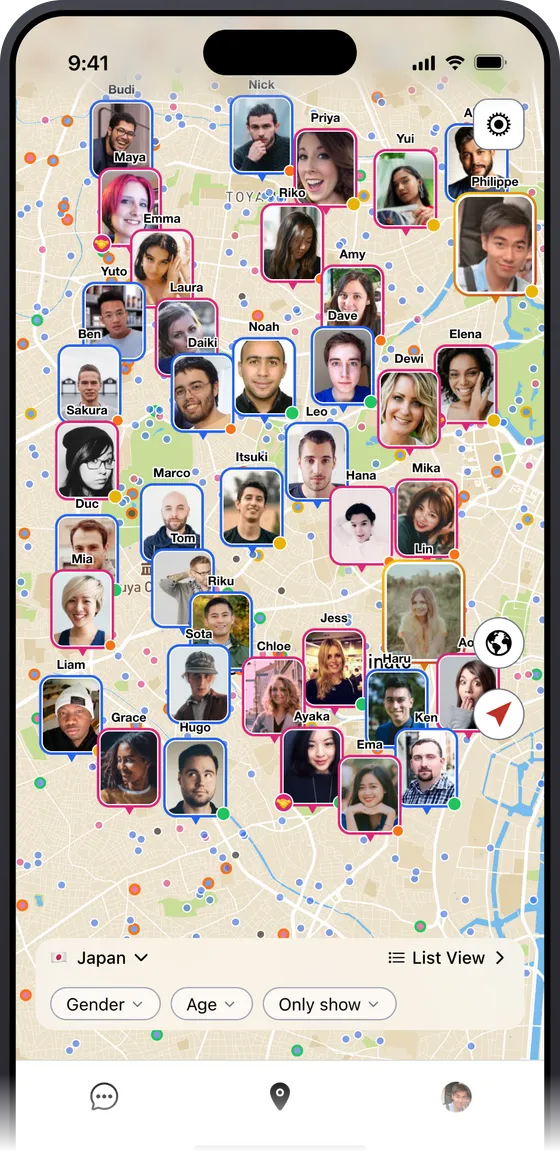
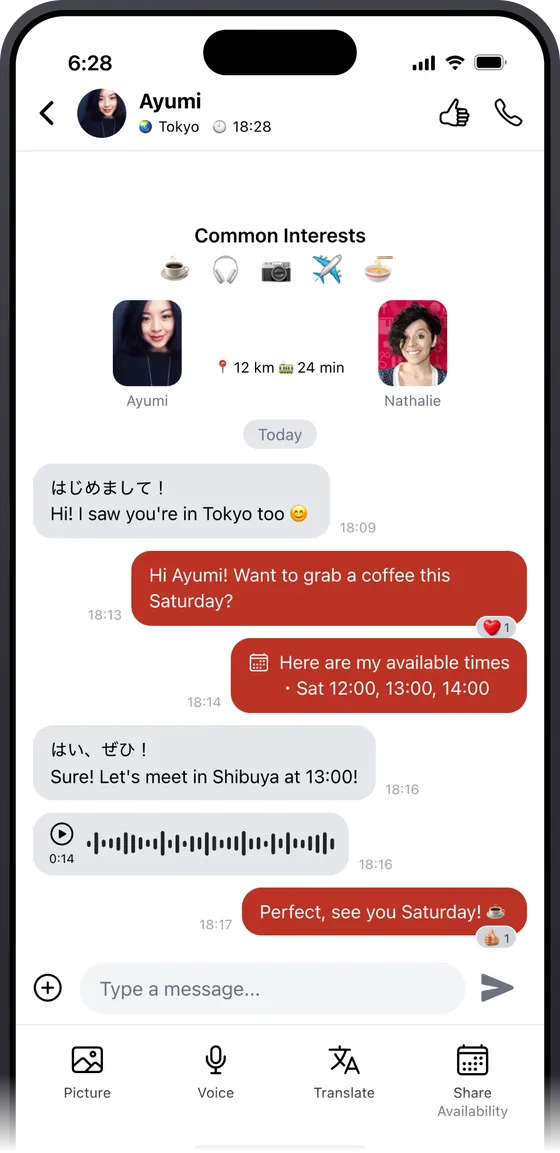


SewaYou is a map-based app for finding locals near you who are genuinely open to meeting in person. Japanese people who want a foreign friend, foreigners who want a local one, both opting in upfront. Not another flashcard app. Not another tutor on a stopwatch. A real person in your city who can be the standing Tuesday on your calendar, the reason your Japanese stops being homework and starts being something you actually use. Find the person first. The method will follow.


