
You finished training. You got placed on a real team. You are fast, you are learning a subject you never studied, and you are doing it in your second or third language.
And yet the person assigned to guide you seems to get colder every week. Questions annoy him. Answers you found yourself annoy him more. Nothing gets approved until it matches his version word for word.
Then a kind coworker leans over to help you with something small, like a jammed printer, and the temperature at your desk drops to zero for the rest of the day.
If you have ever ended up hiding in a bathroom stall because going back to your seat felt impossible, this is for you.
Many Japanese companies pair each new hire with one specific senior employee who guides them through the first year. In my experience, that pairing often comes with an unspoken sense of ownership. Your progress is seen, by him and sometimes by his own boss, as a reflection of him.
So when someone else steps in, it can land as a quiet verdict: he is not doing his job. When you look something up instead of asking, it can feel like being bypassed. When you ask too much, it feels like work piling up. You cannot win a game with no rules, and that is often exactly the situation you are in.
None of this is about your Japanese level or your intelligence. It is about one person's pride being tangled up in your learning curve.

It is worth knowing why someone behaves badly. It is not worth using that knowledge to excuse everything.
Strict feedback is normal. Being belittled in front of the team, told off for receiving help, and then frozen out with silence is something else. Japan's labor law requires employers to take measures against power harassment, including setting up a place where employees can raise it. That obligation has applied to large companies since 2020 and to smaller ones since 2022.
You do not need to decide today whether to use any of that. But you can start keeping a quiet record. Date, what was said, who was nearby. Keep it on your own phone or in a notebook at home, not on a company laptop. Write it down while it is fresh. If things get better, you throw it away. If they don't, you are not starting from nothing.
If you are unsure whether your company's internal channel is safe, prefectural labor bureaus also run free labor consultation corners where you can ask questions confidentially.

While the bigger question gets sorted out, a few small habits can take some heat out of daily life. They are not a cure for someone else's behavior. They just remove easy ammunition.
If he still punishes you after you have done all of this, that tells you something important. The problem was never your approach.
The coworker who keeps stepping in is a gift. He is also taking a risk every time he ignores the instruction to leave you alone.
Thank him properly, and be honest with him about what is happening. Ask whether he would be comfortable confirming what he has seen if you ever talk to HR or a manager. Don't let him become your only lifeline, though. One kind person can be moved to another team, get tired, or get pressured into backing off.
Look for a second and third person. Another senior on the team, someone from your training cohort, a manager one level up. You are not building a case against anyone. You are making sure your whole working day doesn't depend on the mood of the person sitting next to you.
Here is the part people underestimate. When you are new in Japan, the office often is your entire social life. The same building holds your income, your visa sponsor, your daily conversations and your sense of whether you are doing okay.
So when one person at work turns cold, it doesn't feel like a bad coworker. It feels like the whole world has turned against you. That is how a jammed printer ends with tears in a bathroom stall.
The fix is not only at work. It is having people outside it. Friends who can hear the story on a Friday night and say "no, that is not normal" without needing to protect anyone. People who knew you before this job, or who have nothing to do with it at all.

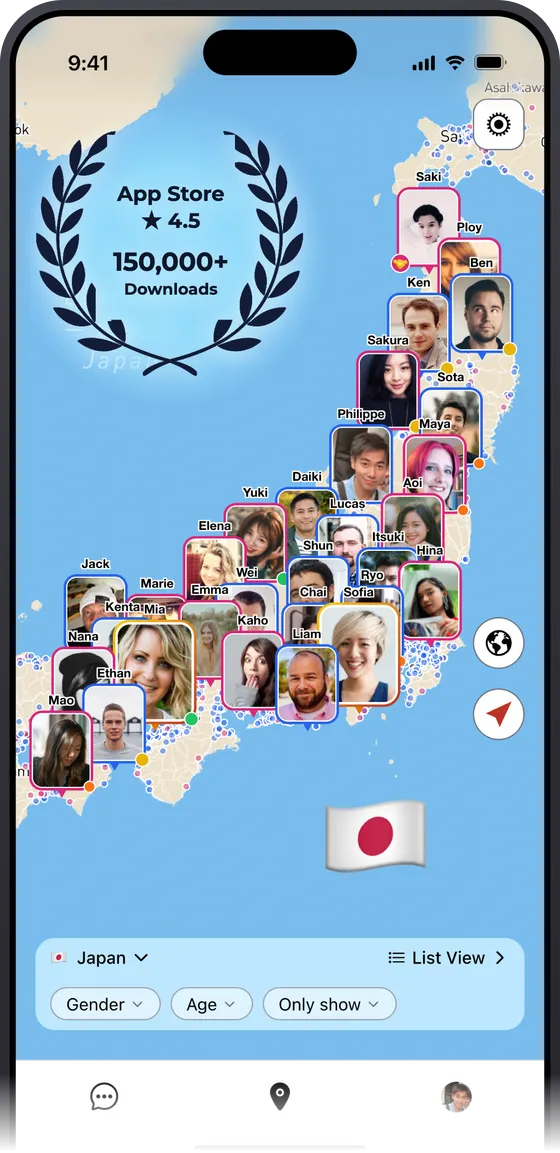
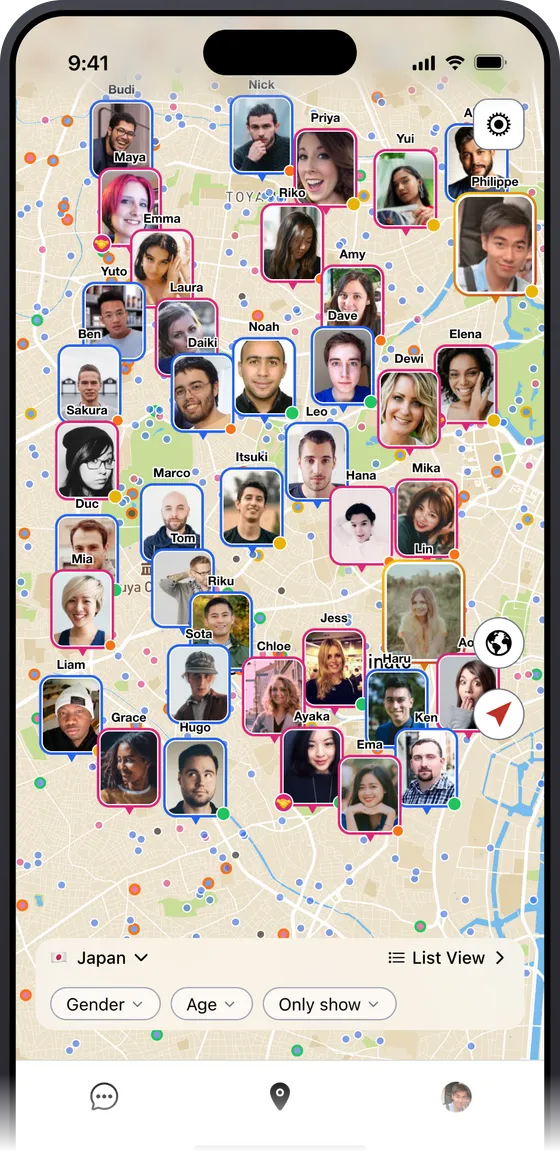
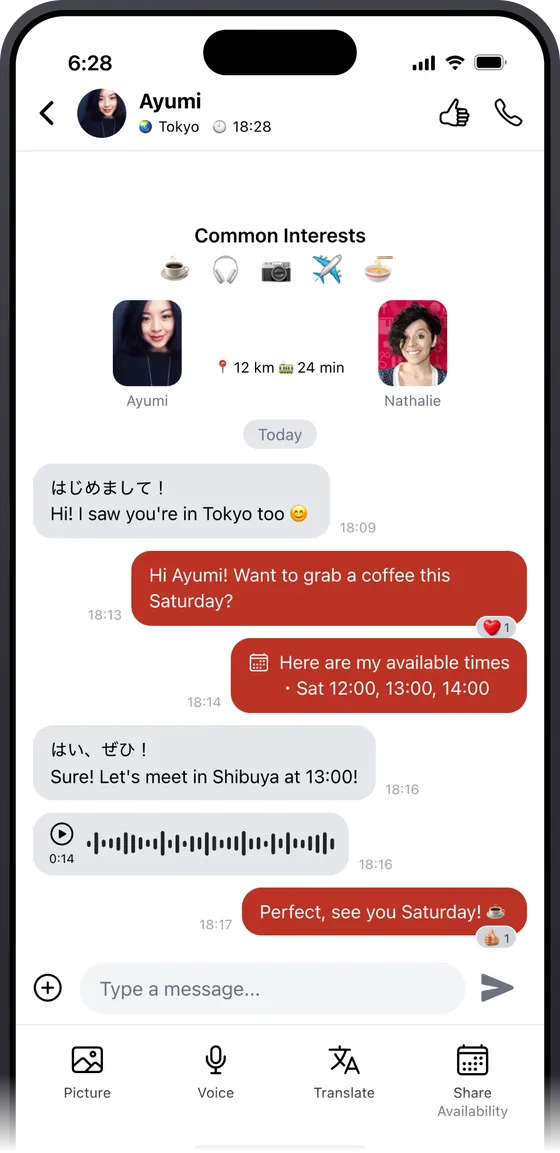
That is the kind of connection SewaYou was built for. It is a map-based app for finding friends nearby and anywhere in the world. You can meet people in your own city for a weekend coffee, or talk with people in another country from your couch, whether that means friends back home, other foreigners who have worked in Japanese companies, or Japanese people who can tell you honestly how their own offices work.
Make Japanese Friends On a Live World Map


Being fast at your job and still getting treated like you are failing is exhausting. Feeling scared to sit at your own desk is not a normal part of adjusting to Japan, and it is not something you have to quietly absorb to prove you belong.
Keep your notes. Spread out your support at work. And build a life big enough that one person's silence can't fill all of it.
If you want people to talk to outside the office, near you or on the other side of the world, download SewaYou and start looking around the map.