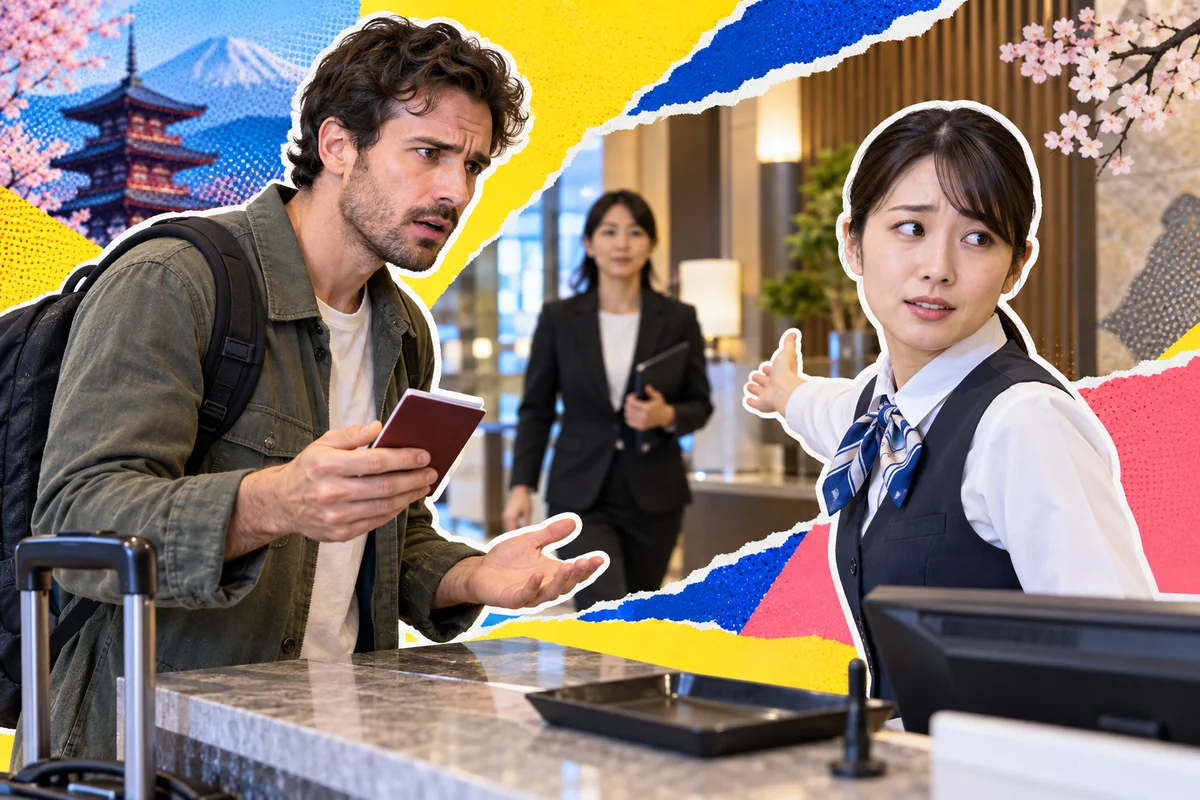
You walk up to a counter in a big electronics store. You have practiced this exact kind of conversation for years. You ask a detailed, polite question in Japanese, with the right keigo and the right vocabulary.
The staff member listens, pauses, and asks where you are from.
Not "how can I help," not an answer to your question. Your nationality. Then a walkie-talkie comes out, a second person arrives, asks the same thing, and eventually someone is brought over who "speaks your language." Meanwhile, the question you asked perfectly clearly is still sitting there, unanswered.
If this has happened to you, you probably walked out feeling a strange mix of anger and embarrassment. Let's talk about that feeling, because it deserves more than "just ignore it."
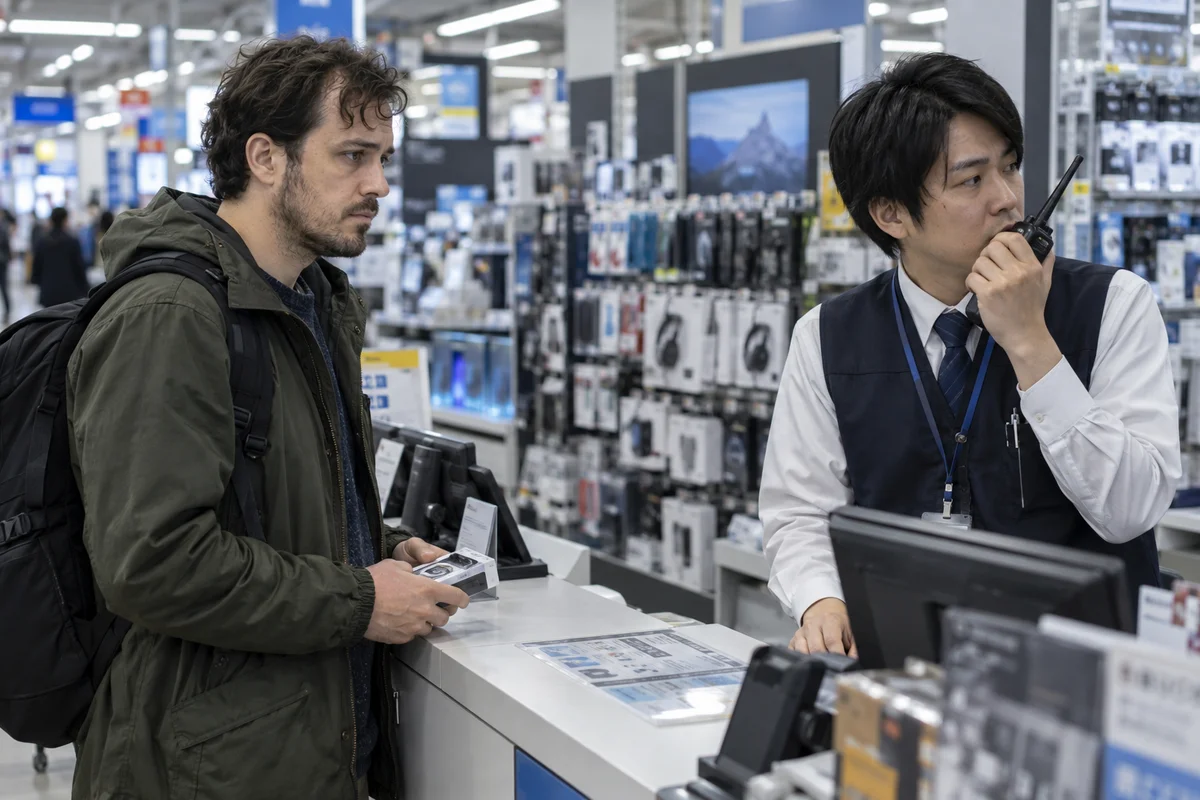
Here is the uncomfortable part. In moments like this, the staff member often decided what kind of customer you were before you finished your first sentence.
Your face, your accent, your name, or the person next to you triggered a mental script: "foreign customer, find the right staff." Once that script starts, the actual words coming out of your mouth barely register. Some people only half hear them. Some hear them and follow the script anyway, because the script feels safer than improvising.
That is why it hurts so much. It is not a judgment of your Japanese. It is the feeling that your Japanese was never even evaluated.
I don't think every person who does this is hostile. In my experience, a lot of it comes from fear of getting something wrong. Phone contracts, insurance, bank paperwork: staff worry that a misunderstanding will turn into a complaint, so they reach for whatever feels like the safest option.
Sometimes stores really do have multilingual staff, and pairing customers with them is meant as a service. For a tourist who speaks no Japanese, it genuinely helps.
But good intentions don't erase the problem. Asking someone's nationality, sometimes in a clumsy shorthand, instead of answering their question treats the person as a category. And being sorted by nationality while you are speaking fluent Japanese can feel exclusionary, whatever the intent was. Your discomfort is valid, even if the staff member thought they were being helpful.

You can't control someone else's script, but you can interrupt it calmly. A few things that tend to work:
If something felt clearly disrespectful, you can also give feedback to the store. Keep it factual: what you asked, what happened, how it made you feel as a customer. Managers can't fix a pattern they never hear about.
The real damage from these moments often comes later. You start to rehearse less, speak less, and assume people won't take your Japanese seriously. That is the part worth protecting yourself from.
One staff member following a bad script tells you nothing about your actual level. The proof of your Japanese is in the conversations that go well: the coworker who jokes with you, the neighbor who chats about the weather, the friend who forgets you aren't a native speaker.
So collect more of those. Spend your Japanese on people who listen, not on the ones who already decided who you are.

Part of what makes counter moments sting is that, for many foreign residents, those are a big share of their Japanese conversations. When most of your speaking happens with shop staff and officials, every awkward exchange feels like a verdict.
The fix is to have more conversations where you are just a person. Friends who know you, who meet you through shared interests, and who don't need to sort you before they talk to you.
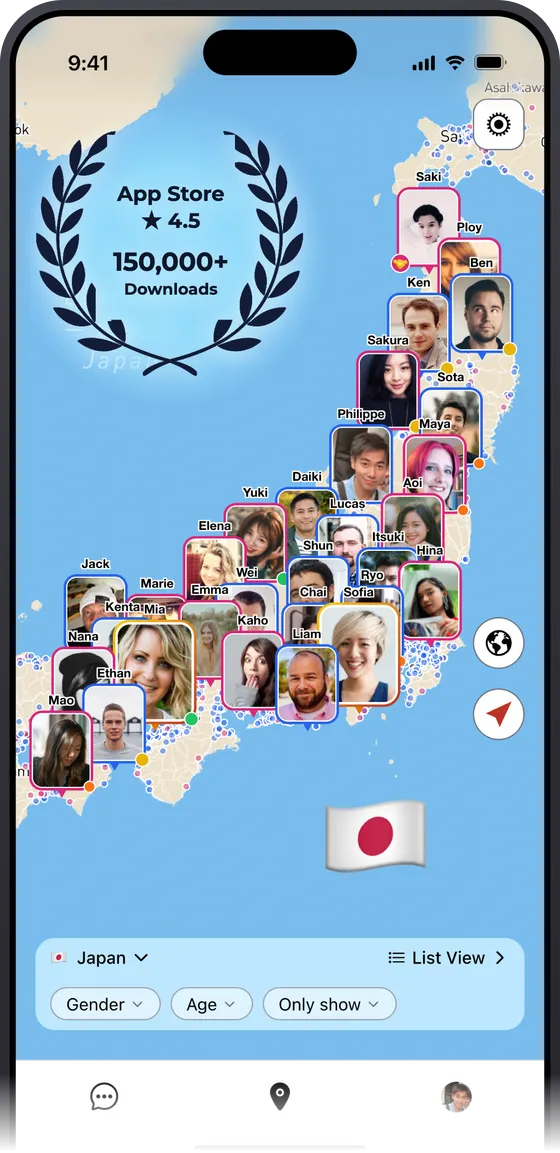
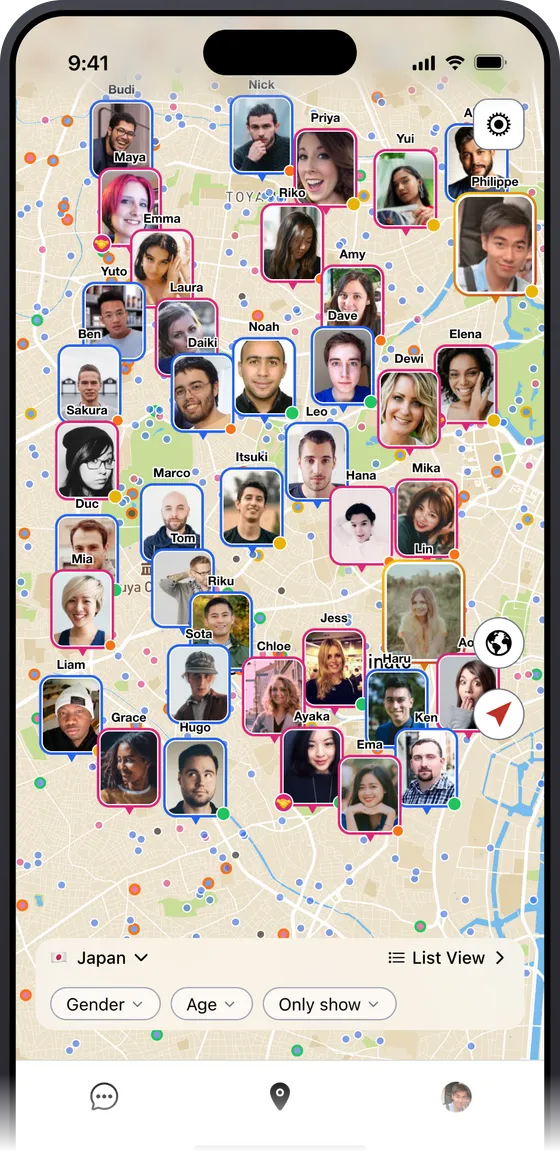
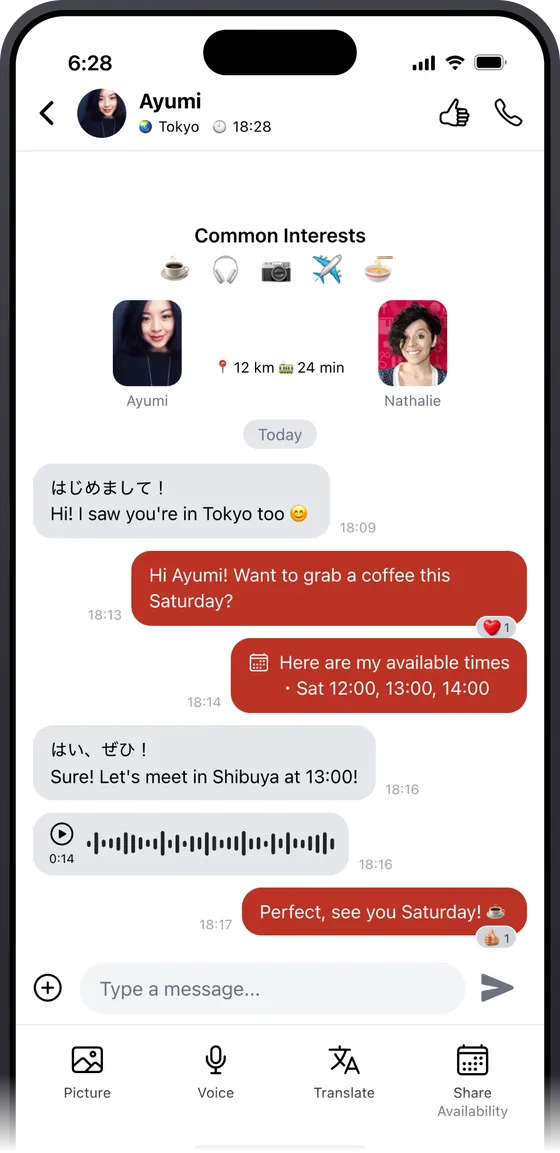
That is what we built SewaYou for. It's a map-based friendship app where you can find people nearby, or explore people anywhere in the world from home. Chat with Japanese speakers in your city, make online friends in another country, connect before a trip, and meet up when you are close. No swiping required.
Make Japanese Friends On a Live World Map


The counter staff might not hear your Japanese. Plenty of other people will.
Download SewaYou and start the conversations where you are treated as yourself.