There is a genre of video you have probably seen. A guy with a camera walks up to a stranger in Tokyo and asks for directions in fluent Japanese. The stranger gasps. He switches to Mandarin. Another gasp. He throws in some Portuguese, some Tagalog, some Russian. The comments roll in. "How is this possible??" The video has eight million views.
Then he posts another one tomorrow, and another the day after, and slowly, in the back of your brain, a quiet poison starts working. You are doing this wrong. He learned 20 languages in his twenties. You have been studying Japanese for three years and you still cannot order coffee without rehearsing it. Something must be broken with you.
Nothing is broken with you. What you are watching is a party trick.
If you slow these videos down, the structure is almost always the same. The polyglot initiates the exchange. He picks the topic, which is usually "where are you from" or "do you speak X language." He uses three or four set phrases per language, mostly compliments and small-talk openers. Then he ends the clip before the conversation can get hard. Forty seconds in, the cut comes, and we are moving on to the next stranger.
What looks like fluency is actually conversational control plus video editing. He has learned the minimum required to look impressive for the length of a TikTok. That minimum is real, it is not zero, but it has nothing to do with the thing you actually want.
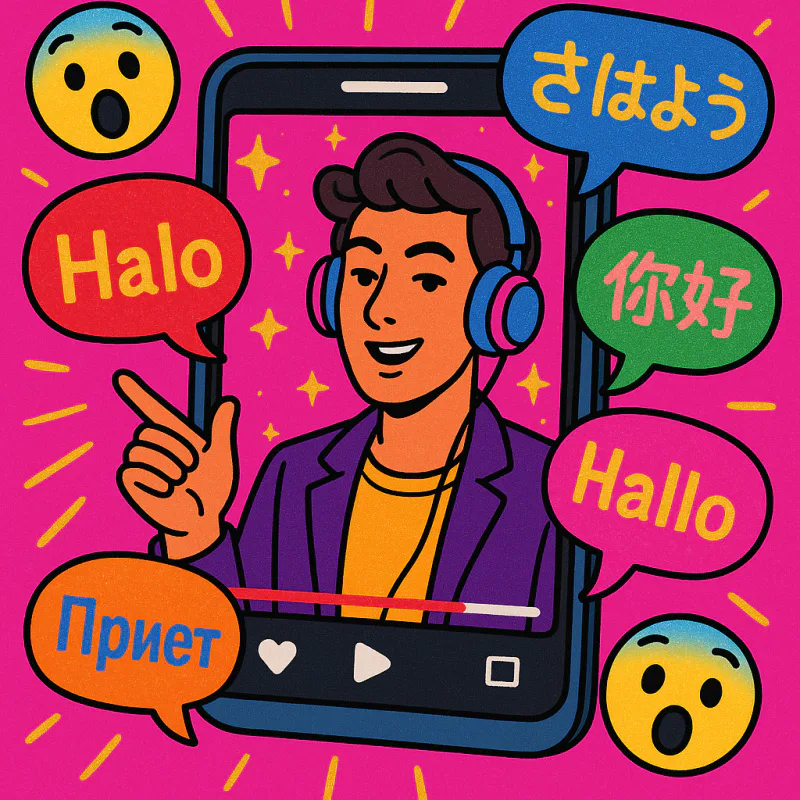
There is a 90-second version of speaking a language. It is the version that gets gasps from strangers. It is mostly accent, opening lines, and a small bag of conversational fillers like "really?" and "that is amazing" and "what about you?" You can build this version of any language in two or three weeks of focused effort. The polyglot YouTube guys have built it 20 times. Good for them.
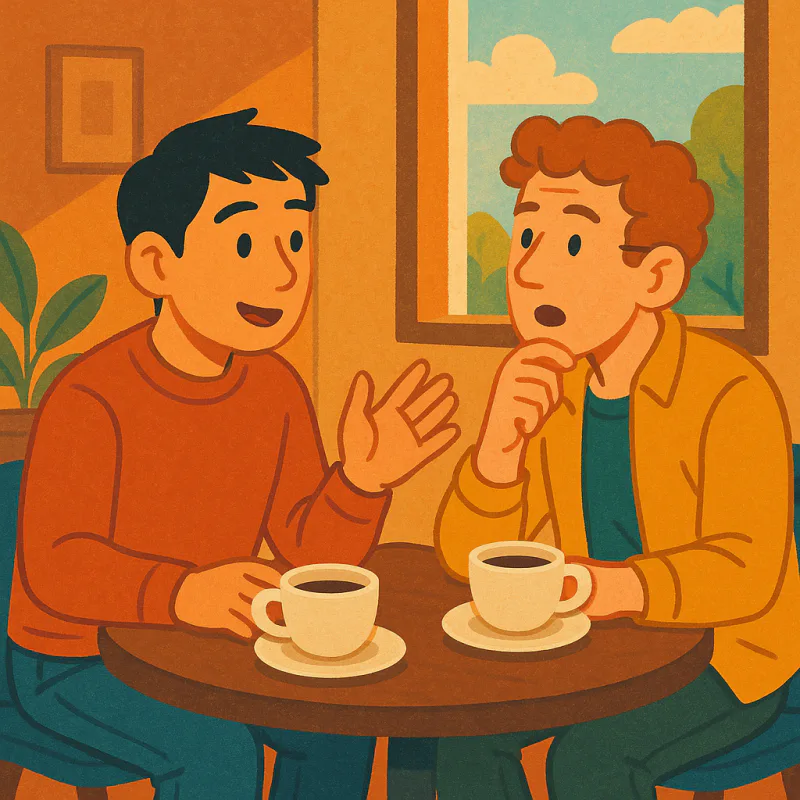
Then there is the two-hour version. The two-hour version is what happens when you and another human being sit at a table in a coffee shop on a Sunday afternoon with nothing planned and no script. The 90-second skill is useless here. Your bag of fillers runs out in the first 10 minutes. Now you have to follow a tangent, ask a real question, sit through your friend explaining their job, react to something sad, change subjects when you both get bored. Almost none of that appears in a polyglot video.
This is the language you want. The boring, slow, unscripted language that lets you actually be friends with someone.
The damage these videos do is not that they are fake. Some of them are not even that fake. The damage is that they set the wrong success metric in your head.
If you spend hours every week watching polyglots wow strangers, your brain starts to file "fluency" under "wowing strangers." You start drilling for the moment a Japanese person says "your Japanese is so good." You start counting compliments as data points. You feel proud when you nail a self-introduction, and frustrated when a real conversation collapses 20 minutes in.
But the compliment economy is rigged. Strangers reward novelty, not skill. A foreigner who can string four polite sentences together in Japanese will get the same wide-eyed reaction as a foreigner who has been speaking the language for 10 years. The system is not measuring you. It is measuring how rare you look, and the bar for rare is very, very low.
If you keep training for that bar, you will plateau at "looks impressive in a clip" and never reach "can hold a friendship."

Real conversational competence looks like a small set of unglamorous skills that no influencer is going to film.
None of this is impressive in a 40-second clip. All of it is what separates a friend from an acquaintance. The boring skills are the load-bearing ones.
Here is a better way to measure your Japanese, or your French, or whatever language you are learning. Forget the stranger test. The stranger test, where someone you will never see again gasps at your accent, is meaningless. The bar is too low and the metric is too noisy.
Use the friend test instead. Can you have a third hangout with a Japanese friend, in Japanese, where neither of you ran out of things to say? Could you call them when something bad happened and have them understand what you meant? Could you tell them a story that took five minutes and have them laugh in the right place?
That is the actual goal. Friendship is the only honest fluency test.
It is also, conveniently, way more fun than learning 20 languages to A2.
Make Japanese Friends On a Live World Map
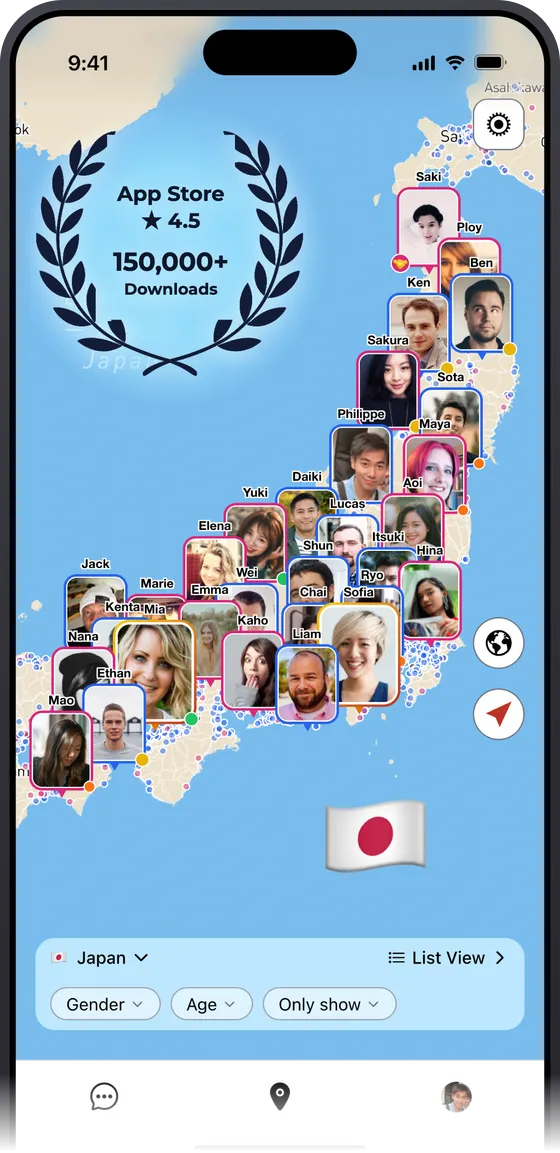
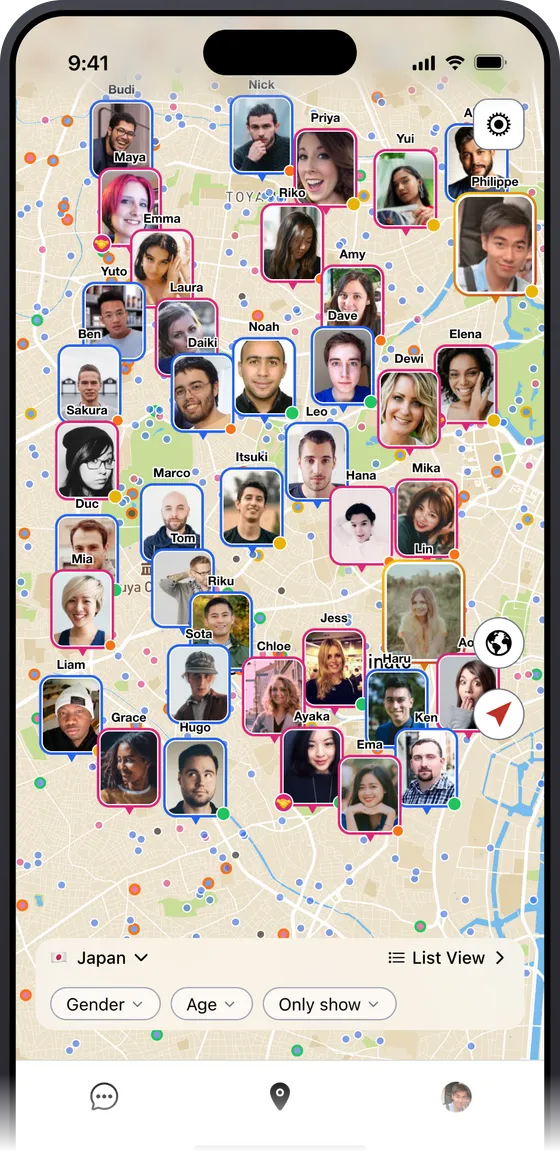
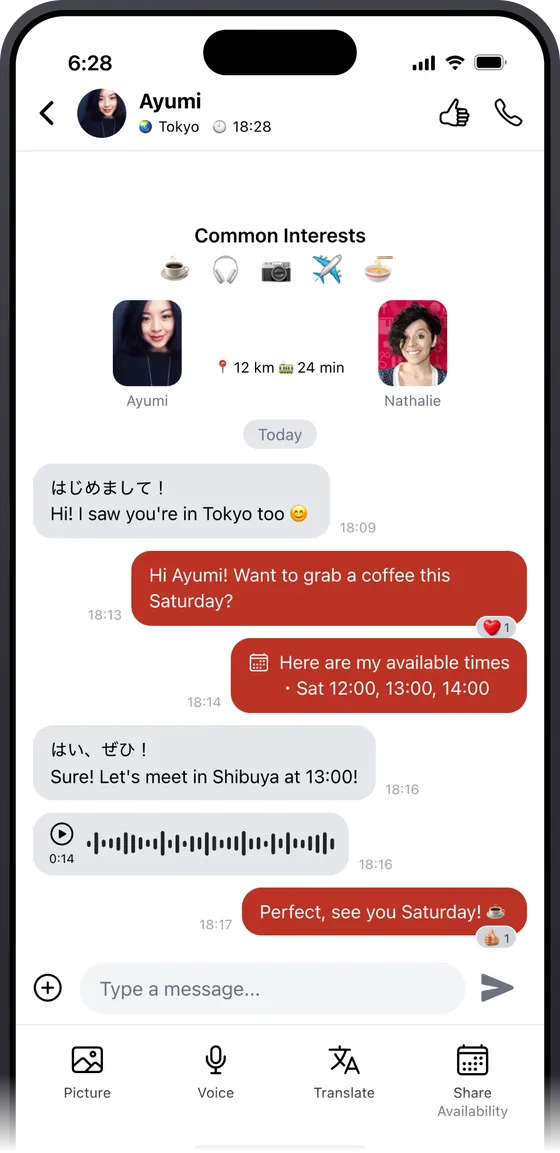


The reason we built SewaYou the way we did is exactly this. The app is map-based and intent-explicit, which means the people on it are not there for a viral clip. They are looking for the kind of friendship that needs the two-hour skill. Japanese, foreign, somewhere in between. The one thing they have in common is that they want to actually hang out with another person, not perform fluency at a stranger.
You meet up in real life, in your real city, over coffee or a walk or a karaoke night. You stumble through your tangents. You ask follow-up questions. You let silence happen. And the skill that grows out of that is the only one that will still be there in five years, when the polyglot videos have all blurred into one another and you cannot remember which guy said which set phrase.
That is the language worth learning. Not the party trick. The friendship.