

A learner I know reached B2 last spring. He was proud, and rightly so. Podcasts at native speed were 95 percent comprehensible. Movies without subtitles were watchable. He could read essays, write decent emails, and hold a forty minute conversation with his teacher without freezing. By every metric he had been told to track, he was almost there.
Then he joined a voice chat with five native speakers, audio only, real conversation, no warmup. He understood maybe 60 percent of what was said. He talked for the first ten minutes, ran out of charm, and went quiet for the rest of the hour. He logged off feeling like he had dropped two full levels in twenty minutes.
He had not. The metric was lying.
Curated input is not the language.
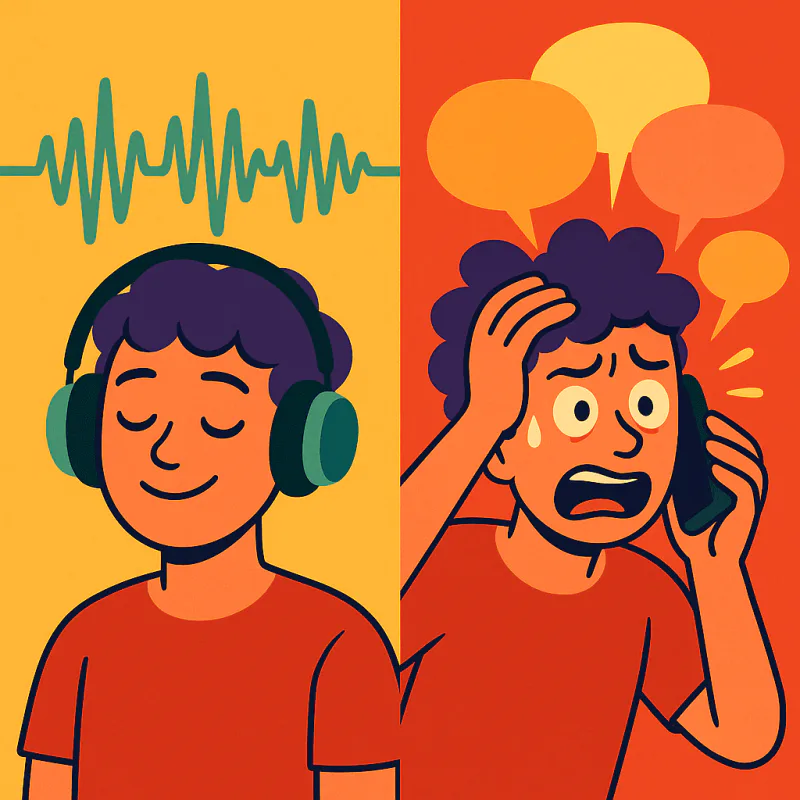
When you have been training on podcasts and movies, you have been training on the cleanest possible version of the language. Hosts speak into expensive microphones in treated rooms. They edit out the ums. They pace themselves because they know strangers will listen. Even the most casual podcast is a performance shaped to be understood by someone who is not in the room.
Native speakers talking to each other in a voice chat are doing none of that. They are slurring, overlapping, half laughing words, dropping the ends of sentences, throwing references nobody outside their friend group would catch. The audio is a phone in a crowded kitchen. The pace is whatever feels natural, which is roughly twice as fast as a podcast and at least one register more compressed.
You did not lose comprehension. You walked out of the studio.
This matters because almost every modern language app trains you on the studio version and quietly suggests the studio version is the goal. It is not. The studio version is the entry ramp. The actual highway is messier, and a lot of otherwise fluent learners do not discover this until they are already on it.
The other thing that breaks B2 speakers in their first real native chat is not vocabulary. It is rhythm. At B2 you can express almost anything you want, eventually, with a little circumlocution. The catch word is eventually. In a group chat, the joke window opens for two seconds and then closes forever. By the time you have assembled the witty thing in your head, the conversation has already moved on to the next topic and laughed at someone else's line.
You do not feel slow because you are bad at the language. You feel slow because you are still translating, and translation is fast enough for one on one and far too slow for a group.
It is not your grammar.
The fix is not more grammar drills, and it is not more passive listening. It is more reps in low pressure speaking until the translation step quietly disappears. That happens through volume of real spoken interaction, not through more input. You can listen to a thousand more hours of podcasts and your speaking timing will not improve, because output speed is a separate skill that only trains on output.

After a bad experience like the one above, most learners decide they need to throw themselves into more group chats with natives until they get used to it. This is roughly like deciding you need to do more bench press to fix a shoulder injury. The intensity is the problem, not the cure.
Natives talking to natives in a group are not adjusting for you. They are not slowing down. They are not picking topics you can follow. They are not waiting for your reply. The natural social pressure of a group means even the kindest native in the room will not stop the flow to make sure the foreign speaker is keeping up. They cannot. The group has its own momentum. You either ride it or sit in the corner.
This is actually a great environment to measure where your level honestly is. It is a terrible environment to grow that level. The growth happens somewhere else.
The gap between studio fluency and group fluency closes in one specific setting, and it is not a classroom or an app. It is one on one with a single native who is willing to talk to you regularly, in person if possible, about the small dumb stuff of the week.
One on one means there is no group momentum. They will pause for you. They will rephrase if you ask. They will let you build a sentence at your pace. The pressure that froze you in the group is just gone.
Regularly means the same person, week after week, not a different stranger every Sunday. Familiarity is what unlocks real speech. The first three sessions you are a polite stranger to each other. By session ten you are halfway into a friendship, and the language starts to flow because the relationship is doing some of the work the grammar used to do.
In person, ideally, because shared physical context is where wit actually lives. The cafe you both keep coming back to. The train delay this morning. The dog that barks every time you walk past that one apartment. These are the references that turn into small inside jokes, and small inside jokes are how you sound native faster than any vocabulary app can teach you.
Find one person, repeat.

The reason a B2 learner often feels boring to the natives in a group chat is not because the language is weak. It is because there is no shared context. None of those natives know his life. He has no inside references to deploy. Without shared context, even a native sounds boring. Try to imagine being witty in your own language to five strangers who have known each other for years. You would also sit there politely and wait for an opening that never quite comes.
Wit is not a language skill. It is a relationship skill. You become witty in a second language with the same kind of people you become witty with in any language. The ones who know you. The ones whose week you also know. The ones who laugh at your worst jokes because they have heard your better ones.
This is the part most speaking-frequency advice misses. The real lever is not how many natives you speak to. It is how deeply you know one or two of them. Wit lives in shared context.
If you walked away from a group chat feeling two levels lower than you started, you did not lose any level. You walked into the wrong test. Your real level is what you can do with someone who knows you, who you see regularly, who is willing to let you fumble at the start of an evening because the rest of the evening you are going to make them laugh.
Most learners never build that single relationship in their target language, because they think the relationship is a reward for fluency. It is the cause of fluency. The order is reversed.

If you are at B2 and quietly humiliated by your last group chat, the answer is not to grind more podcasts and try the same group again next month. The answer is to find one local who is willing to meet you for an hour a week, in a familiar place, and let the relationship and the language grow at the same pace.
Make Japanese Friends On a Live World Map
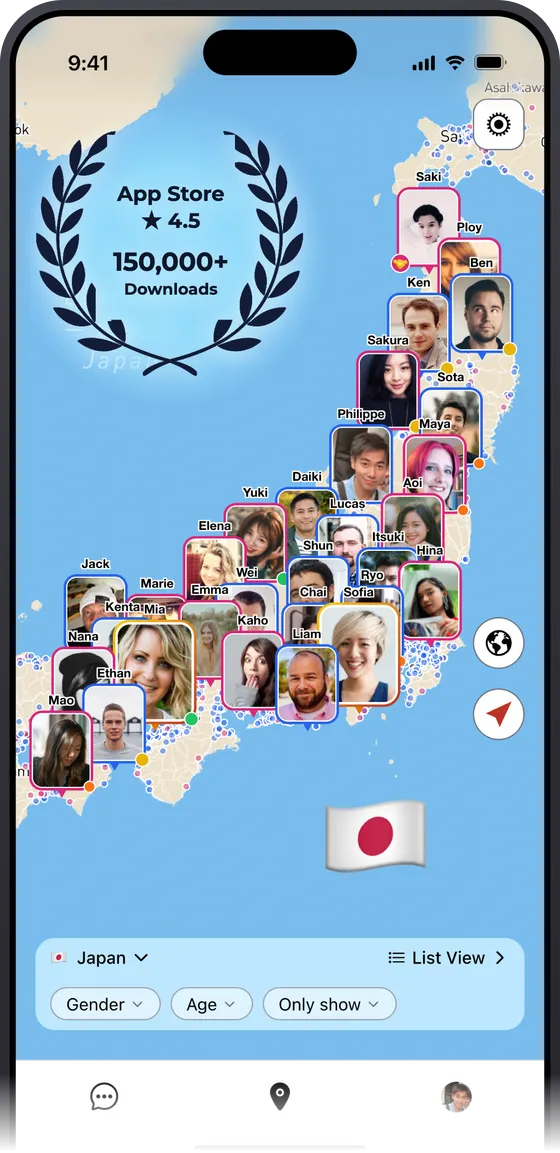
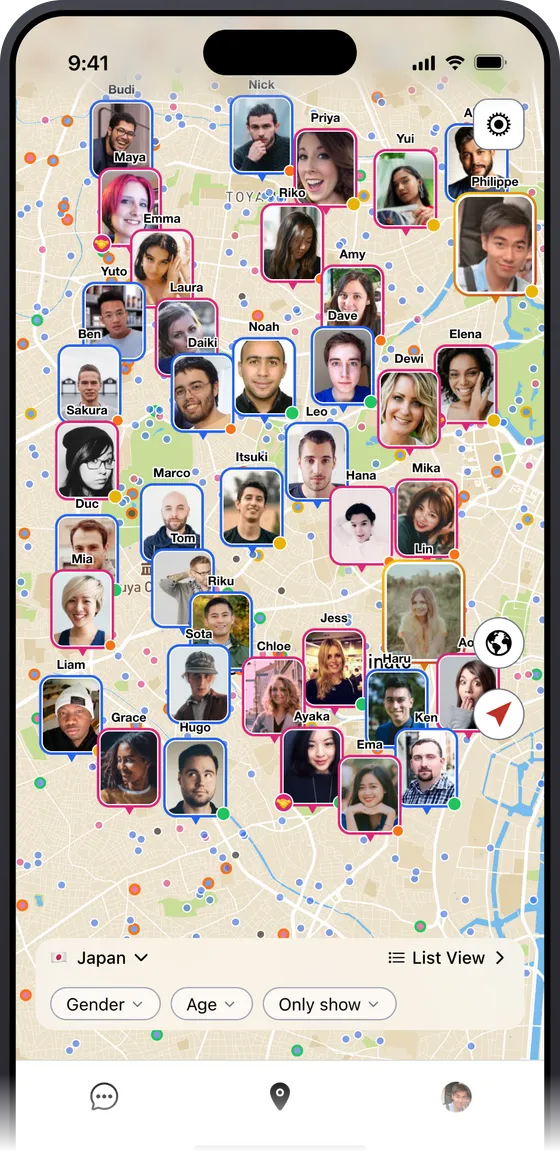
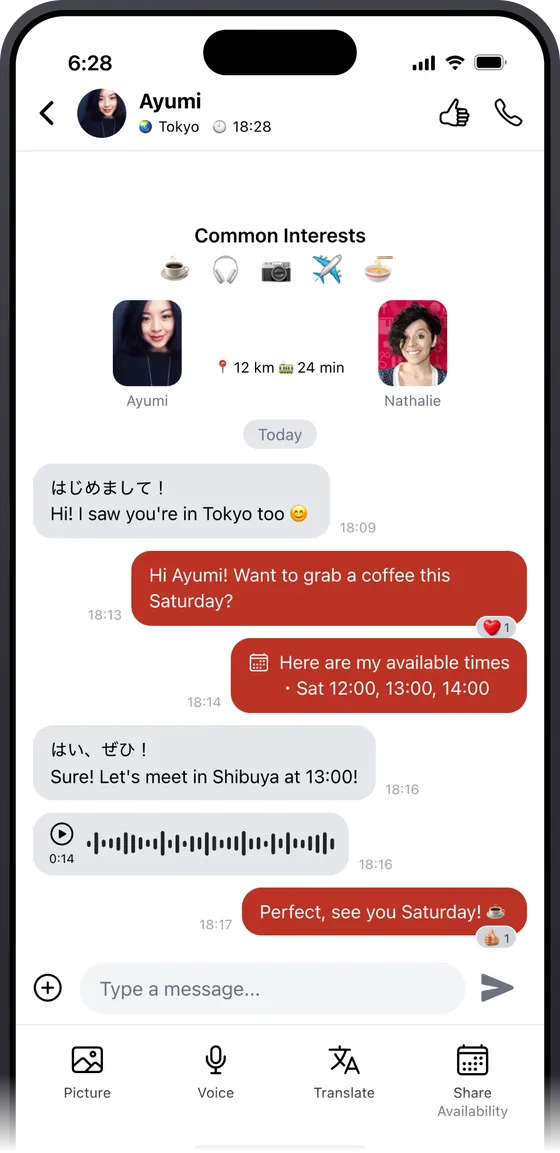


SewaYou is a map-based app for finding people near you who actually want to meet in person. Locals who are open to a foreign friend, foreigners who want a local one, both opting in upfront. Not a five-stranger group chat. Not a stopwatch tutor. A single person in your city who will sit across a table from you on a slow Saturday, ask about your week, get used to the rhythm of your voice, and quietly become the person you stop translating around.
The native group chat is the test. The one person is the practice. Get the practice right and the test takes care of itself.


