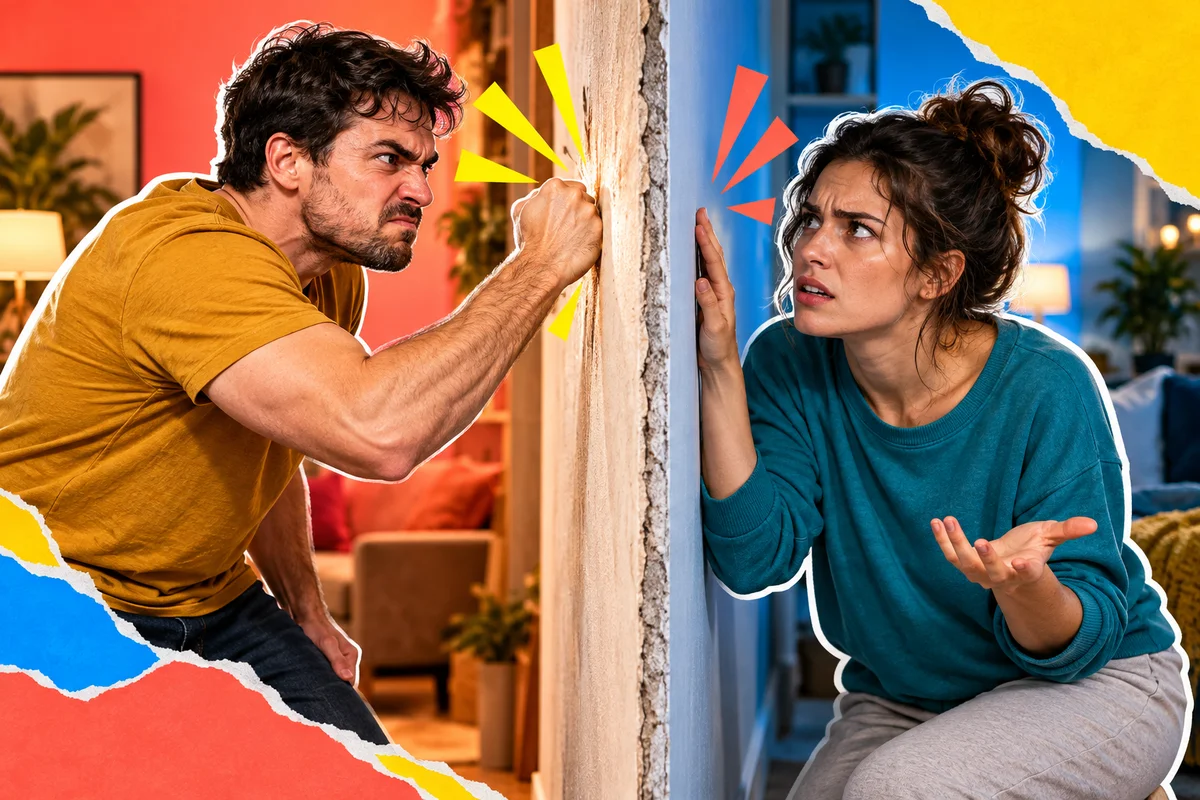
It is 11pm. You are typing an email, or you cough, or you laugh at something on a call. Then it comes through the wall: thud, thud, thud.
You freeze. Was that about you? It was definitely about you. Now your evening is gone, because instead of relaxing you are replaying every sound you made in the last hour and drafting arguments in your head with a person you have never seen.
If you live in an apartment in Japan, there is a decent chance you have had some version of this. And the hardest part is rarely the noise itself. It is that the wall is doing all the talking.
A knock on the wall feels loud and clear, but it carries almost no information. Is your neighbor annoyed at your keyboard? Your chair? Your voice? The TV in a different unit entirely? Are they angry at you, or at their own sleepless week, or at their boss?
You cannot know. So your brain fills in the gaps, usually with the worst version. They are unreasonable. They are targeting you. They are unstable. Meanwhile, on the other side, they are probably filling in their own gaps about you: inconsiderate, deliberately loud, doesn't care.
Two people building villains out of thumps. That is how a small annoyance turns into a months-long cold war between strangers who have never exchanged a single sentence.
This is the part that confuses a lot of people. You chose a reinforced concrete place precisely so you would not have to think about noise. How can anyone hear a quiet keyboard?
Airborne sound, like voices and music, is what thick walls handle best. Vibration is different. Keys bottoming out on a desk, a chair rolling, footsteps, a door closing: these can travel through the structure itself and come out the other side as a dull tap that sounds closer than it is. Sometimes the sound is not even from your unit, and you both end up blaming the wrong person.
None of that makes wall-banging a reasonable response. Ordinary living noise is part of sharing a building, and you are allowed to cough in your own home. But knowing how sound moves helps you drop the "they must be imagining it" story. They may genuinely hear something. That does not mean they are right about what to do with it.

If you want to lower the temperature without conceding anything, a few cheap changes can help: a thick desk mat under the keyboard, felt pads on chair legs, moving the desk a little away from the shared wall. That is not surrender. It is just taking a variable off the table.
The temptation is real. They thumped, so you thump. They stomp, so you turn the speaker toward their wall. It feels like standing up for yourself.
It is not. Retaliating through the wall turns you into a co-author of the feud. It also erases the one big advantage you currently have: you are the calm, reasonable resident who has done nothing wrong. Once you start answering in thuds, that is no longer clearly true to anyone looking from outside.
There is also the safety question. You do not know what is going on in that person's life. If someone is already stressed enough to pound on walls over small sounds, provoking them is a gamble with no upside. Calm is not weakness here. It is the strategy.
In Japan, neighbor problems in rental buildings usually go through the management company or landlord rather than a face-to-face confrontation. It can feel indirect if you grew up somewhere more blunt, but it exists for situations exactly like this one.
A few practical steps:

The goal is not to win. The goal is to move the conversation from thumps to words, through a channel where somebody can actually help.
Here is what nobody warns you about with neighbor conflict. After a few weeks, you start living carefully. You type softer. You take calls in the bathroom. You flinch at your own footsteps. Your home, the one place that is supposed to be yours, starts to feel like enemy territory.
And if you live alone, there is often nobody to say, "That's ridiculous, you're fine," or, "Honestly, maybe get a desk mat." Every thud gets processed alone, at night, which is the worst possible time to process anything.
That is why the most useful fix often has nothing to do with the wall. It is having a life that does not happen entirely inside four rooms. People to talk to. Places to be. Someone who has lived in Japan longer than you and can tell you how this kind of thing usually plays out. A wider life shrinks a loud wall.

That is where SewaYou comes in. It is a map-based friendship app for finding people nearby and anywhere in the world. You can meet someone in your own neighborhood for a coffee and a reality check, or chat with people in another city or country from home on the evenings you would rather not stare at the wall.
Make Japanese Friends On a Live World Map

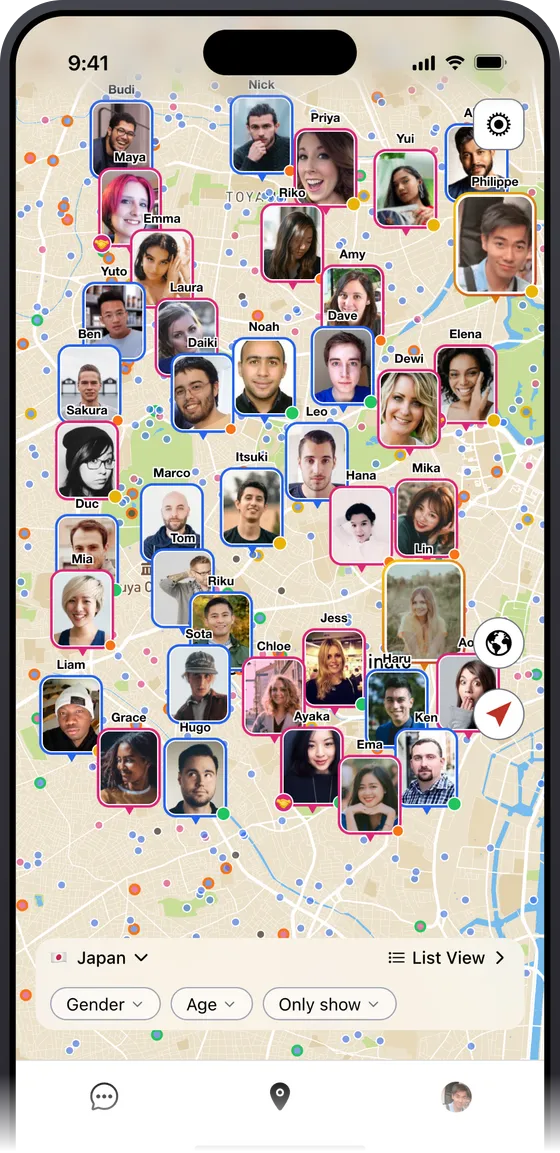
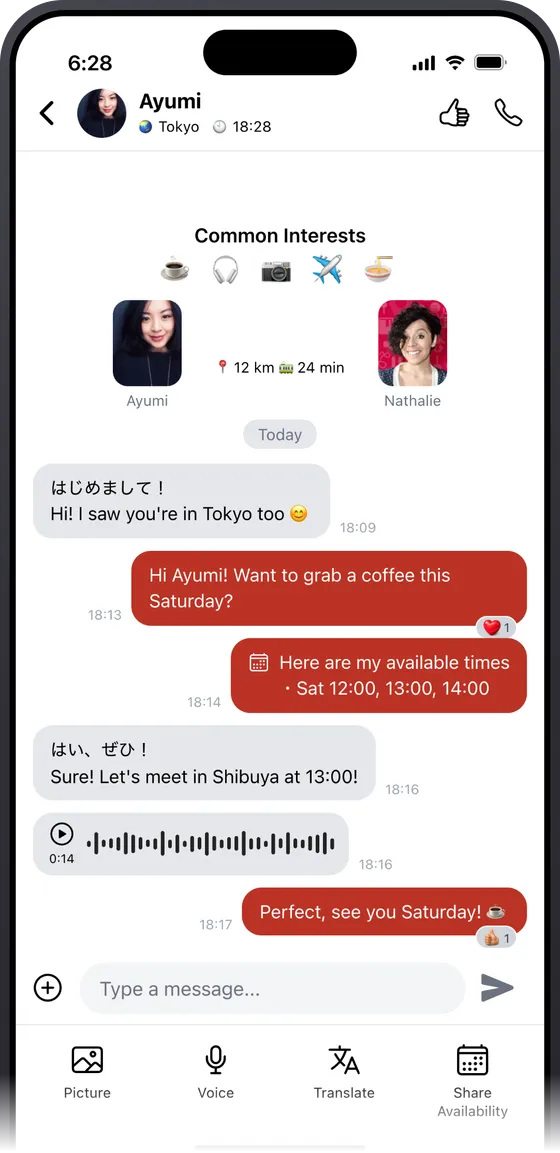


Some of the people you meet will have their own neighbor stories, and trust me, comparing them is oddly therapeutic. Others will just be good company on a walk, which is sometimes exactly what you need after a week of thumps.
If you are living normally, at normal hours, you are most likely not the problem. But being right does not make the situation go away. Log it, report it calmly, take the cheap steps that cost you nothing, and refuse to join a war through the drywall.
Then go outside. Even if you are moving in a few months, those months are worth living well, not tiptoeing through. SewaYou can help you find someone nearby, or anywhere, to spend them with.