

I have watched a lot of people try to learn a language and quietly give up. Smart people. Disciplined people. People who would finish a marathon before breakfast. And almost every one of them had the same problem, which was not effort. They were wandering around without a map.
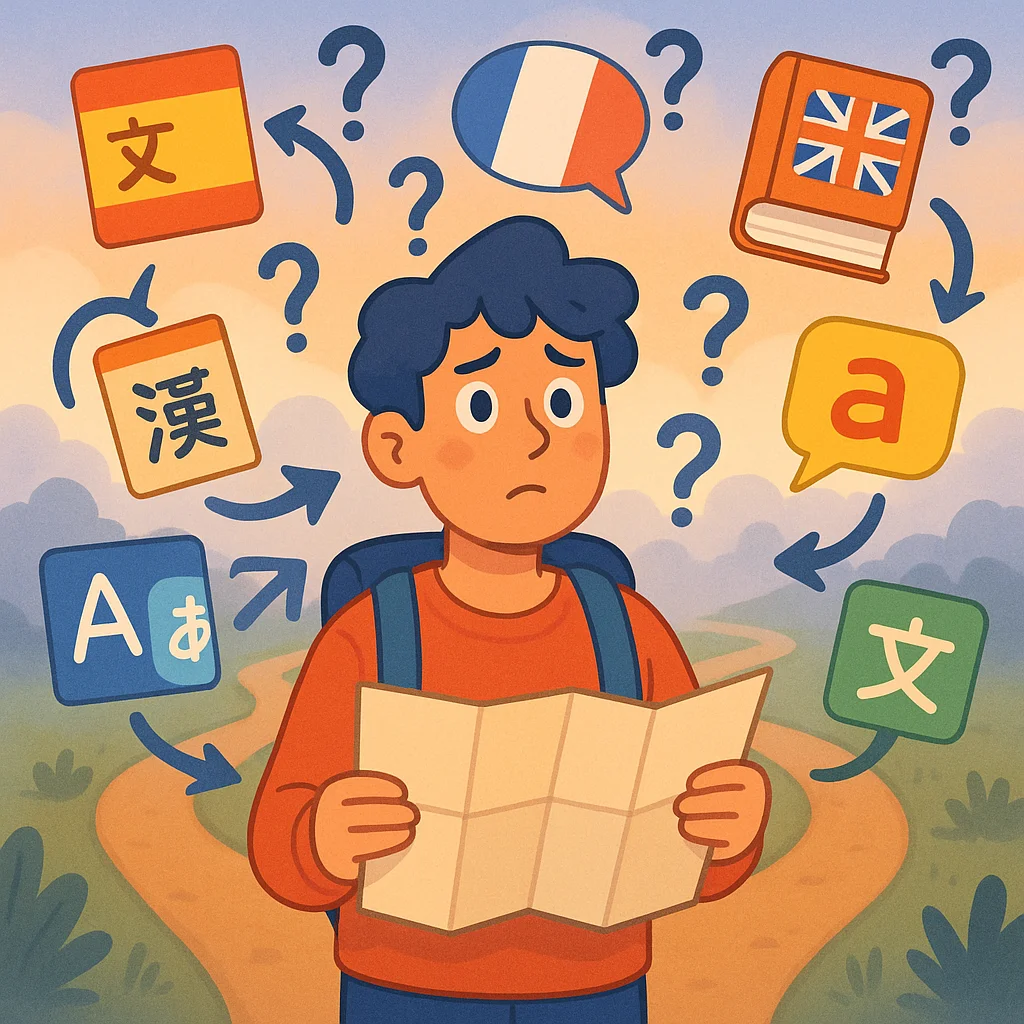
Nobody sits you down and explains how language learning actually works. You get told to "use comprehensible input" or "just talk to natives" or "do Duolingo." That is like telling someone to lose weight by "eating less." Technically true, completely useless. So they pick a random method, grind for six months, get frustrated, and conclude they are bad at languages. They are not bad at languages. They were never given the structure.
This is the map I wish someone had drawn for me.
Strip away the noise and language learning is two stages, in this order.
Stage one is fundamentals. Pronunciation, basic grammar, a starter vocabulary of maybe 1,000 to 2,000 of the most common words, and enough familiarity with the writing system that text stops looking like decoration. This stage is short and dense. A few months if you push, longer if you do not.
Stage two is volume. Once you can read a simple sentence without dying, you stop "studying" and start consuming. Books, podcasts, shows, articles, conversations, anything. You expand your vocabulary by encountering it in context, thousands of times, until words stop translating in your head and just mean things.
That is the entire arc. Every successful learner I know followed it, even if they did not realize they did.
The trap is that nobody tells you these are different stages with different rules. So learners do one of two things, both fatal.
The first failure is skipping stage one entirely. You see somebody on YouTube say "I learned Spanish just by watching telenovelas" and you try the same. You watch ten hours of a show you do not understand and feel like you should be absorbing something. You are not. Comprehensible input requires the comprehensible part. If you cannot follow at least half of what is happening, your brain has nothing to attach the new words to. You are not learning, you are pattern-matching faces and music.

The second failure is never leaving stage one. This is the textbook intermediate plateau. You take classes, you finish your Anki deck, you do Duolingo every day on the train, and three years later you still cannot watch a movie without subtitles. Because all of that is stage-one infrastructure, and you forgot to actually use it. Fundamentals are scaffolding. Scaffolding does not become a building.
Most adult learners spend years in this second trap. They confuse "studying the language" with "learning the language." They are not the same activity.
The thing nobody on the internet wants to admit is that stage two is mostly volume, and volume is boring to talk about. There is no clever shortcut. The people who get fluent read and listen, a lot. People who say they read more than a literature major are not joking. They have actually consumed thousands of hours of native material.
This is good news, actually. It means fluency is not a talent. It is just a stack of hours, on top of solid fundamentals. The reason you have not gotten there is not that your brain is broken. It is that you spent your hours on the wrong stage.
This is the part most people get wrong, and it matters for anyone using an app to practice with a native speaker.
A language exchange partner is not a teacher. A partner is not a teacher. They are a conversation environment. That distinction changes when they are useful.
In stage one, talking to a native is mostly painful. You do not have enough vocabulary to form sentences, they do not have the patience to drill grammar, and you both leave the call feeling weird. Tutors are for this stage. Apps and structured courses are for this stage. A friendly stranger on a chat app is not going to teach you the difference between が and は.
The moment language exchange starts genuinely working is when you have enough fundamentals to fumble through a real conversation. Around the late beginner to early intermediate mark. Suddenly, every meeting is hours of input you actually understand, plus output practice with someone who will gently fix you. This is when partners stop being painful and start being the fastest accelerant you can find.

And then in late stage two, partners become the only way to keep growing. Because books and shows cannot ask follow-up questions. They cannot notice that you always misuse a particular particle. A human partner sees your specific blind spots and pokes them.
When you do reach the stage where conversation helps, do not waste it. The mistake is treating language exchange like a free tutor and showing up with a worksheet of grammar questions. That kills the dynamic. Partners are not teachers, remember.
Use them like a friend who happens to speak the target language. Talk about your week. Argue about a movie. Complain about your job. The point is sustained, real-stakes use of the language about things you actually care about. The grammar fixes happen as a side effect.
The other thing that helps is meeting in person if you can. You need a body, not a Discord. Voice and video are fine, but sitting across from someone in a cafe forces a different kind of attention. Your brain stops treating the language like a game and starts treating it like a survival skill. An hour at a cafe is worth three hours of chat threads.
People burn months arguing about Anki versus Memrise, or whether Pimsleur is better than Assimil. Honestly, it does not matter much. What matters is that you know which stage you are in and you pick a tool that fits it.
Stage one needs structured input. Pick anything reasonable, a textbook, a course, a tutor, a popular app, and finish it. Do not switch every two weeks.
Stage two needs volume and conversation. Read things slightly above your level. Watch things you actually enjoy. And find humans to talk to.
If you have done a few months of fundamentals and you are sitting on a vocabulary you have nowhere to use, that is the signal. You have not failed at the language. You have just finished one stage and have not started the next.
Make Japanese Friends On a Live World Map
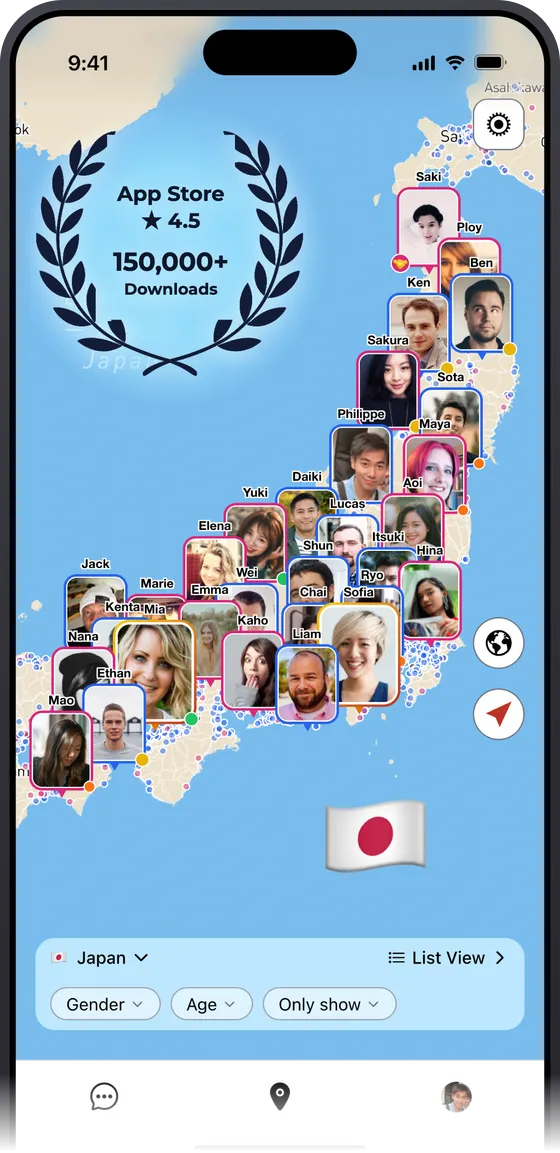
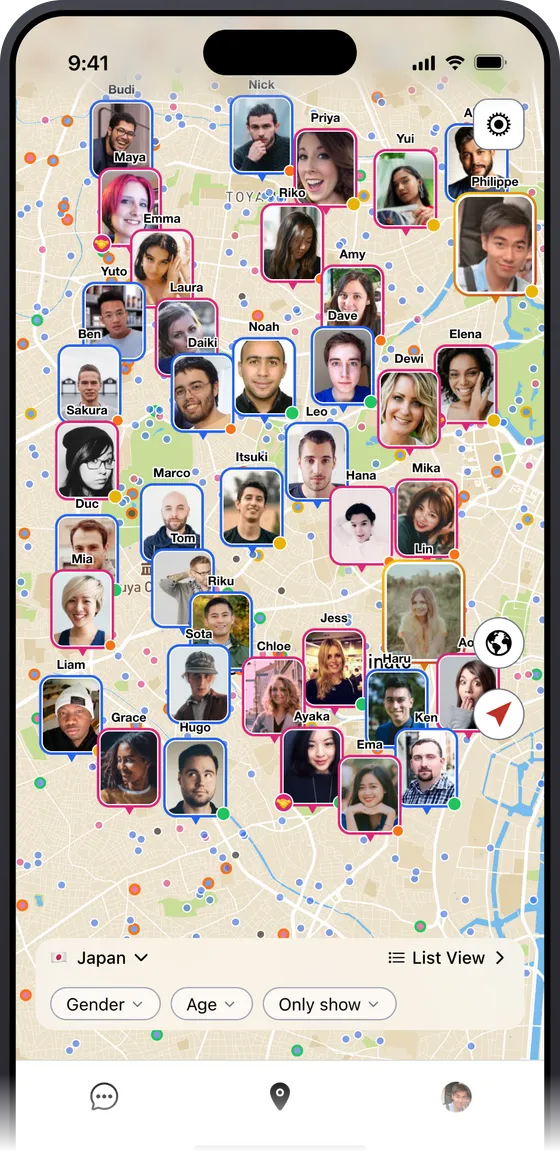
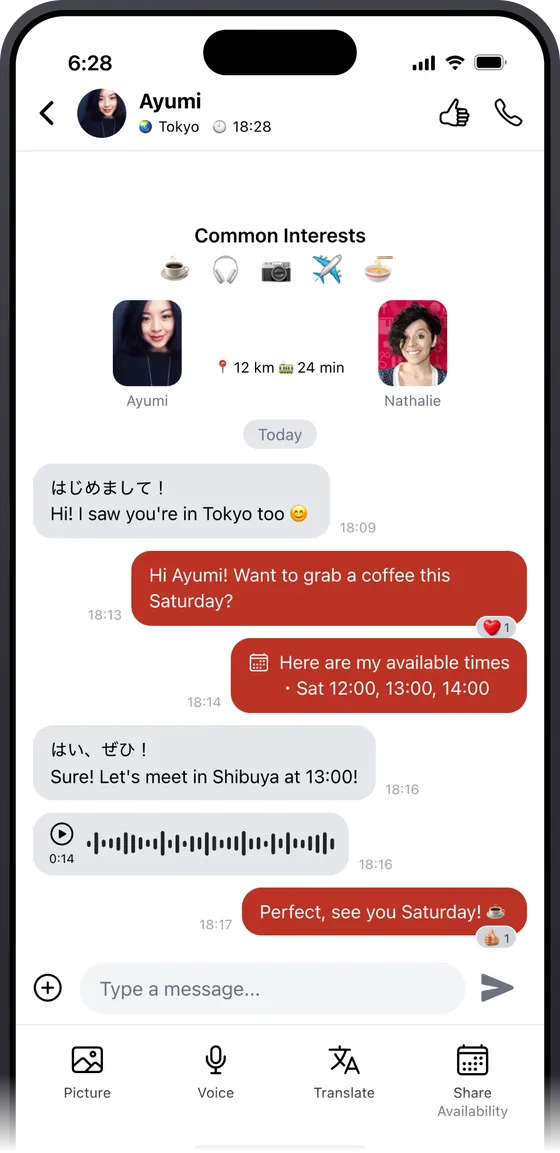


For the conversation half of stage two, especially if you are learning Japanese or English while in Japan, SewaYou is the app I tell people to install. It is a map-based friend-finder, which means it shows you actual nearby people you can meet for coffee, not a global feed of pen pals you will message twice and forget.
The map matters because in-person practice is where stage two compounds fastest. You get the hours, you get the corrections, and you accidentally end up with a friend. Which is the part of language learning nobody really markets, but it is the part that makes you keep going.
Download SewaYou here and skip the wandering-without-a-map phase.


