

I know a woman who started Japanese at 38 after moving to Tokyo for her husband's job. Two and a half years later she is doing parent meetings at her kid's daycare, ordering at sushi counters, having actual conversations with her landlord about water bills. Not perfect Japanese. Real Japanese.
I also know a 23-year-old who has been in Japan for four years and still uses the English menu.
The 38-year-old felt embarrassed about starting so late. The 23-year-old has felt no urgency at all. That gap is the entire story of who actually gets fluent.
Most people in their 30s who try to learn a language carry around a quiet shame about starting in their 30s. They will say it out loud, half joking. "I should have started this in college." "My brain is too old for this." "Kids just absorb languages, I have to study them." The shame is so consistent across people that it almost feels like a fact. It is not a fact. It is a story we tell ourselves that has the side effect of stopping us from beginning, which is the only thing that was ever actually going to make a difference.
The shame is the bottleneck, not the age.

You have probably absorbed somewhere along the way that there is a critical window for language learning, and that you are past it. The neuroscience is more boring than that. Children learn languages slowly, and badly, and with constant errors that adults find adorable but would be ashamed of in themselves. A four year old has been immersed for four years and can talk like a four year old. A motivated 35-year-old who studies seriously for four years can talk like an educated adult.
What kids have is not a faster brain. They have unlimited social permission to sound like idiots, no schedule, no career, no ego, and people around them who will patiently rephrase everything for hours. You are not slower. Just more embarrassed.
The actual research on adult language acquisition is much friendlier than the folk wisdom. Adults move through grammar faster, build vocabulary faster, and reach conversational competence faster, almost across the board. The thing they lose is accent and the thing they gain is everything else. Most people would trade a perfect accent for two extra years of life.
Here is what almost no one tells you when you start in your 30s. You are arriving with a stack of advantages a 22-year-old genuinely does not have, and most of them matter more than the speed of your prefrontal cortex.
You have a clear reason. You are not learning Japanese because it is required, fun, or impressive at parties. You are learning it because you live with someone, work with someone, raise a kid, do a job, want a life in this country. Reasons that survive bad days. The 22-year-old learning Japanese because the anime hits different is going to drift the first time something gets boring.
You have money. You can afford a real teacher, a real tutor, a real workbook, a real subscription. You do not have to scrounge through free YouTube playlists for the right grammar explanation. The 22-year-old is doing language learning on the cheapest possible budget because they have no other choice. You do not have that constraint.
You have time discipline. You know how to put 45 minutes on a calendar and actually do that 45 minutes. The 22-year-old does too sometimes, but a lot of them do not, because they have never been forced to. Adult life is a sustained training program in showing up to things you do not feel like showing up to. That is the entire skill of language learning.
You have emotional regulation. When you sound dumb, you can keep going. The 22-year-old quits the conversation after one humiliation because they have not yet built the callus that lets you eat embarrassment for thirty minutes a day every day for two years. The callus is the gear that pulls you forward.
Patience the 22-year-old does not have yet.
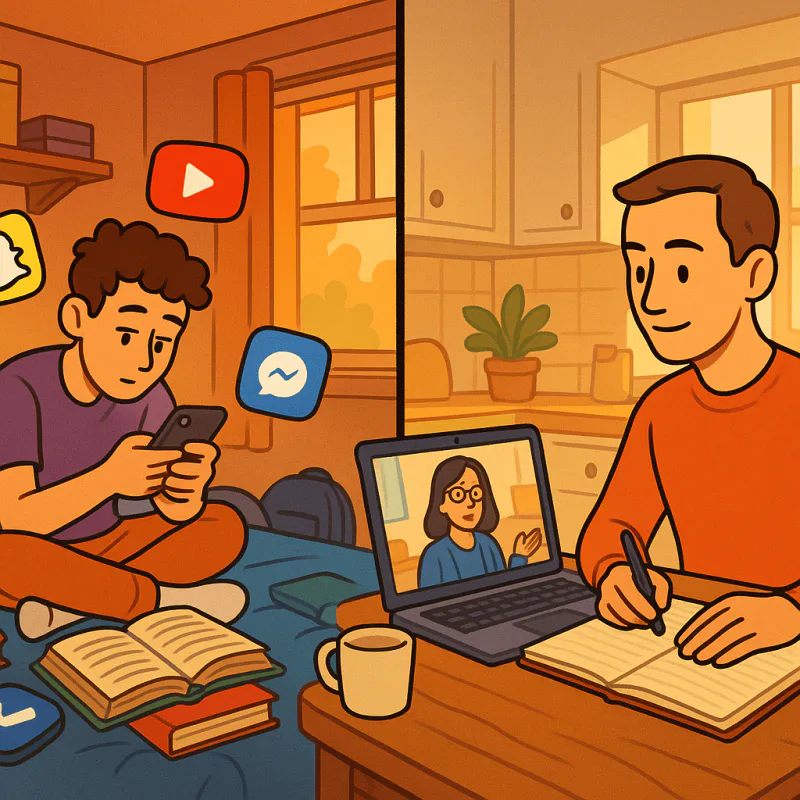
Here is the part that flips the script entirely for adult learners. The single biggest predictor of whether someone reaches functional fluency in a language is not study time, app streaks, or starting age. It is the number of hours they spend in real conversations with people they actually care about.
Not flashcards. Not podcasts. Not even classes. Conversations where the stakes are mildly real. Where you are explaining yourself to a friend, asking a neighbor for a favor, complaining about something with a co-worker, debating a small thing with a partner. That kind of input is sticky in a way no textbook input ever is, because your brain weights things you emotionally invest in.
This is the bottleneck the 22-year-old runs into and the 35-year-old often quietly clears. The 22-year-old in Japan has approximately a thousand surface friends, all of them in the foreigner bubble, none of them giving them daily Japanese conversation. The 35-year-old has a kid in Japanese daycare, a Japanese mother in law, a Japanese coworker who likes them, a Japanese landlord who keeps texting them about the boiler. The 35-year-old is being forced into real conversations by the structure of their life.
Adult life is the fastest classroom.
If you do not have those built-in conversation drivers yet, you can manufacture them. That is actually the whole game once you accept that adult language acquisition is a conversation problem and not a study problem. You stop optimizing your study setup and start optimizing your access to people willing to talk to you in their language about real things.
Be honest about the trade. Starting in your 30s does cost you something. You will probably never sound like a native. Your accent will mark you. You will not pick up the latest slang the way a teenager moving abroad would. You will sometimes meet a foreigner who arrived at 19 and speaks like they grew up there and feel a small pang of what could have been.
That is the entire downside.
Against that you get a faster ramp to actual usability, the discipline to keep going past the boring middle, the relationships that make the language stick, and the life experience that lets you have anything interesting to say in it once you can. A 19-year-old's perfect accent on top of nothing to talk about is not the prize you think it is.
The cost is sounding like a foreigner forever. The reward is being able to live a real adult life in a second language. Most people would take that trade on day one if they let themselves.
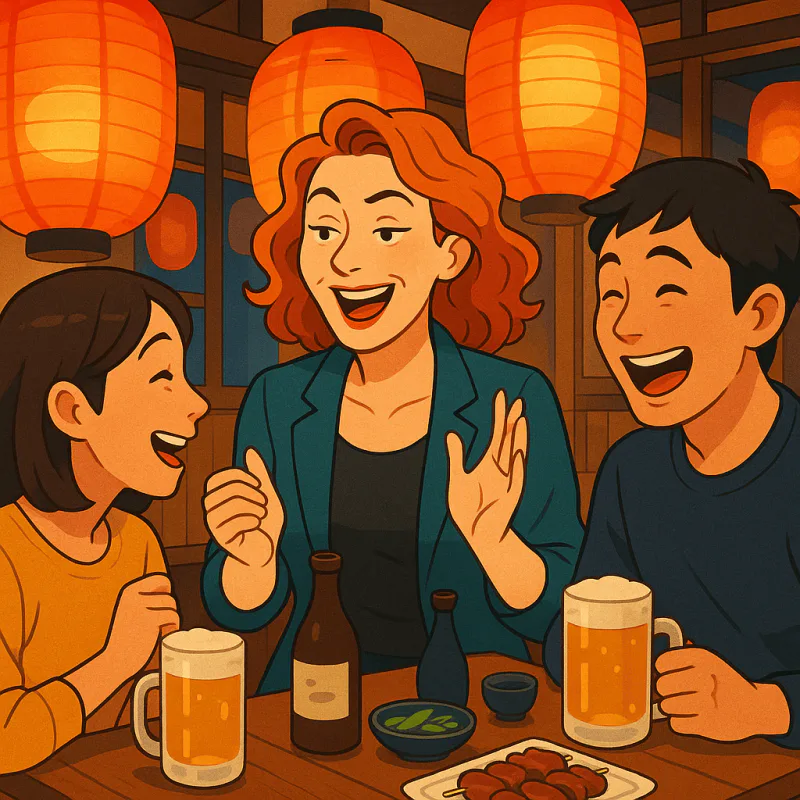
The other thing the shame does, besides making you feel bad, is making you wait. People in their 30s who feel behind tend to delay starting until conditions are perfect. Until the kids are older. Until work calms down. Until they save up for the good textbook. Until they feel ready.
There is no condition. The 35-year-old who started at 35 is ahead of the 38-year-old who is still waiting until 40. The 38-year-old who starts at 38 is ahead of the 43-year-old who keeps waiting. Time is going to pass either way, and at the end of it you are either someone who can have a conversation in this language or you are not.
The minimum viable start is shockingly small. Twenty minutes a day of vocabulary, one weekly conversation with an actual human, and a tolerance for sounding stupid for the next eighteen months. That is the whole protocol. It does not require you to have started ten years ago. It does not even require you to feel ready. It only requires you to begin while you still feel slightly too embarrassed to begin.
Most people who eventually become fluent describe the moment they started as a small, unceremonious decision they almost did not make. None of them describe a perfect mental state at the start. Most of them describe a low grade shame they ignored for one specific Tuesday and then ignored again on Wednesday.
If you are reading this and feeling the familiar shame of starting late, here is the move. Do not pick the perfect app. Do not buy the perfect textbook. Do not wait for the kids to start school. Pick one weekly real conversation with one real person in the language you want to speak, and put it on a calendar this week.
That single conversation is going to do more for you than any other thing you set up. The reason is structural. A weekly conversation forces preparation, exposes your gaps, gives you emotional input, builds a relationship that compounds, and creates a deadline you cannot fake your way out of. Apps do none of that. Textbooks do none of that. The conversation does all of it at once.
Start with one human, not one app.
The 22-year-old has trouble with this part because they think the language is the prerequisite for the friendship. The 35-year-old has trouble with this part because they think they need to be more prepared before subjecting another adult to their bad grammar. Both are wrong in the same way. The friendship is the language curriculum. There is no prerequisite. The bad grammar is the price of admission and you pay it once and then you stop.

The hardest part of the protocol is the human. Most people in their 30s do not know how to find a native speaker willing to have a weekly real conversation with them, and the existing options are either expensive teachers, awkward language exchange apps full of dating energy, or events that produce surface contacts and no follow up.
Make Japanese Friends On a Live World Map
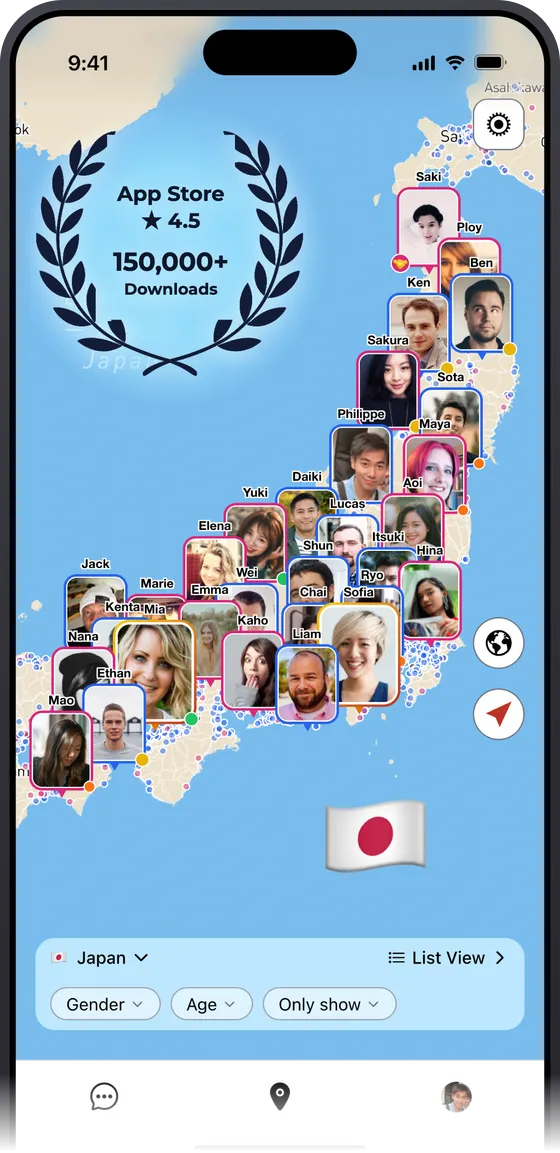
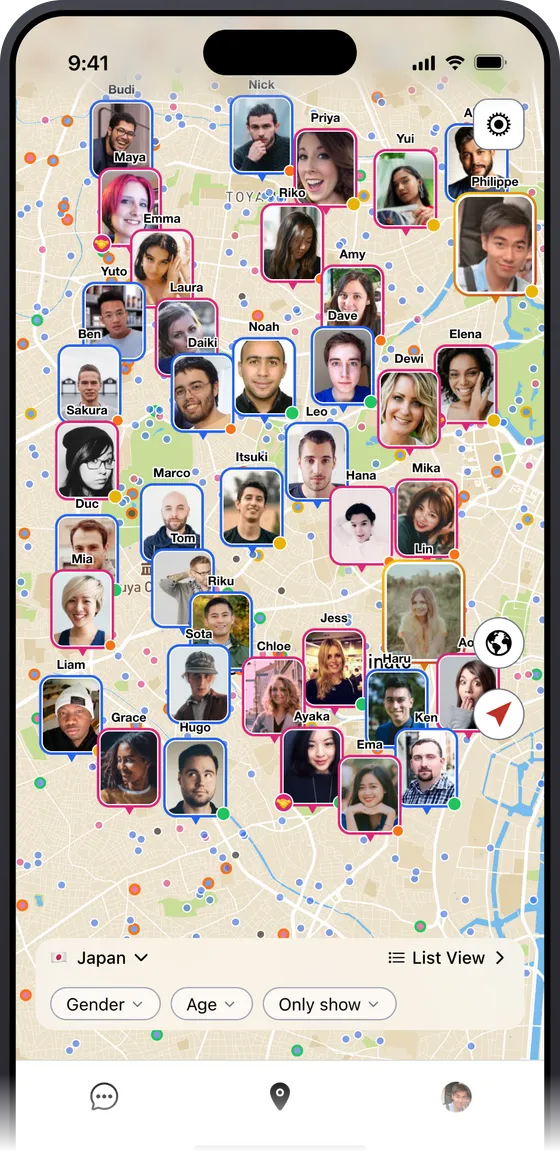
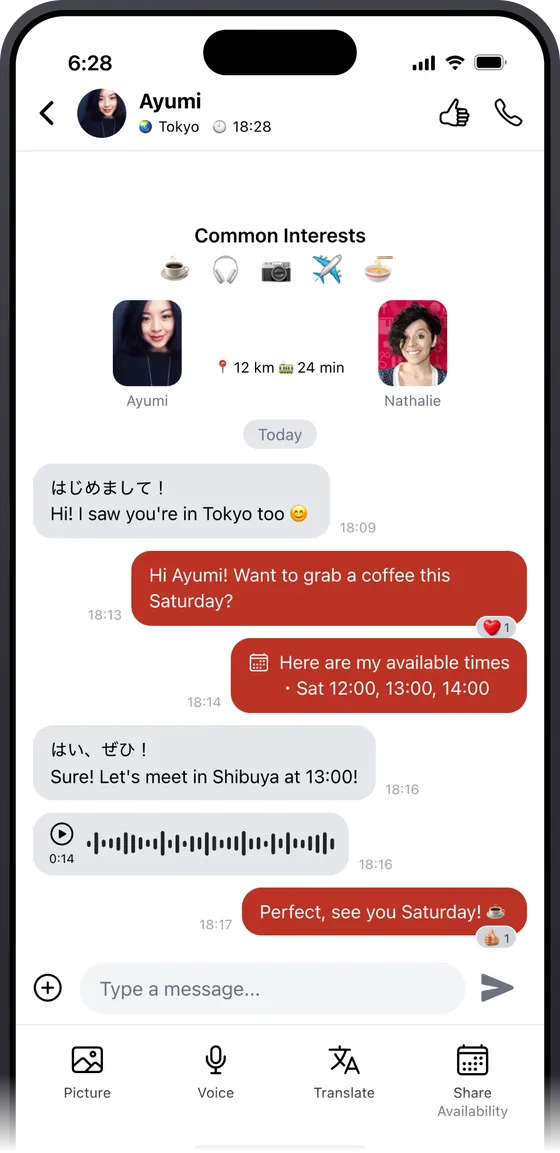


SewaYou is a map-based app for finding people near you who actually want to meet in person. Locals who are open to a foreign friend, foreigners who want a local one, both opting in before any conversation starts. It is built around the assumption that the friendship is the curriculum, not the side effect.
You do not need to feel ready. You do not need to have started ten years ago. You need one human and a recurring slot on the calendar. The 30-something brain is fully capable of the rest.


