

A friend of mine learned four foreign languages to a conversational level before age 25. She watched the shows. She read the books. She did the grammar drills and the listening practice. By any test you'd care to give her, she "knew" English, Japanese, French, and Korean.
Then a Kiwi friend came to visit her for a week, and she came back stunned. "I've never actually used English before," she told me. She had used English. For ten years. For school, for movies, for the internet. But she had never used it the way she had to use it that week: introducing her own culture to a confused outsider, helping him buy yogurt at a small grocery, telling him how she actually felt about her job, asking how his sister was doing.
That gap, between knowing a language and having used it on a real human, is wider than most learners realize. Knowing isn't using.
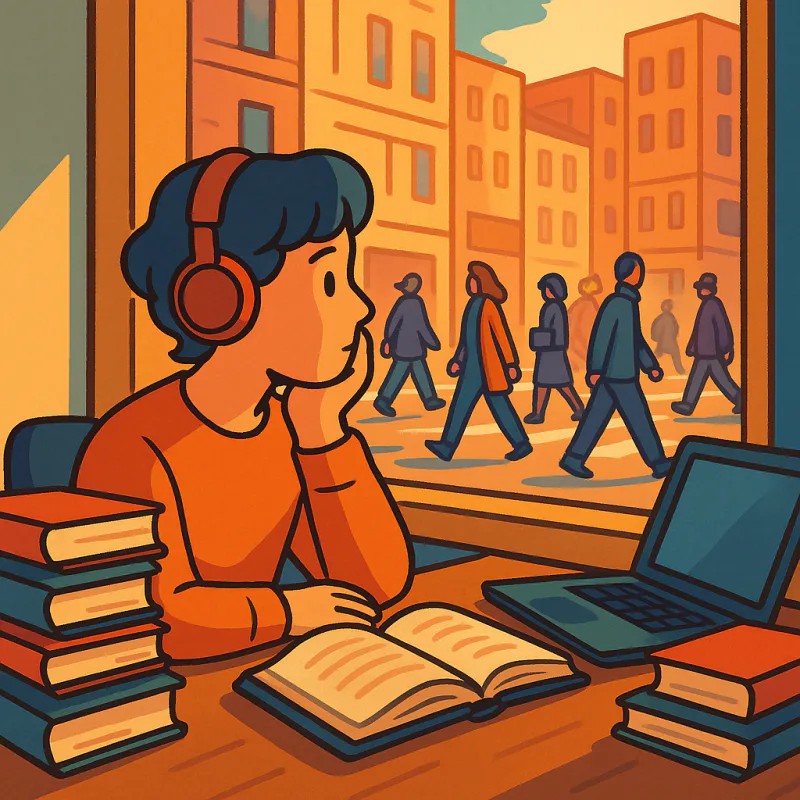
Most of what passes for "language learning" today is consumption. You watch dramas. You scroll TikToks in your target language. You listen to a podcast on the train. You do Anki. You read the news.
All of that is good for input. None of it is use.
Use is when the output matters to another person. Use is when somebody is waiting for you to finish your sentence so they can respond. Use is when a misunderstood word leads to a missed train, a wrong dish, a hurt feeling. Stakes are the difference. A drama can be paused. A real person cannot.
This is why people who have studied a language for years often describe their first real conversation with a native speaker as "the first time I actually used it." They are not being modest. They are correctly identifying that something categorically new is happening.
There are at least four kinds of language use that only happen with a real human in front of you, and that no app, drama, or textbook can rehearse for you in advance.
Introducing your own culture. This sounds easy and is not. You discover, mid-sentence, that you have no idea how to explain why people slurp ramen, why nobody says "you're welcome" the same way you do in English, or what the deal is with your country's tipping. You knew all of this. You just never had to say it.
Helping someone navigate the small things. Asking a shopkeeper if they have a different size. Telling the taxi driver to take the smaller street. These are not phrases you drilled. They show up exactly once, and you need them right now.
Expressing how you actually feel. Not "I am happy" from chapter two. The complicated feeling you had at work last Thursday. The reason your relationship with your brother is weird. The thing you noticed about the city today that you can't quite name. This is where everyone freezes first.
Trading life updates. "How's your mom doing." "Did you ever finish that project." "What happened with that apartment you were looking at." Casual updates are made of small, specific words you would never have studied on purpose.

When you finally do it, your brain will freeze. Not because you don't know the language. You do. Your brain freezes because none of your study time was spent in this mode. You spent your hours in receive mode. Suddenly you are in transmit mode and the engine is cold.
This is not a sign you wasted those years. The study built the engine. The use is the only thing that starts it. Without the engine you cannot drive; without driving the engine is just sitting there.
The people who feel most behind are usually the ones with the most input and the least output. They think they need more study. Almost always, they need less study and more humans.
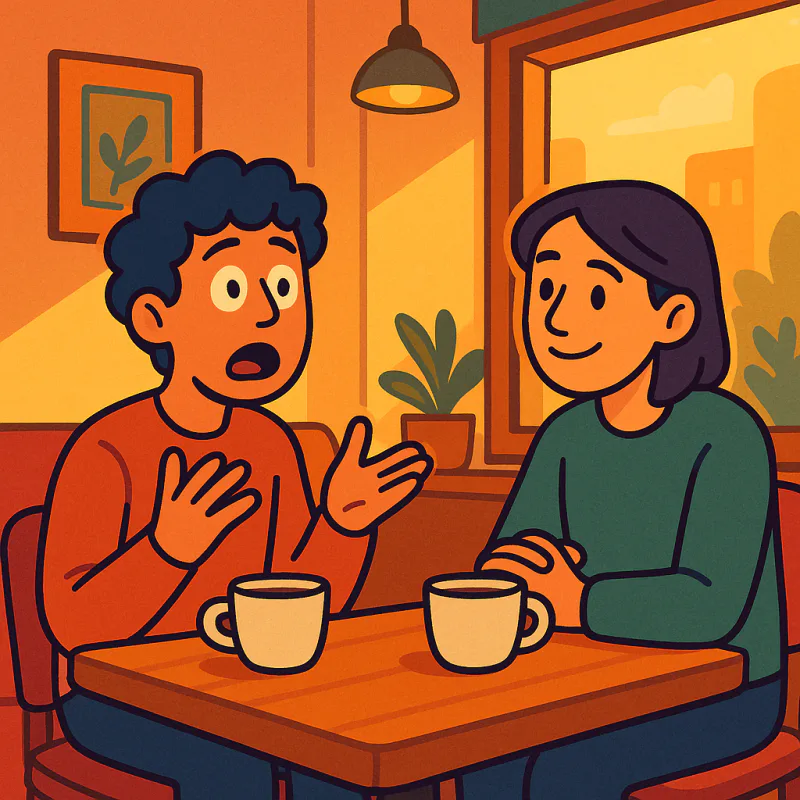
The fix for the gap is not another course. It is not another year of Anki. It is one real person, used regularly, for low stakes, in person if possible and on a call if not.
One real person changes everything because they are unpredictable in exactly the way a drama is not. They will ask you something you didn't prepare for. They will misunderstand you and you will have to repair it. They will get bored if you are boring and you will learn to be less boring. None of those skills can be learned alone.
The reason almost nobody takes this fix is that it is socially uncomfortable. You have to admit, out loud, that you want to practice. You have to risk being slow in front of someone who is fast. You have to schedule it like an appointment instead of letting it stay vague.
But the cost is one coffee a week. The payoff is the difference between a language you "know" and a language you have used. One conversation outranks one hundred episodes.
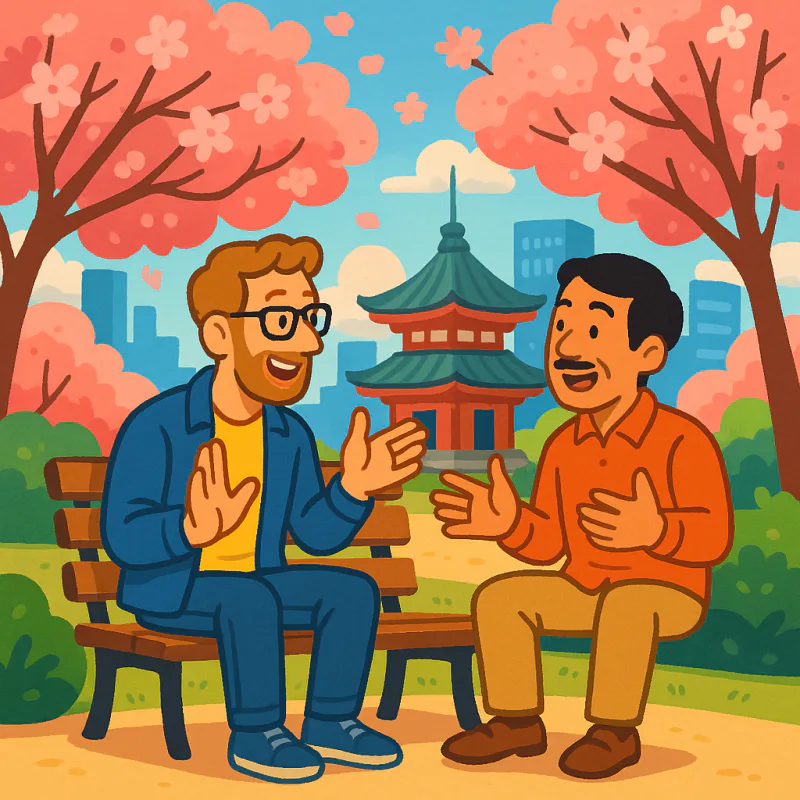
You don't need a tutor for this. A tutor is fine, but the gap we are talking about is not a tutor-shaped gap. It's a friend-shaped gap. You need someone whose actual life you become curious about, and who becomes a little bit curious about yours.
Make Japanese Friends On a Live World Map
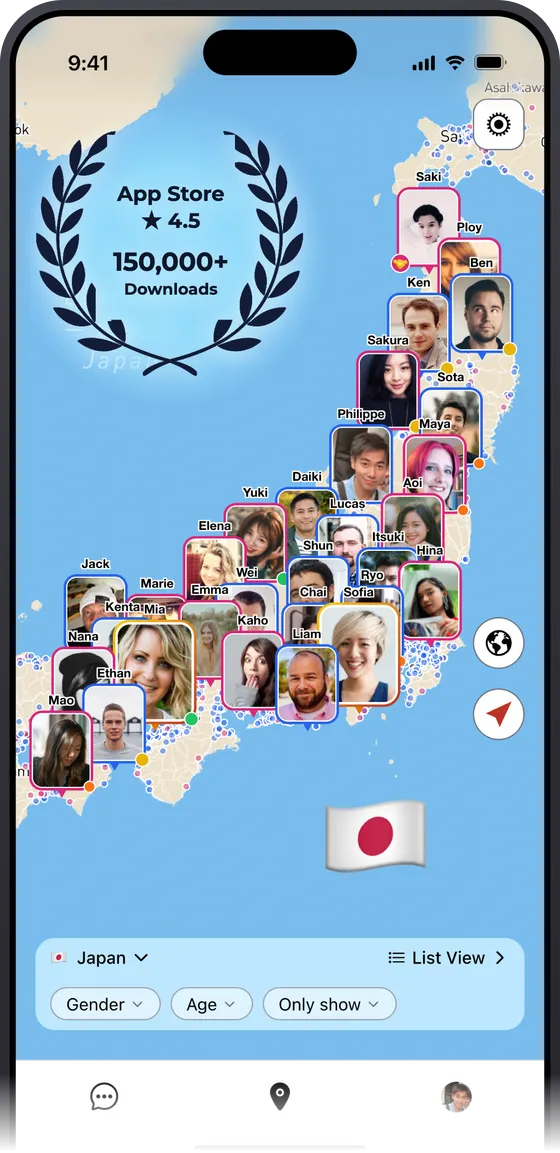
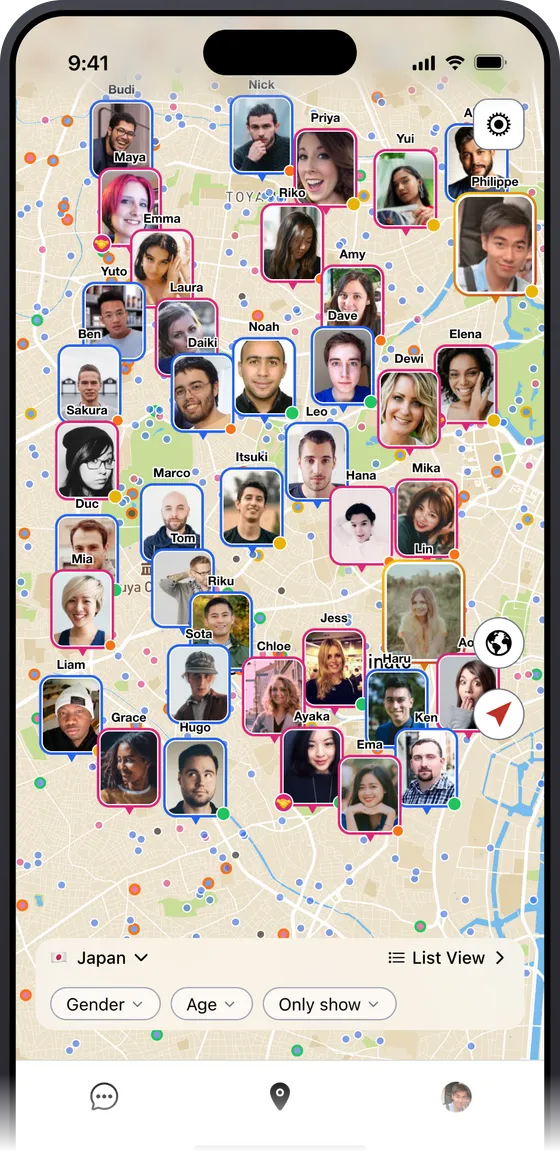
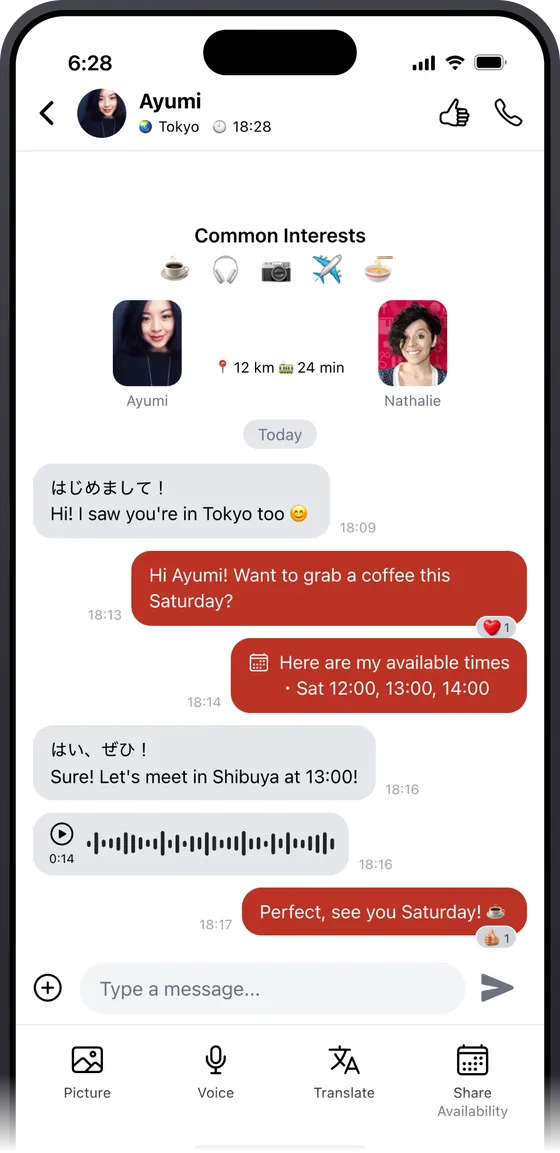


SewaYou is a map-based app for finding language partners and friends near you, especially in Japan. You pin where you are. You see who else is around. You message someone whose profile feels human, you meet for a coffee, you talk in whatever mix of languages works. No swiping, no dating-app energy, no waiting for an algorithm to deliver a stranger to your door.
A year from now you'll either have one or two of those people in your life, or you'll be doing one more round of Anki and wondering why your Japanese still feels theoretical. The gap doesn't close on its own. It closes the first time a real person across a table asks you a question and waits for your answer.


