

You live in Tokyo. You ride the same Yamanote line every morning with a thousand Japanese people who never look up from their phones. You stand in line at the konbini behind a salaryman who never says a word. You eat lunch alone at the soba counter because nobody ever invites you. After a few months you arrive at the obvious conclusion: Japanese people are not interested in meeting foreigners.
It is the wrong conclusion. It is so wrong that it inverts the actual situation. The people sitting silently next to you on the train want to meet you too. They have wanted to for years. They go home at night and wonder how to start, and they decide they cannot, and they go back to riding the train silently. They are looking out the same window you are looking out.
Both sides feel locked out.
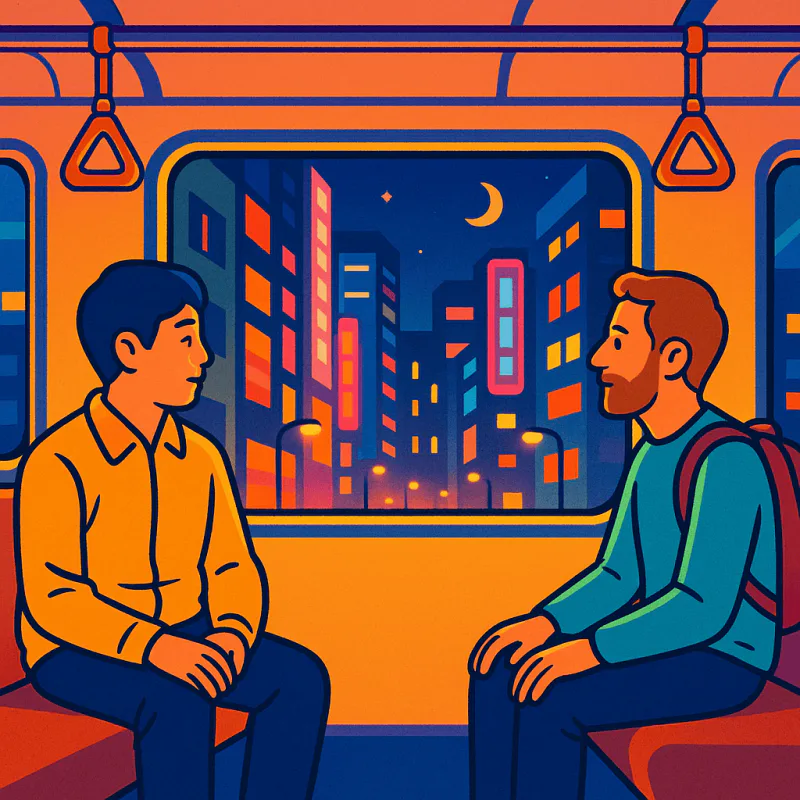
When a foreigner gets lonely in Japan, the story they tell themselves is that the country is closed. When a local in their thirties feels the same way about meeting people from elsewhere, the story they tell themselves is that foreigners come here for tourism or English jobs and don't really want to meet locals as people. Both stories are wrong, and both stories produce the exact same result. Nobody walks across the gap.
I have spent enough time around both sides of this divide to be sure this pattern is real. The Japanese guy in his thirties who walks past Yoyogi every weekend and sees groups of foreigners laughing in the park, and feels like he is watching a movie he is not in. The American woman who has been here three years and has not made a single Japanese friend who isn't a coworker, and assumes nobody local wants the trouble.
Neither of them is correct about the other.
Once a Japanese person decides they actually want to try, the next problem hits immediately. There is no normal place to start. The streets and trains operate on a quiet contract that says you don't speak to strangers. Approaching a foreigner at a cafe to ask if they want to be friends is socially expensive in a way that approaching another Japanese person isn't, because the assumption flips. The other person reads it as "you want me because I'm foreign." Sometimes they're right. Sometimes they're wrong. But the doubt is enough to kill the conversation before it starts.
This is why a lot of the stories about being approached in Tokyo by a friendly local end with the foreigner feeling like a zoo exhibit instead of a person. The local probably did not mean it that way. They were doing the only thing the situation allowed, walking up cold with no shared context and asking for a connection that has no reason to exist yet.
Cold approaches read as weird. Even when the intent is genuine, the form of the approach makes the genuine intent unreadable. So locals who actually want to meet people from elsewhere quietly give up trying, because every attempt feels intrusive. And foreigners who want local friends quietly give up too, because every approach they receive feels suspect. Two groups of people on the same island, both lonely in the same shape, both sure the other side is the problem.
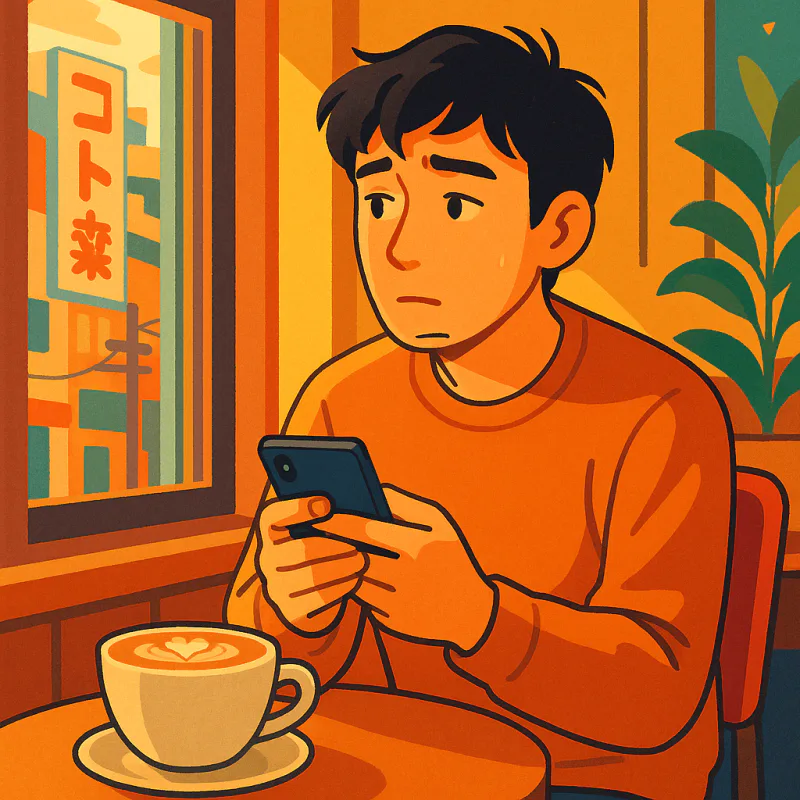
I want to be very clear about this. The bottleneck in cross-cultural friendship in Japan is not that Japanese people aren't interested. Bar conversations, forum threads, drunk speeches at izakaya counters all point the same direction. There is no shortage of locals who would love a foreign friend. There is also no shortage of foreigners who would love a local one.
It is not interest. It is infrastructure.
The country has nothing built into normal life that introduces these two groups to each other. School cuts off in your early twenties. Work puts you in a room with other employees of the same company, mostly Japanese unless you happen to work somewhere unusual. Friend-of-friend networks tend to stay inside whichever language community they grew up in. So unless you happen to land in one of the rare overlap zones, like a big craft beer place with both a foreign and local crowd, or a hobby club that draws both sides, there is no event in your week that puts you in a room with the other group.
When the infrastructure is missing, the people on each side fill in the gap with assumptions about the other side. None of those assumptions are flattering. None of them are accurate either.

The thing that fixes this is shared context plus mutual intent declared upfront. Sounds clinical. It just means a place where both of you are clearly there to meet someone like the other, where nobody has to guess what the other person wants, and where the conversation isn't interrupting anything.
That is why language exchange events sometimes work. Both sides showed up for the same reason. The intent is on the table. Nobody has to wonder why a Japanese guy is talking to an American girl at the cafe, because they are both at an event that exists for that. The awkward part of the cold approach is gone, and what is left is just two people figuring out if they like each other.
Mutual intent changes everything.
The events have one limit, though. They are once a week, in a few specific spots, with whoever happened to show up. If you don't live near one, or if the people there that night don't click with you, you wait a week and try again. That works for some people. It does not scale into actual friendships.
The version that scales is a low-pressure way to say, before you ever meet, "I am someone who wants to meet a person from a different background, in person, for a coffee, this week." A way to say that without it being weird, because the other person is saying the same thing back. Both sides skip the cold-approach problem entirely. Nobody is being approached. Both of you opted in long before the conversation started.

Make Japanese Friends On a Live World Map
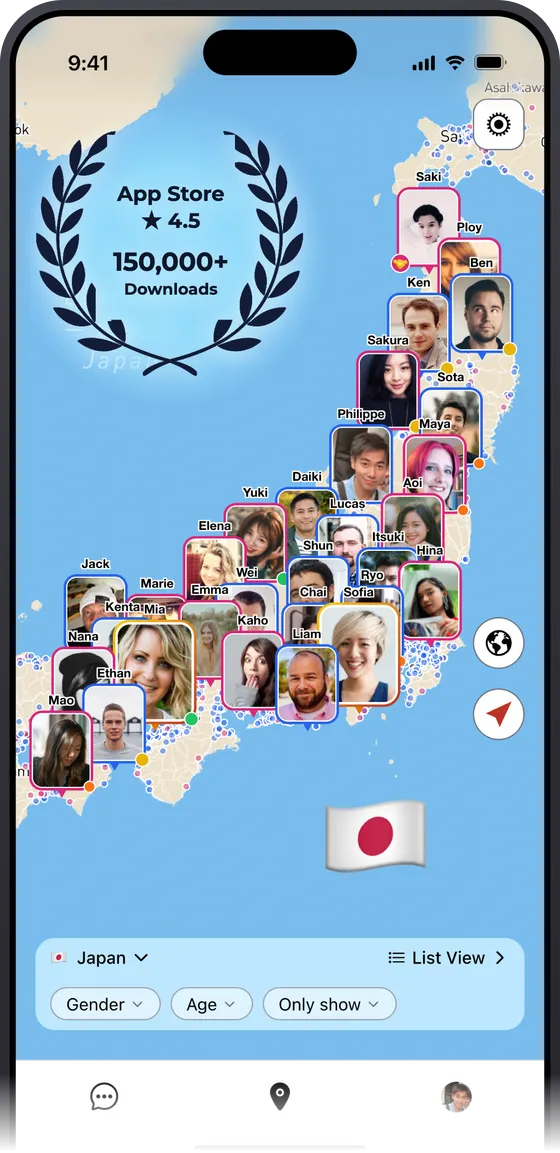
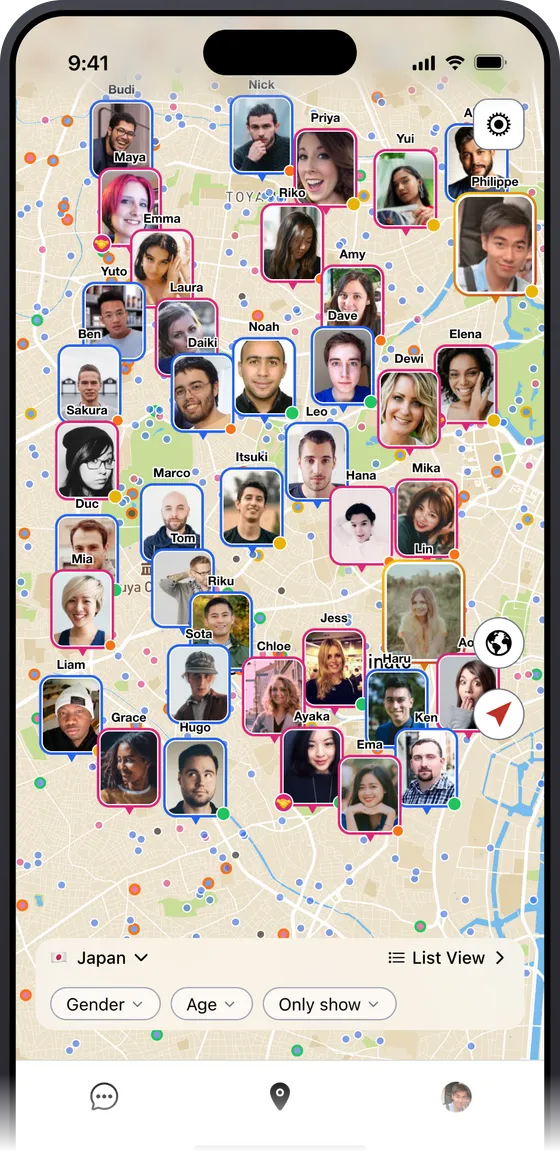
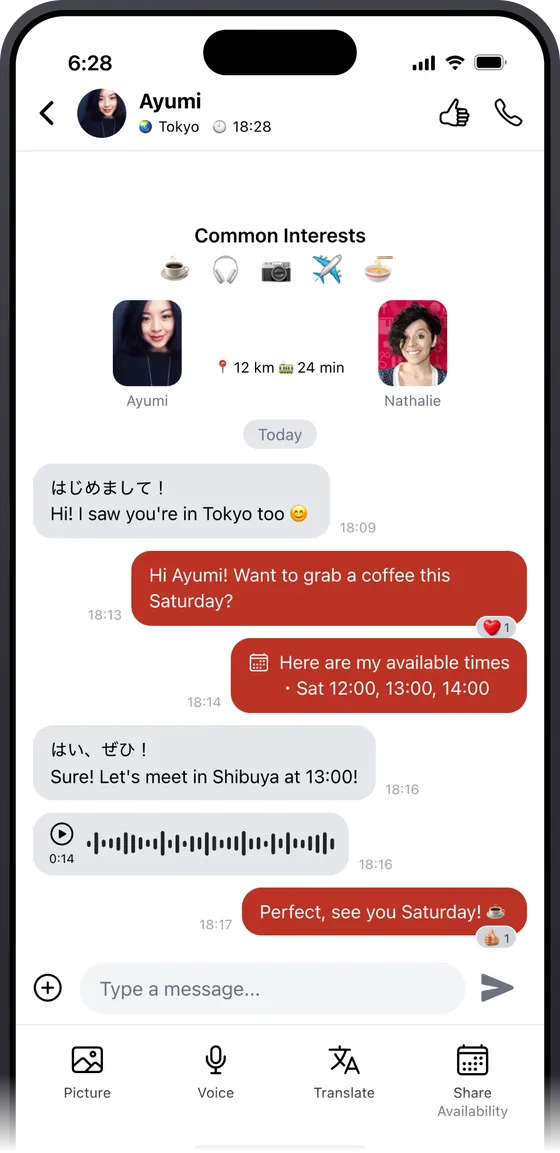


SewaYou is a map-based app for exactly this. You see who is nearby in your city, locals and foreigners both, and everyone on the map is there because they want to meet someone for a real, in-person hangout. You can also explore anywhere on the world map and start with a chat. For a meetup this Saturday, focus on your own area and suggest a coffee near both of you.
The Japanese guy you've been on the same train with for two years is probably on it. So is the woman from your building you've never said a word to. They have wanted to meet you for a while. They just needed somewhere it wasn't weird to say so.


