

Japan might be the single easiest place in the world to be a full introvert. You can go days without a real conversation and nobody notices, nobody worries, nobody asks if you're okay. You order lunch from a ticket machine. You shop in silence. You come home to your own quiet apartment and close the door on the entire world.
And honestly? It's kind of wonderful. There's a specific relief in existing without the constant pressure to be "on," to perform friendliness, to fill silences you never asked for. If crowds and small talk cost you something, Japan hands you a life where you rarely have to pay.
So let's be clear up front. Wanting that is not a flaw. Preferring your own company is not something to fix. But there's a version of this that turns from relief into a slow leak, and it's worth seeing the difference before you're three years in and wondering where all your Japanese went.
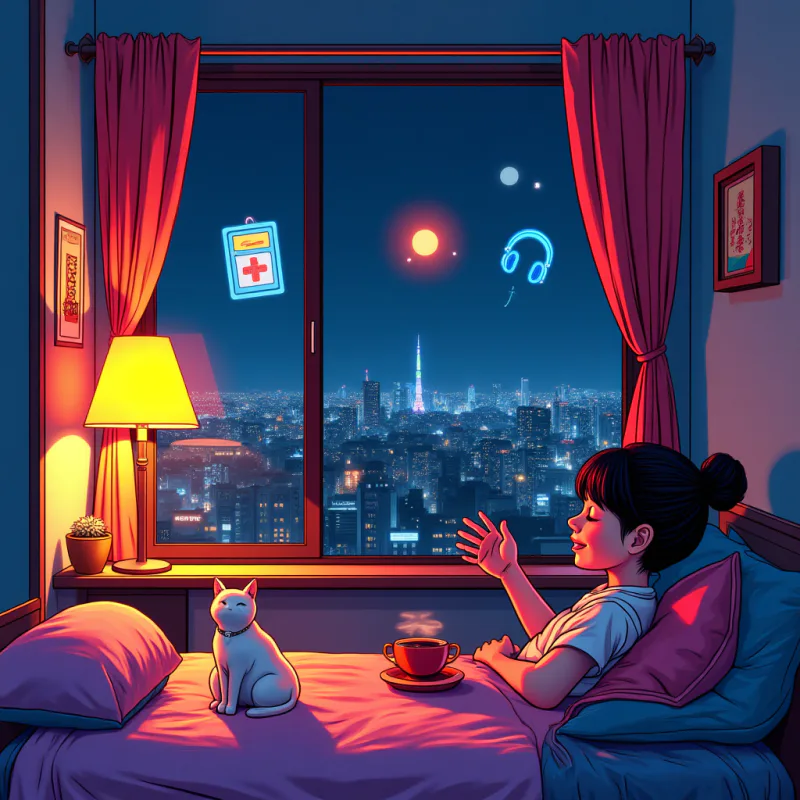
Here's the pattern I've watched play out, in myself and in half the people I know here.
Staying in feels great in the moment. Every single time. The problem is that "the moment" repeats, and the moments stack up into weeks, and somewhere in there two things quietly break.
Your Japanese stops moving. Not because you got worse, but because language is a use-it-or-it-freezes skill, and you stopped using it out loud. And your motivation for everything else sags too, not just for socializing. The gym, the project, the plan to finally see more of the country. It all gets heavier.
None of it announces itself. There's no bad day, no fight, no obvious trigger. Just a life that is comfortable today and quietly expensive by month three. That's the part nobody warns you about. The paradise sends an invoice. It just sends it late.
So you notice the drain, and immediately the advice arrives. Put yourself out there. Just go to the meetup. Say yes to the nomikai. Join a circle. Force it, because it's good for you.
And every cell in your body says no. Because what they're describing is a loud room, a dozen strangers, hours of being "on," and a train home at 11pm feeling scraped hollow. You try it once, hate it, and conclude that socializing itself is the enemy.
But look at what just happened. You were handed two options: rot quietly at home, or drag yourself into exactly the kind of situation you find most draining. And then you were told to pick one.
That's a false choice. Both options rest on the same wrong assumption, that "socializing" means groups, noise, and performance. It doesn't. And once you see that, the whole problem changes shape.
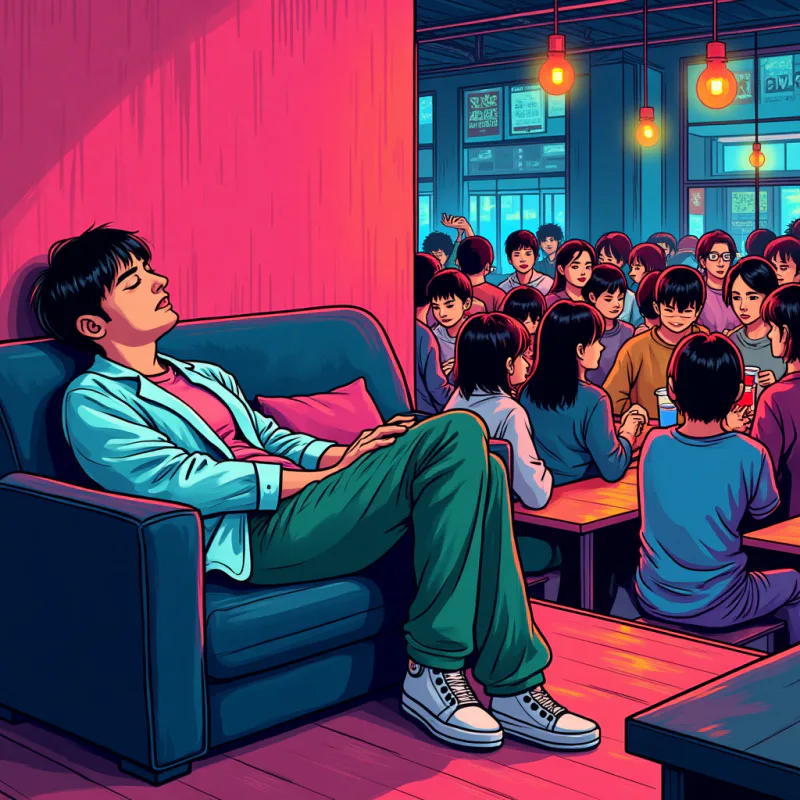
Introversion is not a hatred of people. It's a fact about where your energy goes. Big groups, small talk, unpredictability, being watched, having to be "on" with no exit. That's the stuff that drains an introvert flat.
But notice something. None of that is the same as connection. A single unhurried conversation with one person, about something you both actually care about, costs almost nothing. Sometimes it even gives energy back. That's not forcing yourself to be an extrovert. That's just talking to a human on terms that fit you.
The mistake is copying the extrovert playbook. Extroverts recharge in the loud room, so they chase the loud room. When you chase it too, you burn out and blame your personality. Your personality is fine. You just picked the wrong kind of socializing and assumed it was the only kind.

This is also the honest answer to the Japanese-is-stalling problem.
You can grind vocabulary in an app for a year and still freeze the second a real person is in front of you, because the app never trained the thing that actually breaks under pressure. Comprehension you can study. But the reflex, the "produce a sentence right now, out loud, while a human waits" reflex, only grows one way. By doing it with humans.
You can't download a reflex. No streak, no textbook, no flashcard deck substitutes for the messy, live, slightly scary rep of talking to someone. Which is annoying if you'd rather stay in. But it's also freeing, because the amount you actually need is far smaller than you think.
Here's the reframe that actually helped me. Stop asking "how do I make myself more social." Ask "what's the smallest amount of real contact that keeps me from stalling."
For a lot of introverts, the answer is shockingly low. One good conversation a week. One person, one coffee or one language swap, one hour where you use the language and connect with someone. That's often enough to keep your Japanese thawed and your motivation off the floor, and it barely touches your energy budget.
Then stack the deck so it fits you. Make it one-on-one, not a group. Build it around a shared interest, so there's always a topic and always a natural end. Schedule it, so you can prepare going in and recover coming out. You're not overriding your personality. You're designing around it.

This is exactly the gap SewaYou is built for. It's a map-based app that shows you who's actually near you and open to meeting: Japanese locals who want international friends, other residents putting down roots, language partners a train stop away. You're not walking into a room of strangers hoping something happens. You can see who's around, pick one person who shares an interest, and start a low-stakes one-on-one on your own terms.
Make Japanese Friends On a Live World Map
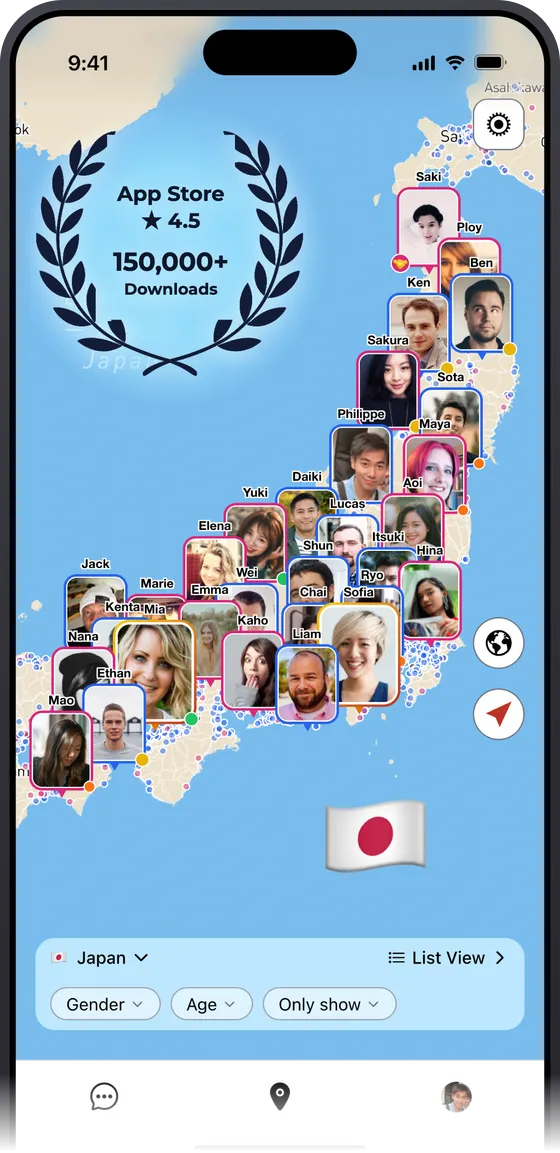
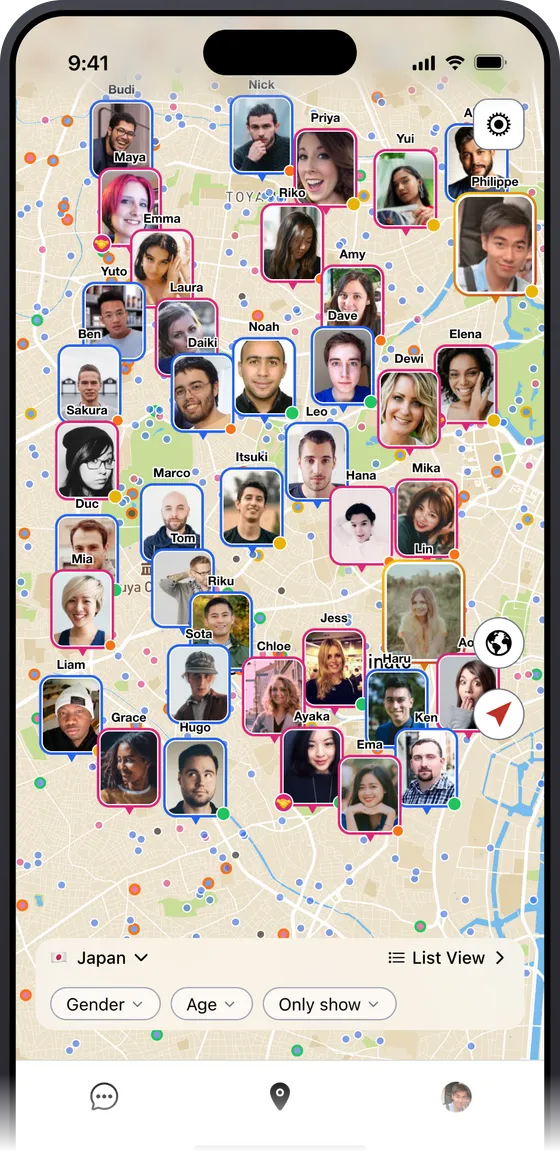
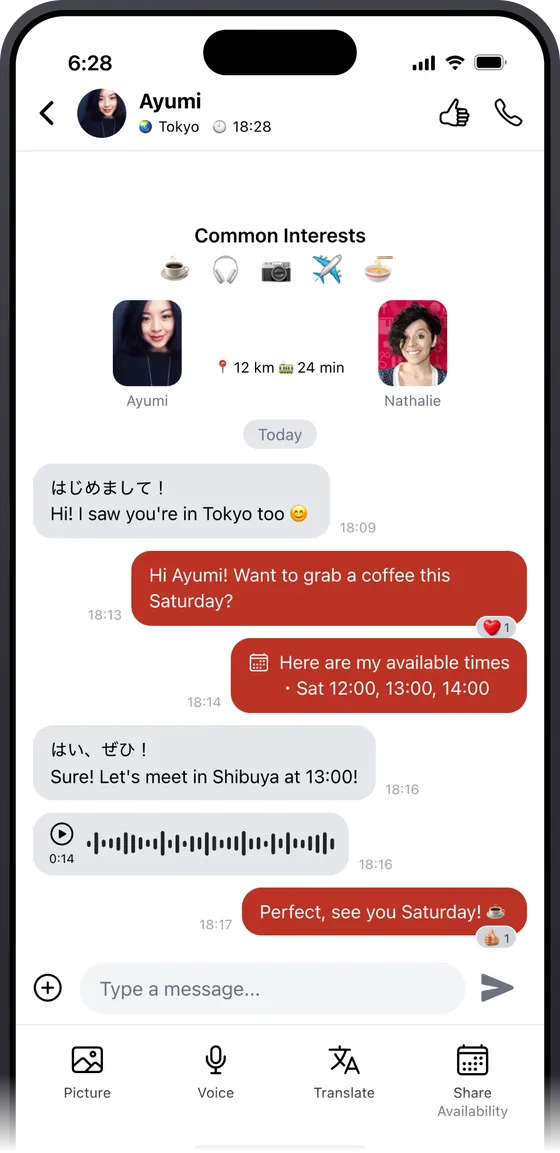


For an introvert, that's the whole difference: one person, on your terms. No group to perform for, no nomikai you'll dread all week, no pressure to become someone you're not. Just the small, regular, human-sized contact that keeps the language moving and the days from blurring together, sized to a battery like yours.
So no, you don't have to become someone else to have a good life here. The people telling you to "just force yourself out there" are half right and half wrong. Yes, you need some real interaction. No, it does not have to look like theirs.
Keep the paradise. Keep the quiet apartment and the days that belong to you. Just put one real conversation a week on the calendar, on terms that fit you, and watch how much of the drain quietly disappears.
That isn't extroversion. It's just refusing to let the easiest place in the world to disappear become the place where you actually do.


