

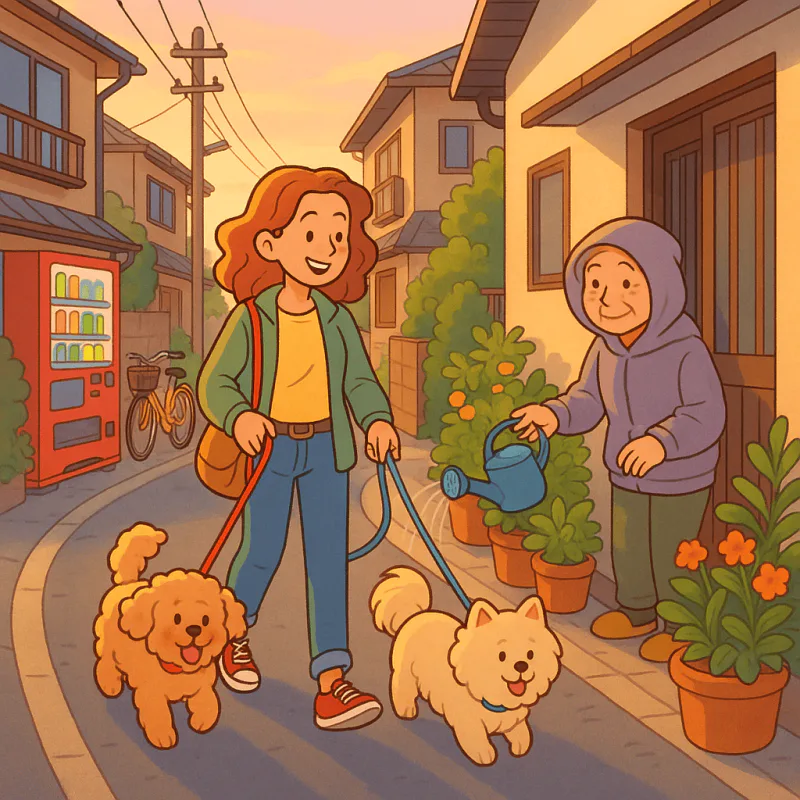
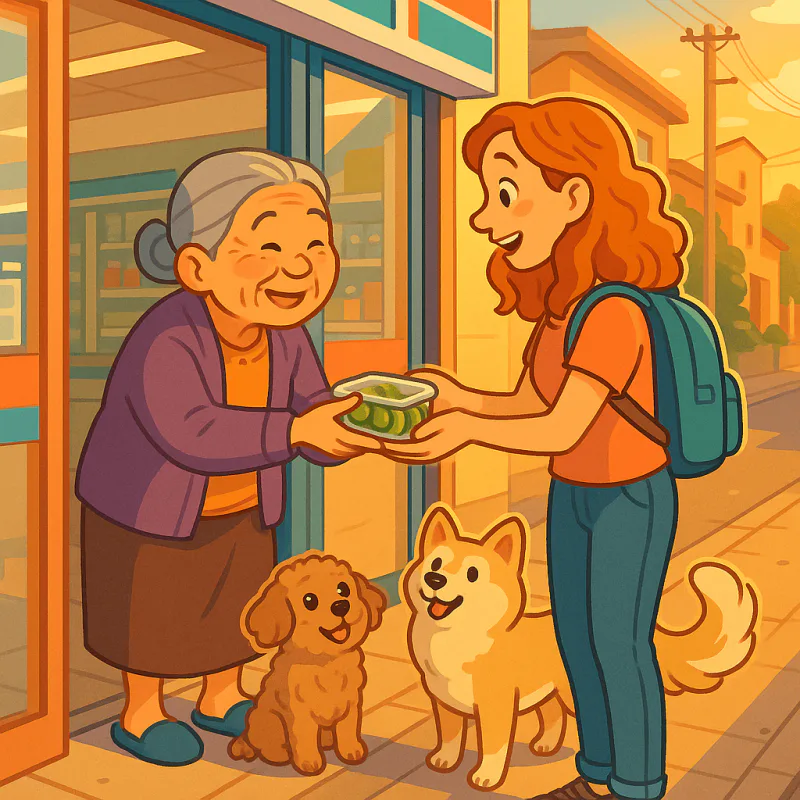
A foreigner I know in a quiet Tokyo suburb gets greeted by name by six different obaachans on her morning walk. Not the polite konnichiwa you trade with strangers. The real kind. The kind where one of them once pressed a tupperware of tsukemono into her hands at the konbini because she looked tired. She has lived there two and a half years. She does not speak particularly fluent Japanese. She has never once invited any of them to anything.
She has two small dogs and walks them at 6:45 every morning.
That is the entire system.
I have watched a lot of foreigners try and fail to break into Japanese neighborhoods, and I have watched a small number quietly succeed without seeming to try at all. The successful ones are not the most outgoing, not the best at Japanese, and not the ones grinding meetups every weekend. They all share a different thing, and almost none of them realize it is the thing.
Repetition over intensity.
Most foreigners arrive with the same playbook from home: smile at strangers, introduce yourself in lines, strike up bar conversations, swap contacts at events. None of this maps onto Japan, and the more enthusiastically you run that playbook the more invisible you become. The neighbor at the supermarket does not want a stranger introducing himself in the produce aisle. It is socially cold. It puts pressure on her to perform a relationship she did not opt into.
So she stays polite, surface, distant. You log it as Japanese reservedness. It is not. It is a sane response to being approached without context.
What works instead is becoming a familiar face before you ever say a real sentence to anyone. The obaachan who eventually pressed tsukemono into my friend's hands had been seeing her walk past with the dogs every morning for nine months before they had a proper exchange. Nine months of small nods, smiles, weather comments. Then suddenly she was the gaijin with the dogs, which is a category that exists in the neighborhood mental map. Strangers do not exist on that map. Categories do.
The walk works because of the dogs. The dogs are what social scientists call a third object. They are the thing both parties can talk about without either of them having to be the topic. Without the dogs my friend would just be a foreigner walking past. With the dogs she is a reason for the obaachan to start a conversation that is actually about the dogs and only secondarily about getting to know her.
This is the trick. You need a third object.
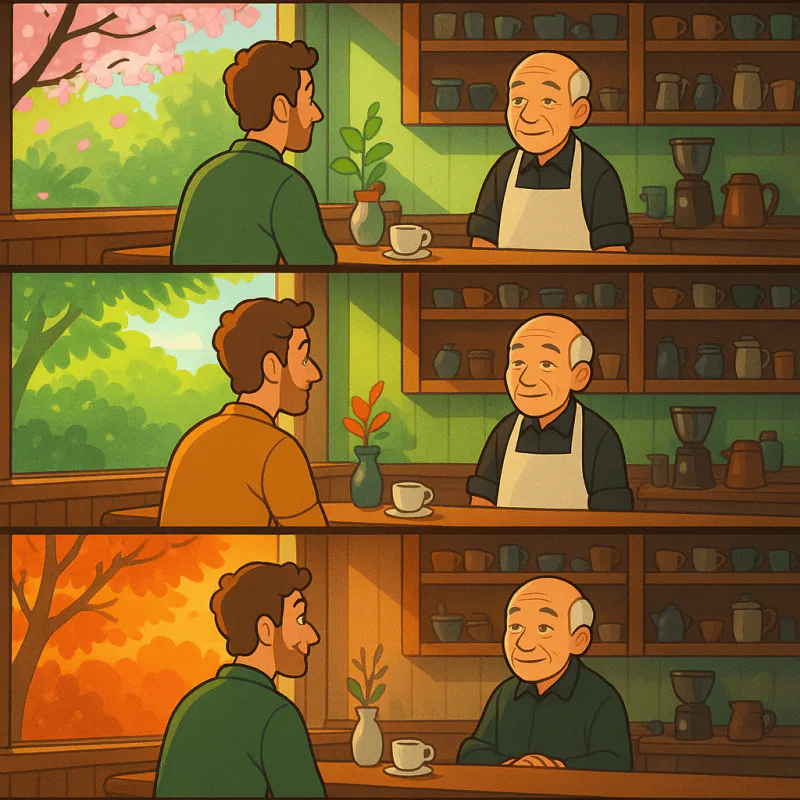
It does not have to be dogs. It can be a balcony of plants that neighbors comment on from across the street. A regular cafe where you always sit at the counter and the master starts to recognize your order. A morning run on the same route at the same time. A small kid in a stroller. A bicycle you keep fixing in front of your apartment. A guitar you take to the park on Sundays.
The point is not the activity. The point is that the activity gives strangers a non threatening reason to begin talking to you, and gives you a non threatening reason to be in the same place over and over without having to perform a social goal. Cold approach in Japan is awkward for everyone. Bumping into the same person every Tuesday for four months is not.
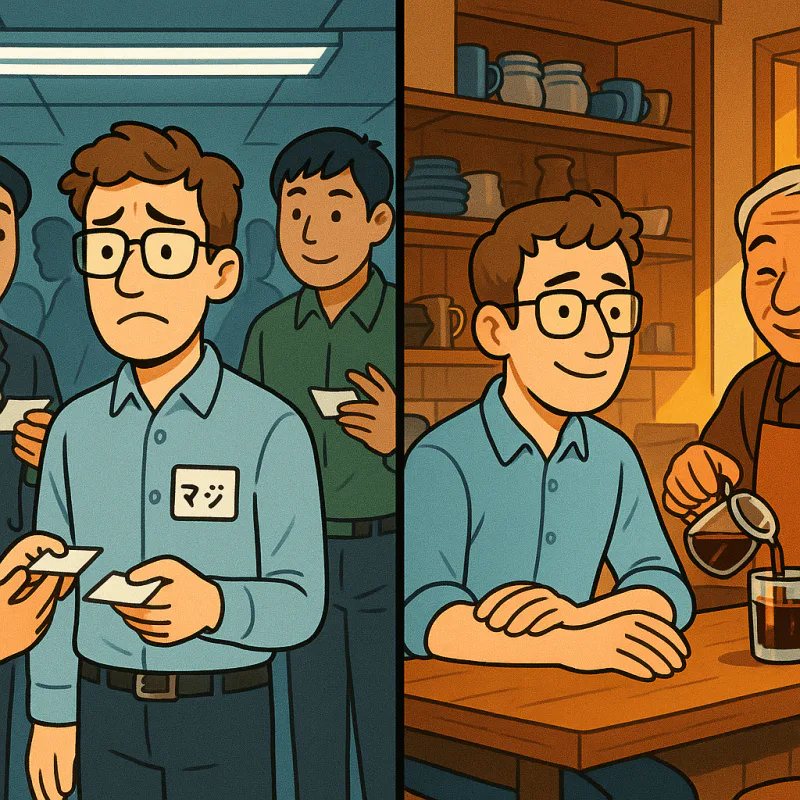
There is a reason the morning works better than any other time of day for this. Mornings are the rare unguarded slot. The neighborhood is at its softest before work, before social roles fully click on, before the day has built up its usual hierarchy of polite distance. People walking their dogs at 7am are not in salaryman mode. The obaachan watering her plants in a faded hoodie is not performing the formal version of herself. The convenience store clerk who waved at you yesterday is the same one who is now off shift buying a coffee in normal clothes and finally making eye contact.
Evenings in Japan are the opposite. Evenings are when people are tired, defensive, headed home, putting up walls. Try to make a regular evening connection with a neighbor and you are working against a current. Try the same thing in the morning and the current is with you.
This is also why the famous advice to grind izakayas as a foreigner does not work for most people. The izakaya is the wrong slot. You are catching everyone in their evening armor. The morning walk catches the same people stripped of it.
The biggest mistake foreigners make once they finally clock that repetition matters is to treat the early sightings as a failure. They walk past the same obaachan three mornings in a row, get a nod and nothing more, and conclude that nothing is happening. Nothing visible is happening. Underneath, you are being processed. You are being added to the mental map of who belongs to this street. That processing takes weeks, sometimes months, and the only thing you have to do during that period is keep showing up.
Show up before the friendship.
You do not need to force a conversation. You do not need to introduce yourself. You do not need to learn the perfect opener. You need to be the person who is reliably there at the same time, in the same place, with the same dog or plant or coffee, looking like you are part of the landscape rather than passing through. The conversation will start when one of them is ready. Your job is to make sure you are still there when that day comes.
This is the part that frustrates me about the standard advice for foreigners trying to build a life in Japan. Almost all of it points at meetups, language exchanges, international events. Those have their place, but they almost never produce the kind of relationship the dog walker has. They produce contacts. The dog walker has neighbors.
Contacts are people you have to schedule. Neighbors are people you bump into. Contacts require a reason to meet. Neighbors require no reason at all. The dog does the work. A neighbor will check on you when you are sick, sign for your packages, press tsukemono on you in the konbini. A contact will not, because the relationship lives on a calendar somewhere and is held together entirely by your willingness to keep proposing the next thing.
The foreigner who has been here ten years and complains that Japanese people are cold often has a phone full of contacts and zero neighbors. The foreigner who has been here two years and feels at home almost always has at least three neighbors and almost no contacts.
It is not how long you have been here. It is whether you have a morning reason to be outside.
If you are arriving in Japan or restarting after years of feeling invisible in your neighborhood, do not start with apps and events. Start with the routine. Pick the morning thing. Get a dog if you can have one. Grow plants if you cannot. Pick the cafe you are going to become a regular at and go there four times a week for the same drink. Walk the same route at the same time. Buy your coffee from the same konbini clerk every morning until they know your order before you say it.
Do this for three months without expecting anything. Around month four people start nodding. Around month six someone says something more than konnichiwa. Around month nine you get pulled into something, a small conversation that turns into a recommendation, a recommendation that turns into a tupperware of tsukemono. By month twelve you do not feel like a foreigner on that street anymore. You feel like the gaijin with the dogs, which is a kind of belonging no amount of meetup attendance ever produces.
The neighborhood routine builds your local roots. But you also need at least one person in this country whose week you actually know, who you can text when something goes wrong, who is not a neighbor and not a contact but a friend. That part the morning walk will not solve, because the obaachans are not going to reply to a text about your work problems and the konbini master is not coming to your moving day.
Make Japanese Friends On a Live World Map
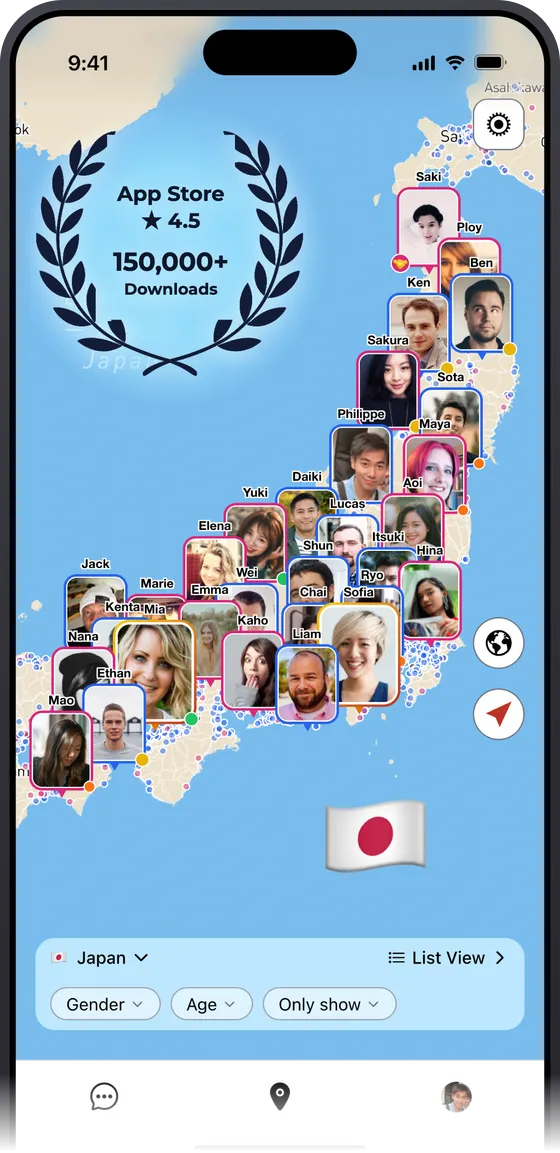
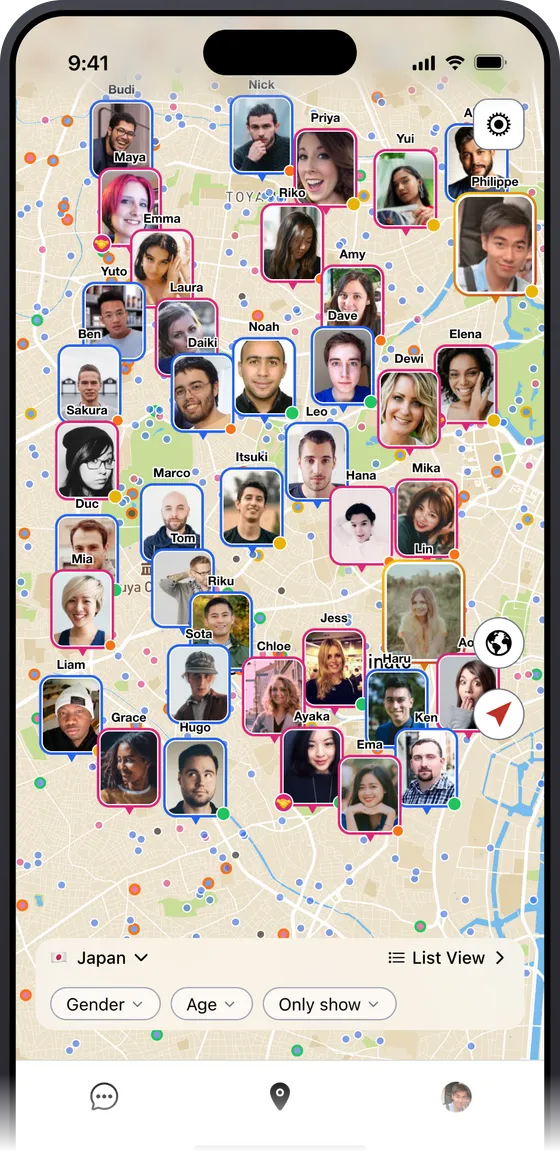
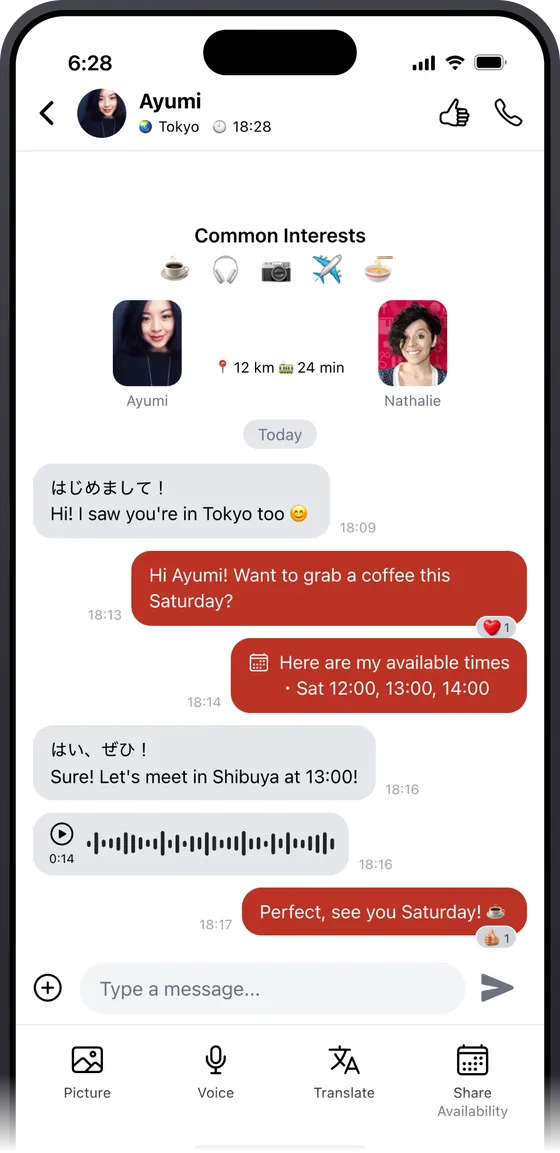


SewaYou is a map-based app for finding people near you who actually want to meet in person. Locals who are open to a foreign friend, foreigners who want a local one, both opting in before any conversation starts. The app gives you the one anchor friend. The morning walk gives you the neighborhood. Together they are what people mean when they say they finally feel at home in Japan.
The dog gets you the obaachans. SewaYou gets you the friend. Both take repetition. Neither takes much else.


